
3 Days in Seoul for First-Timers: A Realistic Plan
A paced three-day Seoul plan grouped by area: palaces and old Seoul, a market and Namsan, then one neighbourhood of your choice. With rainy-day swaps.
Three days is how long a lot of first trips to Seoul last: a long weekend, a stopover, or the opening act of a bigger Korea trip. It is enough time to see the city's best-known sides properly, as long as you stop trying to see all of them. The plans that go wrong are almost always the overstuffed ones, with a palace, a market, a tower, a theme park and a nightlife district squeezed into one day and most of that day spent underground on the subway.
Our own Seoul guide says the city wants four days at the very least, and we stand by that. This plan is for when you have three anyway. It builds each day around one part of the city so that you walk more than you ride, puts the things with fixed hours where they fit, and leaves room to sit down. Day 1 is palaces and old Seoul, Day 2 is a market, the downtown stream and Namsan, and Day 3 is your choice of three very different neighbourhoods.
The plan at a glance
| Day | Area | Highlights | Good to know |
|---|---|---|---|
| Day 1 | Gyeongbokgung, Bukchon, Insadong | Palace grounds, the guard ceremony at the main gate, hanok lanes, tea houses and craft shops | Gyeongbokgung closes on Tuesdays. Tourists may not enter Bukchon-ro 11-gil from 5 p.m. to 10 a.m. |
| Day 2 | Gwangjang Market, Cheonggyecheon, Myeongdong, Namsan | Market food, a walk along the stream, shopping, the city from N Seoul Tower | Market shops close on Sundays, but the food alley opens every day. The stream path may close in rain. |
| Day 3 (pick one) | Hongdae and Yeonnam, Gangnam and COEX, or the Han River parks | Park walks and cafés, Starfield Library and malls, or picnic lawns by the river | Choose one area, not two. Hongik Univ. Station is on the airport railway. |
Before you start: arrival day and getting around
If you land in the afternoon, do not count that day as Day 1. Getting from Incheon into the city, checking in and finding dinner is plenty for a first evening. Our guides to the airport-to-Seoul options and to the first three hours after landing cover that part, and the T-money guide explains how transport cards, transfers and tapping out work on buses and the subway.
Every stop in this plan sits on or near a subway line, and within each day most moves are short walks. If you stay somewhere central, around Jongno, City Hall, Myeongdong or Hongdae, none of the three days needs more than a couple of rides. That matters more than it sounds: what eats time in Seoul is rarely the train itself but the stairs, the transfers and the walk to the right exit.
Day 1: Palaces and old Seoul
Start at Gyeongbokgung, the first and largest of the Joseon dynasty's royal palaces, built in 1395 as the main palace of the new capital. Gyeongbokgung Station on Line 3 (Exit 5) and Gwanghwamun Station on Line 5 (Exit 2) are both a short walk away. Try to be there close to the 9:00 opening. The grounds are big, and even a loop that only takes in the throne hall, Geunjeongjeon, and the pond pavilion, Gyeonghoeru, takes longer than most people expect.
Check the weekday before you go, because the palaces do not share a closing day. According to the Royal Palaces and Tombs Center, Gyeongbokgung and Jongmyo Shrine close on Tuesdays, while Changdeokgung, Deoksugung and Changgyeonggung close on Mondays. When a closing day falls on a public holiday, the palace opens and closes on the next non-holiday instead. So if your first full day is a Tuesday, swap Gyeongbokgung for Changdeokgung, which also sits on the edge of Bukchon, and the rest of the day works exactly the same.
Gyeongbokgung's hours follow the seasons: 9:00 to 17:00 from November to February, until 18:00 in spring and in September and October, and until 18:30 from June to August, with last entry an hour before closing. Anyone wearing hanbok gets in free, and the official guideline says this applies to foreign visitors too. It does ask for a complete outfit, a wrap-collar jacket (jeogori) with a hanbok skirt or trousers. A jeogori over jeans, or hanbok trousers with a T-shirt, does not count. That rule is why rental shops cluster around the station.
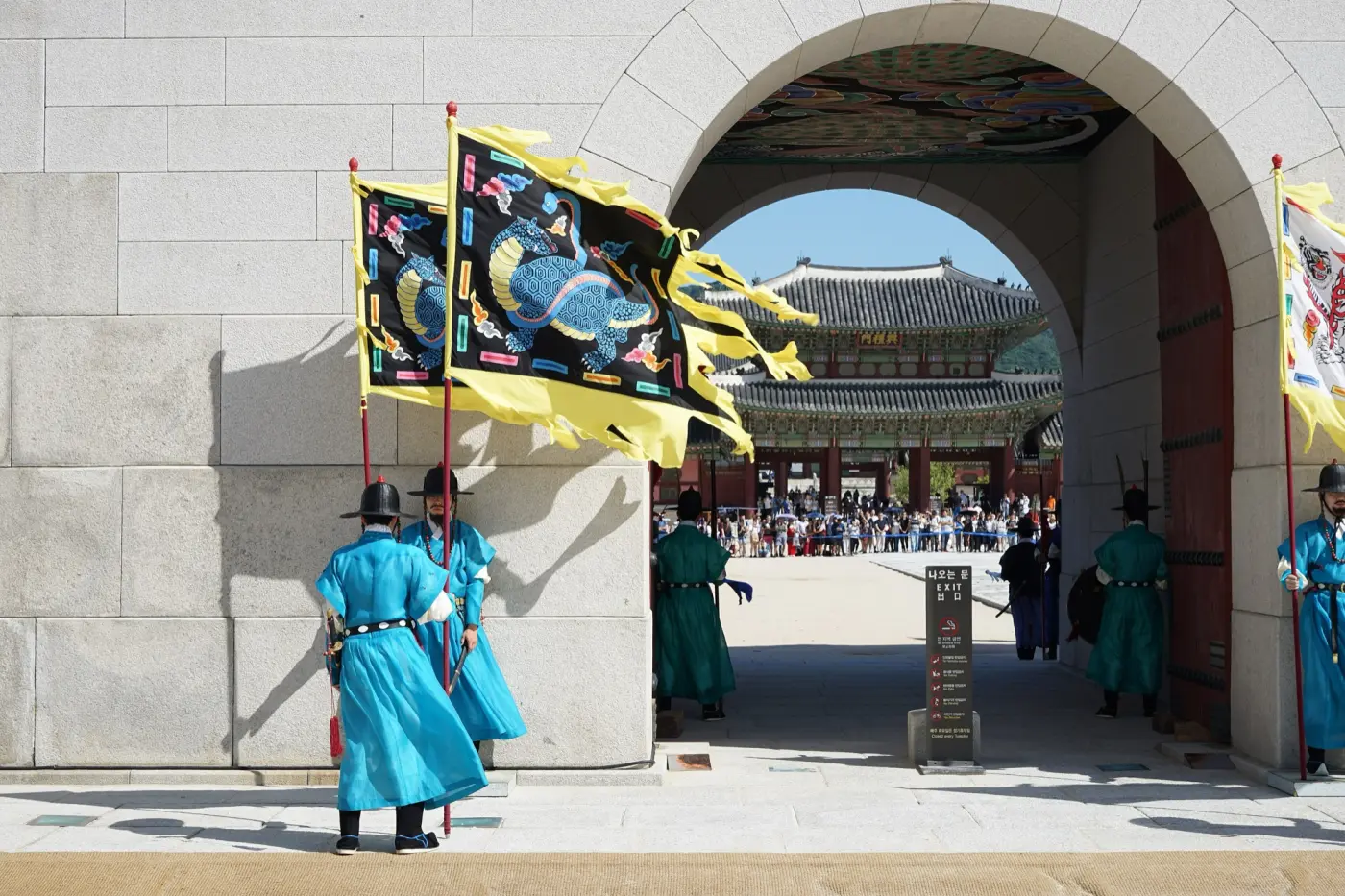
At 10:00 and 14:00, every day except Tuesday, the royal guard changing ceremony takes place in front of Gwanghwamun, the palace's main gate. It is a re-enactment based on historical research, first staged in 1996, with guards in period uniforms carrying traditional weapons and banners to the sound of traditional instruments. You can watch it from the square without a ticket, which makes it a good reason to arrive early. Visit Seoul notes that it may be cancelled in heavy rain or snow.
From the palace, walk east into Bukchon, the hanok neighbourhood that lies between Gyeongbokgung, Changdeokgung and Jongmyo. People live here, and the city has started to enforce that. Since 1 November 2024 the Seoul Metropolitan Government has restricted tourist visits to the most photographed lane, Bukchon-ro 11-gil, from 5 p.m. to 10 a.m. the next day, and fines have applied since March 2025. In practice this makes Bukchon a midday stop: go straight after the palace, keep your voice down in the lanes, and do not linger on doorsteps for photos.
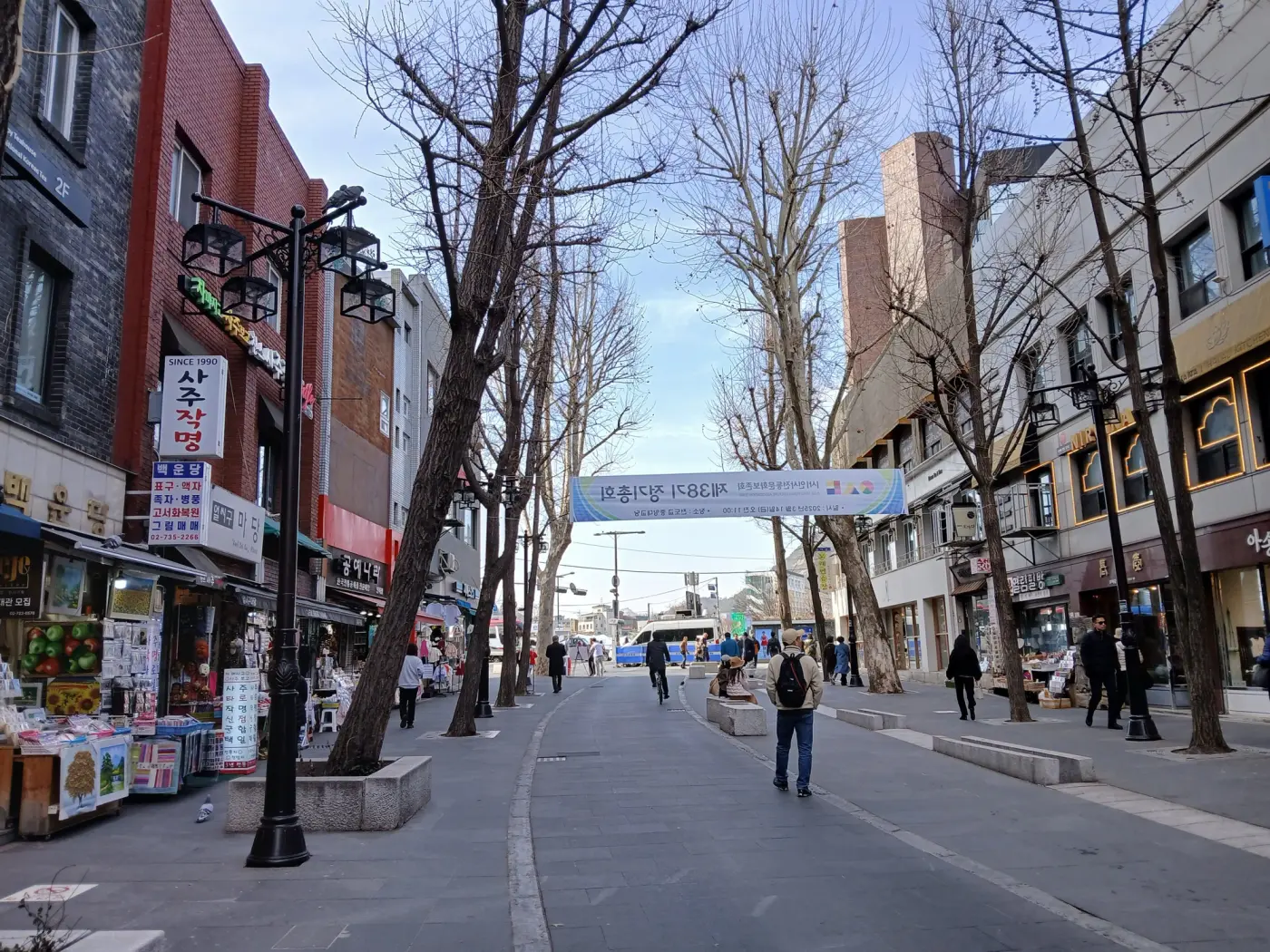
Finish the afternoon in Insadong, a short walk to the south. The main street is lined with antique shops, galleries, traditional stationery and craft shops, tea houses and restaurants, and Visit Seoul notes that it becomes traffic-free on Sundays, when buskers and street performers take over. It is also one of the best places in the city to look for traditional Korean crafts and souvenirs. When you are ready to head back, Anguk Station on Line 3 and Jongno 3-ga Station on Lines 1, 3 and 5 are the nearest stops.
Day 2: A market, the stream and Namsan
Begin at Gwangjang Market, a historic traditional market that opened in the early 20th century and sits right next to Jongno 5-ga Station (Line 1, Exit 8). Arrive hungry in the late morning. Bindae-tteok (mung bean pancakes), mayak gimbap and yukhoe (Korean beef tartare) are what most visitors come for, and upstairs there are hanbok and vintage clothing shops. Mind the day of the week: according to Visit Seoul, the market's general shops and the vintage clothing street close on Sundays, but the food alley is open every day and well into the evening.
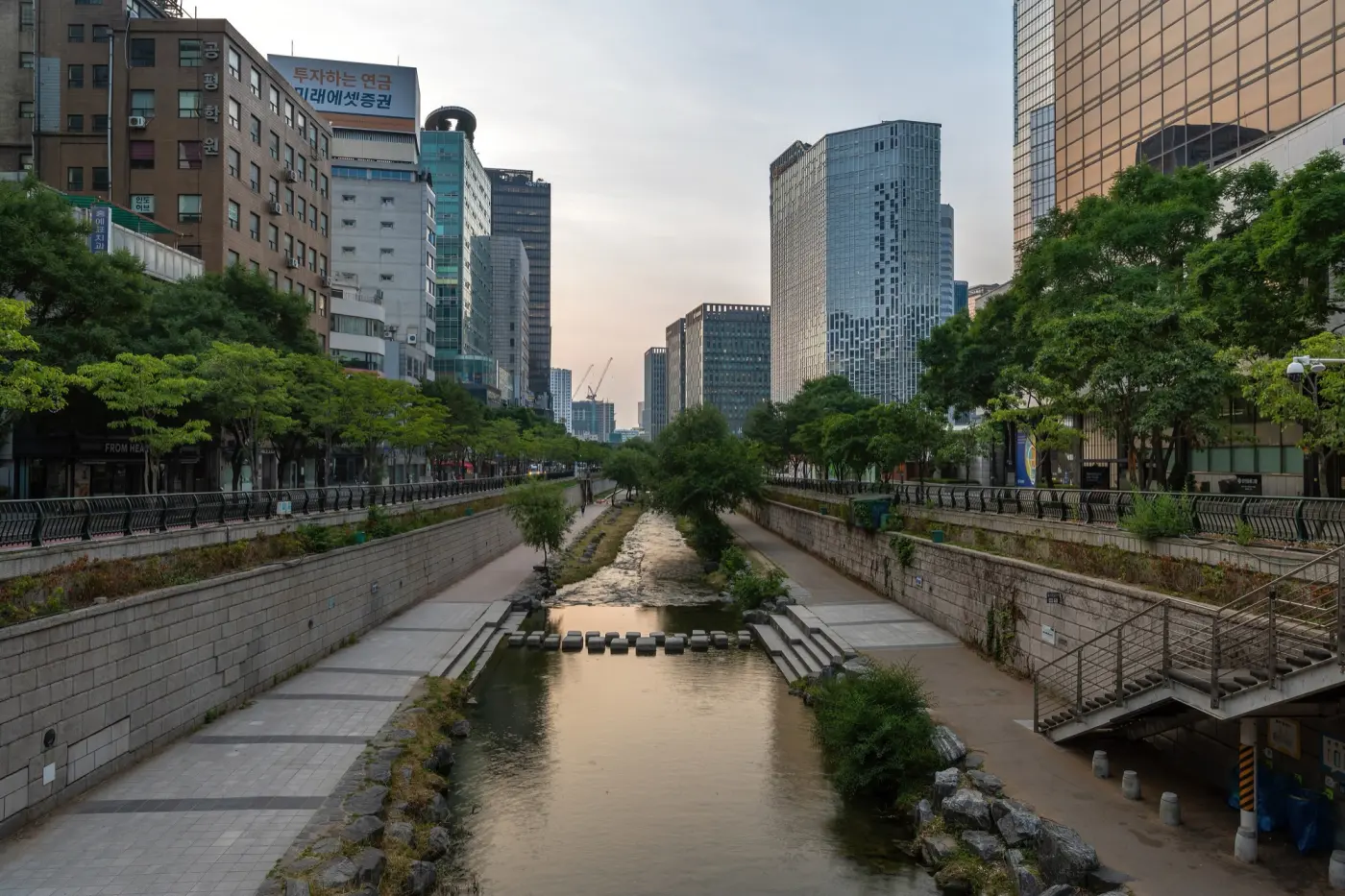
From the market, walk west along Cheonggyecheon, the stream that runs through downtown Seoul. It was covered by an elevated highway after the Korean War, and in 2003 the highway was removed to bring the stream back. The path runs below street level, is open around the clock and passes under one bridge after another until it reaches Cheonggye Plaza, where the stream begins. It is probably the easiest walk in the city: flat, partly shaded, with stone steps to sit on whenever you need them. Visit Seoul warns that access may be restricted in rain for safety reasons, so on a wet day stay at street level.
From the western end of the stream, Myeongdong is a short walk south. It is Seoul's best-known shopping district, with fashion stores, a dense cluster of Korean cosmetics shops and street stalls, and opening hours vary from shop to shop. It is lively rather than beautiful, so give it an hour or two rather than a whole afternoon, and use it for a late lunch or a coffee before the last stop of the day.
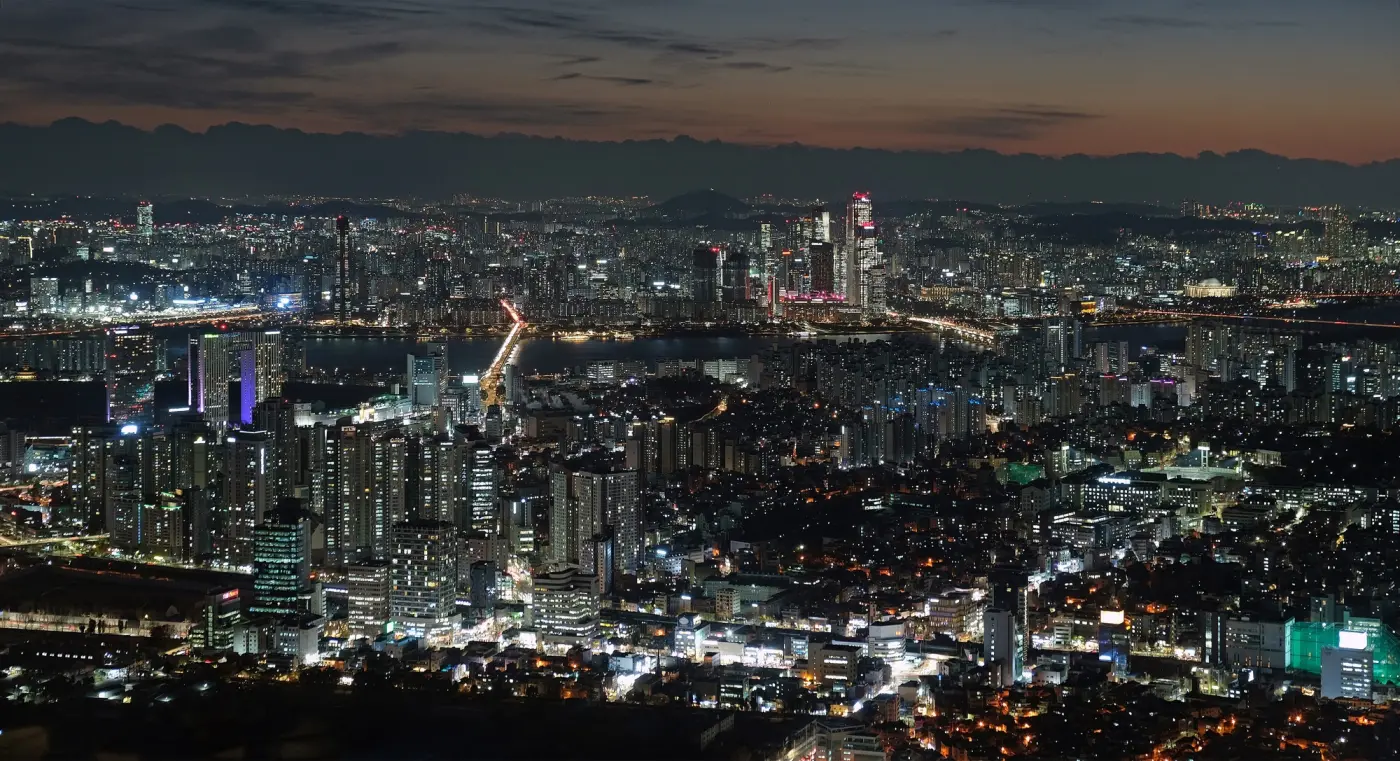
Save Namsan for the evening. N Seoul Tower stands at the top of Namsan, the mountain in the middle of the city, and its observation decks look out over Seoul in every direction. Visit Seoul lists it as open every day of the year, including holidays. You can ride the Namsan cable car, or take the Namsan Circular bus 01 from Chungmuro Station (Lines 3 and 4, Exit 2) to the stop by the tower. Going up a little before sunset and staying until the lights come on gives you the daytime and night-time view in one visit.
Day 3: Pick one neighbourhood
By the third day most first-timers are tired, and the best thing you can do is choose the one area that suits you and give it the whole day. Here are three that work well, each with a different mood.
Hongdae and Yeonnam, for cafés and a young crowd. Start at Hongik University Station, Exit 3, which is served by Line 2, the Gyeongui-Jungang Line and the Airport Railroad. A few minutes' walk away begins the Yeonnam-dong section of Gyeongui Line Forest Park, a 6.3 km park built along a former railway line. Locals call this stretch Yeontral Park, and on fine days young people spread mats on the grass; the streets around it are full of small cafés and restaurants. Because the station is on the airport railway, this is also the easiest choice if you fly out that evening.
Gangnam and COEX, for malls, K-pop and a reliable rainy-day option. Starfield Library, in the middle of COEX Mall, is an open public space where anyone can sit down with a book or a magazine, free of charge, from 10:30 to 22:00 every day. The nearest stations are Samseong (Line 2, Exit 5) and Bongeunsa (Line 9, Exit 7). Our K-pop fan guide covers the area around COEX in more detail, and Bongeunsa, the temple in our templestay guide, is in the same neighbourhood.
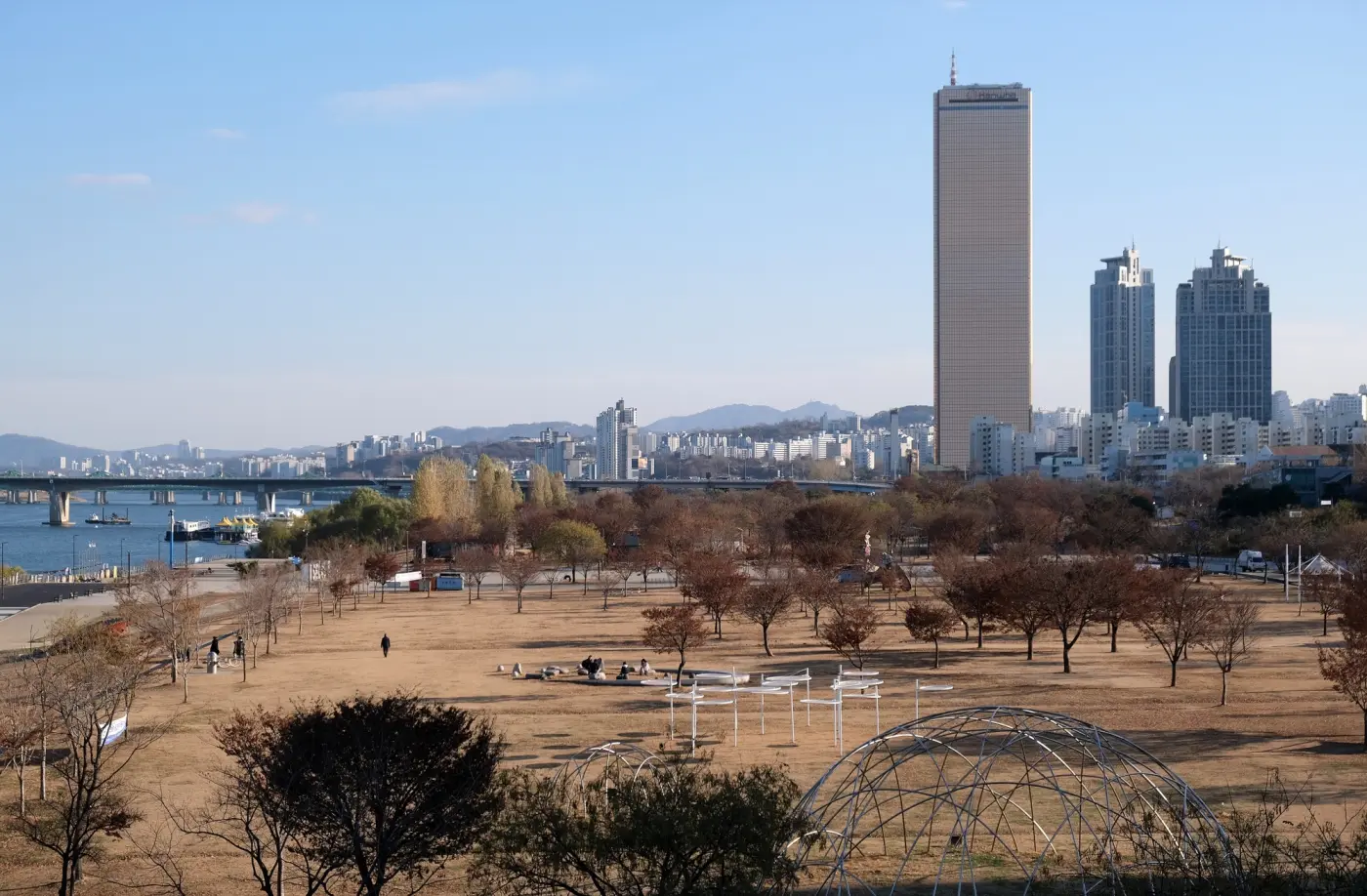
The Han River parks, for an unhurried day outdoors. Yeouido Hangang Park is a short walk from Yeouinaru Station (Line 5, Exit 3), and it is open 24 hours with free admission. You can rent a bicycle, the lawns fill with picnics, spring brings cherry blossoms and autumn the Seoul International Fireworks Festival. As our Seoul guide puts it, having fried chicken delivered to a riverside park is a very local way to spend an evening. Choose this one if the weather is good and your legs are not.
Pacing: what a realistic day looks like
- One area per day. Moving between districts costs more time than most itineraries admit.
- Start early and slow down after lunch. Palaces and markets are calmer in the morning; mid-afternoon is for a café, a tea house or an hour back at the hotel.
- Plan one fixed-time thing per day at most: the guard ceremony on Day 1, sunset on Namsan on Day 2.
- Leave at least one evening completely open. A slow dinner near your hotel is often the meal people remember.
Where do tired travellers actually rest? On Day 1, an Insadong tea house is the obvious answer. On Day 2, the stone steps along Cheonggyecheon are made for sitting, and the market's food stalls double as a break. On Day 3, Starfield Library and the Han River lawns are both free places to stop for as long as you like. Build at least one of these pauses into every day rather than waiting until your feet decide for you.
Rainy-day swaps
- Day 1: the National Palace Museum of Korea and the National Folk Museum of Korea are both on the Gyeongbokgung grounds, so you can stay dry without leaving the area. Save Bukchon's sloping lanes for a dry spell.
- Day 2: skip the stream walk, where access can be restricted in rain, and ride the subway between the market and Myeongdong instead. On a low-cloud evening the view from Namsan may be limited, so look at the sky before you go up.
- Day 3: choose COEX. Starfield Library and the mall around it are indoors.
- The guard ceremony may be cancelled in heavy rain or snow, so do not build the morning around it on a stormy day.
What not to try to fit in
Three days in Seoul means saying no to some good things. These are the ones that most often break a short itinerary:
- Day trips. The DMZ, Suwon's fortress or Nami Island each take most of a day. With three days, any one of them costs you a third of your time in Seoul.
- Every palace. One palace seen properly beats three seen at a jog, and the closing days make a palace marathon harder than it looks.
- Changdeokgung's rear garden (Huwon). Entry is limited to fixed times with a cap on numbers, so it needs planning that a three-day trip rarely has room for.
- Hongdae and Gangnam on the same day. They are on opposite sides of the city, and doing both means spending your last day in transit.
- Bukchon at sunrise or after dinner. The visiting restriction on Bukchon-ro 11-gil runs from 5 p.m. to 10 a.m.
If several of these matter to you, that is the best argument for adding a fourth day. If you cannot, pick the one you would regret missing most and drop something from the plan above to make room.
If you would rather have the days planned for you
Piecing all of this together around real flight times, a hotel location and the palace closing days takes longer than it should. If you would rather skip that part, Haeva can build a day-by-day plan around your own dates, with the order, the transit and the timing already worked out. Seoul-centred trips usually suit our city-focus plan, and the other plan lengths are on our plans page.
Comments
Sign in to leave a comment.
Sign in ·No account? Create one
Confirm your email address to comment — it takes one click.
No comments yet.