
The Best Time to Visit Korea: A Season-by-Season Guide
Cherry blossoms, monsoon rain, typhoons, autumn leaves and dry winter cold: when to visit Korea, month by month, with official weather data and holiday tips.
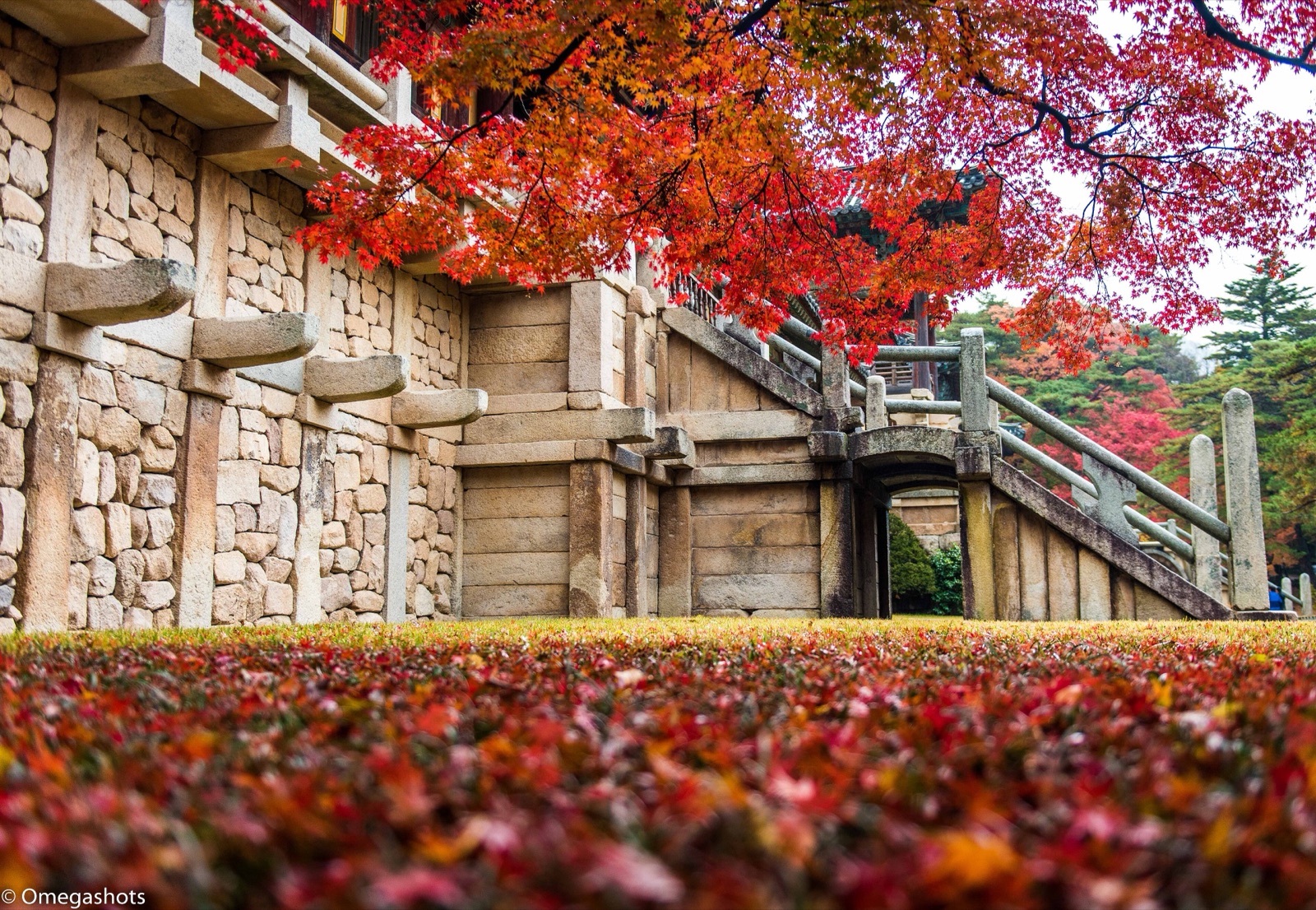
Ask people who live in Korea when a first-time visitor should come, and you will hear the same two answers again and again: spring or autumn. They are not wrong. But Korea has four seasons that genuinely feel different from one another, and each one changes what a trip looks like, from what you pack to whether your train is sold out. A week in late July and a week in mid-October can feel like two different countries.
This guide walks through the year the way locals experience it: the short, pretty spring with its cherry blossoms and its dusty days, the rainy season called jangma and the heavy summer that follows, typhoon season, the clear autumn that many people here call their favourite, and a cold, dry winter. It also covers the two big holidays, Seollal and Chuseok, which matter more to your plans than any weather. Where we give numbers, they come from the Korea Meteorological Administration (KMA) and other official sources, and most of them describe Seoul, because that is where nearly every first trip starts.
Korea's year at a glance
Seoul has a big swing between seasons. In KMA's climate normals for 1991 to 2020, January averages -1.9°C and August averages 26.1°C, and the city gets about 1,418 mm of rain and snow a year. The rain is not spread evenly, though. The three summer months bring around 63 per cent of the year's total, while the three winter months bring only about 5 per cent. The chart below makes the shape of the year obvious at a glance: dry at both ends, with a tall wall of rain in the middle.
- Jan16.8mm
- Feb28.2mm
- Mar36.9mm
- Apr72.9mm
- May103.6mm
- Jun129.5mm
- Jul414.4mm
- Aug348.2mm
- Sep141.5mm
- Oct52.2mm
- Nov51.1mm
- Dec22.6mm
If you only remember one thing from that chart, make it July and August. Those two months alone deliver more rain in Seoul than the other ten combined. That does not mean it rains every day, but it does mean summer is the season when you need a flexible plan.
Month by month: what to expect
The table below is the short version. Temperatures are Seoul's monthly averages from KMA's 1991–2020 normals; places further south, on the coast and on Jeju tend to be milder in winter, and the mountains are colder. Treat the highlights as typical, not guaranteed: a warm March can bring the blossoms forward by a week or more.
| Month | Weather feel | Highlights | Watch out for |
|---|---|---|---|
| January | Coldest month, dry. Average -1.9°C | Clear winter skies, skiing, ice-fishing festivals in Gangwon | Biting wind. Seollal can fall in late January or February |
| February | Cold and dry. Average 0.7°C | Quiet palaces, a chance of snow | Seollal holiday in 2027: 6–9 February |
| March | Thawing, chilly mornings. Average 6.1°C | First spring flowers, few crowds | Seasonal dust days begin |
| April | Mild. Average 12.6°C | Cherry blossoms (Seoul's normal first bloom: 8 April) | The dustiest month in Seoul's records; blossom-weekend crowds |
| May | Warm and green. Average 18.2°C | Long days, hiking, eating outdoors | Public holidays on 1 and 5 May make some weekends busy |
| June | Warm, turning humid. Average 22.7°C | Early summer before the rains | Jangma usually begins in the second half of the month |
| July | Hot, humid, the wettest month. Average 25.3°C | Museums, cafés, indoor Seoul | Downpours; typhoon season gets going |
| August | Hottest month. Average 26.1°C | Beaches and summer holidays | Heat and humidity; the peak month for typhoons |
| September | Warm, drying out. Average 21.6°C | Clear days return | Late typhoons; Chuseok in 2027: 14–16 September |
| October | Crisp and clear. Average 15.0°C | Autumn foliage in the mountains | Busy mountain roads at peak foliage |
| November | Cool, first frost. Average 7.5°C | Late foliage, quieter sights | Seoul's first snow normally comes around 20 November |
| December | Cold and dry. Average 0.2°C | Winter scenery, the start of ski season | Short, cold days; pack proper layers |
Spring (March to May): blossoms and dusty days
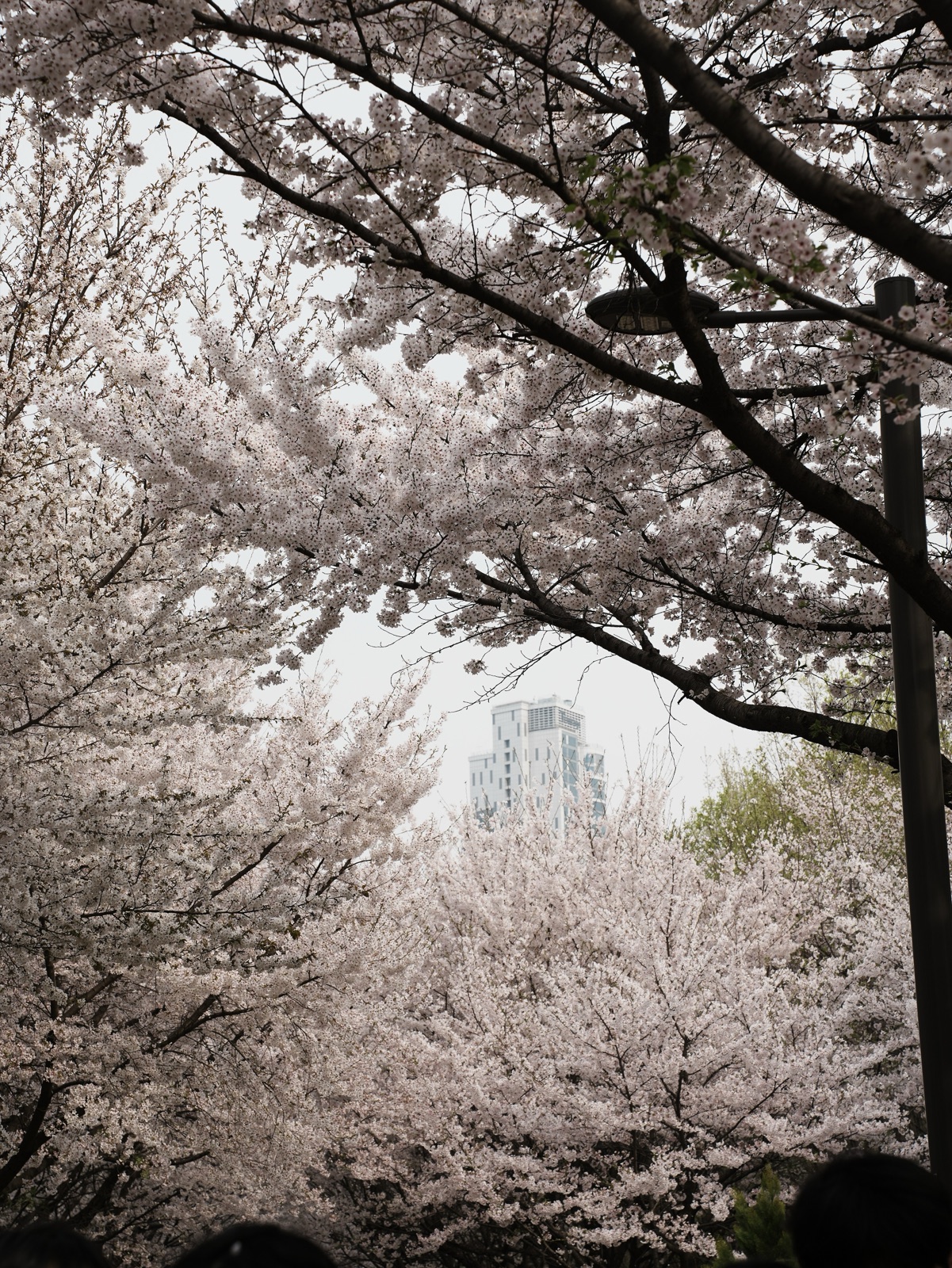
Spring is short in Korea, and that is part of its charm. March still feels like late winter, with cold mornings and bare trees, and the season only really arrives in April. By May the city is green, warm and at its most comfortable for walking, and in KMA's normals Seoul averages 12.6°C in April and 18.2°C in May.
The cherry blossom season is the moment everyone waits for. KMA has tracked it in Seoul since 1922, using an official reference tree at the Seoul weather station, and declares the blossoms open when at least three flowers are fully out on one branch. The normal date is 8 April, with full bloom around 10 April. Recent years have run early: the official first bloom came on 24 March in 2021, 25 March in 2023, 1 April in 2024 and 4 April in 2025. If the blossoms are the point of your trip, aim for late March to mid-April and keep a few days of slack, because a single warm or cold week can move the date.
Blossoms bring crowds. Famous avenues such as the riverside road on Yeouido fill up on weekends, so a weekday morning walk is far more pleasant. Smaller parks and university campuses are often just as pretty and much calmer.
Spring is also when Korea gets its seasonal dust. Locals call it hwangsa, literally "yellow sand": fine wind-blown dust that can turn the sky hazy and beige for a day or two. KMA's observers in Seoul recorded an average of about seven dust days a year in spring between 1991 and 2020, most of them in April, and none at all in summer. It is a separate thing from the everyday fine dust grade, but you will hear both mentioned on the same forecasts. The practical advice is simple: check the air quality grade in the morning, keep an indoor plan in your back pocket, and do not let it put you off spring. Most spring days are clear. Our guide to fine dust explains the four grades you will see on signs and apps.
Early summer and the rainy season (June to July)
June starts warm and pleasant, and the first half of the month is one of the overlooked good times to visit. Then the rainy season arrives. Koreans call it jangma, a summer rain band that settles over the peninsula for several weeks. In KMA's rainy-season normals, it begins around 19 June on Jeju, 23 June in the south and 25 June in the central region, which includes Seoul, and ends around 20 July, 24 July and 26 July respectively. Each region gets roughly a month of it.
Jangma does not mean rain from morning to night every day. It means unsettled weather: grey, sticky days broken by very heavy bursts, sometimes torrential for an hour and then dry. July is the wettest month of the year in Seoul, with an average of 414.4 mm. The season also varies a lot from year to year. In 2020 the central region's jangma ran for 54 days, from late June to mid-August.
If your dates fall in this window, it is still perfectly possible to have a good trip. Book things you can move, keep a compact umbrella with you, plan indoor alternatives (museums, markets, cafés, palaces with covered corridors), and leave some slack around hiking or island days. Check the forecast the night before rather than a week ahead.
High summer and typhoon season (July to September)
When the rain band lifts, real summer begins. August is Seoul's hottest month, averaging 26.1°C, with daytime highs averaging 30°C, and July is the most humid month in KMA's records. Nights stay warm. This is when Koreans head for the beaches and cool mountain valleys, and when air-conditioned subways, cafés and malls feel like a gift. If you visit, plan outdoor sightseeing for early morning and evening, carry water, and save the middle of the day for indoor sights.
Late summer is also typhoon season. In KMA's 1991–2020 normals, about 3.4 typhoons a year affect Korea, and nearly all of them come between July and September: on average 1.0 in July, 1.2 in August and 0.8 in September. Most years see only a few, and many pass with strong wind and rain for a day or so. But a typhoon can cancel ferries to Jeju and the islands, ground flights and close mountain trails, so if you travel in this window, keep your island days flexible and watch KMA's forecasts.
Autumn (September to November): the season locals love
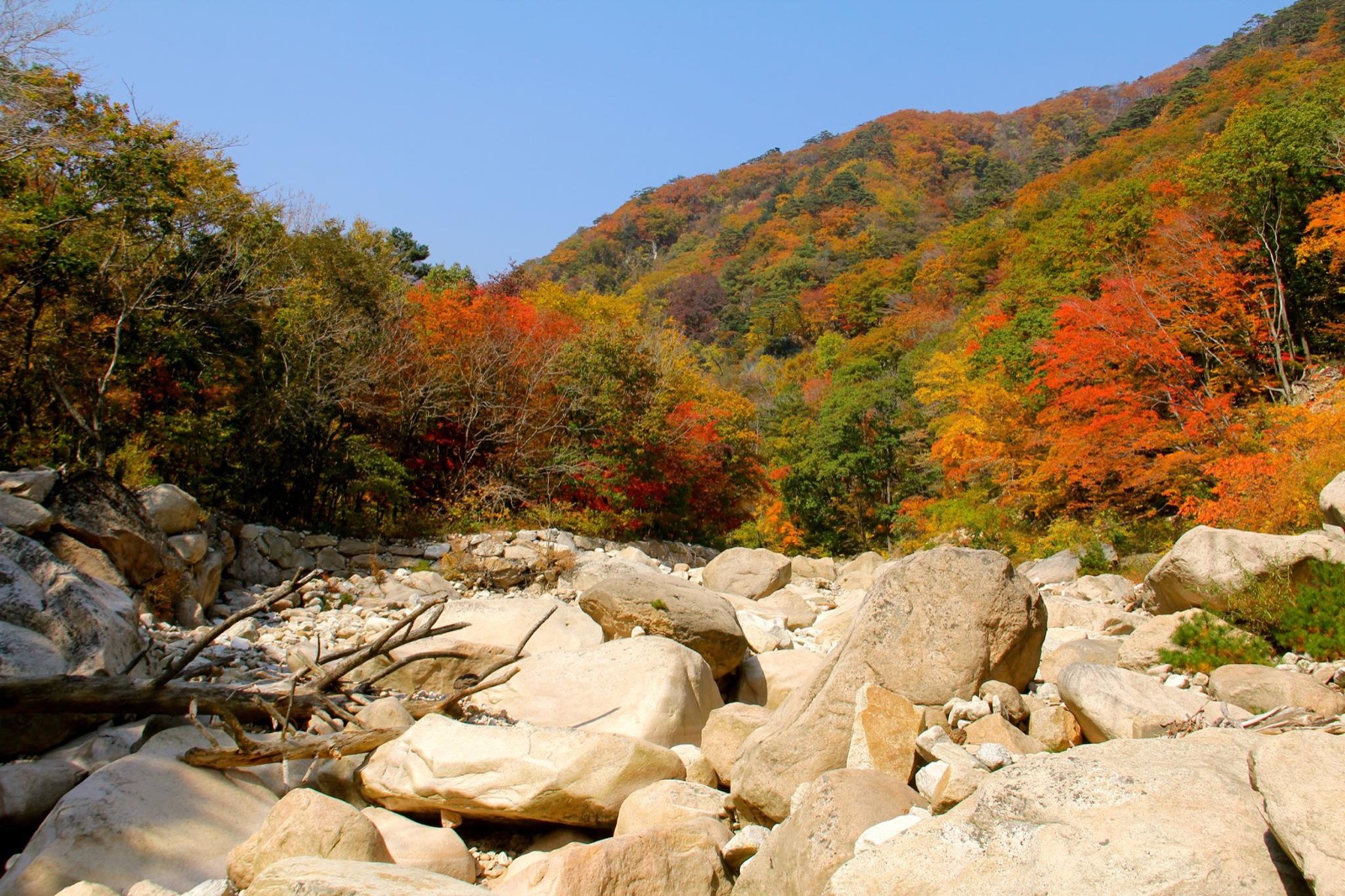
If you can choose any time of year, autumn is the safest bet, and it is the season many Koreans would pick for themselves. The summer humidity fades through September, skies clear, and October brings dry, crisp days that average 15.0°C in Seoul. It is ideal weather for walking a city, climbing a mountain or sitting outside with a drink.
Then the leaves turn. Korea's autumn foliage, danpung, is a national event, and the hiking trails fill with people who have come to see it. KMA watches the colour on 21 well-known mountains and publishes their status on its weather site through the season. Seoraksan in Gangwon is the benchmark. KMA counts the foliage as started when about 20 per cent of the mountain has turned, from the summit down, and at its peak at about 80 per cent. For Seoraksan, the normal start is 28 September and the normal peak 17 October, and in general the peak comes about 20 days after the start. Other mountains, temples and city parks turn on their own timetables, so check the current status before you set off.
Autumn has one big catch: Chuseok. The harvest holiday falls in September or early October, and in those days Korea's transport network is under real pressure, which we cover below. November is cooler and quieter, with late foliage still hanging on in many places. In Seoul, the normal first frost comes on 28 October and the first ice on 3 November, so bring a warmer layer for late-autumn evenings.
Winter (December to February): cold, dry and bright
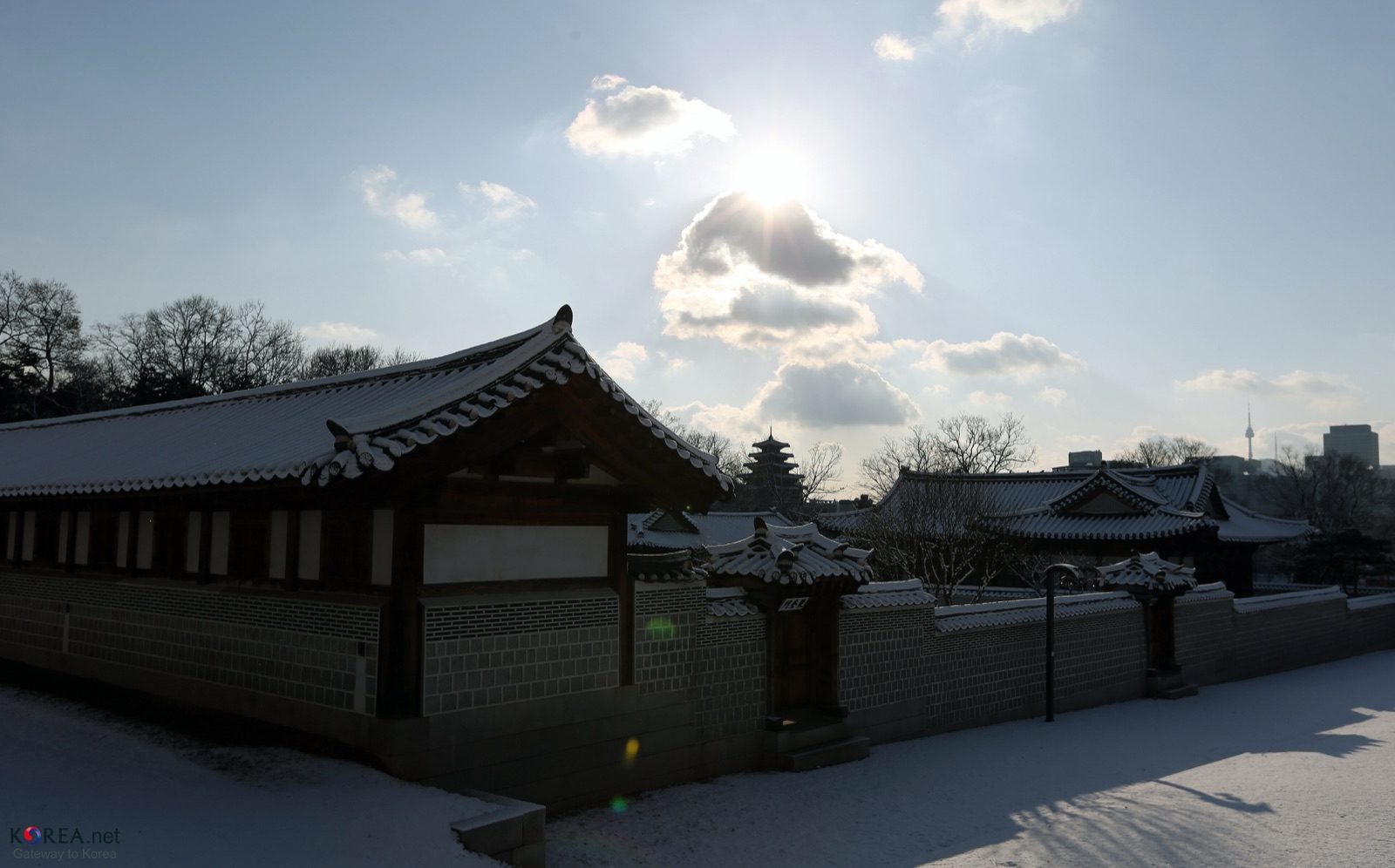
Korean winters are cold, but usually not grey. January is the coldest month, averaging -1.9°C in Seoul, and the average daily low is -5.5°C. Winter is also very dry: December to February together bring only around 5 per cent of Seoul's yearly precipitation, so you get many bright, clear days. The wind is what catches visitors out. Pack a proper coat, a hat and gloves, and expect to dress in layers that you can take off indoors, because heating in Korean buildings is strong.
Snow in Seoul is not guaranteed. The normal date for the city's first snow is 20 November, but a snowfall heavy enough to whiten the palaces is a treat rather than a fixture. If you want reliable snow, head for the mountains of Gangwon, where the ski resorts are. Winter is also festival season there: the Hwacheon Sancheoneo Ice Festival, held every January on a frozen stream in Gangwon, is built around fishing for mountain trout through holes in the ice, plus sledding and other games on the frozen surface.
The upside of winter is space. Outside the holidays, it is a quiet season for the big sights, and a steaming bowl of soup after a cold walk is one of the best things you can do in Korea.
Seollal and Chuseok: the two dates that matter most
Weather shapes the mood of a trip, but the two big holidays shape its logistics. Seollal, the Lunar New Year, and Chuseok, the autumn harvest festival, each run for three days in the official holiday list: the day before, the day itself and the day after. Both follow the lunar calendar, so they move around the solar year. Seollal lands in late January or February, and Chuseok in September or early October.
For 2027, the official calendar published by the Korea AeroSpace Administration puts Seollal on Sunday 7 February. Because the holiday overlaps the weekend, a substitute day is added, and the break runs from Saturday 6 to Tuesday 9 February. Chuseok falls on Wednesday 15 September 2027, with the holiday running from 14 to 16 September.
During these holidays, huge numbers of people travel to their family homes. Intercity train seats and express buses are the first thing to sell out, and the roads out of Seoul are packed. Some small family-run restaurants and shops close for a few days, while large stores, convenience stores and the major sights generally stay open. If your trip touches Seollal or Chuseok, book your intercity legs before anything else, check opening days for any small places on your list, and consider staying in one city for the holiday itself. Seoul can be pleasantly quiet when half the city has gone home.
Korea has a handful of other public holidays, too. In early May, Labor Day on 1 May (a public holiday since 2026) and Children's Day on 5 May can create long weekends when domestic travel picks up. Our holidays guide explains how the dates and the substitute-holiday rule work.
So when should you go?
For most first-time visitors, the honest answer is mid-April to early June, or mid-September to early November, while steering around Chuseok. Those months give you comfortable walking weather, the best chance of clear skies, and either blossoms or foliage as a bonus. If you have to pick just one, many people who live here would choose October.
That said, there is no bad month, only different trips. Winter suits people who like clear cold days, ski slopes and fewer crowds. Summer suits beach lovers and night owls who do not mind the heat, as long as they plan around the rain. Whenever you come, check the weather a few days out rather than relying on averages, keep one indoor plan for each day, and book your trains early if a holiday is anywhere near your dates.
Comments
Sign in to leave a comment.
Sign in ·No account? Create one
Confirm your email address to comment — it takes one click.
No comments yet.