
A K-pop Fan's First Trip to Seoul: What You Can Really Do
Where K-pop lives in Seoul, how concert and music-show tickets really work, and the fan etiquette that keeps idols, staff and neighbours comfortable.
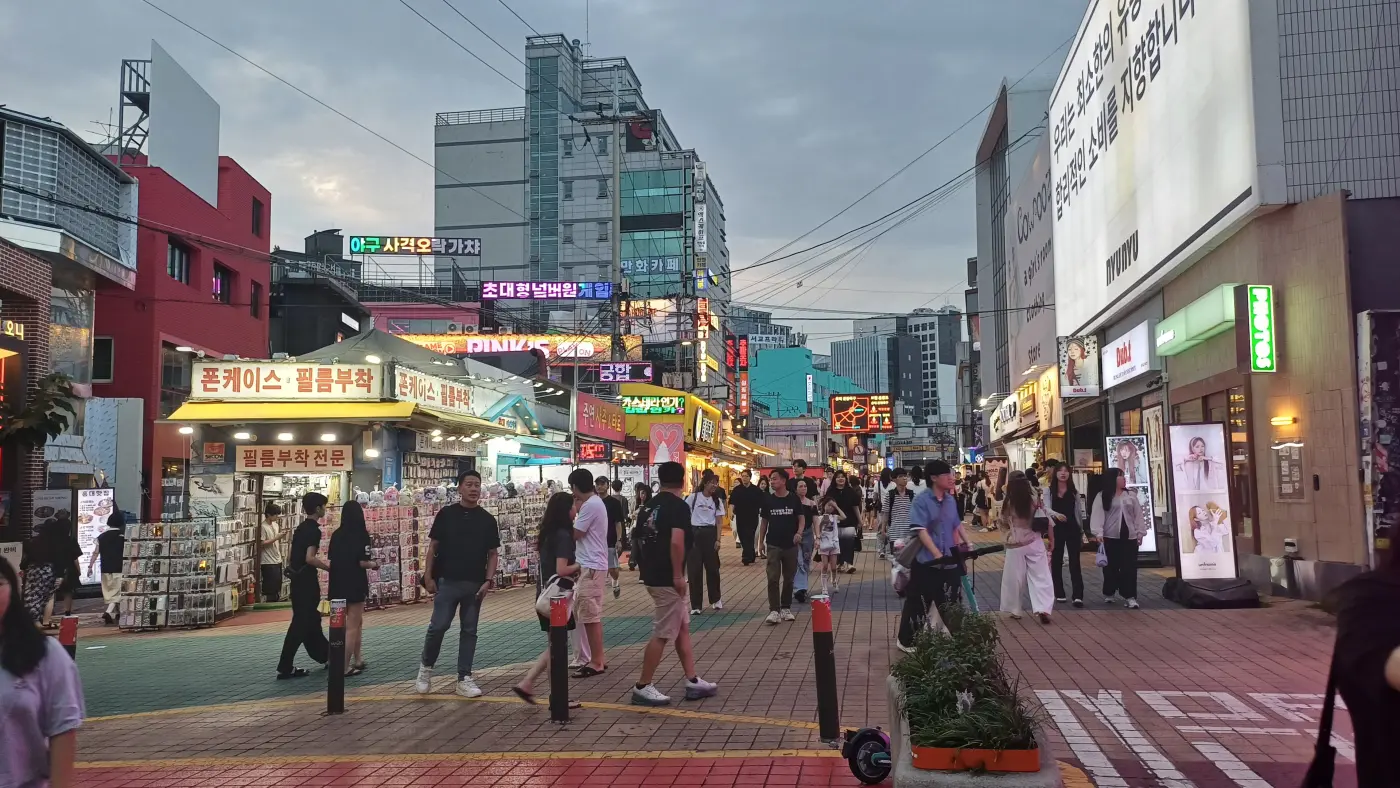
If K-pop is the reason you finally booked a ticket to Korea, you are in very good company. A report released by the Ministry of Culture, Sports and Tourism and the Korea Tourism Organization in October 2023, which counted mentions of Korean culture on social and online media in 20 countries that send visitors here, found that K-pop was talked about more than Korean food, beauty or other cultural content such as dramas. Seoul knows this, and the city now has official Hallyu pages, free K-culture spaces and whole streets built around the music.
What the fan videos do not always show is how the day actually works on the ground. Agency buildings are offices, not museums. Concert tickets are rarely something you can buy on a whim. The places idols are "known to visit" are ordinary restaurants on ordinary streets. This guide, written by people who live here, walks through what a first-time fan can realistically do in Seoul, where to go, how tickets and music shows tend to work, and the etiquette that keeps idols, staff and neighbours comfortable.
- K-pop36.8M
- Korean food14.2M
- Cosmetics and beauty10M
- Cultural content9.3M
Set your expectations before you land
The most useful mindset is simple: plan around places and experiences, not around seeing a particular person. You can stand next to your group's statue on K-Star Road, open albums in a Hongdae shop, film your own dance video in a free government-run studio, and watch a concert in a famous arena. Whether you also catch a glimpse of an idol is luck, and chasing that luck is where most of the trouble starts. Gangnam's own district tourism site makes the same point about the restaurants it lists: "known to visit" does not mean anyone will be there on the day.
The second thing to know is that a lot of fan information is published in Korean first, and schedules change quickly. Pop-up stores, exhibitions and birthday events come and go within days or weeks. In this guide we only name places that official tourism pages list as ongoing, and even then it is worth checking opening hours the week you travel.
The one-minute plan
| What you want | Where or how | Good to know |
|---|---|---|
| Photos with your group's statue | K-Star Road, from Apgujeong Rodeo Station (Exit 2) toward Cheongdam Crossroads | A public street with 17 GangnamDol bear statues; they are moved from time to time |
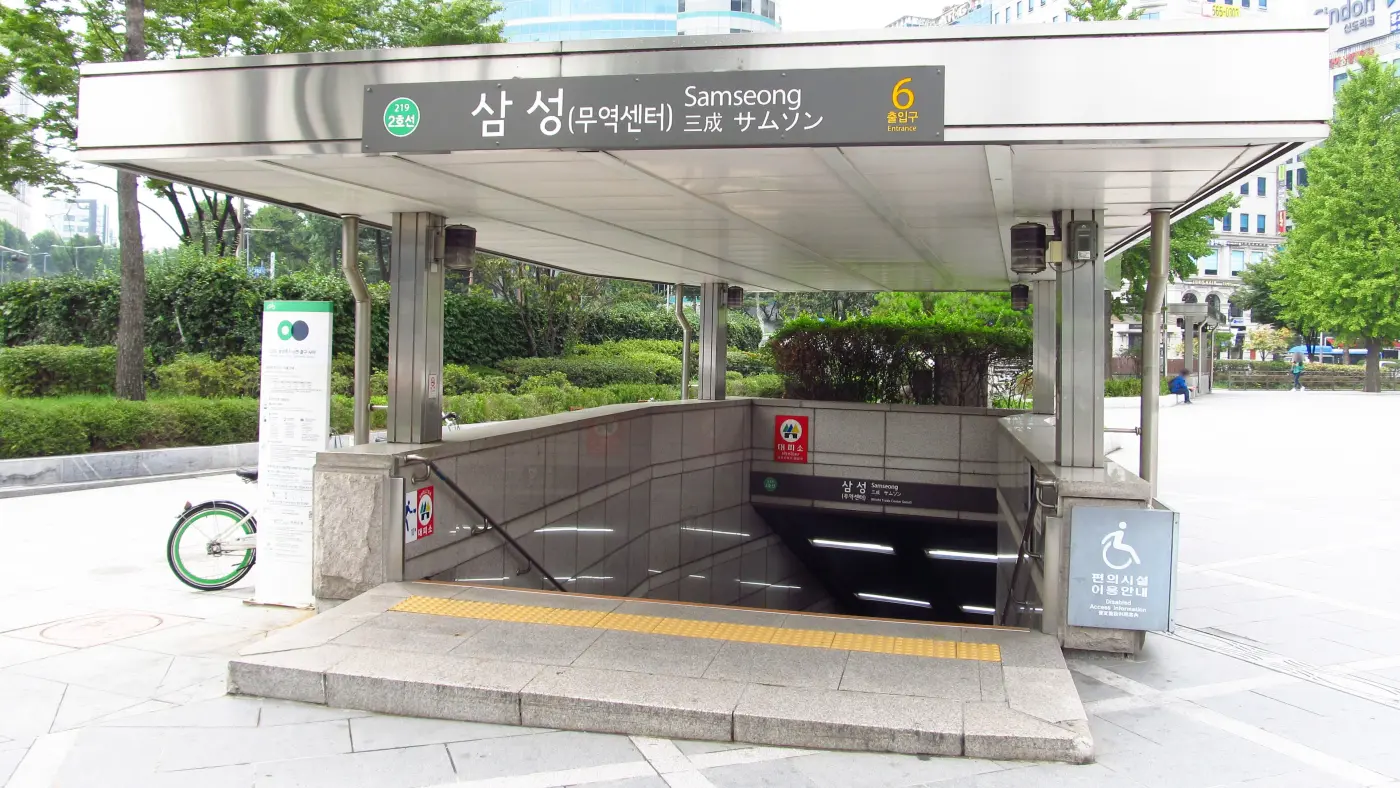
| A giant K-pop screen | COEX K-Pop Square, Samseong Station Exit 6 | A free public plaza, open 24 hours; best after sunset |
| Albums, photocards and merch | Hongdae (K-Pop Square Hongdae, Withmuu AK Plaza) and COEX (Ktown4u) | Photocards are packed at random, so fans often buy several copies |
| Film yourself like an idol | HiKR Ground near Jonggak Station, HiKR Station at Incheon Airport Terminal 1 | Run by the Korea Tourism Organization; admission is free |
| A dance class | One-day and beginner classes listed on the Gangnam district site | Book ahead; ask whether the class is taught in English |
| A concert | KSPO DOME, Gocheok Sky Dome, INSPIRE Arena and other venues | Book hotels early; arrive two to three hours before entry starts |
| A music-show recording | Through the broadcaster or the artist's official fan channels | Rules differ by show and by week; nothing is guaranteed |
| Birthday cafés and fan ads | Cafés announced on fandom social media; ads in stations such as Samseong, Gangnam and Hongik Univ. | Fan-run and temporary; anyone can usually walk in |
Gangnam: K-Star Road and the agency buildings
Gangnam has turned its K-pop connections into a walking route. K-Star Road runs for about a kilometre from Apgujeong Rodeo Station toward Cheongdam Crossroads, and along it stand 17 GangnamDols, bear-shaped art toys roughly the height of a person, each representing a K-pop group. The Gangnam district office suggests starting from Exit 2 of Apgujeong Rodeo Station on the Suin-Bundang Line and simply walking the street to find your group's bear, since the statues are moved from time to time and a fixed spot can go out of date.
The same district page lists the entertainment agencies still based in Gangnam, and it is refreshingly blunt about them: these are working offices, not attractions, so there are no tours, lobbies or waiting areas. It asks visitors to look from the outside and keep noise down, because the buildings sit among homes and businesses. It also clears up a common mix-up. Not every big agency is in Gangnam any more: according to the district, SM Entertainment moved from Cheongdam to Seongsu in 2021, and HYBE is in Yongsan-gu.
Gangnam also publishes a free Hallyu guidebook covering idol-linked restaurants, beauty salons and shops, downloadable in several languages including English and Japanese. If you want to eat where a favourite group is said to have eaten, go for the food and the photo of your plate. Staff are working, other diners are on their own night out, and nobody owes you information about who came in last week.
COEX: the big screen, the albums and the library
A short walk from Samseong Station, COEX K-Pop Square is a public plaza beneath the huge LED facade of COEX Artium. Visit Seoul describes it as one of the city's best-known digital landmarks, famous for a 3D illusion artwork called WAVE in which water seems to crash through the screen. K-pop and Hallyu content plays throughout the day, and the Gangnam district notes that idol birthday ads and comeback announcements often run there. The plaza is free and open 24 hours, and the screen is at its best after sunset.
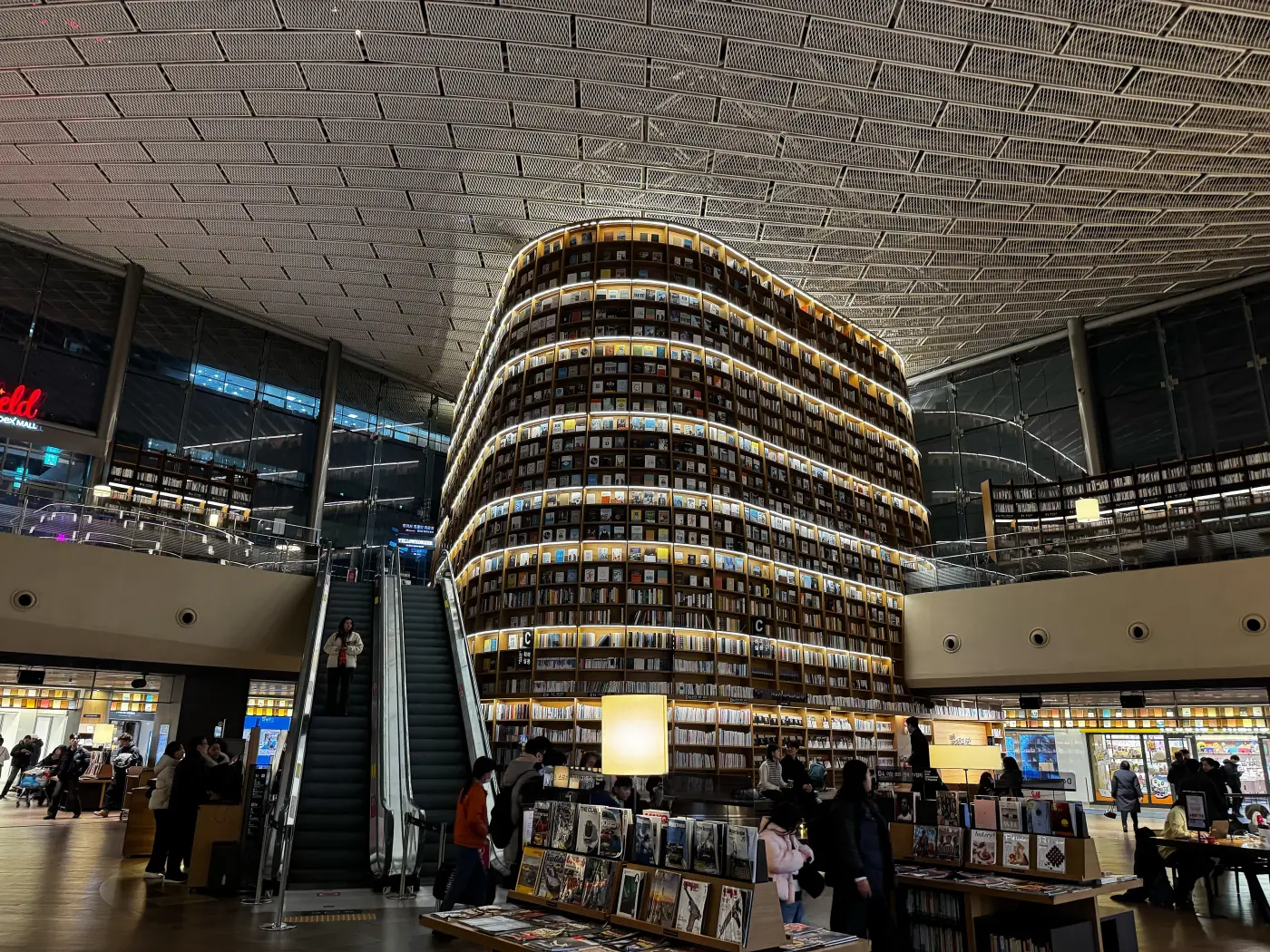
Inside the same complex, the Gangnam district site lists Ktown4u COEX on the second to fourth floors of COEX Artium for albums, merchandise and pop-up events. Starfield Library, the multi-storey wall of bookshelves in the middle of COEX Mall, is right next door and makes a good place to sit down between shopping and the screen.
Hongdae: albums, photocards and the street of youth
Hongdae, the area around Hongik University in Mapo-gu, is what Visit Seoul calls the street of youth, and the city's tourism site describes young musicians giving street performances at the playground near the university's front gate. For fans, it is also the easiest place to shop. Visit Seoul lists K-Pop Square Hongdae, a K-pop store near Exit 1 of Hongik Univ. Station that runs pop-ups, exhibitions and limited-edition goods, and Withmuu on the second floor of AK Plaza by Exit 4, which sells albums, lightsticks and photo books and hosts events such as fan-signing sessions and pop-up booths around album releases.
If you are new to K-pop shopping, the photocard is the thing to understand. Many albums include a randomly packed card of one member, which is why fans often buy several copies and open them on the spot, a ritual known in Korean as album-kkang, or album unboxing. VisitKorea notes that photocards, once a bonus, have become a main reason people buy CDs at all. Some shops in the Hongdae area provide tables or lounges for unboxing, and decorating your photocard holder, or toploader, has become a hobby of its own.
Seongsu, Yongsan and fan-made events
Some of the most interesting fan culture in Seoul is created by fans themselves. VisitKorea describes how fandoms rent entire cafés around an artist's birthday and fill them with photo zones, cups, banners and freebies. These birthday cafés are usually held near the artist's label, which is why they cluster around HYBE's headquarters in Yongsan and SM Entertainment's in Seongsu-dong. The Gangnam district adds that they are organised by fans rather than by the cafés, announced on fandom social accounts usually a week or two in advance, and that anyone can walk in.
Fans also pay for advertisements celebrating birthdays and comebacks in subway stations, at bus stops and on mall screens. VisitKorea calls stations such as Samseong, Gangnam and Hongik University "advertisement pilgrimage sites" because so many fans stop to photograph them. Seongsu is worth a visit even without an event: VisitKorea points to Seoul Forest and the café street of Yeonmujang-gil, a former factory district, as nearby attractions.
HiKR Ground and HiKR Station: free, official and fan-friendly
If you want one stop that is designed for visitors rather than for local fandom, go to HiKR Ground, the Korea Tourism Organization's K-culture space at 40 Cheonggyecheon-ro, about two minutes from Exit 5 of Jonggak Station on Line 1. Admission is free, with any paid programmes announced separately. Its K-POP Ground lets you shoot photos and videos on sets inspired by K-pop music videos, such as a subway car or a coin laundry, and choose music and lighting for your own performance clip. According to the official site, the exhibition floors open Tuesday to Sunday, 10:00 to 20:00, and close on Mondays, while the tourist information centre and café on the fifth floor open every day.
The same organisation runs HiKR Station in the transportation centre on the basement level of Incheon Airport Terminal 1, open daily from 10:00 to 19:00 except on the last Wednesday of the month. It has a stage with lights and backdrops for filming your own idol-style fancam, which makes it a fun first or last hour of a trip. Hours and programmes can change, so check the official site before you go.
Dance and recording classes
Learning a routine in the city where it was made is one of the most memorable things a fan can do. The Gangnam district tourism site lists K-pop academies that run one-day classes for visitors, including beginner-level dance sessions that need no experience, as well as recording studios where producers guide you through singing in a booth. Class levels, languages and booking rules differ by studio, so book ahead and ask whether instruction is available in English.
The Seoul Metropolitan Government has also run free Hallyu experience programmes for foreign visitors, taught in English, including K-pop dance classes; Korea.net reported a series running through November 2024. Programmes like this are seasonal, so treat them as a bonus and check Visit Seoul for whatever is on during your dates.
Concerts: venues, tickets and the day itself
Seeing a concert is the dream for many fans, and it helps to know the main venues. VisitKorea's concert guide describes KSPO DOME, the largest arena in Olympic Park and built for the 1988 Seoul Olympic Games, as holding around 15,000 people and being seen among artists as a symbol of success. Gocheok Sky Dome in Guro-gu, home of the Kiwoom Heroes baseball team, is described as Korea's largest indoor concert venue, with room for up to about 18,000. INSPIRE Arena on Yeongjongdo Island in Incheon, about 15 minutes from Incheon Airport by free shuttle, is billed as Korea's first dedicated concert arena.
Tickets are the hard part, and it is better to hear that now than at checkout. For big K-pop shows, sales are announced by the artist's agency or the promoter and usually run through official fan-club memberships, a ticketing platform, or both. Whether foreign fans can buy, which site to use, whether identity checks apply, and how seats are allocated all vary by concert. Read the official notice for your show carefully, follow the artist's official channels rather than resale posts, and be wary of anyone offering seats that seem too easy to get.
TV music-show recordings are even less predictable. Audience places are usually allocated through the broadcaster or through the artists' official fan channels for a specific week, rules change from show to show, and there is no guarantee of entry. If you happen to qualify for one, wonderful, but build your trip around things you can control.
On the day itself, VisitKorea recommends arriving about two to three hours before entry starts, because traffic and crowds build quickly, and booking a hotel near the venue two to three months ahead. Official lightsticks have also changed: many now connect by Bluetooth and become part of the light show, which VisitKorea describes as letting fans help create the concert experience. Every concert sets its own rules on photos and video, so read them in advance and follow staff instructions in the hall.
Fan etiquette that locals and idols will thank you for
- Treat agency buildings as offices. Look from outside, keep your voice down and do not block entrances; they sit among homes and businesses.
- Never follow idols, their cars or their staff, and never wait outside private homes. Behaviour like this, sometimes called sasaeng behaviour, is the opposite of being a fan.
- At restaurants and salons linked to idols, be a customer, not a lookout. Do not photograph staff or other diners without asking.
- At birthday cafés, follow the organisers' rules for freebies and photos; they are fans who rented the space with their own money.
- At concerts, follow the show's own rules on photos and video, keep your lightstick at a height that does not block others, and leave your seat area clean.
- Ask before you take a photo of anyone, including other fans in cosplay or matching outfits.
None of this is about being timid. Korean fan culture is loud, creative and generous, from Bluetooth lightsticks to self-funded ads. The line it draws is between celebrating artists in public spaces and intruding on their private lives, and visitors who respect that line are welcomed into the fun.
Practical tips for the trip
- Get a transport card. T-money and similar cards are reloadable prepaid cards that need no bank account, are sold at convenience stores nationwide, and work on all public transport as well as at shops displaying the card's logo.
- Download a Korean map app. VisitKorea calls Naver Maps the most widely used online map among Koreans; the app is available in English and Japanese and shows walking and public-transport routes.
- Keep a translator handy. Papago, which VisitKorea describes as the most widely used translator app among Korean speakers, can read text from images, which helps with fan notices posted in Korean.
- Save the 1330 Korea Travel Helpline (+82-2-1330). It also offers text chat in several languages, including English and Japanese.
- Treat ticket on-sale times as appointments. Convert them to Korea Standard Time, log in early, and have a backup plan in case the show sells out.
- Book accommodation near your venue early, and plan your route back after the encore, when every nearby station is crowded.
Above all, leave room in your schedule. The best fan memories in Seoul are often unplanned: a birthday ad you did not know about, a busker covering your favourite song in Hongdae, a stranger in the same group's shirt who points you to the right exit. Come with a plan for the places, stay relaxed about the people, and Seoul will give you plenty to bring home besides the photocards.
Comments
Sign in to leave a comment.
Sign in ·No account? Create one
Confirm your email address to comment — it takes one click.
No comments yet.