
K-Drama vs Real Life in Korea: What Visitors Actually Find
Ramyeon by the Han River, soju in orange tents, sheep-head towels: which K-drama scenes are real in Korea, which are exaggerated, and how to try them yourself.
If you fell for Korea through its dramas, you probably arrive with a mental checklist. Eat ramyeon from a convenience store at midnight. Share a green bottle of soju under an orange tent. Watch someone get a piggyback ride home after one drink too many. Wrap a towel into little sheep ears at a sauna. Walk through a palace in hanbok while the wind does something cinematic to your sleeves.
The good news, from people who live here: most of those scenes are based on real life, and you can try nearly all of them on an ordinary trip. The less glamorous news is that dramas compress, polish and occasionally exaggerate. Real Seoul has more queues, fewer handsome strangers on the riverbank, and a lot more people eating quietly alone. This guide walks through ten situations fans recognise from countless romance dramas and office comedies, separates what is real from what is staged, and explains how a first-time visitor can experience the real version. If you want the deeper background on bowing, pouring and table manners, we covered that separately in our guide to Korean etiquette for first-time visitors.
The quick answer
| Drama scene | Reality | How to try it as a visitor |
|---|---|---|
| Ramyeon from a convenience store by the Han River | Very real. Many riverside convenience stores have ramyeon cooking machines | Buy a cup or packet, cook it in-store, and sit by the water at sunset |
| Soju under an orange pojangmacha tent | Real, but tents are less common than dramas suggest; indoor "pocha" bars copy the look | Look for tent streets near markets, or an indoor pocha in a nightlife district |
| Chimaek: fried chicken and beer | Completely real, and a national habit | Order half fried, half seasoned chicken with a cold beer |
| Food delivered anywhere, even to a park | Real. Delivery culture is huge | Easiest through your hotel or a Korean friend; apps are built for residents |
| "Oppa!" and asking someone's age | Real. Age shapes how people speak | Don't worry about it; polite Korean or English is fine for visitors |
| Deep bows to elders and bosses | Real, but everyday bows are small nods | Return a bow with a small nod and a smile |
| Piggyback rides, couple outfits, 100-day anniversaries | Couple culture is real; dramatic piggybacks are rarer | Spot matching outfits on weekends in Seongsu, Hongdae or by the river |
| Sheep-head towels and roasted eggs at a jjimjilbang | Very real, and very cosy | Visit a jjimjilbang; baths are gender-separated, the lounge is shared |
| Walking through a palace in hanbok | Real, and hugely popular | Rent a full hanbok; wearers get free entry to the main palaces |
| Hoesik: the office dinner that never ends | Real, though softer than it used to be | You'll see it in barbecue restaurants on weeknights |
1. Convenience-store ramyeon by the Han River
This is the scene almost every visitor wants to recreate, and it is one of the most accurate. Korean convenience stores are not just places to grab a drink; they are cheap, bright, open-late living rooms. Students eat triangle gimbap between classes, office workers have a cup of ramyeon at the window counter, and friends sit at the plastic tables outside on summer nights. The drama habit of slurping noodles while having a heart-to-heart is very much how people use these stores.
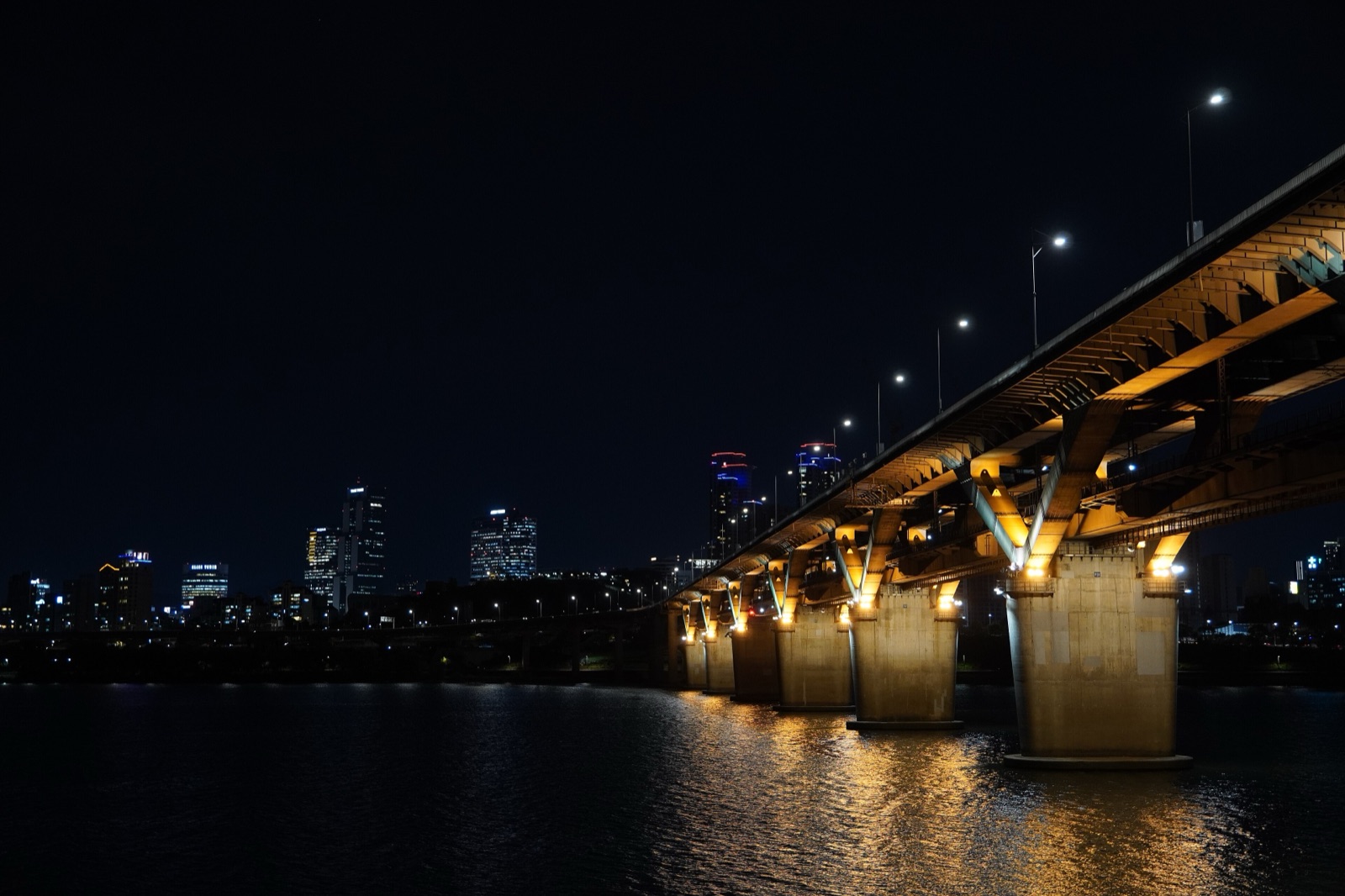
The Han River version is real too. VisitKorea, the national tourism organisation, lists Hangang parks among the favourite filming locations for Korean content, naming Banpo, Yeouido and Mangwon, and describes Mangwon as a place to eat instant noodles cooked in a machine at a convenience store. Korea.net, the government's official site, also notes that many convenience stores around the river sell ramyeon and have equipment to cook it on the spot. The machines are the trick: you put the noodles and soup packet into a paper bowl, set it under the cooker and press start; it pours in water and boils it for a few minutes while you stir. Then you carry it out and sit by the river.
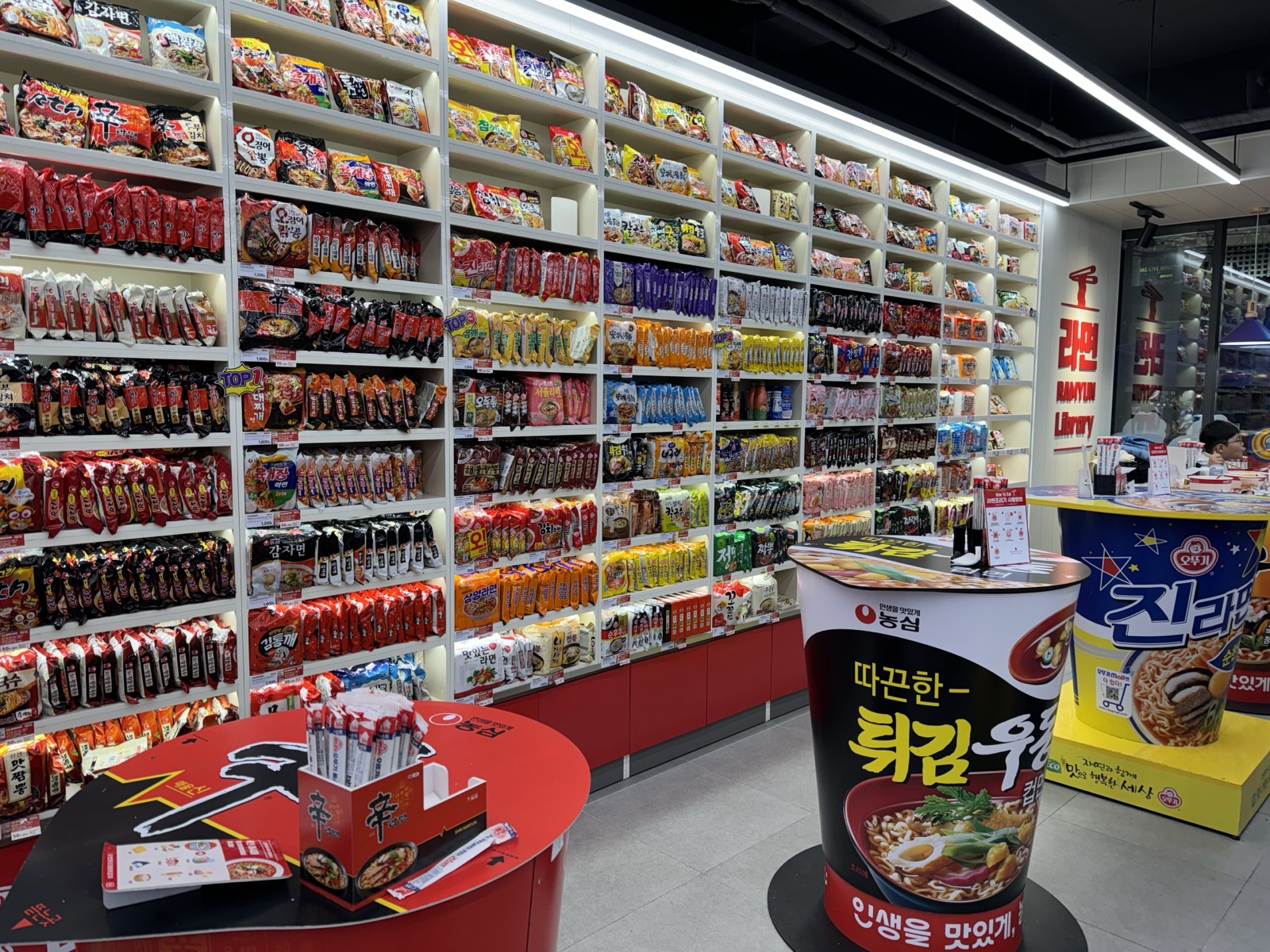
If you want to go all in, the CU convenience store branch in Hongdae known as the Ramyun Library is built around the idea. Korea.net described it in 2024 as stocking some 230 kinds of ramyeon, with cooking machines so customers can prepare their own bowl. It is a fun first stop before heading to the river.
What dramas leave out: the riverbank is busy on warm evenings, so the quiet bench for two may be shared with a hundred picnickers, cyclists and a busker. Bring a mat, pick a spot a little away from the store, and take your rubbish with you. And go easy on the spice level if you are new to Korean ramyeon; the red packets are usually red for a reason. Our ramyeon guide explains the main styles.
2. Soju under an orange tent
The pojangmacha, a street stall covered by a tarpaulin tent, is drama shorthand for heartbreak, confession and best friends getting emotional. Inside there are plastic stools, a small table, a hot plate, something grilled or simmered, and green bottles of soju. It is a beautiful image, and it does exist.
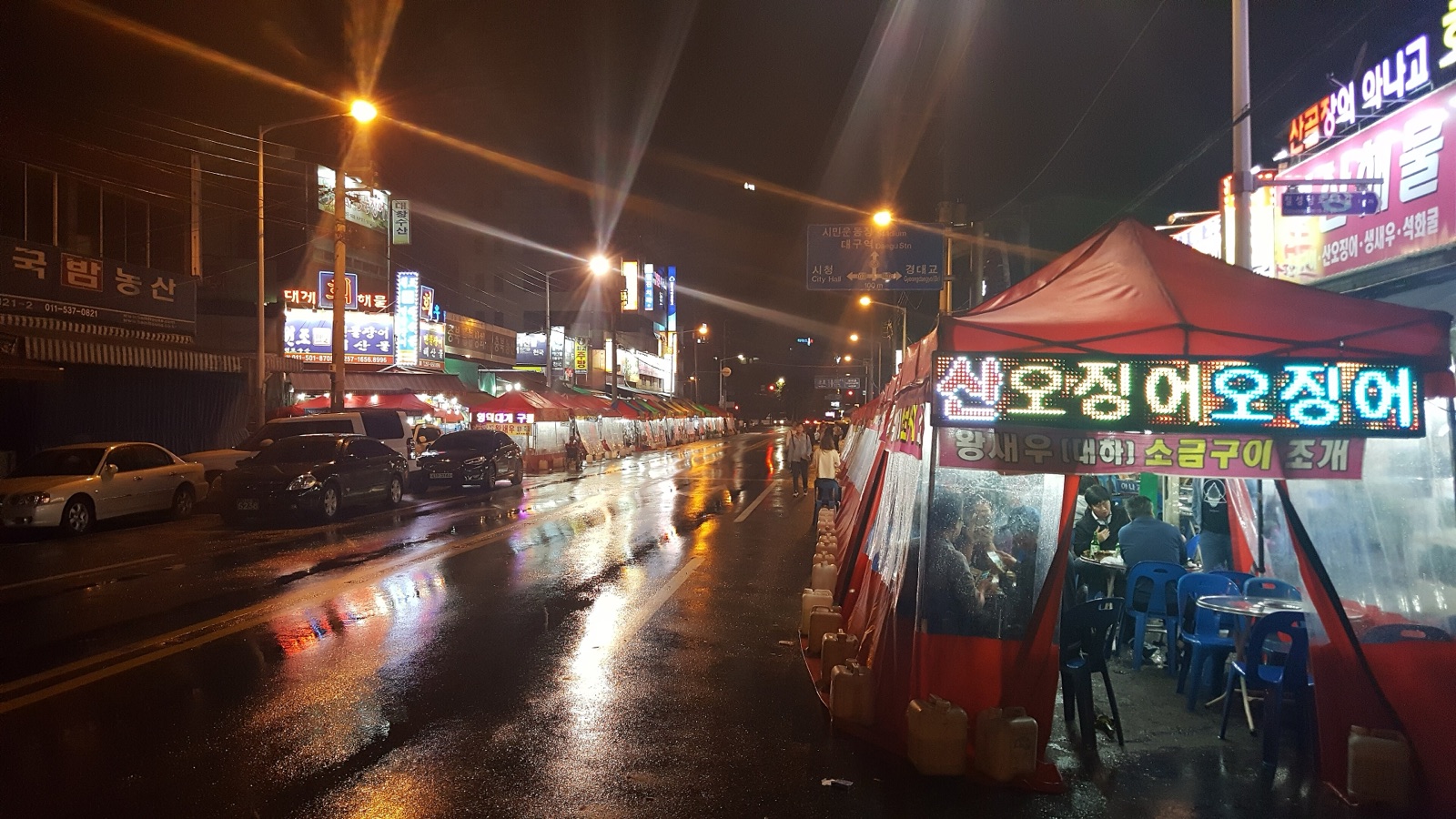
The reality is that classic tents are less common than dramas imply, especially in central Seoul, and many of the ones you see are seasonal or clustered in specific streets near markets, river areas and nightlife districts. What has spread instead are indoor bars called pocha, which borrow the tent look, the plastic stools and the late-night menu, but come with walls, heating and a proper toilet. For most visitors, an indoor pocha is the easier and more comfortable version.
Soju is exactly as everywhere as dramas show. It is cheap, it comes in small glasses meant to be shared, and it is stronger than it tastes, especially the fruit-flavoured kinds. Dramas love the shot where someone downs glass after glass alone; in real life, drinking in Korea is mostly social, and a slow pace is perfectly normal. If you want to order with confidence, "soju han byeong juseyo" asks for one bottle. For pouring and receiving drinks politely, see our etiquette article and drinking rules guide rather than copying drama scenes, which tend to skip the polite parts.
3. Chimaek: fried chicken and beer
Chimaek, from chikin (chicken) and maekju (beer), is not a drama invention, but dramas made it famous abroad. Korean fried chicken is crisp and light, and you usually choose between plain fried (huraideu), sweet and spicy sauced (yangnyeom), or half and half. A big box shared with friends and a pitcher of draft beer is a standard weeknight plan, a standard way to watch football, and a standard thing to eat by the Han River.
The drama version is accurate. The only exaggeration is how little anyone in a drama seems to eat. Portions are generous, chicken shops often add pickled radish cubes to cut the grease, and ordering one chicken for two people is usually plenty. If you like spice, ask which sauces are hot before you order.
4. Delivery food, everywhere
In dramas, food arrives at offices, at hospital rooms, at film sets and, memorably, at riverside picnic spots, carried by a rider on a scooter. That is not exaggerated. Delivery is woven into everyday life in Korean cities, from jjajangmyeon and fried chicken to tteokbokki, coffee and late-night snacks, and riders on motorbikes are a constant sight.
For a visitor, it is slightly harder than it looks on screen. The delivery apps are built for residents and assume a Korean address and phone setup, so the simplest route on a short trip is to ask your hotel or guesthouse, use a shop that takes orders at the counter, or join a Korean friend's order. Still, a delivered tteokbokki dinner in your room after a long day is a very Korean way to end it.
5. Oppa, unni and "How old are you?"
If you have watched any romance drama, you know "oppa", the word a woman uses for an older man she is close to, often a brother, a friend or a boyfriend. There is a whole set of these words: "unni" (a woman's older sister or older female friend), "hyung" (a man's older brother or friend), and "noona" (a man's older sister or female friend). They are real and used constantly, but they depend on being close. Calling a stranger "oppa" because you heard it on TV would sound odd, or like flirting.
This is also why Koreans sometimes ask your age soon after meeting you. Korean changes its politeness level depending on who is older, so knowing ages tells people how to talk to each other. Dramas sometimes play this for comedy, with characters arguing about who should speak casually first. The age itself has become simpler: Korea.net reported that from 28 June 2023, the full-year (international) age system became the standard for legal and public documents, replacing the traditional "Korean age" in which a baby is one at birth and everyone adds a year on 1 January. The same report notes some exceptions, including school entrance, military service and youth-protection rules for buying alcohol and tobacco, so carry ID if you plan to drink.
As a visitor, you are outside this system. People will speak to you in polite Korean or English, and you can simply use polite forms, add "-ssi" after a name, or use the name on its own. No one expects you to know whether to call them oppa.
6. Bowing and respect for elders
Dramas love the ninety-degree bow: to a chairman, to a future mother-in-law, to the whole office after a mistake. Deep bows do exist, especially for formal apologies, ceremonies and very senior people. But the everyday bow is small, a quick nod of the head and shoulders, often with a greeting. Respect for elders is real and visible on public transport, at the dinner table and in how people speak, but it is usually quiet rather than theatrical.
You do not need to bow like a drama character. Returning a small bow, using both hands when you hand something over, and letting older people go first will cover almost every situation. Our first article in this journal explains these habits in more detail, so we will not repeat them here.
7. Piggyback rides, couple outfits and 100-day anniversaries
The piggyback ride is practically a genre convention: someone drinks too much, and the male lead carries her home under the streetlights. You might see it once in a while late at night, usually among friends and usually with lots of laughing, but it is far more common on screen than on the street.
Couple culture, on the other hand, is very real. Matching outfits, matching sneakers or rings, couple sets in cafes and photo booths, and celebrating anniversaries counted in days, especially the hundredth day, are all things Korean couples do. Not every couple goes for matching clothes, but on weekends in neighbourhoods like Seongsu or Hongdae, or along the Han River, you will likely spot a pair in identical hoodies. Public displays of affection are generally more reserved than in many Western countries: hand-holding is everywhere, long kisses in public much less so. Dramas, interestingly, are often more restrained than real life here.
8. Jjimjilbang: sheep-head towels and roasted eggs
The jjimjilbang scene is one of the most accurate in K-drama. VisitKorea itself describes the familiar image from Korean media of someone with a towel wrapped like ram horns on their head, sipping sweet rice punch (sikhye) and peeling roasted eggs. That towel style is called yangmeori, "sheep head", and you will see people of all ages wearing it.
What dramas usually skip is the layout. Korea.net describes the jjimjilbang as a bathhouse with hot tubs and kiln saunas, with separate facilities for men and women. In the gender-separated bath areas people bathe without clothes, and many also pay for a body scrub. The shared jjimjil area, where friends, families and couples hang out, is where everyone wears the matching T-shirt and shorts provided at the counter. So the drama scene of a couple lying on mats in matching outfits is real, but it happens in the shared area, not the baths.
Useful phrases help here: asking for the scrub, asking to go to the jjimjilbang floor in a building where the sauna and baths are on different levels, and, if you have tattoos, asking politely whether that is okay. Policies vary by venue, so asking is better than assuming.
9. Palace visits in hanbok
Historical dramas and modern romances both love a palace. Today the courtyards of Gyeongbokgung and other Seoul palaces are full of visitors, Korean and foreign, wearing rented hanbok and taking photos under the eaves. This is one drama fantasy that is easy and genuinely fun to live out.
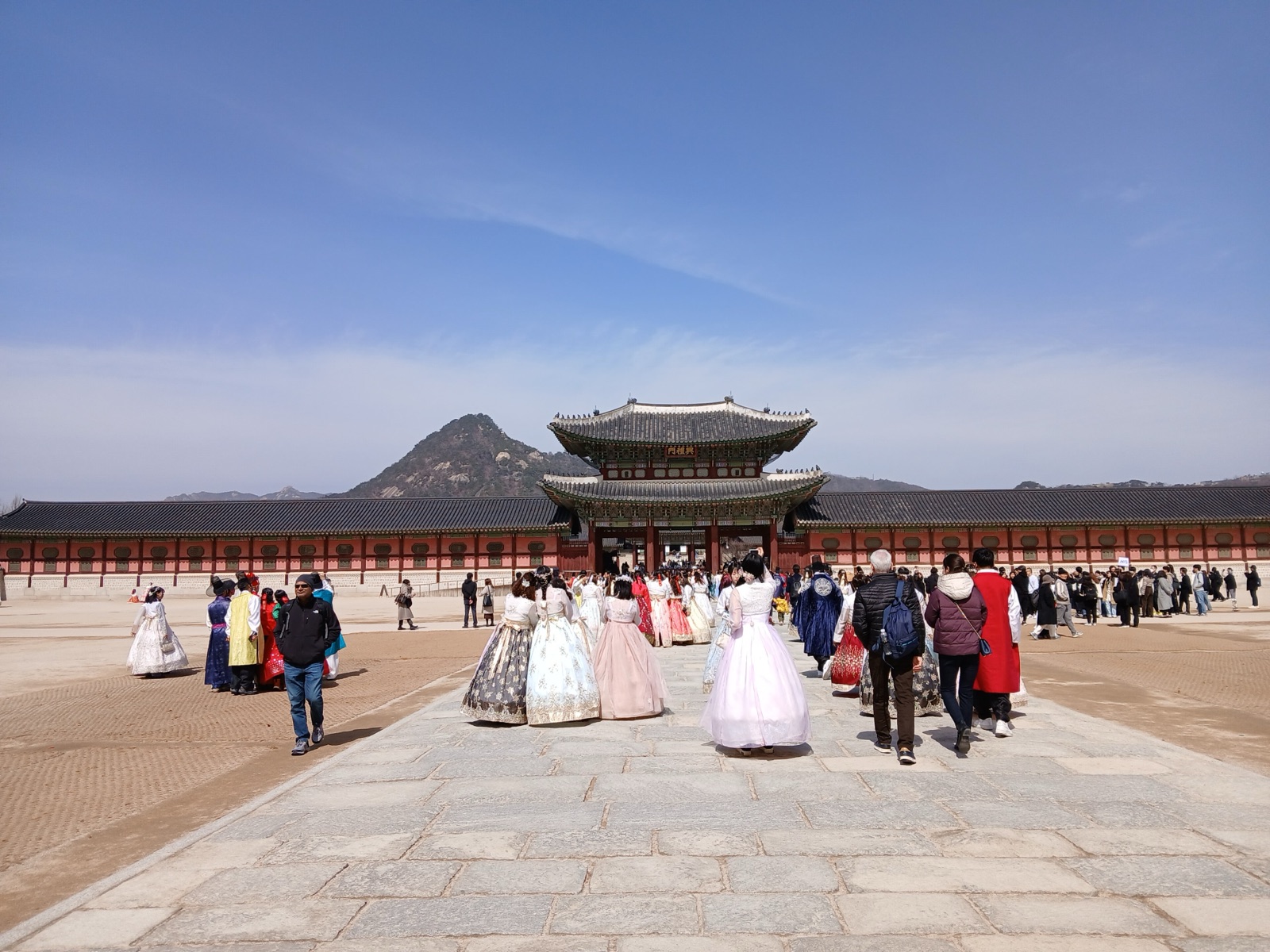
There is also a practical bonus. The Royal Palaces and Tombs Center, run by the Korea Heritage Service, offers free admission to visitors wearing hanbok at Gyeongbokgung, Changdeokgung, Deoksugung, Changgyeonggung, Jongmyo Shrine and the royal tombs. Both traditional and modernised hanbok count, but you need a proper set: an upper jacket (jeogori) and a skirt or trousers worn together. A jeogori with jeans, or a hanbok skirt with a T-shirt, does not qualify, and an overcoat on its own is not enough. Rental shops near the palaces know these rules well.
The reality check is mainly about crowds and weather. In dramas the palace is empty and golden; in real life it is busy at popular times, and long skirts in summer heat are warmer than they look. Going early in the day helps with both.
10. Hoesik: the office dinner
Office dramas often feature hoesik, the team dinner that starts at a barbecue restaurant, moves on to a second round of drinks and sometimes ends at a karaoke room. The boss pours, the junior employee tries to keep up, and someone says something they regret. It is a real part of Korean work culture, and on weeknights you will see long tables of colleagues in suits around a grill.
What has changed is the pressure. Many younger Koreans say hoesik has become shorter and more optional than it used to be, and the drama image of being forced to drink until midnight feels dated to a lot of people. As a visitor, you are unlikely to join one, but if you sit near a hoesik table you get a glimpse of the hierarchy, toasts and teamwork that dramas build whole plots around.
So, how real are K-dramas?
More than you might think. The settings are real, the food is real, and most of the habits are real. What dramas add is timing, lighting and coincidence. The best way to enjoy Korea as a drama fan is to treat those scenes as a menu, not a script: pick the ones you love, try them in their everyday form, and let real life surprise you. You may find that the quiet, unglamorous version, ramyeon on a crowded riverbank or a roasted egg in a warm sauna room, is the one you remember longest.
Comments
Sign in to leave a comment.
Sign in ·No account? Create one
Confirm your email address to comment — it takes one click.
No comments yet.