
Templestay in Korea: What a Night at a Temple Is Like
What a templestay in Korea is really like: the three program types, the 4 a.m. service, temple meals, etiquette, booking and honest tips for non-Buddhists.
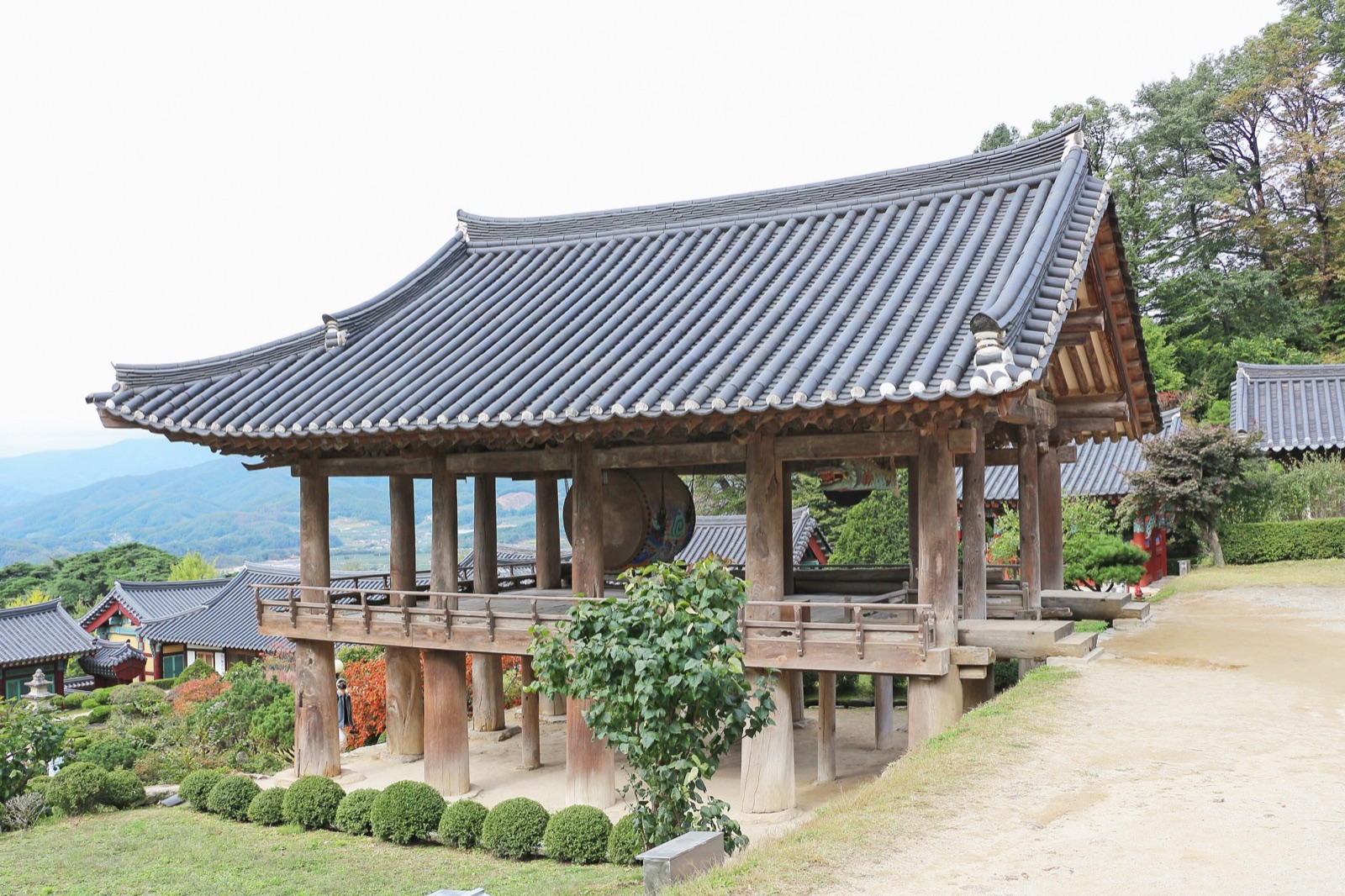
Picture it: a temple on a forested mountainside, a great bronze bell sounding in the dark, and you, slightly bewildered, in borrowed temple trousers, following a line of people into the main hall. That is the morning most people remember from a templestay, the overnight programme that lets visitors live for a day or two by the rhythm of a Korean Buddhist temple.
It is also the kind of trip that makes first-timers nervous. Do you have to be Buddhist? Will you be expected to bow 108 times? What if you snore in a shared room, or simply cannot face a 4 a.m. start? This guide, written by people who live in Korea, walks through what a templestay actually involves, using the official information published by the organisation that runs it, and tells you honestly which parts are easy, which are hard, and which you can quietly skip.
What templestay is, and who runs it
Templestay is the official name of a programme of stays and short experiences at Buddhist temples across Korea. It is run by the Cultural Corps of Korean Buddhism, part of the Jogye Order of Korean Buddhism, and bookings go through its website, templestay.com, which has a full English version. The official site describes it as a cultural experience programme for understanding Korean traditional culture and Korean Buddhism, with chanting, meditation, conversation over tea and Buddhist meals.
According to the programme's own FAQ, templestay began in 2002, when Korea co-hosted the FIFA World Cup with Japan. The Ministry of Culture, Sports and Tourism and the Jogye Order set it up together so that foreign visitors could find a place to sleep and an experience of Korean tradition at the same time. Since then it has grown well beyond its original purpose, and today the official site lists programmes for families, students and companies as well as for foreign visitors.
Three kinds of programme
The official site sorts every programme into one of three types, and choosing the right one solves most worries before they start.
| Type | How long | What you do | Best for |
|---|---|---|---|
| One-day | About two to three hours; depending on the temple, often starting around 10 a.m. or 1 p.m. | Temple tour, meditation and tea; at some temples a craft such as a lotus lantern, prayer beads or sutra copying | Travellers short on time who want a first taste |
| Experience-oriented | Usually one night, often at weekends | Dawn service, 108 prostrations, the formal monastic meal, meditation, plus a craft | First-timers who want the full temple routine |
| Rest-oriented | Overnight, at your own pace | Only the core parts, such as services and meals; the rest of the time is yours | Anyone who mainly needs quiet and time to think |
The official FAQ recommends the experience-oriented type for first-timers, the rest-oriented type for people who need time to sort out their thoughts, and the one-day type for anyone who just wants a brief look at temple culture. Some people combine programmes and stay longer: the FAQ says the maximum varies by temple but is usually around ten days. Prices also vary by temple and programme, so check the current price on each programme's page on templestay.com.
A typical overnight stay, step by step
Every temple runs its own timetable, and contents change with the season. The outline below follows the official templestay FAQ's description of a typical one-night experience programme, so treat the times as approximate.
| When (approx.) | What happens | What it means for you |
|---|---|---|
| Day 1, around 2 to 3 p.m. | Check-in, room assignment, temple tour, basic temple etiquette | You change into the vest and trousers provided and learn how to bow |
| Afternoon, at some temples | Samul: the dharma drum, bronze bell, wooden fish and cloud-shaped gong | Hear, and sometimes try, the instruments that call the temple to service |
| Early evening | Evening meal (gongyang) | A simple vegetarian meal; take only what you will finish |
| Evening | Evening service (yebul), 108 prostrations, meditation | All optional; sitting quietly is perfectly acceptable |
| Day 2, around 4 a.m. | Dawn service | The hardest part of the stay, and for many the most memorable |
| Morning | Breakfast, communal work (ullyeok), tea with a monk, writing your impressions | The tea conversation is your chance to ask anything |
| Around 12 to 1 p.m. | Lunch, then the programme ends | Plan onward travel for the early afternoon |
The rituals, in plain language
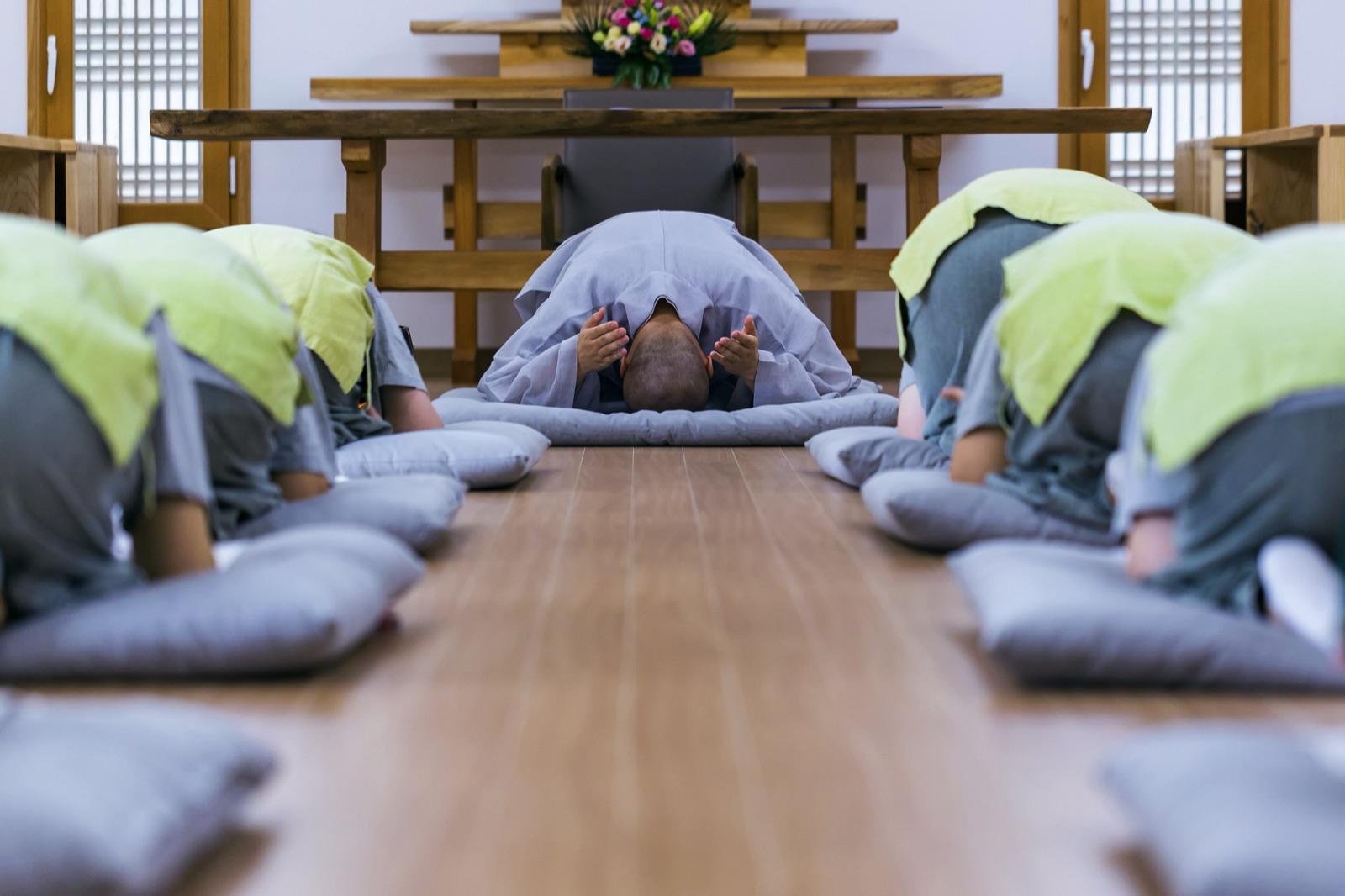
Yebul is the ceremonial service that opens and closes the temple day. The official site describes it as a ceremony paying respect to the Buddha, the bodhisattvas and the Buddha's disciples. In the dark before dawn, the great bell is struck, the monks begin to chant, and the day starts. You do not need to know the words. Most visitors simply stand, bow when everyone else bows, and listen.
The 108 prostrations are full bows, from standing down to forehead on the floor and back up again, repeated 108 times. In Korean Buddhism each one represents letting go of one of the 108 afflictions. It is genuinely physical, closer to a slow workout than a ritual gesture, and your thighs may remind you the next day. The official FAQ is clear that you can stop whenever you need to, and that if bowing to the Buddha conflicts with your own beliefs, you can sit quietly instead.
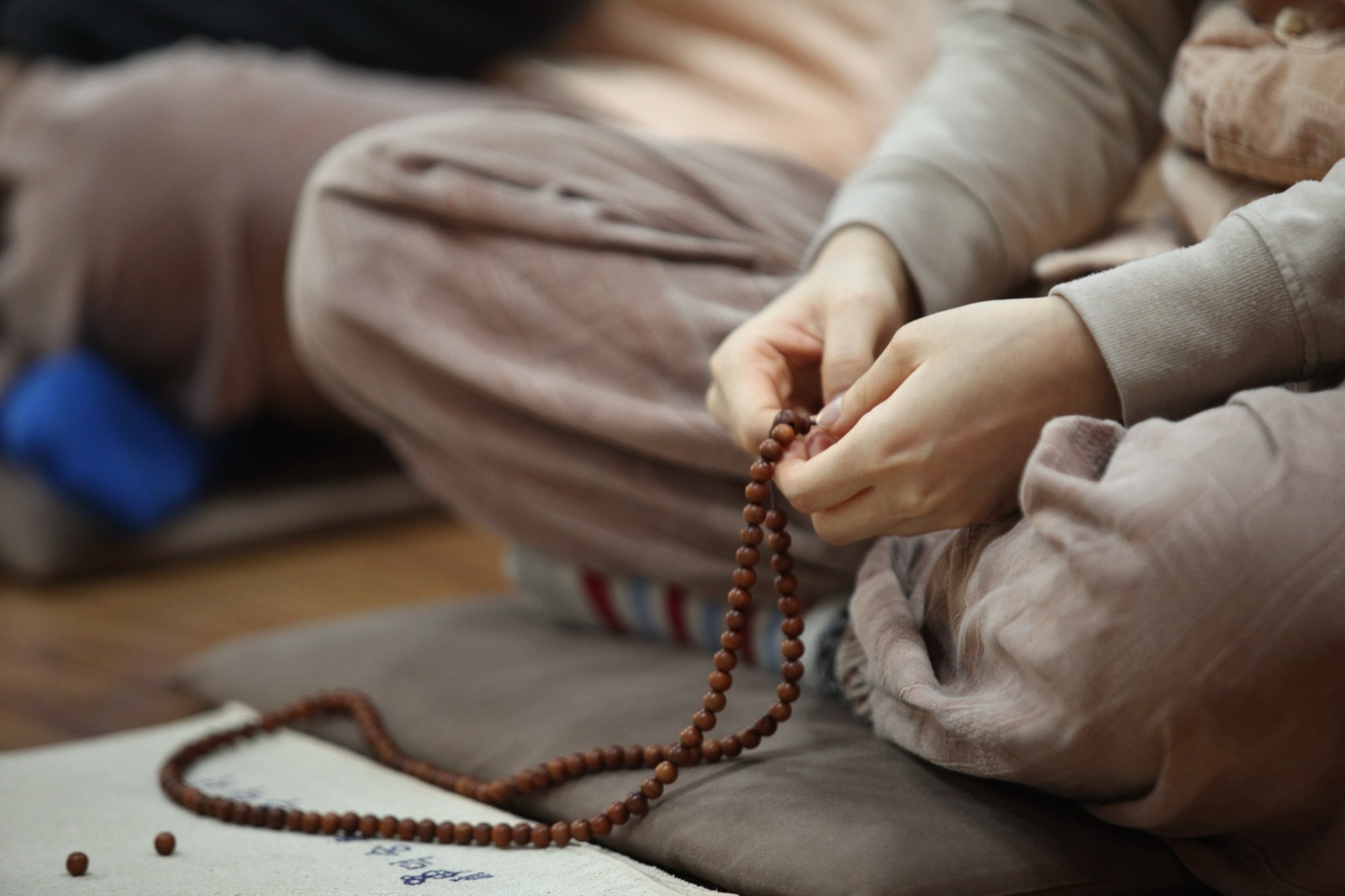
Meditation is Seon, the Korean word for what most of the world knows as Zen. The official site describes it as a practice of mindfulness and concentration, and the central method of Korean Buddhist practice; at a templestay you get a beginner's introduction. Tea with a monk, called chadam, is the part many people did not expect to enjoy most. The official Korean description calls it one of the most meaningful moments of a templestay: a relaxed conversation where you can ask about Buddhism or about whatever is on your mind. The morning programme can also include ullyeok, a short stint of communal work around the temple.
Temple meals: vegetarian, and sometimes very formal
Korean Buddhism is vegetarian, and the official FAQ states that no meat, eggs or instant food are served at templestay. Instead you eat seasonal greens, vegetables, tofu and beans. Temple cooking also leaves out the five pungent vegetables, including garlic and green onion, which monks traditionally avoid. If you are used to Korean food being fiery and garlicky, temple food can come as a gentle surprise.
Some temples hold barugongyang, the traditional way Buddhist monks and nuns eat, using their own set of bowls called baru and following a set ritual. The official site describes it as a practice in itself, built on equality, cleanliness and thrift: everyone shares the same food equally, it is prepared in a clean environment, and nothing is wasted. The official Korean description adds a sense of gratitude to everyone whose work brought the food to the table, and a resolve not to waste a single grain of rice. In practice, that means taking only as much as you can finish. You are not expected to know the ritual before you arrive.
Where you sleep
Monks live communally, and templestay is built on the same idea. According to the official FAQ, rooms are shared by default: larger rooms can hold 15 or more people, ordinary rooms around four to eight. Shared toilets and showers are standard, although some rooms have their own bathroom. Men and women are strictly separated, so couples are given separate rooms, but temples try to keep same-sex friends or family members together. Some temples offer private rooms or rooms for two to four people for an extra fee, which you can choose when booking.
If you are travelling alone, the official FAQ addresses safety directly: rooms open only with a key and can be locked from inside, outsiders' access is controlled after 10 p.m., and templestay staff are stationed at the temple. Children can generally join with a parent or another adult, but rules differ, so the FAQ asks families to phone the temple first.
Etiquette that actually matters
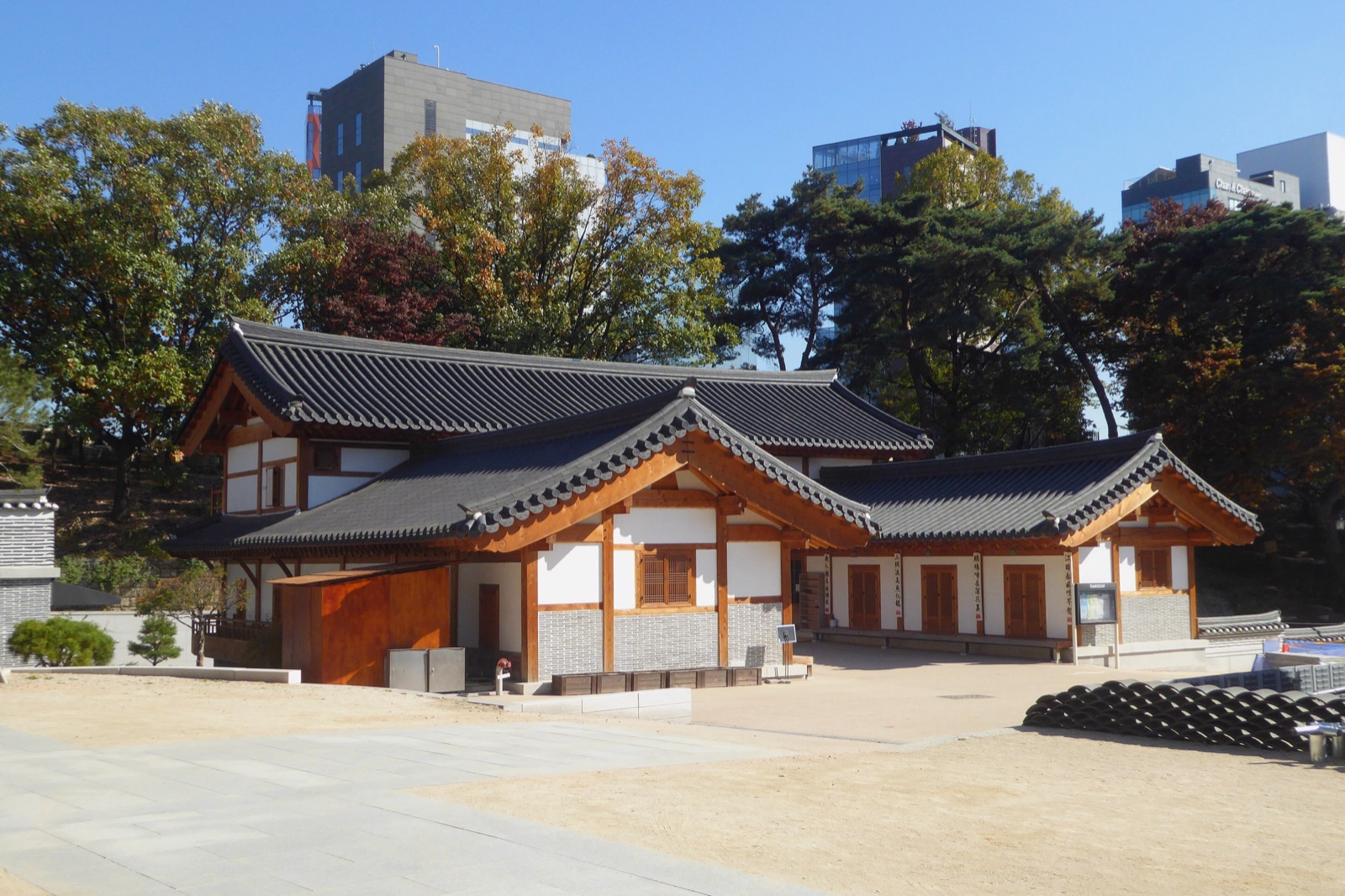
You will be given a short etiquette briefing on arrival, and nobody expects you to get everything right. These are the points the official FAQ highlights:
- No drinking, smoking, loud talk or singing anywhere in the temple, and keep displays of affection for later.
- When walking around, hold your hands loosely in front of you, right hand lightly over the back of the left. This posture is called chasu.
- If you meet a monk outside, stop, put your palms together (hapjang) and give a small half-bow.
- When entering or leaving a main hall, pause and give a half-bow with palms together towards the centre.
- Use the side doors of a hall. The central door, and the central space inside, are for the monks.
- Speak quietly in the hall, and walk behind people who are praying or bowing rather than in front of them.
If you have read our guide to Korean etiquette, you will recognise the spirit of it: small gestures of respect matter more than perfect technique. A sincere hapjang, even a clumsy one, says the right thing.
"I'm not Buddhist. Will this be awkward?"
This is the single most common worry, and the official answer is reassuring. The templestay FAQ says anyone can take part regardless of gender, nationality, age, religion or values, and adds that in practice more participants come from other religions than from Buddhism. Templestay is presented as a cultural experience programme, not a religious commitment.
Participation in each activity is voluntary. The FAQ says that if you feel unwell or are too tired, you can rest in your room; just tell the templestay staff. During the services and prostrations, standing or sitting quietly at the back is fine. Even if you are not religious at all, you may find the dawn service moving simply as living culture: a daily routine that monks keep up whether or not anyone is watching.
English, foreigners and choosing a temple
The reservation page on templestay.com lets you filter for temples for foreigners, which is the easiest way to find programmes run with English-speaking visitors in mind. The site also publishes a templestay guide map you can download in several languages, including English and Japanese. VisitKorea, the Korea Tourism Organization's official site, keeps its own list of temples that run regular templestay programmes for international visitors, from Seoul to Jeju.
A few starting points, all from the official FAQ and VisitKorea's list:
- In Seoul, temples such as Jogyesa, Bongeunsa, Geumsunsa, Myogaksa, Jinkwansa and Hwagyesa can be reached by subway or bus, which suits a first try or a short trip.
- For meditation, the FAQ points to the International Seon Center in Seoul and the Lotus Lantern International Meditation Center on Ganghwa Island, which it describes as widely open to non-Koreans.
- For forests and mountains, it suggests Woljeongsa in Gangwon; for mountains and sea together, Naksansa, also in Gangwon; for a view over the sea and islands, Mihwangsa in Haenam, near the southern tip of the peninsula.
- For temple food, it names Baekyangsa in Jangseong, in the south-west, and for something more active, Golgulsa near Gyeongju, known for Seonmudo, a meditative martial art.
- Among UNESCO World Heritage temples, the FAQ lists Beopjusa, Bulguksa, Magoksa and Haeinsa as offering English templestay programmes.
How to book
- Go to templestay.com, switch to English and open Reservations. Filter by region, programme type and number of people, or tick the option for temples for foreigners.
- Read the individual programme page carefully. It shows the schedule, what the temple provides, the price and whether private rooms are available.
- You do not need to bring a confirmation letter, because each temple keeps its own reservation list. Some temples do not send confirmation letters at all; if you want to check, contact the temple or templestay.com's support desk with your booking name, date and temple.
- To change or cancel, contact the temple directly or the templestay.com support desk, and check the calendar first, since some dates are unavailable.
- If you are in Seoul, the Templestay Information Center across the street from Jogyesa, a five-minute walk from Jonggak Station exit 2 or Anguk Station exit 6, can help in person. It closes on New Year's Day, Seollal and Chuseok.
What to bring
Most temples provide only soap, toothpaste and the temple uniform of a vest and trousers, according to the official site. Pack the rest:
- A towel, shampoo, toothbrush and face wash
- A hair dryer if you need one
- Underwear, socks and a change of clothes
- A warm layer such as a cardigan, fleece or jacket. The official site warns that mornings and evenings in mountain temples are cold except in high summer, and colder than you might expect in winter.
- Earplugs and an eye mask, a practical extra if you are sharing a room
Honest notes for the nervous
The early start is real. If a 4 a.m. service sounds impossible, choose a rest-oriented programme or a one-day experience, or go to bed early, as most participants do. So is the floor: services involve kneeling and sitting on cushions, which can be stiff if you are not used to it. Tell the staff if you have knee or back trouble; nobody will push you into 108 bows. Food is simple and meat-free; the booking form has space for notes to the temple, so use it for allergies or other needs.
What tends to surprise people is how little is demanded of them. You are a guest, not a novice monk. Temples have been welcoming curious outsiders since 2002, and nobody expects you to arrive knowing the rituals. Come with an open mind and an extra layer of clothing, let the temple set the pace for a day, and you will probably leave with the same thing most visitors mention first: the sound of that bell in the dark.
Comments
Sign in to leave a comment.
Sign in ·No account? Create one
Confirm your email address to comment — it takes one click.
No comments yet.