Your first three hours in Korea, in the order they happen
There is nothing to plan for the hours after you land — only things to have ready. The order is fixed at every Korean airport, so the useful preparation is knowing what each step asks of you before you are standing in it.
Between the plane and the door
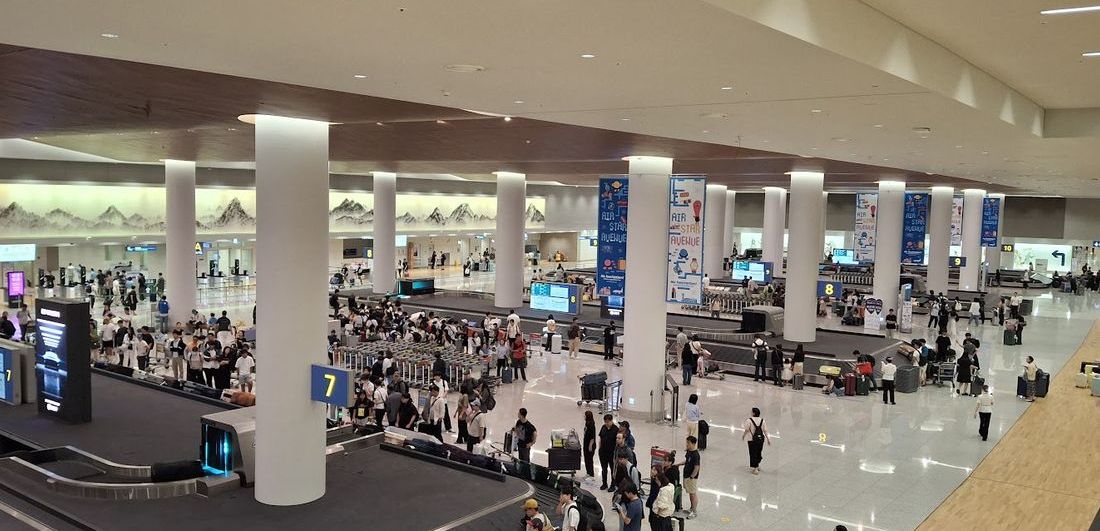
The sequence is the same at every Korean airport, and it never changes: immigration, then baggage claim, then customs, then the arrivals hall. You can’t skip a step and you can’t reshuffle them, so there’s nothing to plan — only things to have ready.
Have these in your hand, not in your bag
- Your passport and the address of your first night’s lodging. You’ll be asked to write it or say it, and "it’s in my email" is a slow answer when you’re offline.
- A pen. Not every line has one to spare.
- Whatever entry paperwork your nationality currently requires — see the box below.
Entry requirements are the one thing in this book we won’t pin a number or a form name to. Visa-exemption rules, travel authorizations and declaration forms change with little notice, and on this one topic a six-month-old guidebook is worse than no guidebook at all. Check your own government’s travel advice and the Korean immigration service within a week of flying. Everything else in this chapter holds steady.
Getting online before you leave the building
Do this in the arrivals hall, not later in the city. The counters are right there, the staff speak English, and every other option means hunting for a phone shop when you can’t search for a phone shop.
| Option | Pick it when |
|---|---|
| eSIM | Your phone supports it and you want to be online before you hit the baggage belt. Buy and install it while you still have your home network or airport wi-fi. |
| Physical SIM | Your phone has a SIM tray and you’d rather hand the whole thing to a person at a counter. Hang on to your home SIM — you’ll want it back. |
| Pocket wi-fi | You’re traveling as a group and want a single bill, or you need to stay reachable on your own number. Just remember it’s one more device to charge. |
We don’t print prices here. Airport data plans are a competitive business and the numbers move every season; the counters post current rates right there, and you can compare three of them in five minutes.
Money on day one
Korea runs on cards to a degree that catches visitors off guard — a bakery, a bus, a corner coffee shop will all take one. You still want some cash on day one, for exactly two reasons: loading a transit card, and the small, old, cash-only places that are often the ones worth finding.
- Change a modest amount at the airport and do the rest later, or pull cash from an ATM marked for international cards. Airport rates are convenient, not good.
- Hang on to small bills. Loading a transit card and paying at a market stall both go easier without a big one.
- Let your bank know you’re traveling. A card frozen for suspected fraud on your first evening is a genuinely bad start.
Tipping isn’t part of the culture here, and it gets its own chapter rather than a line in a list. For now: no one is waiting for a tip, and no one is offended that you didn’t leave one.
Five things that go wrong on day one
- Stepping off a bus without tapping out. It quietly costs you on your next ride.
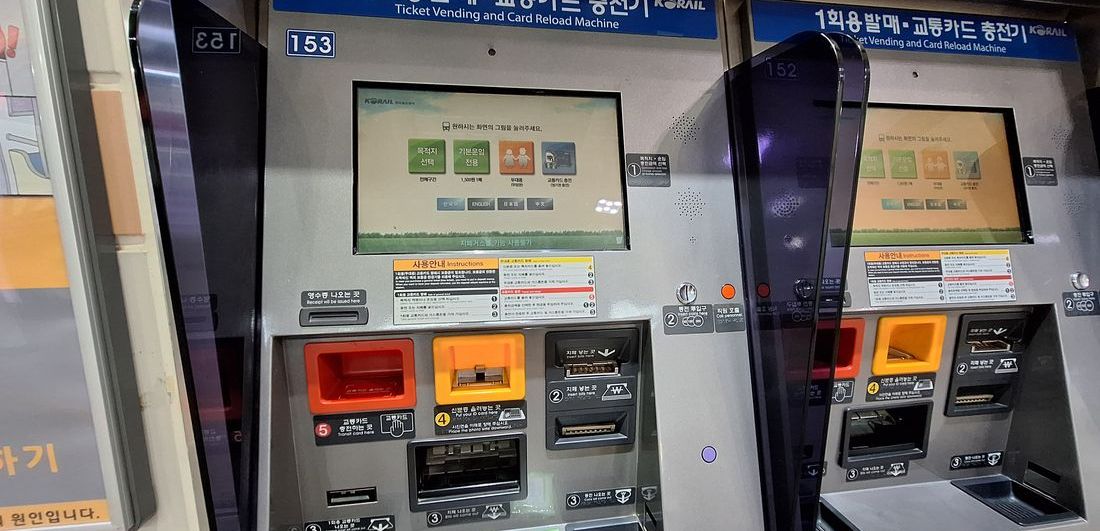
- Leaving the airport without a transit card, then trying to buy one from a station machine at rush hour.
- Assuming the card price is refundable and budgeting around a deposit that doesn’t exist.
- Booking the first night far from a subway line to save money, then handing it all back in taxi fares while jet-lagged.
- Planning a full first day. Day one is for arriving. The plan can start tomorrow.
Before you leave the airport
Six lines. If all six are true, you’ve cleared away most of what could go wrong today.
- My phone is online.
- I have a transit card and there’s money on it.
- I know I have to tap the card again when I get off.
- I have some cash, including small bills.
- I know tonight’s address without having to look it up.
- I know which of the three ways into the city I’m taking.
이 주소로 가 주세요.
i jusoro ga juseyo.
Questions people actually ask
- Should I buy a SIM at the airport or before I fly?
- Either works, and the page above lays out the trade. An eSIM bought before you fly puts you online before the baggage belt; an airport counter lets you compare three prices in five minutes. What does not work is planning to sort it out in the city.
- Do I need Korean cash on the first day?
- Some, yes — the money section above covers what for. The short version is that cards go a long way in Korea and then stop suddenly, and the places where they stop are the ones you meet on day one.