
Korean Etiquette for First-Time Visitors: What Really Matters
Worried about bowing, elders and drinking rules on your first trip to Korea? What Koreans actually expect from visitors, and what you can relax about.
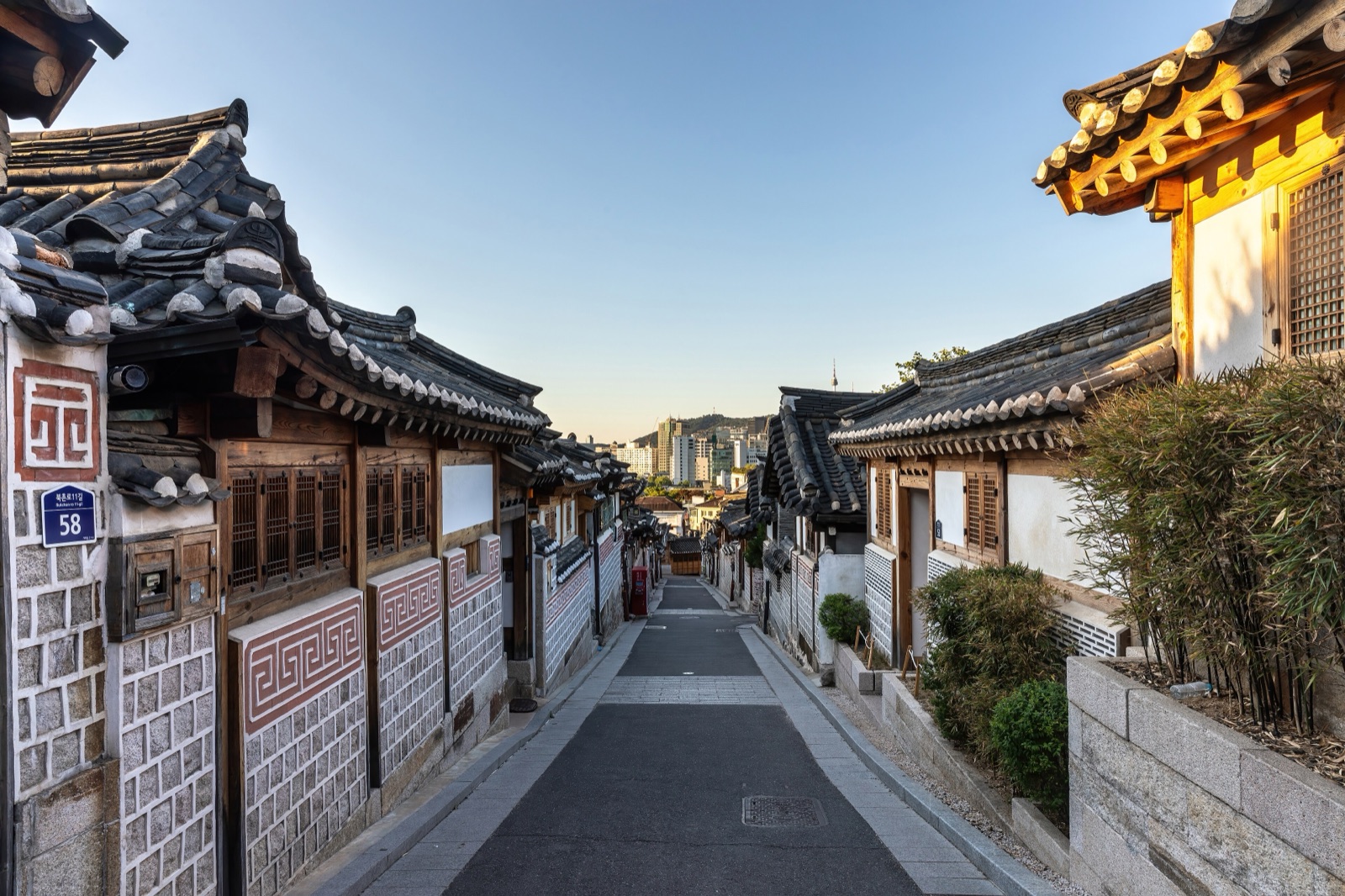
If you are planning your first trip to Korea, you have probably read that it is a Confucian society where age matters, elders come first, and there are rules for everything from pouring a drink to holding your chopsticks. It is easy to arrive half-convinced that you will offend someone before you have even left the airport.
Here is the reassuring part, written by people who live here: Koreans do not expect visitors to know every custom, and almost nobody will be upset by an honest mistake. What people do notice is whether you are trying. A handful of habits, most of which take seconds to learn, cover nearly every situation a traveller meets. This guide explains where those habits come from, which ones genuinely matter, and which ones you can stop worrying about.
Why age and hierarchy still shape everyday manners
For roughly five centuries, from 1392, the Joseon dynasty ran the country on Neo-Confucian principles. Respect for parents, loyalty, and a clear order between older and younger people were not just private virtues; they were how the state, the family and the village were organised. The dynasty is long gone and modern Korea is fast, digital and very informal in many ways, but that idea of order survived in the language and in small gestures.
Korean has different speech levels depending on who you are talking to, so the first thing two adults often work out is who is older. That is why a new acquaintance may ask your age or your birth year. It is not nosy; it tells them how to speak to you. Since 28 June 2023, Korea has officially used the international way of counting age in law and public administration, replacing the old "Korean age" in most official contexts, although you will still hear people mention the year they were born rather than a number.
None of this means you need to bow lower for every birthday someone has on you. As a visitor, you sit slightly outside the system, and people will usually speak to you in polite, neutral Korean or simply in English. The point of knowing the background is that the gestures below suddenly make sense instead of feeling like arbitrary rules.
The one-minute version
| Situation | What Koreans usually do | What is fine for you |
|---|---|---|
| Meeting someone | A slight bow with a greeting | A small nod or bow and "annyeonghaseyo" (hello) |
| Giving or receiving | Both hands, or one hand with the other touching the wrist or forearm | Use both hands for money, cards, gifts and drinks |
| Starting a meal | Younger people wait until the eldest picks up their spoon | Wait a moment before you dig in |
| Chopsticks | Never stand them upright in rice (associated with rites for the dead) | Rest them on the table or the dish |
| Drinks | Pour for others, not yourself; turn slightly away from elders to drink | Hold your glass with two hands when someone pours |
| Paying | One person often pays for the group; no tipping | Do not leave a tip; offering to pay next time is gracious |
| Subway | Leave priority seats free, keep voices down | Same, and let passengers off before boarding |
| Homes and temples | Shoes off before stepping onto the raised floor | Wear socks you are happy to show |
Greetings: a small bow goes a long way
The everyday Korean greeting is a short bow from the neck and shoulders, usually with "annyeonghaseyo". With friends it shrinks to a nod; in very formal settings, or when meeting someone much older, it gets deeper and slower. Handshakes are common in business, often with a slight bow at the same time and sometimes with the left hand lightly supporting the right forearm.
For a traveller, the useful takeaway is simply to return a bow when you get one. Shop staff will often bow when you enter or pay, and a small nod back reads as warm and polite. You do not need to match the depth exactly, and nobody is grading your angle.
Two hands mean respect
If there is one habit worth adopting from the first day, it is this: when you hand something to someone, or receive something from them, use both hands. That applies to cash and cards at the counter, business cards, gifts, a cup of tea and, above all, a drink being poured for you. When one hand is busy, Koreans often touch their forearm or wrist with the other hand instead. It is a quiet gesture, but it is one of the clearest signs that you understand where you are.
At the table
Korean meals are usually shared. Side dishes, called banchan, sit in the middle and everyone takes from them, and in most restaurants extra side dishes and water are refilled at no charge. The VisitKorea guide puts the money question plainly: tipping is not required or expected in Korea. Leaving coins on the table can even cause confusion, with staff running after you to return them.
Traditional manners revolve around the eldest person. Younger diners wait until the senior person at the table picks up their spoon or chopsticks, and it is considered polite not to finish long before them. Two habits that some visitors bring from home are worth leaving behind: do not stand your chopsticks upright in a bowl of rice, because that image belongs to rituals for the dead, and do not lift your rice bowl to your mouth. In Korea the bowl stays on the table and the spoon does the lifting.
Drinking with Koreans
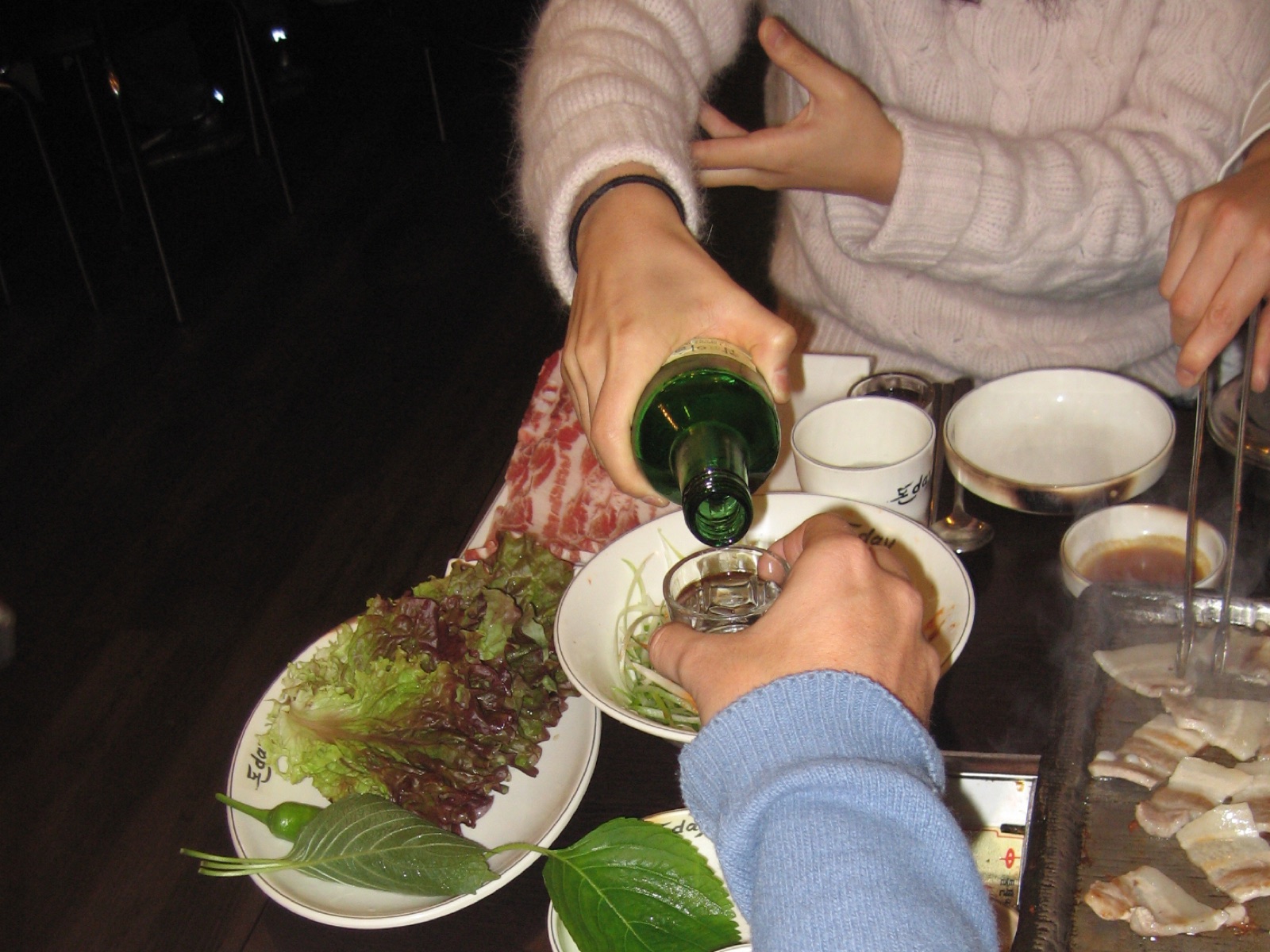
Drinking culture is where Confucian manners are most visible, and also where they are most forgiving to outsiders. The basic idea is that you look after each other: you pour for the people around you, and someone pours for you. Filling your own glass is not a crime, but it can look a little lonely, and friends will usually jump in to do it.
When someone older pours for you, hold your glass with both hands, or with one hand while the other touches your wrist. When you drink in front of someone much older, many Koreans turn their head slightly to the side. You do not have to drink every time a glass is filled, and you do not have to finish it. Leaving your glass full is the simplest way to say you have had enough. If you do not drink at all, saying so early on is completely normal, and a soft drink in a raised glass still joins the toast.
On the subway and in public
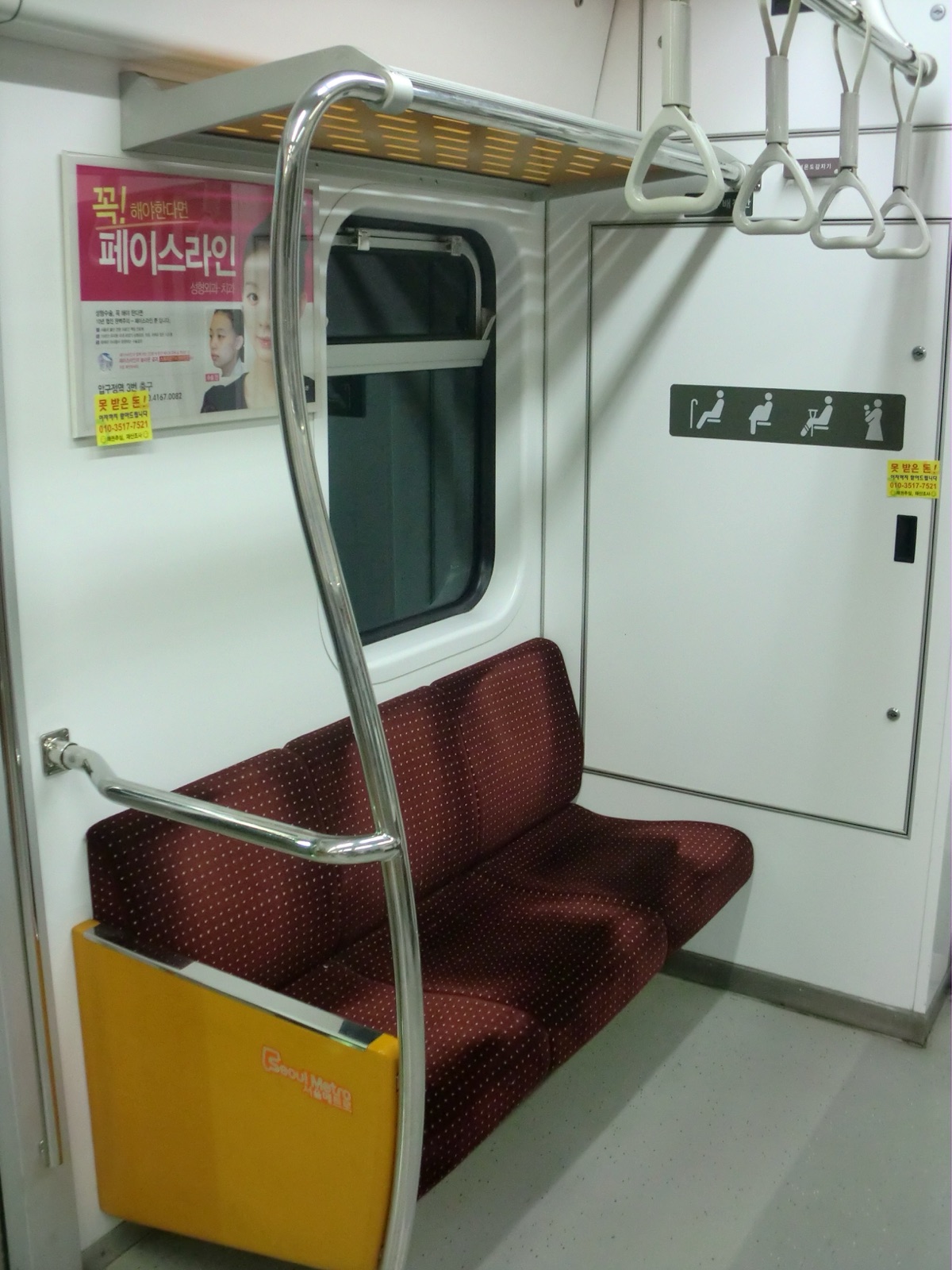
Public transport is where visitors meet Korean courtesy most often, and the rules are practical rather than ceremonial. Seats at the ends of each subway car are kept for older passengers, people with disabilities, pregnant passengers and people with small children. Many lines also have pink seats marked for pregnant women. Locals tend to leave these empty even when the train is busy, and you should too.
Seoul Metro publishes its own short list of etiquette for riders. The points that matter most for a visitor are simple:
- Let passengers get off the train before you board.
- Do not push or shove on a crowded train.
- Offer your seat to pregnant women, people with children and the physically disadvantaged.
- Turn your phone to vibrate and keep your voice down on calls.
- Keep to the right when walking in stations.
Beyond the subway, the same spirit applies: queues are respected, loud phone calls in quiet places draw looks, and people generally avoid blocking narrow streets or shop doorways for photos. None of this is uniquely Confucian, but in a crowded city it is how people show consideration for strangers.
Holidays and ancestral rites: where tradition is most visible
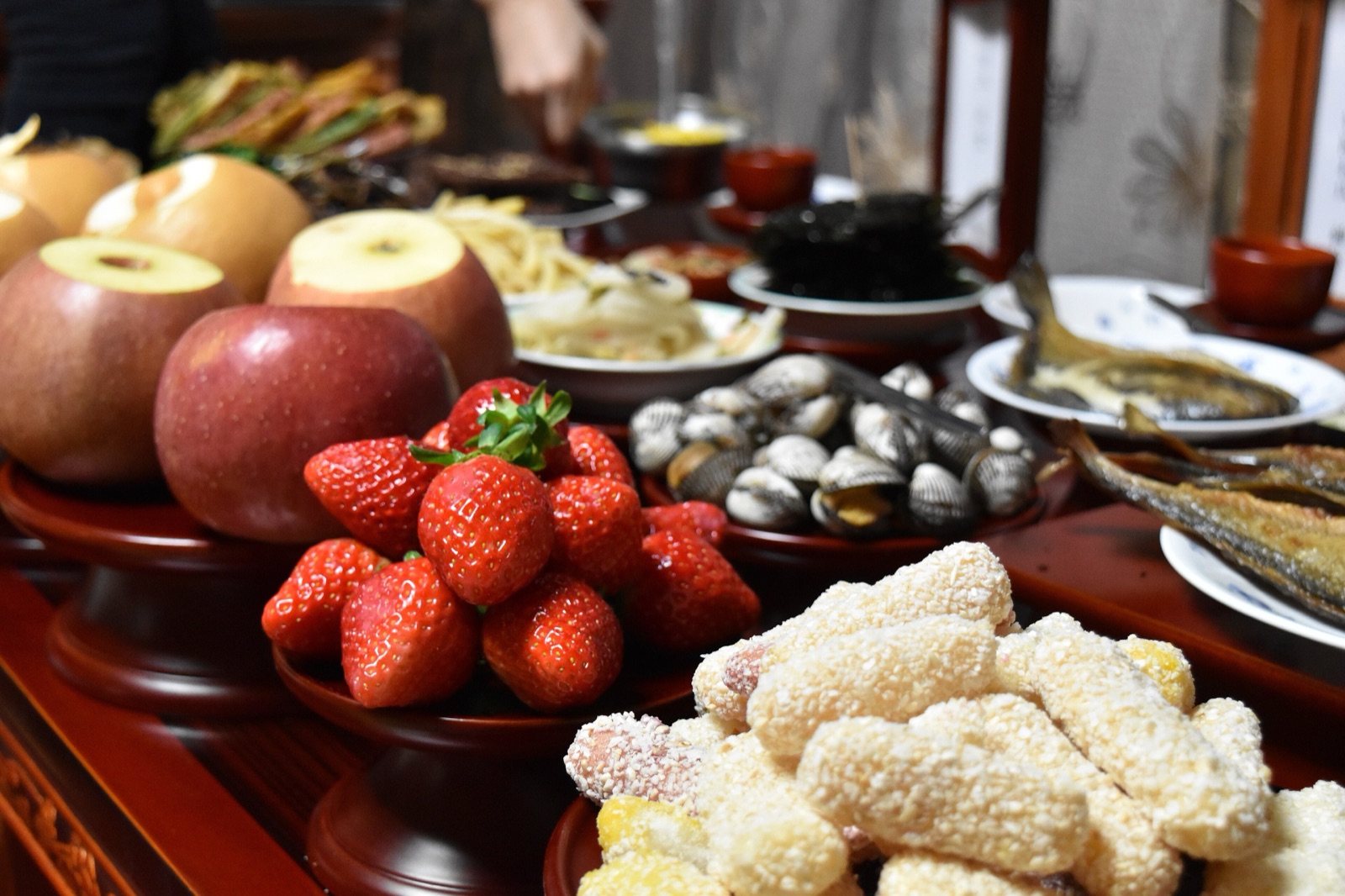
If you want to see Confucian tradition at its most visible, look at the two biggest holidays: Seollal, the Lunar New Year, and Chuseok, the autumn harvest festival. Many families gather at the home of the eldest relative, prepare food, and hold a charye, a short memorial rite in which food is laid out for ancestors and family members bow in turn. On Seollal, younger family members also make a deep New Year bow, sebae, to their elders, who often answer with words of advice and an envelope of money.
As a traveller you are unlikely to attend a family rite, but the holidays affect you in practical ways. Trains and long-distance buses sell out early, roads out of Seoul are packed, and some small family-run restaurants and shops close for a few days, while large stores, palaces and city attractions often stay open. If your dates overlap with Seollal or Chuseok, book transport early and check opening hours.
Small taboos you might hear about
- Chopsticks standing upright in rice look like an offering for the dead. Lay them down instead.
- Many Koreans avoid writing a living person's name in red ink, which was traditionally used for the names of the deceased.
- The number four sounds like the word for death, so some buildings label the fourth floor "F" in lifts.
- Take off your shoes when you step up onto the floor of a home, a temple hall or a floor-seated restaurant.
- Blowing your nose loudly at the table is considered rude; step away if you need to.
These are customs rather than laws, and younger Koreans may shrug at some of them. Knowing them simply saves you from an awkward moment.
What you can relax about
You do not need to speak Korean, and nobody expects you to master honorific speech. "Annyeonghaseyo" for hello and "gamsahamnida" for thank you will get you a long way, and many people in cities will switch to English when they see you are a visitor. If you accidentally pour your own drink, finish before your host, or forget to use both hands, the most likely reaction is a smile.
What does leave an impression is the overall attitude: returning a bow, waiting a beat before you start eating, giving up a seat, keeping your voice down on the train. Those small signals tell people that you respect the place, and in a culture built around respect, that is exactly what they are looking for. Come curious, watch what the people around you do, and you will find Korea far more welcoming than the rulebooks suggest.
Comments
Sign in to leave a comment.
Sign in ·No account? Create one
Confirm your email address to comment — it takes one click.
No comments yet.