
December in Seoul: Christmas, Lights and New Year's Eve
Seoul's 2026 Christmas market, lantern festival, Bosingak bell and first sunrise: what official pages confirm for December, and what is still unannounced.
December is when Seoul turns its lights up. The days are short and cold, but the city centre fills with a Christmas market, light installations along the Cheonggyecheon stream, an outdoor skating rink on the plaza in front of City Hall and, on the last night of the year, a crowd around an old bell pavilion waiting for midnight. Christmas Day is a public holiday, New Year's Day follows a week later, and the whole month has a festive, busy feel.
This guide sticks to what official pages confirm for the 2026–27 season, as of late November 2026. Where this winter's edition has not been announced yet, it says so and describes the event from its most recent official edition, with the year clearly marked. Dates move from year to year and programmes are sometimes extended at short notice, so treat the table below as a starting point and check the linked official page shortly before you go.
December 2026 in Seoul at a glance
| Event | Where | Dates (official page) | Cost |
|---|---|---|---|
| Seoul Winter Festival (umbrella programme) | Gwanghwamun Square, Cheonggyecheon, Seoul Plaza, Bosingak, Han River, DDP | Until 31 Jan 2027. The city's own pages give two different start dates (4 or 14 Dec 2026) | Varies by programme |
| Gwanghwamun Market (Christmas market) | Gwanghwamun Square and Sejongno Park area | 11 Dec 2026 – 10 Jan 2027. Sun–Thu 17:30–22:00, Fri–Sat 17:30–22:30 | Free admission |
| Seoul Light Gwanghwamun | Gwanghwamun Square | From 11 Dec 2026; VisitKorea lists it until 3 Jan 2027 | Not stated |
| Seoul Lantern Festival | Cheonggyecheon, Cheonggye Plaza to Samilgyo Bridge | 11 Dec 2026 – 31 Jan 2027, daily 18:00–23:00 | Free admission |
| Seoul Plaza skating rink | Seoul Plaza, in front of City Hall | Planned to reopen 18 Dec 2026; hours and closing date not announced yet | Not announced yet |
| Christmas Day | Nationwide | Friday 25 Dec 2026, public holiday | — |
| Bosingak bell-ringing ceremony | Bosingak Pavilion, Jongno | 31 Dec 2026; times not announced yet | Not stated |
| Jeongdongjin Sunrise Festival | Jeongdongjin, Gangneung (east coast) | 31 Dec 2026 – 1 Jan 2027 | Not stated |
"Not stated" means the official listing does not mention a fee either way. "Free admission" is how the official page describes entry; food, drinks and goods sold at the stalls are paid for separately.
The Seoul Winter Festival: one name, many venues
The Seoul Metropolitan Government groups most of its year-end events under one banner, the Seoul Winter Festival (also written Seoul Winter Festa). In a March 2026 announcement, the city said the 2026 edition would run for 59 days, from 4 December 2026 to 31 January 2027, at places including the Han River, Gwanghwamun Square, Cheonggyecheon Stream, Seoul Plaza, Bosingak Pavilion and DDP, built around light displays and media art. The city's holidays-and-events page, however, gives 14 December as the start. Both pages agree that it runs until 31 January 2027, but because they disagree on the opening date, check the festival announcement before planning a trip around the first half of December.
For a visitor, the useful thing is the geography. Most programmes sit in a compact strip of central Seoul: Gwanghwamun Square, the head of Cheonggyecheon a few minutes' walk away, Seoul Plaza a little to the south, and Bosingak at the Jonggak crossroads on Jongno. You can walk between all of them in one evening. Details of this winter's riverside programmes had not been published on the official pages at the time of writing; when they are, our Han River parks guide explains how to reach the parks along the river.
Gwanghwamun Market: Seoul's Christmas market
The city's Christmas market is called the Gwanghwamun Market. Visit Seoul, the city's official tourism site, lists the 2026 edition from 11 December 2026 to 10 January 2027 on Gwanghwamun Square and around Sejongno Park, open from 17:30 to 22:00 Sunday to Thursday and until 22:30 on Friday and Saturday, with free admission. The festival's own website gives the same dates. This is the market's fifth year, and the theme is "Santa Village Where Time Stands Still": a giant tree, a village of market stalls, photo spots and hands-on programmes. The nearest subway stop is Gwanghwamun Station on Line 5; Visit Seoul gives Exit 9.
One change is worth noticing. The 2025 edition ran only from 12 to 31 December 2025, so this year's longer run means the market is still open over the New Year weekend and into the first week of January. There is no official price list for the stalls, so carry a card and a little cash; our guide to money in Korea explains what works where. Visit Seoul also lists accessible pathways and information desks with wheelchair rental for the event area.
Gwanghwamun Square is a wide, open space, and December evenings in Seoul are cold, so the market is more comfortable in short visits between warm cafés than as a long stand in one place. Weekday evenings are generally calmer than Friday and Saturday nights.
Seoul Light Gwanghwamun: light and media art on the square
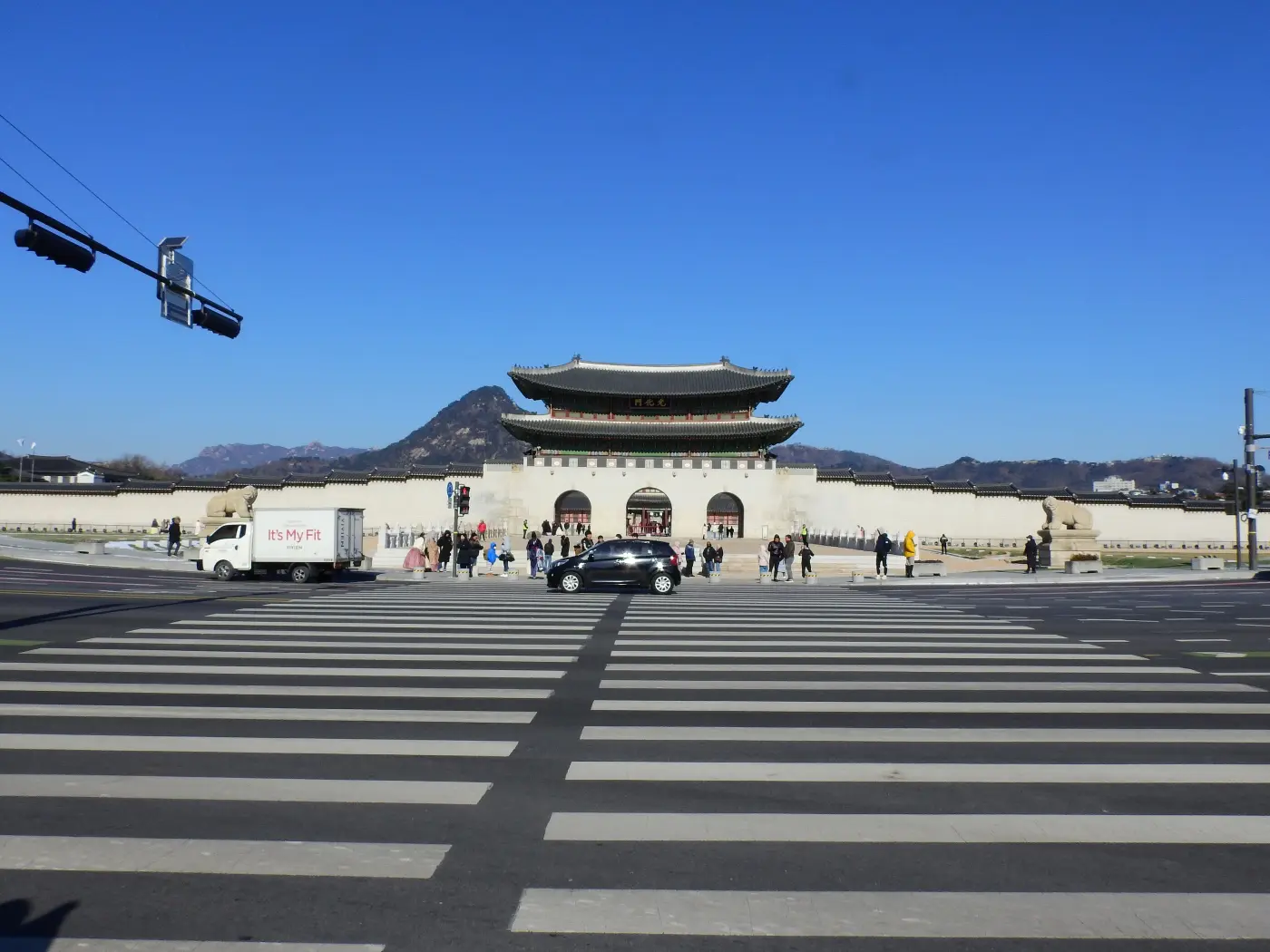
The same square doubles as an outdoor gallery after dark. VisitKorea's guide to 2026–27 winter festivals lists Seoul Light Gwanghwamun from 11 December 2026 to 3 January 2027, and notes a countdown on 31 December to welcome the New Year in the heart of the city. In its call for artworks for this year's edition, the city describes a light festival under the theme "Yunseul: Shimmer of Time", combining a media facade at Gwanghwamun, light sculptures and content that visitors can take part in, with selected works also screened on the outer wall of the Sejong Center for the Performing Arts. Nightly hours and the countdown programme had not been published at the time of writing.
Seoul Lantern Festival on Cheonggyecheon
The stream that begins just east of Gwanghwamun Square becomes a line of large lit installations every winter. Visit Seoul lists the 2026 Seoul Lantern Festival from 11 December 2026 to 31 January 2027, daily from 18:00 to 23:00, along Cheonggyecheon between Cheonggye Plaza and Samilgyo Bridge, with free admission; the festival's own website and VisitKorea give the same dates. It is the 18th edition of a festival held since 2009, and this year's theme is "Romance of Seoul: Symphony of Light". Visit Seoul names Gwanghwamun Station (Line 5), Exit 5, as the nearest stop.
The stream walk itself, the free media art near Gwanggyo Bridge and how to fit them into an evening are covered in our Seoul at night guide, so they are not repeated here. Because the market, the light festival on the square and the lanterns on the stream overlap from 11 December, one evening can take in all three.
Skating on Seoul Plaza
The open-air rink on Seoul Plaza, in front of City Hall, is one of the city's winter fixtures. When the 2025–26 season closed in February 2026, the Seoul Metropolitan Government reported 180,701 visitors over the season and said that roughly one in every 3.5 skaters was a foreign visitor. The same announcement said the rink would return on Friday 18 December 2026. As of late November 2026, the city had not yet published this season's hours, fees or closing date, so check its announcement before you go. Our winter in Korea guide explains how the rink works and what last season looked like.
Christmas in Korea and Myeongdong Cathedral
Christmas Day, 25 December, is a national public holiday in Korea. The Seoul Metropolitan Government's official calendar lists it alongside New Year's Day on 1 January. In 2026 both fall on a Friday, which creates two long weekends in a row, so expect central Seoul, popular restaurants and trains out of the city to be busy, and book ahead where you can. For how Korean public holidays work, see our public holidays guide.
Christmas in Korea has a double character. It is a religious holiday for the country's Christians, with services in churches across the city, and for many other people it is simply a winter holiday for going out, seeing the lights and meeting friends, partners or family. Decorated trees, carols in shops and Christmas menus are common in the weeks before.
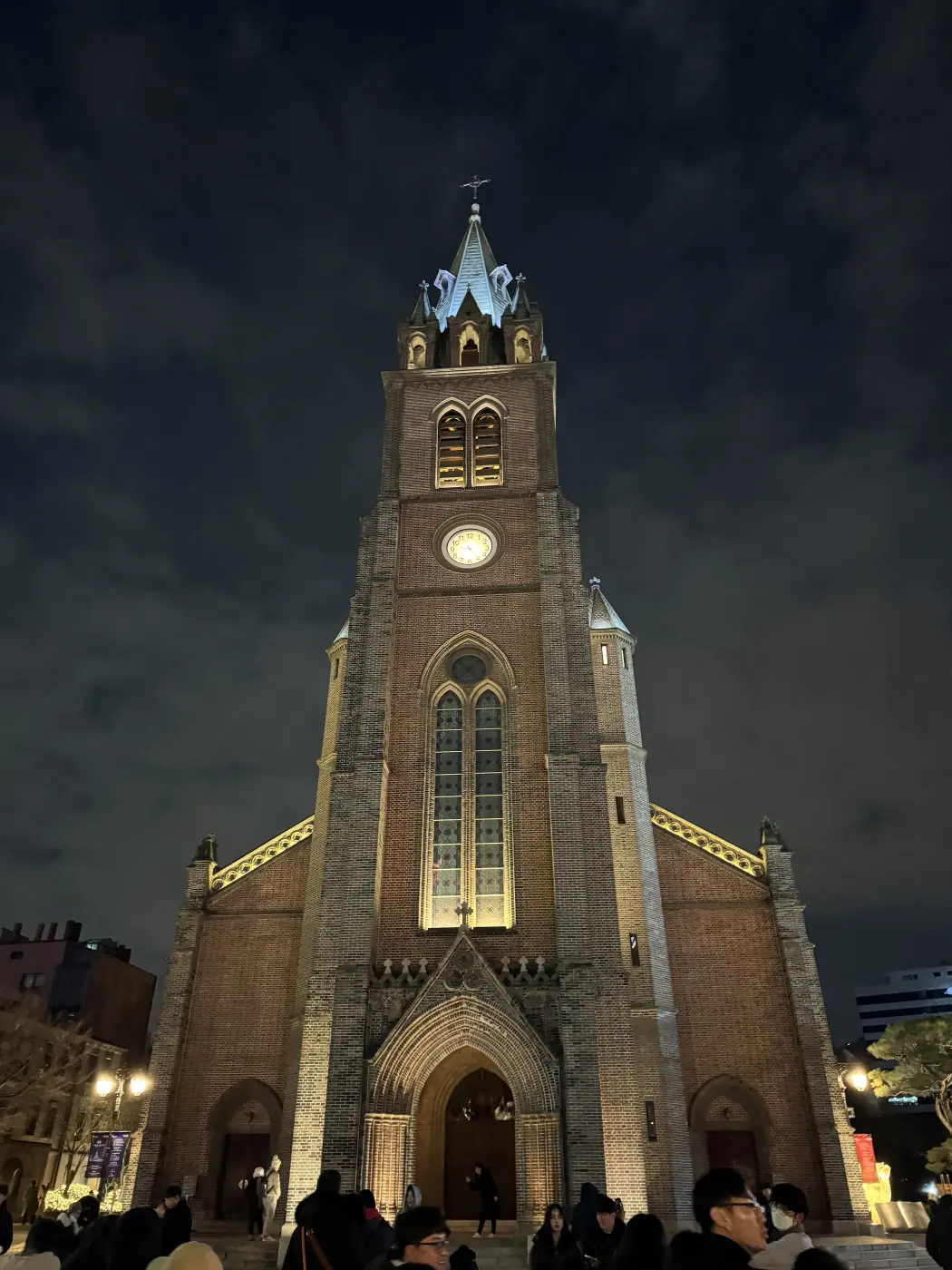
The building most closely tied to Christmas in Seoul is Myeongdong Cathedral. Visit Seoul describes it as the first Roman Catholic parish church in Korea, built between 1892 and 1898, and the first Gothic building in the country, made of brick rather than stone. The Korea Heritage Service, which designated it a Historic Site in 1977, notes that the tower is 45 metres high and the nave 23 metres, and that the bricks, in about twenty kinds of red and grey, were all made in Korea. VisitKorea adds that Pope Francis celebrated a Mass for Peace and Reconciliation here in 2014, and that thousands of LED roses and lights illuminate the cathedral grounds each winter.
Remember that this is a working church. VisitKorea notes that visiting hours change with the Mass schedule, and the cathedral's own website (mdsd.or.kr) has the current timetable, which matters most on Christmas Eve and Christmas Day. During Mass, VisitKorea asks visitors to stay quiet and not take photos inside. Visit Seoul gives Myeong-dong Station (Line 4), Exit 8, about 590 metres away, as the nearest stop, so the cathedral fits easily into an evening in the Myeongdong shopping streets; our 3-day Seoul itinerary shows how that area connects with the rest of the centre.
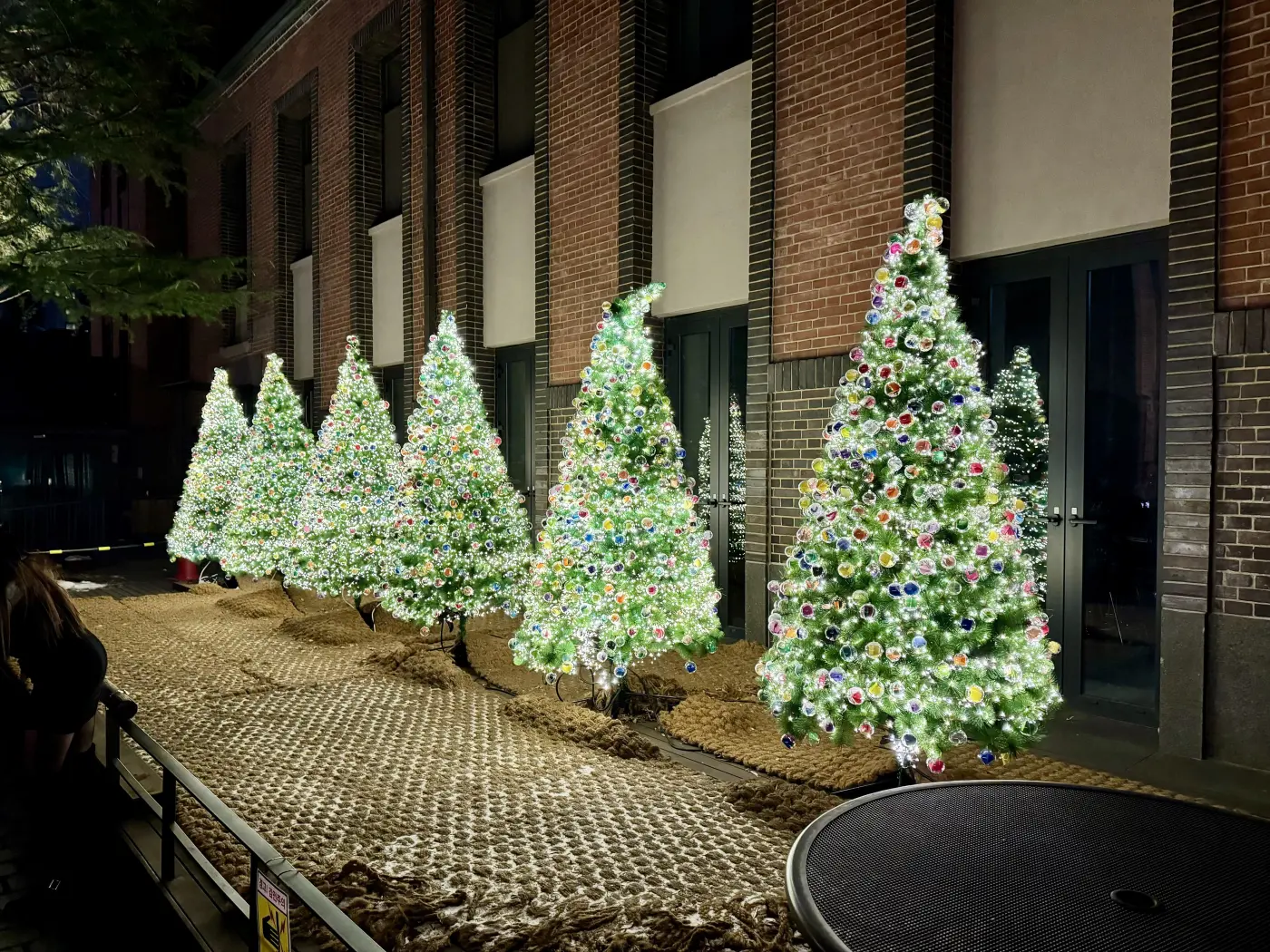
Around Myeongdong and in Seoul's other big shopping districts, the large department stores also dress their buildings for the season, with lights, decorated trees and, on some buildings, large screens showing Christmas animations. Visit Seoul has featured these displays in its Christmas articles. They change every year and have no official schedule, so treat them as a bonus on an evening walk rather than something to plan a trip around.
New Year's Eve: the Bosingak bell
At midnight on 31 December, Seoul rings in the New Year at Bosingak, the bell pavilion at the Jonggak crossroads on Jongno. The Seoul Metropolitan Government describes the bell-ringing ceremony as Korea's representative New Year event, held since 1953, and confirmed in November 2026 that this year's ceremony will take place on 31 December. Some of the bell-ringers are ordinary citizens chosen from public nominations, as the city has done since 2005; nominations for this year were open from 6 to 30 November 2026.
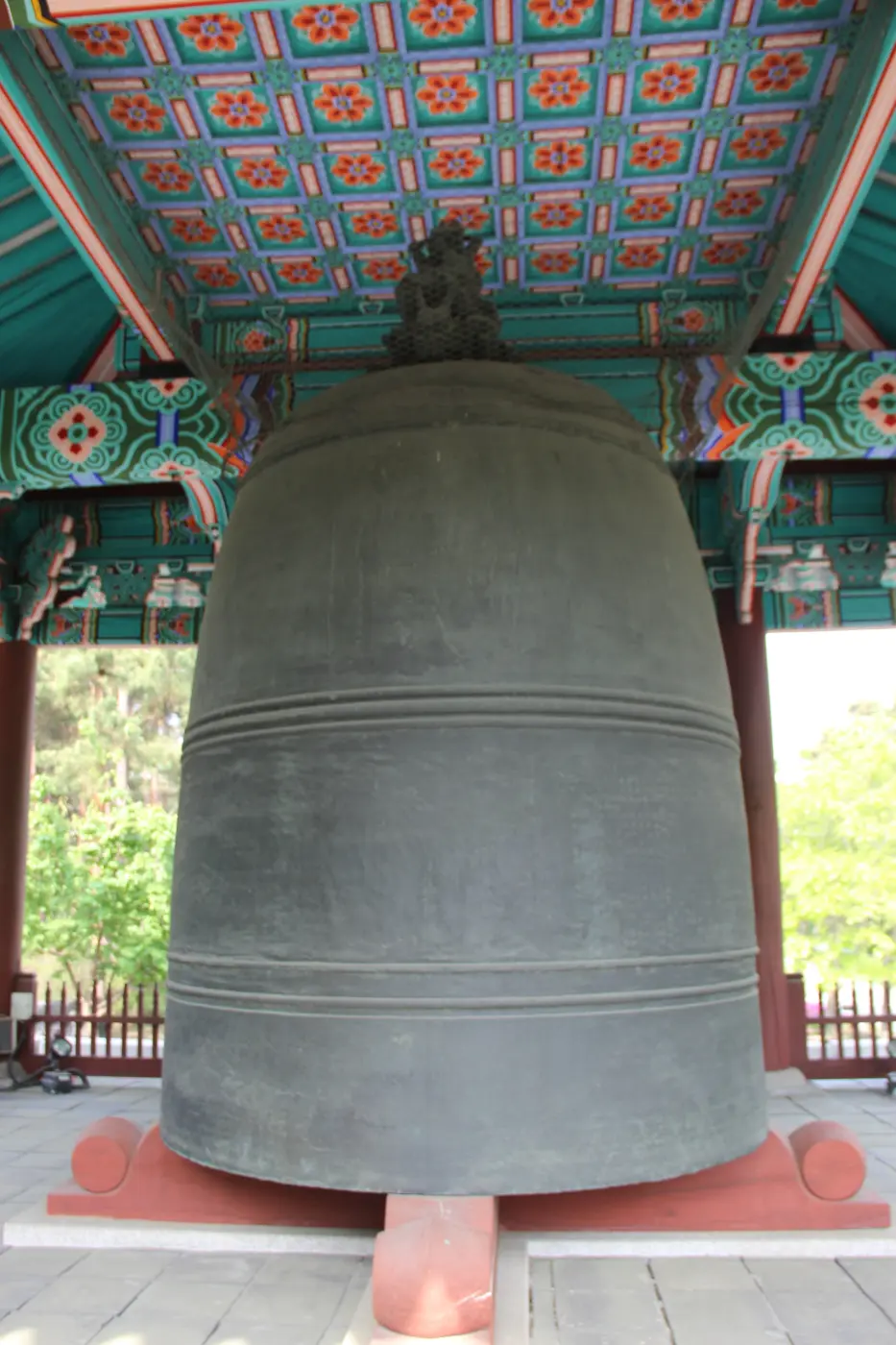
For the most recent edition, on 31 December 2025, the city announced a programme running from 23:00 to 00:20, with the bell struck 33 times at midnight. That number has a history. According to the National Museum of Korea, the old Bosingak bell, cast in 1468 and moved to the pavilion in 1619, was rung 33 times at 4 a.m. to signal the opening of the city gates and 28 times at 10 p.m. for their closing. The old bell is now a designated Treasure kept at the National Museum of Korea in Yongsan, where it is shown outdoors, so the bell struck at the pavilion today is a different one.
As of late November 2026, the city had not published this year's timetable, road closures or transport arrangements. Last year's details were announced on 30 December, so look for the Seoul Metropolitan Government's notice in the final days of the month rather than relying on last year's plan. If you go, dress for a long wait outdoors on a cold night, keep your phone charged, and agree on a meeting point in case you are separated in the crowd. If you would rather avoid the densest crowd, the countdown on Gwanghwamun Square mentioned by VisitKorea is a short walk away.
The first sunrise of the year
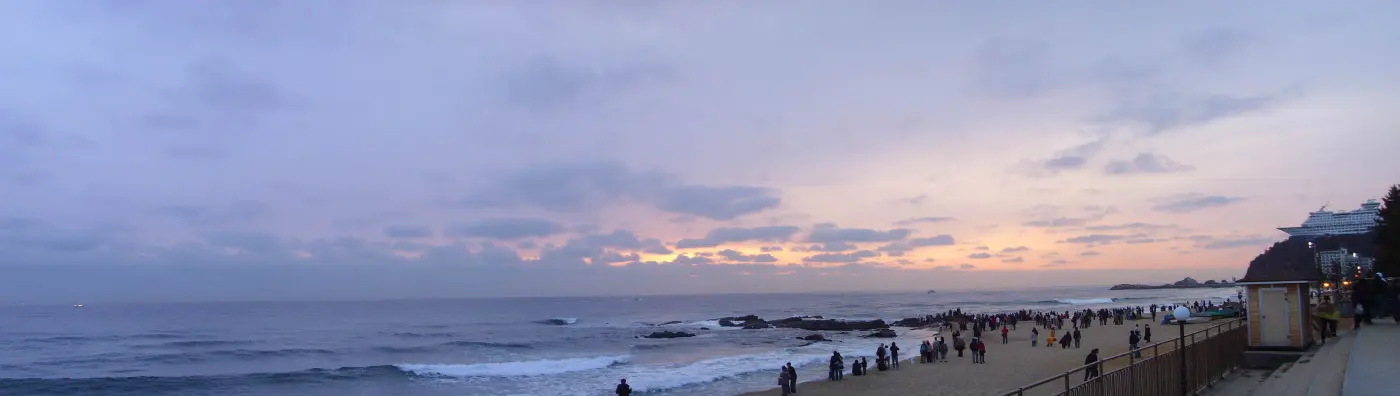
Watching the first sunrise of the New Year is a widespread custom in Korea, and many people travel overnight to the east coast to see it. VisitKorea's 2026–27 winter festival guide lists three sunrise festivals running from 31 December 2026 to 1 January 2027: Jeongdongjin in Gangneung, Homigot in Pohang and Hyangiram, a Buddhist hermitage in Yeosu. VisitKorea also mentions overnight sunrise train tours to Jeongdongjin, and reminds readers to check each festival's official website or social media before going.
Jeongdongjin is the classic choice from Seoul. Our Gangneung travel guide explains how to get there by KTX, what is around the beach and why staying in Jeongdongjin the night before is the easiest way to be on the sand at dawn. If you plan to go on New Year's Eve, book transport and a room well in advance, and check the sunrise time for 1 January before you set your alarm.
Weather and fine dust in December
December in Seoul is cold and dry. According to the Korea Meteorological Administration's 1991–2020 climate normals, the normal date of Seoul's first snow is 20 November, but settled snow in the city is never guaranteed. January is the coldest month, with an average temperature of -1.9°C, and December, January and February together bring only 67.6 mm of precipitation, about 5 per cent of the yearly total. Most of the events in this guide are outdoors and in the evening, when it is colder still, so a warm coat, hat and gloves matter more than an umbrella. Our packing guide has a full winter list.
Air quality is the other thing to watch. AirKorea, the government's air-quality service, describes December to March as the high-concentration period for fine dust: average PM2.5 over those months is 29 µg/m³, against 20 µg/m³ from April to November, or about 45 per cent higher. Since the government decided in November 2019 to introduce a seasonal management programme, stronger emission controls apply over those months. Many clear, cold days are perfectly fine, but check the forecast each morning; our fine dust guide explains the four grades and when a mask is worth wearing.
Putting a December evening together
- Start at Gwanghwamun Market soon after it opens at 17:30, and walk the square to see Seoul Light Gwanghwamun.
- From 18:00, go down to the stream at Cheonggye Plaza and follow the Seoul Lantern Festival east along the stream towards Samilgyo Bridge.
- On another evening, combine Myeongdong Cathedral's winter lights with the department store displays and street food in Myeongdong.
- From 18 December, if the city confirms the opening, add an hour on the Seoul Plaza rink, a short walk from Cheonggye Plaza.
- On 31 December, choose between the Bosingak bell and the countdown on Gwanghwamun Square, and check the city's transport notice that day.
- On 1 January, either take a sunrise trip to the east coast or keep it slow in Seoul: the first day of the year is a public holiday.
For daytime sightseeing between the evening events, our 3-day Seoul itinerary and the Seoul region page cover palaces, markets and neighbourhoods; check each palace's closing day before you go. Whatever you choose, check the official pages linked below a few days before you travel: winter events can be extended or adjusted after they open.
Comments
Sign in to leave a comment.
Sign in ·No account? Create one
Confirm your email address to comment — it takes one click.
No comments yet.