
Gangneung Travel Guide: Day Trip or Overnight from Seoul
Plan a Gangneung trip from Seoul: KTX or bus, Gyeongpodae and the lake, seawater tofu, Ojukheon, Jumunjin port, Jeongdongjin sunrise and Danoje.
Gangneung is a city on the East Sea coast of Gangwon, and since the KTX line opened in December 2017 it has become one of the easiest seaside escapes from Seoul. In a single day you can stand in a pavilion that poets wrote about centuries ago, walk a lagoon shore lined with pines and cherry trees, eat soft tofu set with seawater, and still be back in Seoul for a late dinner. Stay one night and you can add a sunrise at Jeongdongjin and a morning at the fishing port of Jumunjin.
This guide covers how to get there from Seoul by train or bus, how to move around once you arrive, what each of the main sights actually is, and two plans you can copy: a day trip and a one-night stay. Opening hours, journey times and other details were checked on Gangneung City's tourism pages and the official sites of the heritage venues; the sources are listed at the end. We have left out fares and admission prices, which change; check them when you book.
Gangneung at a glance
Gangneung sits between the Taebaek mountains and the East Sea. The city centre, with Gangneung Station and the bus terminals, is a few kilometres inland. Most of what visitors come for is spread along the coast in a long line: the Gyeongpo area with its lagoon, pavilion and beach about 6 km north of the centre; Anmok Beach and its coffee street to the south-east; Jumunjin port in the far north of the city; and Jeongdongjin on the southern coast. Ojukheon and Seongyojang, the two historic houses, are inland from the lake, on the western edge of the Gyeongpo area.
That shape matters for planning. Gyeongpo, Ojukheon, Seongyojang, Chodang and Anmok can all be done in one day without rushing, because they are close together. Jumunjin and Jeongdongjin sit at opposite ends of the city, so on a short trip pick one of them rather than trying to fit in both. Gangneung was also one of the host cities of the 2018 Winter Olympics. For the wider region, including Sokcho and Seoraksan further north, see our Gangwon page and the Sokcho and Seoraksan guide.
Getting there from Seoul: KTX or express bus
The KTX Gangneung Line is the fastest way. Gangneung City's tourism site says the line opened on 21 December 2017 and that the train takes about two hours from Seoul Station and about an hour and a half from Cheongnyangni Station in north-east Seoul. Actual times vary from train to train, depending on how many stops it makes, so check the timetable for your departure. Tickets go on sale a month ahead and can be bought at the station, on the Korail website or in the KorailTalk app; on weekends and in summer the most convenient morning and evening trains can sell out, so book both directions early. Our KTX guide explains how booking and seat classes work.
Express buses are the alternative. The city lists two Seoul departure points: Seoul Express Bus Terminal, on subway lines 3, 7 and 9, and Dong Seoul Terminal, at Gangbyeon Station on line 2. Buses run from early morning to late evening, and you can choose between regular buses with four seats per row and wider excellent-grade or premium buses. The city page does not give a journey time, and the road trip depends heavily on expressway traffic, so check the scheduled time when you book on the operator's site and allow extra on Friday evenings and holiday weekends.
If you are flying in, there are also direct airport buses from Incheon and Gimpo airports to Gangneung. The city's page lists a journey of about three and a half hours from Incheon, with a limited number of departures a day, so it suits travellers heading straight to the coast on arrival.
Getting around: buses, taxis and walking
Gangneung's city buses run along the main roads and connect the centre with the coast and the outlying districts. The city is candid that bus stops have little information in English, which makes the buses harder for first-time visitors. Live arrival times and routes are on the Gangneung Bus Information System (bis.gn.go.kr), and a map app with public transport directions does most of the work. Pay with a T-money or other transport card: according to the city, card users get one free transfer between buses if they change within 40 minutes and tap the card reader when getting off.
Taxis are plentiful and metered, and drivers take cash or cards. For short hops between Ojukheon, Seongyojang, Chodang and Gyeongpo, a taxi often saves a lot of waiting. The city also runs a tour taxi for foreign visitors, booked in advance through the tourist information centre at Gangneung Station; it sends a driver who speaks the requested language or uses an interpretation service. Around the lake itself, walking or a rented bicycle is the nicest way to move.
Gyeongpodae and Gyeongpo Lake
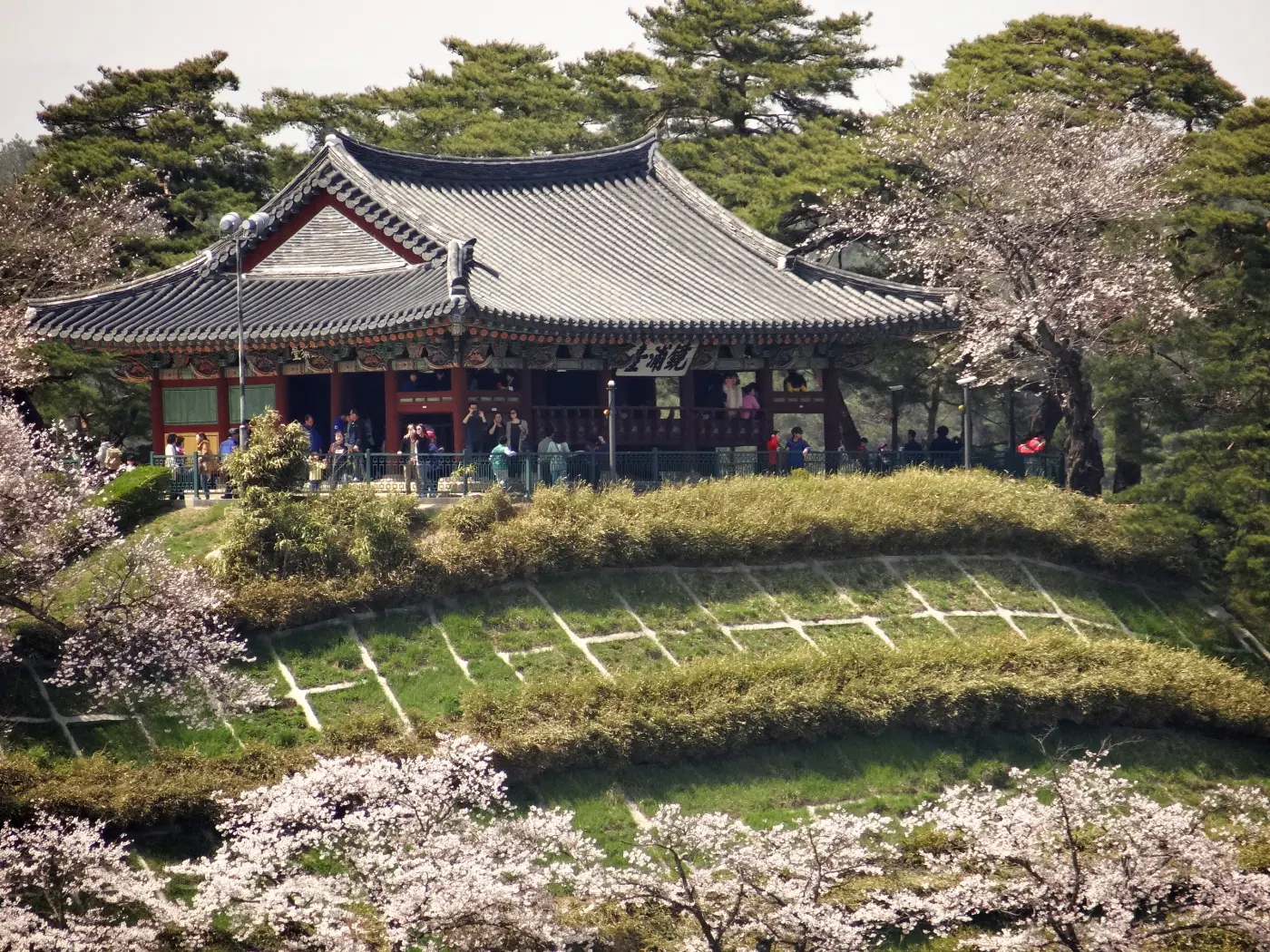
Gyeongpodae is a wooden pavilion on a small wooded hill on the western shore of Gyeongpo Lake. For centuries it has been one of the classic viewpoints of the east coast, counted among the Eight Scenic Views of Gwandong, and the city notes that Yulgok Yi I wrote a prose poem about it at the age of ten. Today the pavilion is a national Treasure, and the pavilion and lake together are protected as a scenic site. Climb the steps from the lakeside road and look out over the water toward the sea; the city's tourism site repeats the old saying that from here you can see the moon in five different ways.
Gyeongpo Lake is a lagoon cut off from the sea by a sandbar. Gangneung's tourism site says it was once much larger, but silt has reduced its shoreline to about 4 km and its depth to a metre or two. A flat path goes all the way round, with bicycle rentals nearby, and the walk takes in pine groves, a wetland park and views back to the pavilion. In spring the cherry blossom festival draws crowds from all over the country; in early summer lotus flowers bloom in the marshes along the lake.
Gyeongpo Beach and the coast walk
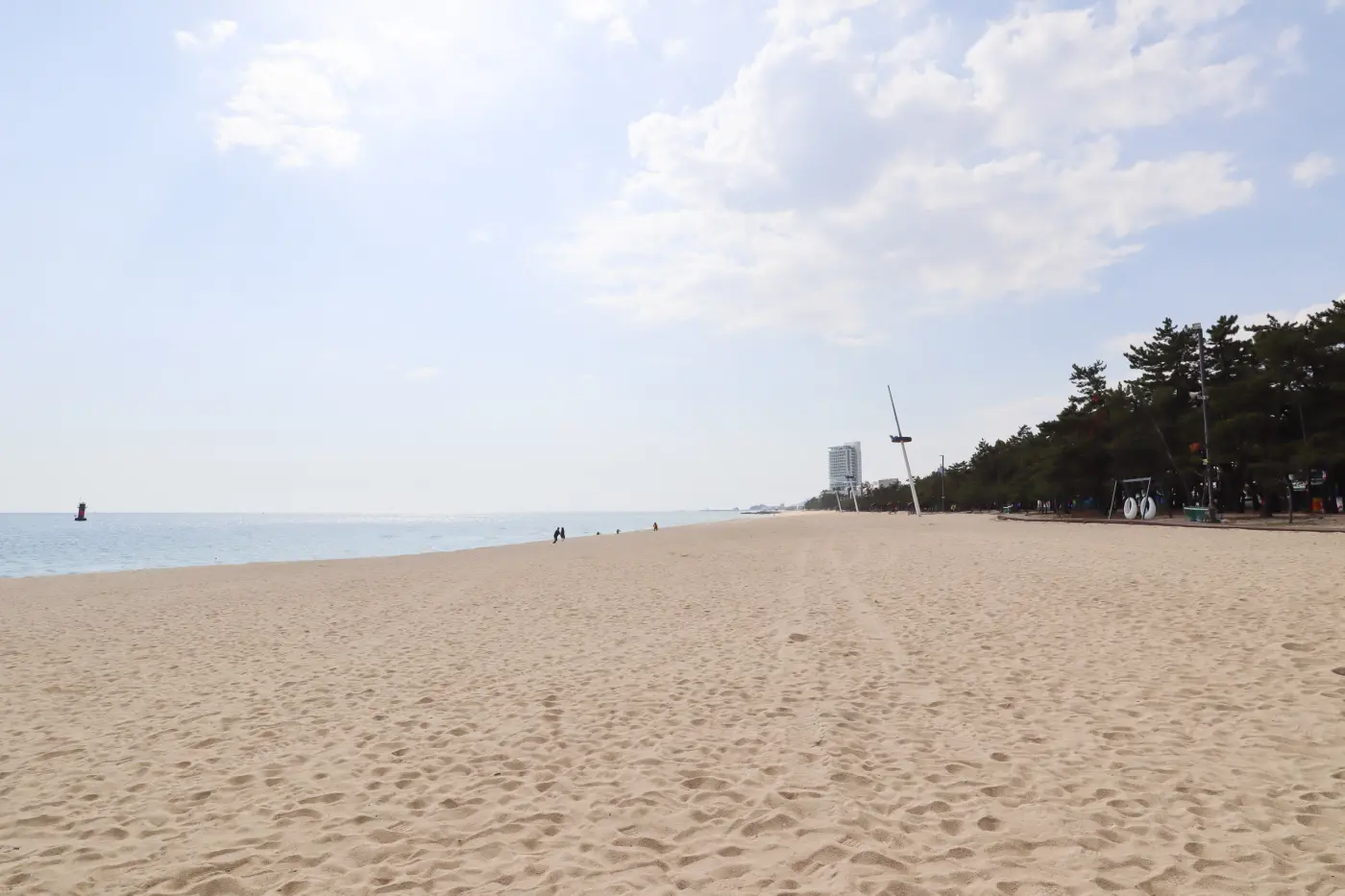
Gyeongpo Beach lies about a kilometre from the pavilion, on the other side of the sandbar. It is the city's best-known beach and, in July and August, its busiest; the tourism site describes it as the place where young Koreans head for the summer. Out of season it is broad and quiet, with a pine belt behind the sand and a coastal road lined with places to eat. New Year's Day is the exception: crowds come to watch the first sunrise of the year, and the city advises booking accommodation well ahead if you plan to be here then.
Heading south, Gyeongpo runs into Gangmun Beach, which the city describes as calmer and more used by locals, and from Gangmun a pine-forest path of about 3 km, the Ttangjaebong walking path, continues all the way to Anmok Beach. If you have a free afternoon and comfortable shoes, it is a pleasant way to link the lake and the coffee street on foot.
Chodang: soft tofu set with seawater
Just south of the lake is Chodang-dong, home to the cluster of tofu restaurants known as Chodang Sundubu Village. What makes the tofu here different is the coagulant. Most tofu is set with magnesium or calcium salts; in Chodang, according to an article by the Korean Culture and Information Service, the soy milk is set with seawater from the East Sea, which is rich enough in minerals to do the job without being concentrated first. The result is sundubu, a very soft, fresh curd, eaten plain or with a little soy sauce, or cooked into a red, spicy stew.
The village name is often linked to Heo Yeop, a Joseon-era scholar whose pen name was Chodang, though the same article treats that story as legend and traces the industry mainly to families who made and sold tofu after the Korean War. The tofu is made early, so breakfast or an early lunch is the classic time to come. Next door is the memorial park for Heo Gyun, author of The Tale of Hong Gil-dong, and his sister, the poet Heo Nanseolheon. For what to expect from a bowl of soft tofu stew, see our sundubu-jjigae food page.
Anmok Beach and the coffee street
Anmok Beach, at the southern end of the city's beach strip, is lined with cafés facing the sea, and Gangneung's tourism site presents it as the city's coffee street. The city's account is that it began with simple vending-machine coffee drunk by the water, and that in the 1990s skilled roasters and baristas moved in. Today independent cafés and chains stand side by side, and with coffee festivals and specialty cafés the city now calls itself Korea's coffee capital. There is no single place you need to go: walk the beachfront, choose a seat with a view of the water, and take your time. By public transport the city says Anmok is about 40 minutes from the intercity bus terminal. Our guide to Korean café culture explains how ordering and table etiquette work.
Ojukheon: birthplace of Yulgok and Sin Saimdang
Ojukheon is a house that most Koreans know from their wallets. Yulgok Yi I, one of the great Confucian scholars of the Joseon dynasty, was born here, and so was his mother, Sin Saimdang, a painter and calligrapher; the two appear on the 5,000-won and 50,000-won notes. The house takes its name from the black bamboo, ojuk, that grows around it. The small main building is a detached wing of an early Joseon upper-class house, valued as a well-preserved example of the period's architecture and of the shift between two styles of wooden bracket construction.
The site today includes the shrine to Yulgok, the house itself, the Yulgok Memorial Hall with works by Sin Saimdang and her family, and the Gangneung Municipal Museum. Gangneung City gives the visiting hours as 09:00 to 18:00, with last tickets and entry at 17:00. On New Year's Day, Seollal and Chuseok some or all of the indoor exhibition halls close, and the two official pages describe this slightly differently, so check before visiting on a holiday. Every year on 25 and 26 October a memorial rite for Yulgok is held here.
Seongyojang: a manor house that is still lived in
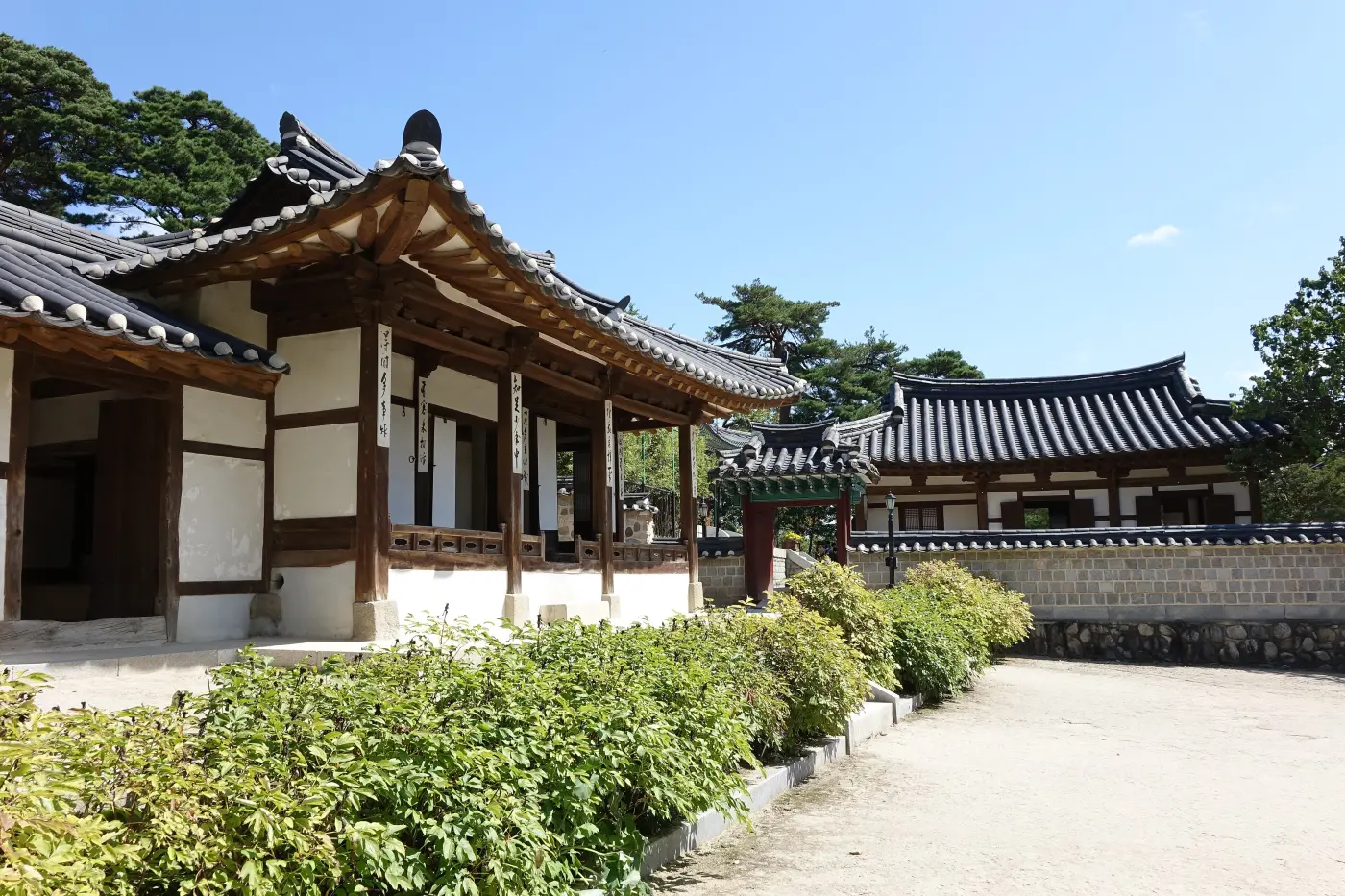
A short ride from Ojukheon, Seongyojang is a late Joseon aristocratic estate that has kept its original form for around three centuries. The house says it was first built by Yi Nae-beon, an eleventh-generation descendant of Grand Prince Hyoryeong, King Sejong's older brother, and enlarged by later generations over some 300 years into a typical 99-kan upper-class residence, with a kan being the space between four pillars. It is protected as national folklore heritage and remains in private hands.
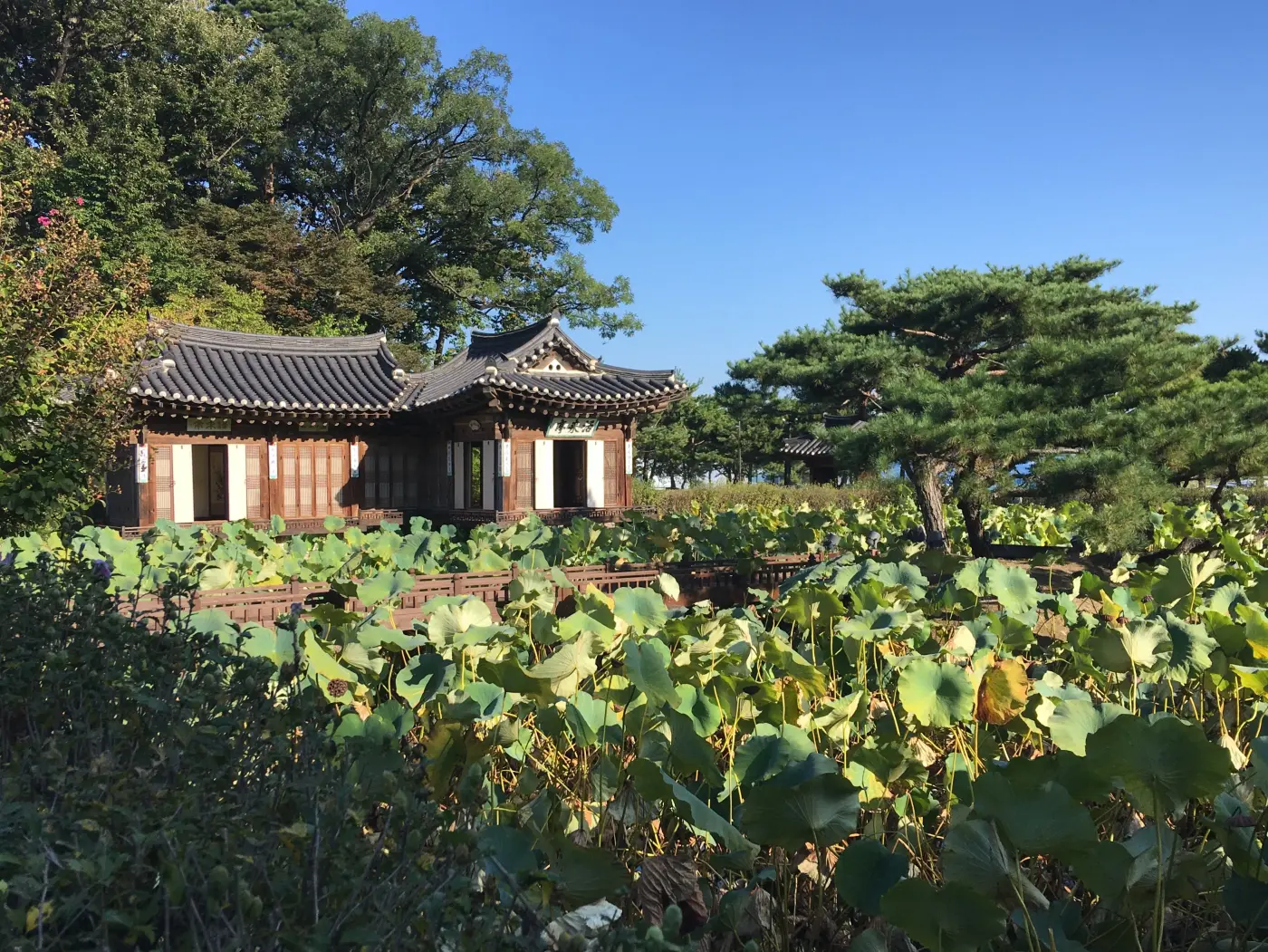
Inside the compound, look for Yeolhwadang, a raised building that once held the family's collection of thousands of books, and Hwallaejeong, a pavilion whose walls are made entirely of lattice doors, built over an artificial pond at the entrance. The house's own site gives the visiting hours as 09:00 to 18:00 in summer and 09:00 to 17:00 in winter, and Seongyojang also offers overnight hanok stays for anyone who wants to sleep in a historic house.
Jumunjin port and fish market
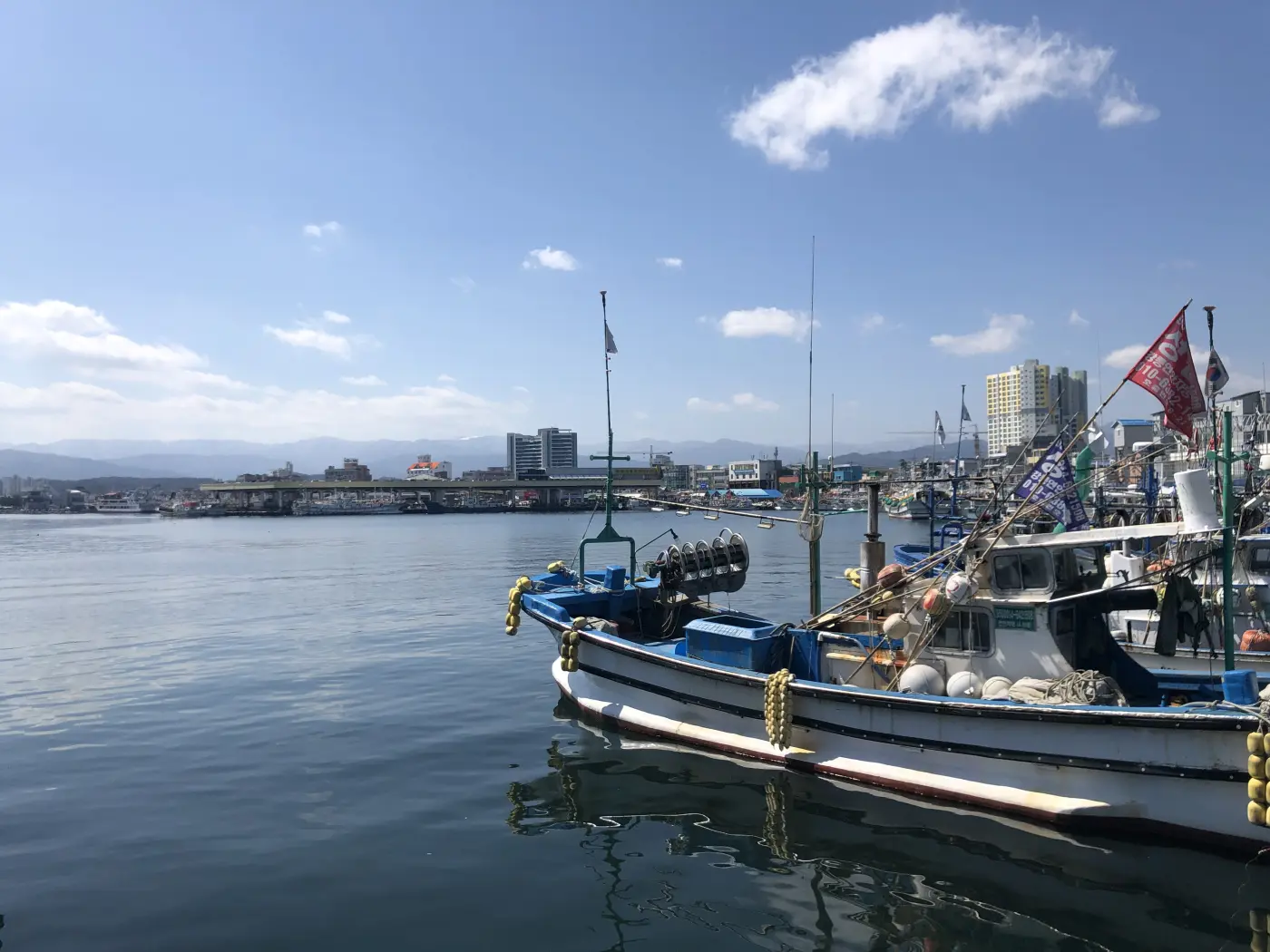
In the far north of the city, Jumunjin is one of the main fishing ports of the east coast. Gangneung City says about 350 fishing boats work from here, and that squid, Korean sand lance and pollack are among the main catches where the warm and cold currents of the East Sea meet. Next to the harbour is the fish market, where the catch comes straight off the boats and the city promotes fresh sashimi at reasonable prices. The port is close to a bus terminal, and Jumunjin Beach and Jumunjin Lighthouse are a short walk north.
What is on sale depends on the season and the day's catch, so ask the price before you agree to anything. If you are travelling with K-pop fans, the city also lists the beach bus stop at Hyangho Beach in Jumunjin, which appeared in a BTS album booklet and is now a photo spot.
Jeongdongjin: sunrise and a station by the sea
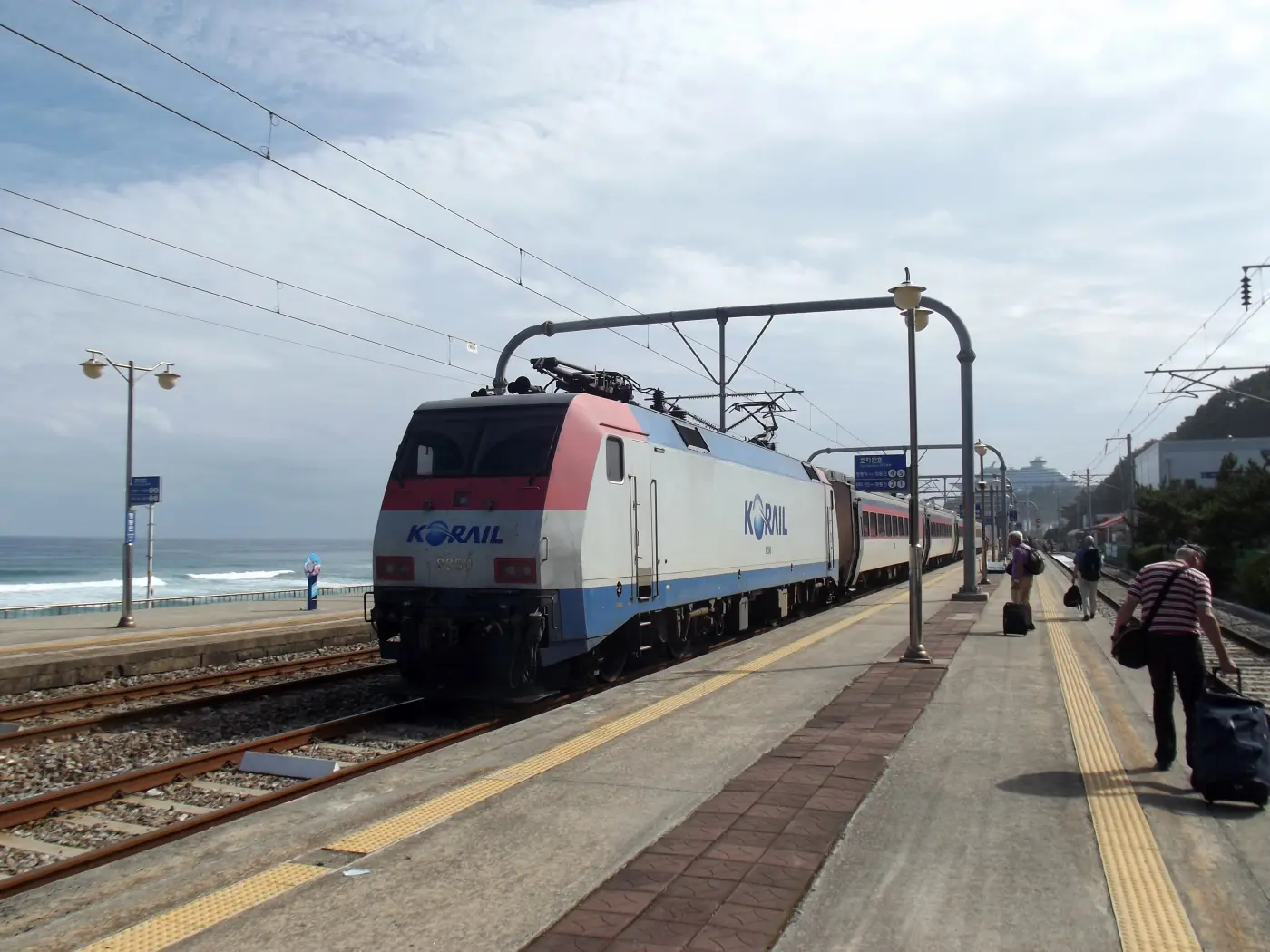
Jeongdongjin, on the southern coast of Gangneung, takes its name from its position: according to the city, it lies due east (jeongdong) of Gwanghwamun, the main gate of the old capital in Seoul. It is one of Korea's best-known places to watch the sunrise, especially on 1 January, and became famous after the 1995 TV drama Hourglass was filmed here; the park on the beach is named after it. Jeongdongjin Station stands right on the shore, and the city describes it as one of the stations closest to the sea anywhere. Trains run between Gangneung and Jeongdongjin, so you can come without a car.
South of the beach, the Jeongdong–Simgok Badabuchae-gil is a coastal trail along a raised marine terrace, designated a natural monument, linking Jeongdongjin with Simgok port. The city lists the swimming season at Jeongdongjin Beach as July and August. For sunrise, the easiest option is to stay in Jeongdongjin itself the night before, and check the sunrise time for your date.
Gangneung Danoje Festival
If you can plan around it, the Gangneung Danoje Festival is the city's great event. It is a national intangible heritage, designated in 1967, and UNESCO recognised it in 2005; it is now on UNESCO's Representative List of the Intangible Cultural Heritage of Humanity. The festival follows the lunar calendar: the rites begin with brewing a sacred liquor in the fourth lunar month and a procession from the Daegwallyeong pass, and the main days fall in the fifth lunar month, around Dano, the fifth day of that month, which in the solar calendar lands around late May or June. The centre is the Namdaecheon stream in town, with shamanic rites, the Gwanno mask drama, folk games and the Nanjang market, which UNESCO describes as Korea's largest outdoor market.
The 2026 festival ran in June. As of October 2026 the official festival site has not announced dates for 2027, so check danojefestival.or.kr before you plan a trip around it.
Where everything is, and how long to allow
| Place | What it is | How to get there | Time to allow |
|---|---|---|---|
| Gyeongpodae and Gyeongpo Lake | Historic pavilion above a lagoon with a 4 km shore path | City bus or taxi to Gyeongpo, about 6 km north of the centre | 1–1.5 hours |
| Gyeongpo Beach | The city's best-known beach, busy in July and August | On foot, about 1 km from Gyeongpodae | 30–60 minutes |
| Chodang Sundubu Village | Tofu restaurants serving soft tofu set with seawater | Just south of Gyeongpo Lake; walk or short taxi | 1 hour for a meal |
| Anmok Beach coffee street | Beachfront row of cafés | City bus (about 40 minutes from the intercity bus terminal) or taxi | 1–2 hours |
| Ojukheon | Birthplace of Yulgok and Sin Saimdang, with a city museum | City bus or taxi from the centre; check bis.gn.go.kr | 1–1.5 hours |
| Seongyojang | Late Joseon manor house with a pavilion over a lotus pond | Short taxi ride from Ojukheon or Gyeongpo Lake | 45–60 minutes |
| Jumunjin port and fish market | Major east-coast fishing port and its market | City bus or taxi to the far north of the city | 1.5–2 hours with a meal |
| Jeongdongjin | Sunrise beach, seaside station and coastal terrace trail | Train from Gangneung Station | Half a day |
| Gangneung Danoje (seasonal) | UNESCO-listed festival in the fifth lunar month | Namdaecheon stream, city centre | Half a day or more |
A day trip from Seoul
This plan keeps everything in the Gyeongpo area, so you spend your time looking around rather than travelling between far-flung sights.
- Early morning: take a morning KTX from Seoul Station or Cheongnyangni to Gangneung, and book your evening return at the same time.
- Mid-morning: taxi or bus to Ojukheon, which opens at 09:00. Allow an hour or so for the house and the memorial hall.
- Late morning: Seongyojang, a short ride away, for the manor house and Hwallaejeong pavilion.
- Lunch: soft tofu in Chodang Sundubu Village.
- Afternoon: walk to Gyeongpodae, then follow the lake path and cross to Gyeongpo Beach.
- Late afternoon: taxi to Anmok Beach for coffee by the sea, or take the Ttangjaebong pine path if you have time and energy.
- Evening: back to Gangneung Station for the train to Seoul.
One night in Gangneung
With a night, slow down on the first day and use the second for one of the coast's far ends.
- Day 1: follow the day-trip plan at an easier pace, adding the Heo Gyun and Heo Nanseolheon memorial park in Chodang and an evening walk round the lake. Stay near Gyeongpo or near the station.
- Day 2, option A (sunrise): stay in Jeongdongjin instead, watch the sunrise on the beach, walk part of the Badabuchae-gil, then take the train back to Gangneung.
- Day 2, option B (port): head north to Jumunjin in the morning for the harbour and fish market, have a seafood lunch, then return to Gangneung Station for the afternoon train.
- If your dates match, swap a day for the Danoje Festival by the Namdaecheon stream.
Before you go
- Book KTX tickets early for weekends, July and August, the cherry blossom season and New Year's Day.
- Ojukheon: 09:00–18:00, last entry 17:00; indoor halls may close on New Year's Day, Seollal and Chuseok. Seongyojang: 09:00–18:00 in summer, 09:00–17:00 in winter.
- Bus stops have little English, so use a map app or bis.gn.go.kr, and carry a transport card for transfers.
- Gangneung is mild for Korea in winter, but the Daegwallyeong pass inland gets very cold; our winter guide has the details for December to February.
- For other trips from the capital, see our guide to day trips from Seoul.
Comments
Sign in to leave a comment.
Sign in ·No account? Create one
Confirm your email address to comment — it takes one click.
No comments yet.