
Visiting Korea in Winter: Weather, Snow and Festivals
Planning a December–February trip to Korea? How cold it really gets, where the snow is, 2027 festival dates, Seollal closures and how to stay warm.
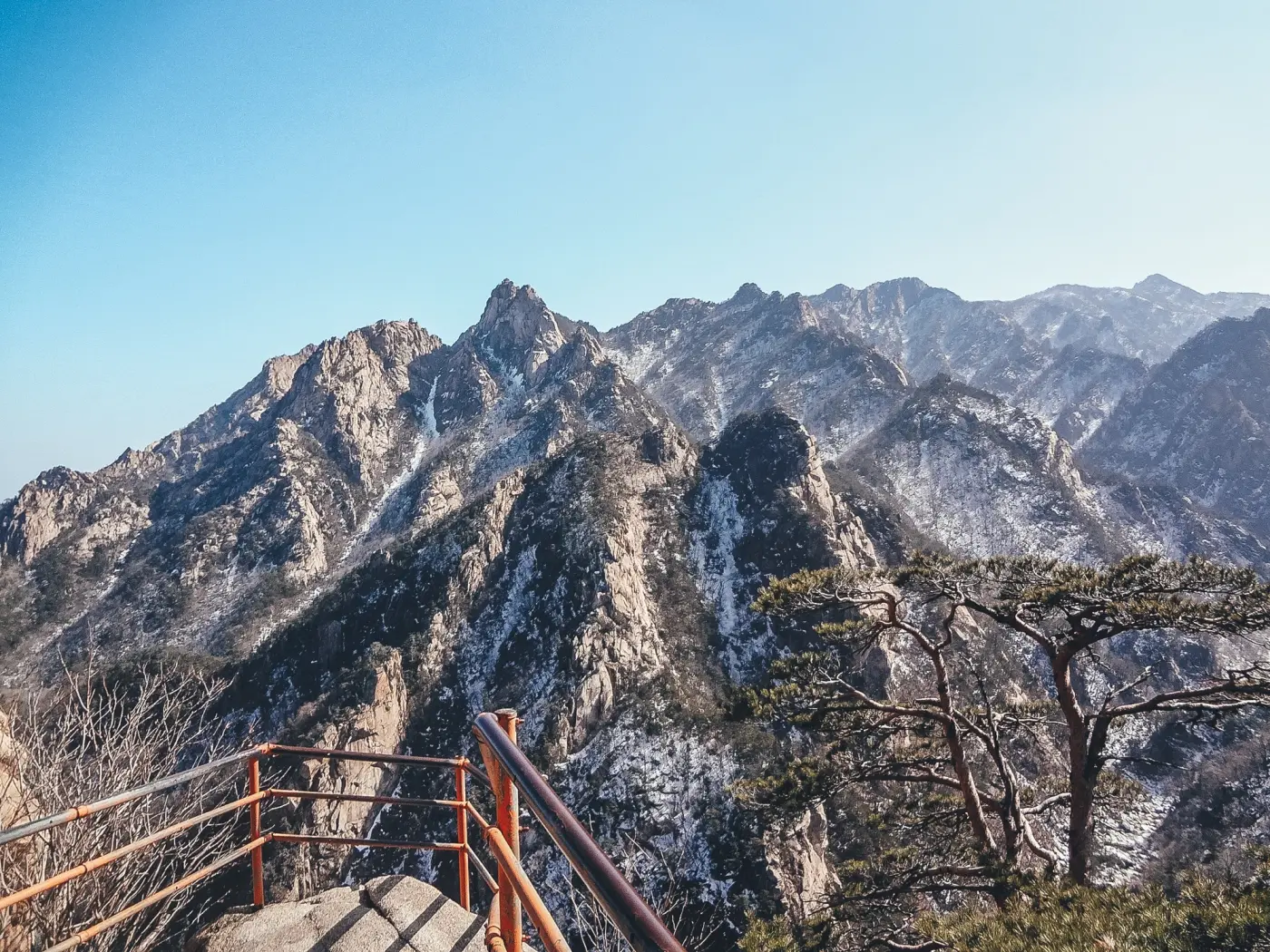
Most people picture Korea in spring blossom or autumn colour, and winter barely makes the shortlist. That is a pity, because December to February has its own logic. The skies are often clear, the big sights are calmer outside the holidays, the mountains of Gangwon turn white, and a whole calendar of festivals happens on frozen rivers. It is also the season when Korean comfort food makes the most sense.
It is cold, though, and the cold is a particular kind: dry, windy and bright rather than grey and damp. This guide covers what the weather is actually like according to the Korea Meteorological Administration (KMA), how winter changes from Seoul to the mountains and the south coast, the festivals with dates where they have been announced, skiing, skating, the Lunar New Year holiday, heated floors, food, air quality and how to stay upright on icy pavements.
What Korean winter weather is really like
Start with Seoul, because that is where most trips begin. In KMA's 1991–2020 climate normals, January is the city's coldest month, with an average temperature of -1.9°C. That is the average across day and night, so early mornings are colder and a sunny afternoon can feel mild out of the wind. Winter is also remarkably dry: December, January and February together bring 67.6 mm of precipitation in Seoul, about 5 per cent of the yearly total. KMA describes spring and winter as the relatively dry seasons, with average relative humidity around 56 per cent, and you will feel it on your lips and hands.
The normal date for Seoul's first snow is 20 November, but snow that settles in the city is never guaranteed. If snow is the point of your trip, look east. Daegwallyeong, the mountain pass and highland at 832 metres on the border of Pyeongchang and Gangneung, has a winter average of -5.3°C and an average January low of -12.2°C. KMA notes that it is the first place in Korea to see frost each year and that its heavy winter snow is what made it a natural home for ski resorts. Taebaek, a highland city ringed by mountains, averages -3.1°C in winter.
Go a little further, down to the coast, and the picture flips. Gangneung sits on the East Sea on the other side of the Taebaek range. When the cold north-westerly wind crosses those mountains it warms as it descends, and KMA records a winter average of 2.3°C there, above freezing. Busan, on the south coast, averages 5.0°C in winter. In other words, a single country can give you a snowy ski slope and a walk on a sunny beach in the same week.
- Daegwallyeong (Gangwon mountains)132.5mm
- Gangneung (Gangwon east coast)131.1mm
- Busan117.6mm
- Taebaek (Gangwon mountains)73.2mm
- Seoul67.6mm
- Cheorwon (inland Gangwon)65.5mm
One thing the chart shows is that Seoul's winter is genuinely dry, while the Gangwon mountains and the east coast receive about twice as much winter precipitation, much of it as snow at altitude. Cheorwon, inland near the border, is dry like Seoul but much colder, with an average January low of -11.8°C.
Winter month by month
| Month | What to expect | Good for |
|---|---|---|
| December | Cold and dry in Seoul; snow building in the Gangwon mountains. Short days. | Start of the ski season (check each resort's opening date), city lights, quiet palaces before the holidays |
| January | The coldest month. Seoul averages -1.9°C; Daegwallyeong's average low is -12.2°C. | Frozen-river festivals in Gangwon, including Hwacheon (9–31 January 2027), skiing, jjimjilbang evenings |
| February | Still cold, with Seoul a little milder by the end of the month. Seollal falls on 7 February 2027. | Late-season skiing and snow festivals; plan intercity travel around the Seollal break (6–9 February 2027) |
| Through the season | Fine-dust days are more frequent from December to March than in the rest of the year. | Check the daily air-quality grade before planning a long day outdoors |
Packing: dress for wind, then for heat indoors
VisitKorea's advice for winter is simply to wear thick outerwear at all times, and it lists winter jackets, gloves, scarves and non-slip shoes for walking on snow. The catch is that Korean interiors are warm, so the real skill is layering: a coat that blocks the wind, something light underneath, and a hat and gloves that fit in a pocket when you go inside. We have already written a full season-by-season list, so rather than repeat it here, see our guide to what to pack for Korea for the winter section and the small things people forget, like lip balm and hand cream for the dry air.
Ondol: why the floor is warm
The first thing many visitors notice in a Korean home or guesthouse in winter is not the radiator, because there often is not one. The heat comes up through the floor. This is ondol, the Korean underfloor heating tradition, and it matters enough that the Korea Heritage Service lists ondol culture as a National Intangible Heritage, designated on 30 April 2018, under the English name Ondol (Underfloor Heating).
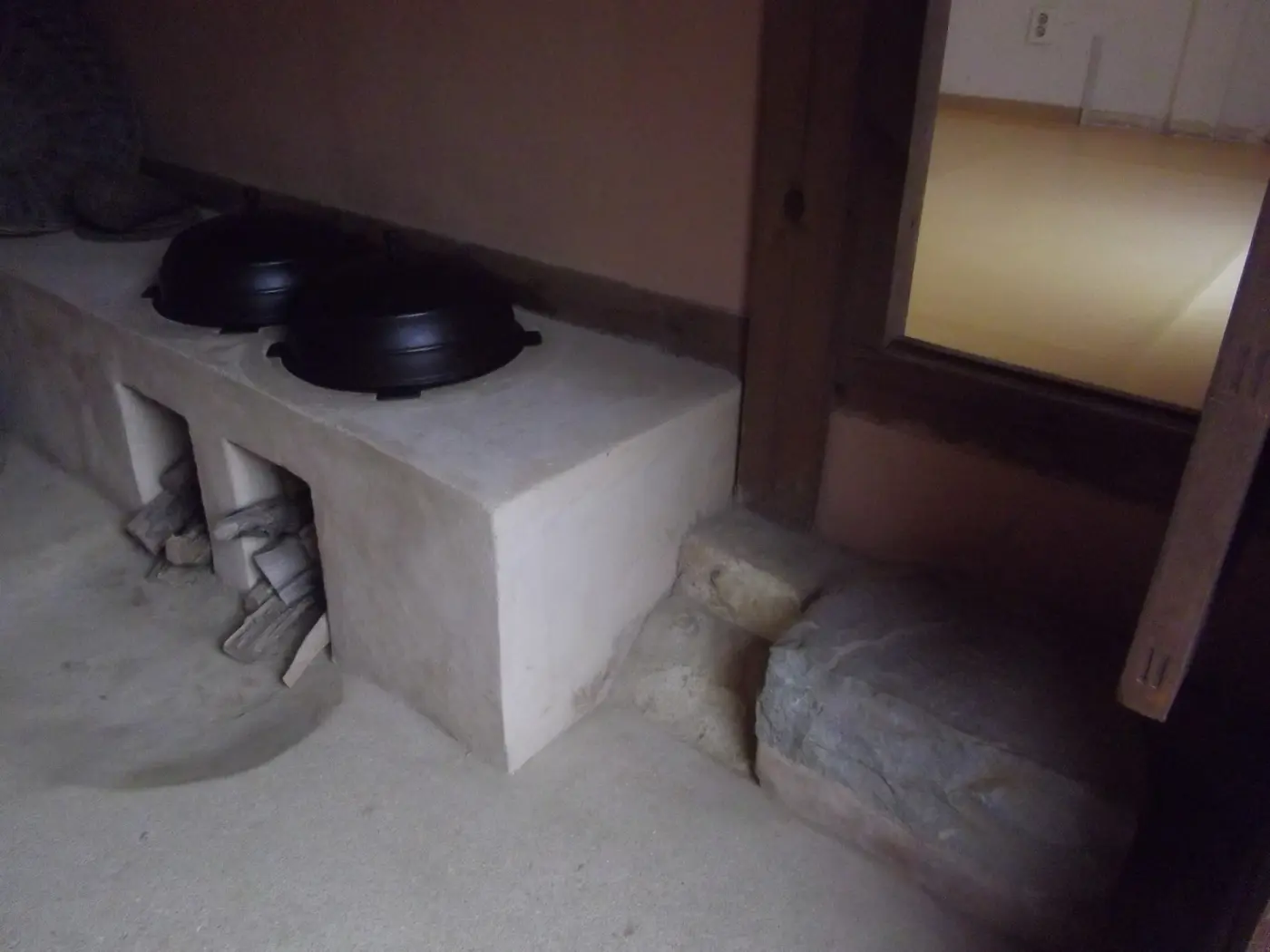
In the old form, a fire in the kitchen firebox cooked the rice and, at the same time, pushed hot air through stone channels under the floor of the next room before it left through a chimney. That is why Korean life traditionally happens close to the ground: people sit, eat and sleep on the warm floor. You will still see the habit today in restaurants with floor seating and in guesthouses where bedding is laid out on the floor.
Practically, this means three things for a winter visitor. Take your shoes off where the floor is raised, because that floor is someone's warm living space. Expect a room to be warmer than you set it if you sleep on the floor, and turn it down rather than up at night. And bring something for the dry air, because warm floors and cold, dry outside air together are hard on skin.
Jjimjilbang: the warmest place in town
If ondol is how Koreans heat their homes, the jjimjilbang is where they go to be properly, thoroughly warm. These bathhouses combine baths with hot rooms where everyone lounges in the same loose outfit, and they are at their best on a freezing evening. VisitKorea lists hot springs alongside ondol culture and warm soups as things that make winter worth it. If you have never been, our jjimjilbang guide walks you through the whole visit, from the shoe locker to the hot rooms.
Skiing and snowboarding in Gangwon
Korea is not the Alps, but it does have a real ski culture, and most of it is in Gangwon State. VisitKorea describes Gangwon as known for heavy snowfall, and its winter roundup lists ski resorts in Pyeongchang, Jeongseon, Hongcheon and Hoengseong, plus others within easy reach of Seoul. According to the same page, Korean resorts generally have slopes for every level from complete beginner to expert, ski lifts and rental shops, and many also run night skiing. Most add an indoor water park or a sauna, which helps if not everyone in your group wants to ski.
Two practical points from VisitKorea are worth taking seriously. The peak season runs from December to February, so book accommodation and shuttle buses early. And opening dates and the number of slopes in operation depend on the weather and snow-making, so check each resort's official website shortly before you go rather than relying on last year's dates. In the 2025–26 season, VisitKorea listed free shuttle buses from Jinbu Station, a KTX stop, to some Pyeongchang resorts; check whether that is still running before you build a plan around it. For the region as a whole, our Gangwon page is a good starting point, and our KTX guide explains how the high-speed train works.
Winter festivals on ice and snow
Gangwon's winter festivals are built around frozen streams and fresh snow, and they are among the most Korean things you can do in January. Dates change every year and depend on the ice, so treat the official festival site as the final word.
- Hwacheon Sancheoneo Ice Festival: the best known of the ice festivals, held when Hwacheoncheon Stream in Hwacheon County freezes over. Visitors fish through holes in the ice for sancheoneo, a mountain trout, or try catching them by hand, and there is sledding on snow and ice. The 2027 edition is set for 9 to 31 January 2027, a date that both the official festival site and VisitKorea give.
- Pyeongchang Trout Festival: held on a frozen stream in Jinbu-myeon, Pyeongchang, with ice fishing, fishing from inside tents and bare-handed catching. The 2026 festival ran from 9 January to 9 February 2026. As of late October 2026, the official site has not announced 2027 dates.
- Taebaeksan Snow Festival: Taebaek's signature winter event since its first edition in 1994, with large snow sculptures and winter games set against Taebaeksan, which became a national park in 2017. The 33rd festival ran from 31 January to 8 February 2026. As of late October 2026, the 2027 dates have not been announced.
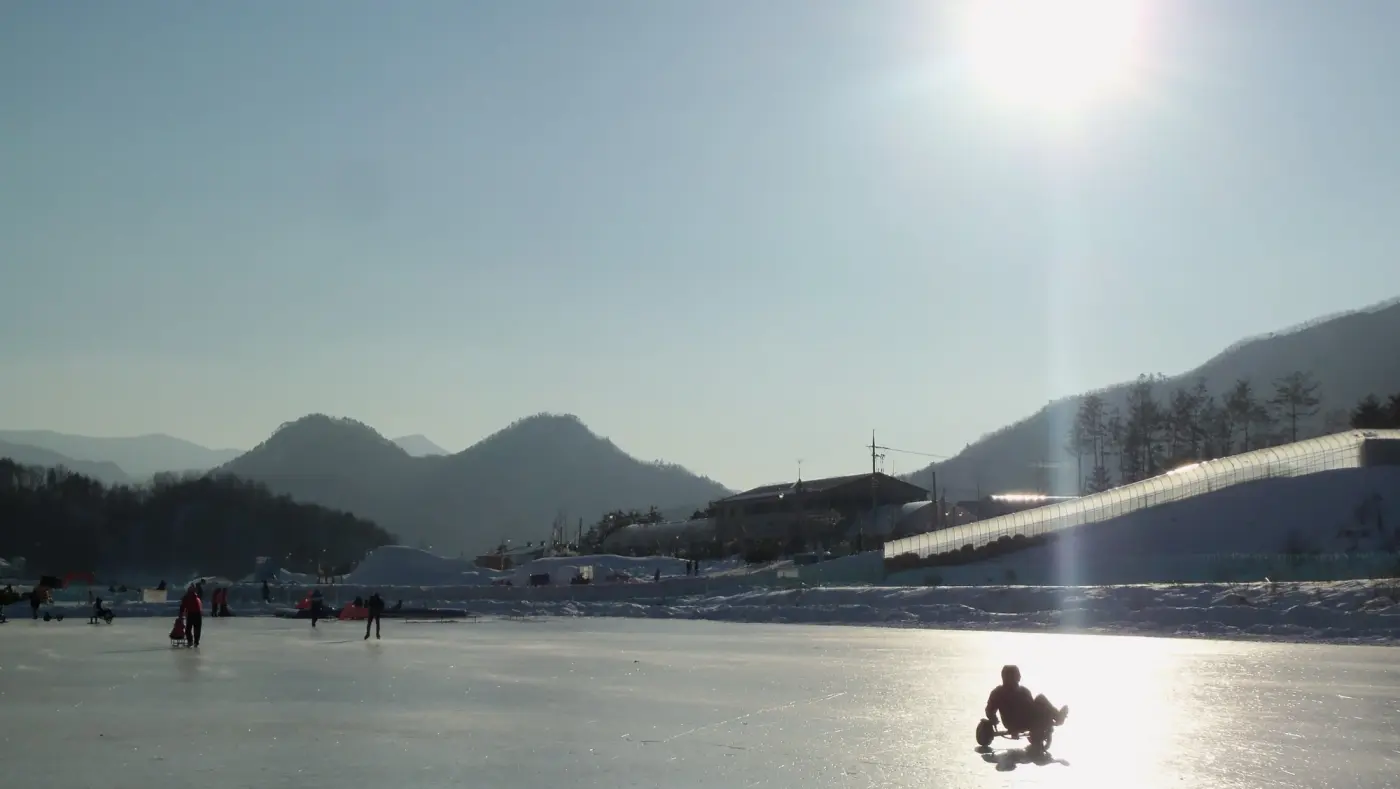
A few habits make these days far more pleasant. Dress for standing still, not for walking: ice fishing means sitting on a frozen surface for an hour or more, so an extra layer for your legs and warm boots matter more than a stylish coat. Stay inside the areas the organisers have opened, because a frozen stream is only safe where it has been checked and marked. Weekends are much busier than weekdays. And if you catch something, most festivals have a place to have it grilled on the spot.
Ice skating in Seoul
Seoul's best-known outdoor rink is the one the city sets up on Seoul Plaza, in front of City Hall. It first opened in 2004, and the 2025–26 season, its nineteenth winter, ran from 19 December 2025 to 8 February 2026 with skate and helmet hire included in the ticket. The city noted that, as an outdoor rink, it can stop operating during high fine-dust alerts or in snow and rain, so check its official page on the day.
As of late October 2026, the Seoul Metropolitan Government has not announced the 2026–27 season. Last season it opened in mid-December, but do not book a trip around it until the city publishes this winter's dates.
Seollal: the Lunar New Year holiday
Seollal, the Lunar New Year, is the single date that most changes how a winter trip works. In 2027, according to the official calendar published by the Korea AeroSpace Administration, Seollal falls on Sunday 7 February. Because it lands on a weekend, a substitute holiday is added and the break runs from Saturday 6 to Tuesday 9 February 2027. New Year's Day also creates a long weekend from 1 to 3 January 2027.
Seollal is when people travel to their family homes, and VisitKorea warns that trips during the holiday can take two to four times as long as usual because of traffic, while bus and train tickets are hard to get. In Seoul, the effect is the opposite: the city becomes quiet, and many restaurants and shops close for a day or more. Major palaces, national parks and amusement parks generally stay open, and in 2025 VisitKorea noted that most department stores closed for two days around the holiday. If your dates touch Seollal, book any intercity trains first, check opening days for small places on your list, and consider staying put in one city for the holiday itself.
The food of the day is tteokguk, a clear soup with sliced rice cakes, which VisitKorea describes as symbolising a fresh start to the year. Our holidays guide explains how the dates and the substitute-holiday rule work.
Warm food for cold days
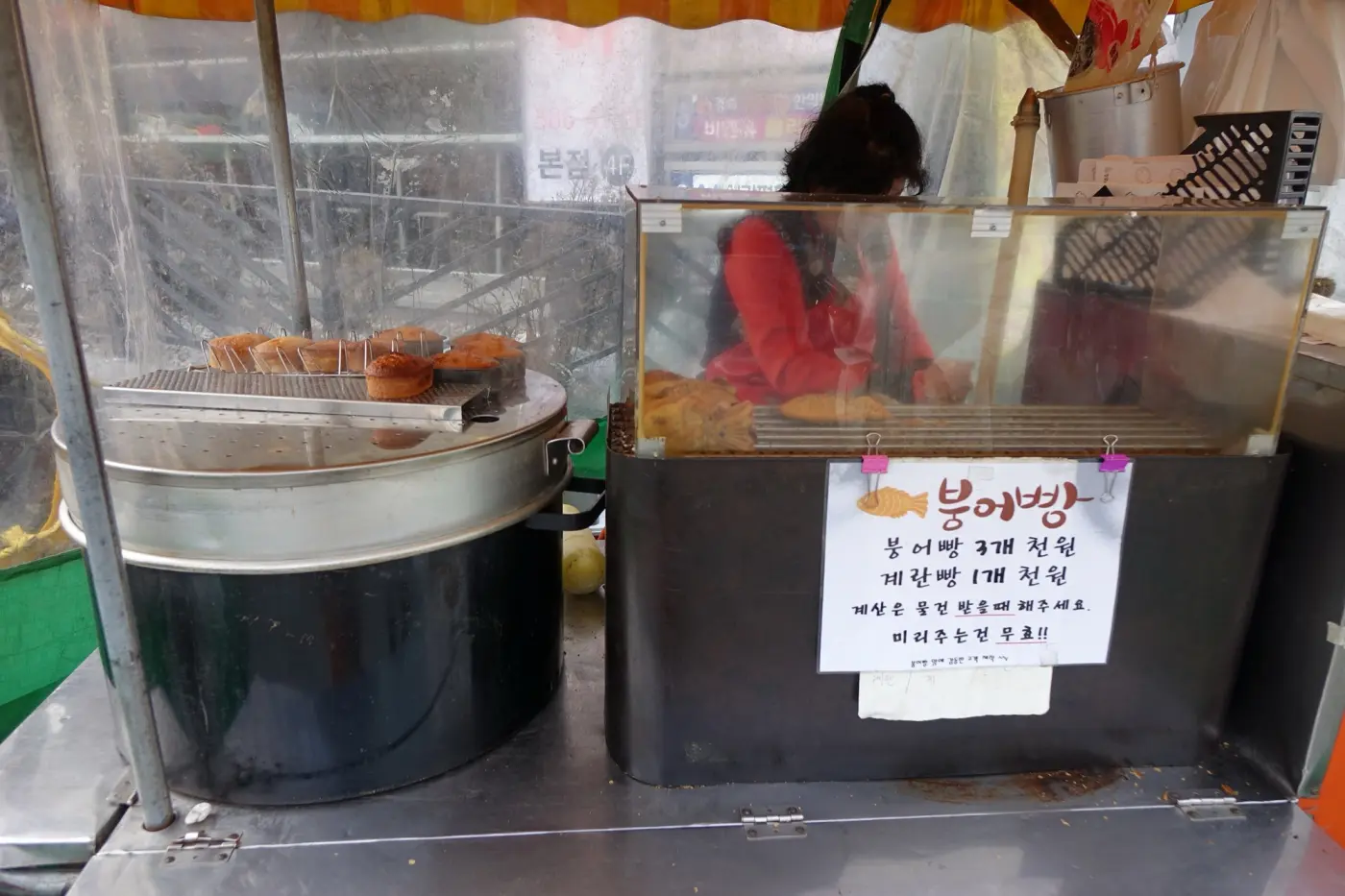
Winter is when Korean street food feels most necessary. The classic is bungeoppang, a fish-shaped pastry filled with sweet red bean and sold hot from small carts in the cold months. Hotteok, a griddle pancake with a molten brown-sugar filling, is the other street-cart staple; let it cool for a moment before the first bite. Eomuk, fish cake on skewers standing in hot broth, is a favourite partly because the cup of broth comes with it.
For a proper meal, look for soups and stews. Seolleongtang is a milky beef-bone soup that arrives unsalted so you can season it yourself. Gimchi-jjigae, kimchi stewed with pork and tofu, is on almost every everyday menu. Kalguksu, knife-cut noodles in a hot broth, and mandutguk, dumpling soup, are the kind of bowls that make a cold walk worthwhile. Our food pages explain each one, including how to eat it.
Fine dust: a winter and spring issue
Clear, cold days are common, but winter is also when air quality needs watching. According to AirKorea, the government's air-quality service, December to March is the period when high fine-dust concentrations occur most often, with average PM2.5 levels about 45 per cent higher than from April to November. Since 2019, the government has run a seasonal management programme over those months with extra emission controls.
For a visitor, the practical step is to check the daily air-quality grade, which appears in weather apps and on public screens as one of four Korean words. Our fine dust guide explains what each grade means. On a bad day, swap a long hike or an outdoor festival for museums, markets and the jjimjilbang, and keep the outdoor plans for a clearer morning.
Staying safe on ice and snow
The commonest winter injury for visitors is not frostbite but a fall on a frozen pavement. Shaded side streets, stairs to subway entrances and the polished stone in front of buildings can stay icy long after the main roads are cleared. Shoes with real grip help more than anything else. Walk with small steps, keep your hands out of your pockets so you can catch yourself, and take the handrail on stairs.
In the mountains, conditions change quickly, and winter days are short. Trails that are easy in autumn can be icy and partly closed in winter, so check the national park's notices before you set out, carry traction devices if you plan to hike on snow, and turn back early rather than late. Our Sokcho and Seoraksan guide covers the park's rules and closures in detail. If you need help in English, the Korea Travel Helpline answers on 1330 (+82-2-1330 from a foreign phone), and our emergency guide lists the numbers to call when something goes wrong.
So, is winter a good time to visit?
If you want comfortable walking weather, spring and autumn are easier, and our best-time-to-visit guide compares every month. But if you are happy to dress for the cold, winter offers things no other season does: frozen-river festivals, real snow in the mountains, quieter palaces outside the holidays, and the particular pleasure of a warm floor and a hot bowl of soup at the end of the day. Plan around Seollal, check the festival sites before you book, keep an eye on the air-quality grade, and Korea in winter can be one of the most memorable versions of the country.
Comments
Sign in to leave a comment.
Sign in ·No account? Create one
Confirm your email address to comment — it takes one click.
No comments yet.