
Seoul's Five Palaces: Which One Should You Visit?
Gyeongbokgung, Changdeokgung's Secret Garden, Deoksugung and more: how Seoul's palaces differ, which day each closes and how long to allow.
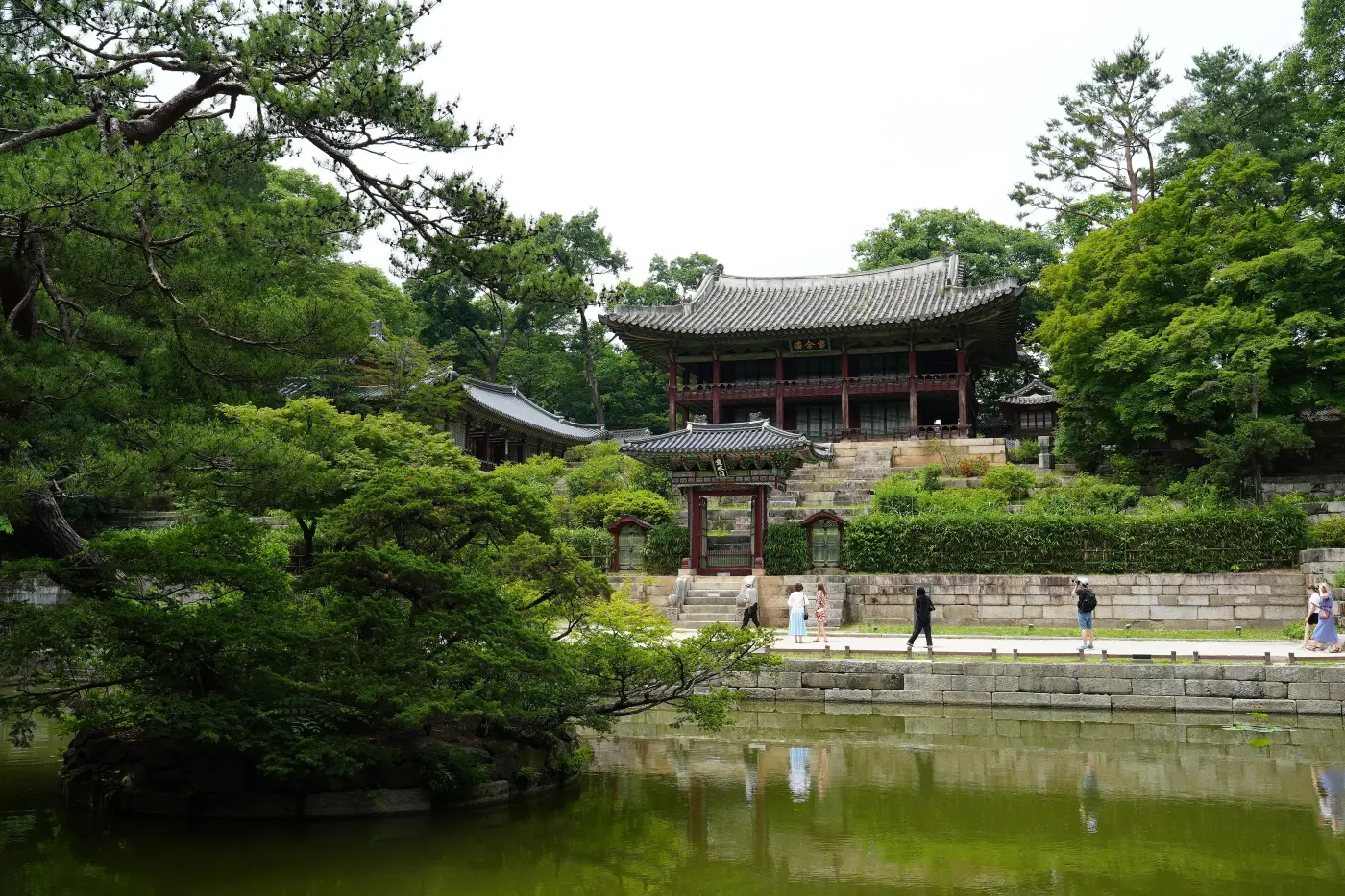
Seoul is one of the few capitals where you can walk from a royal palace to the next one in twenty minutes. Five palaces survive from the Joseon dynasty, founded in 1392, and the short-lived Korean Empire that followed it, and a royal shrine sits between them. Together they are known as the Five Grand Palaces, and they all lie inside the old city walls, a few subway stops apart.
Most first-time visitors only have time for one or two, and the guidebooks tend to treat them as interchangeable. They are not. One is a grand ceremonial capital, one is a garden you can only enter on a guided walk, one stays open until nine at night among office towers, and one is free and nearly empty. They do not even close on the same day. This guide explains what makes each one different, how long it really takes, and which one fits your trip.
If you are planning your first days in the city, our three-day Seoul itinerary already walks you through a Gyeongbokgung morning with the guard ceremony and the hanok lanes of Bukchon. This article takes a step back and compares all of them, so you can choose with your own dates and interests in mind.
The short answer
| Palace | Best for | Closed | Time to allow |
|---|---|---|---|
| Gyeongbokgung | A first visit: the largest palace, the main gate, the throne hall and two museums on the grounds | Tuesday | 2–3 hours |
| Changdeokgung and the Secret Garden | Architecture that follows the landscape; the guided Secret Garden (Huwon) | Monday | 1.5 hours; about 3 hours with the Secret Garden |
| Changgyeonggung | A quieter stroll, a pond and a 1909 glasshouse; open into the evening | Monday | 1–1.5 hours |
| Deoksugung | Korean and Western-style halls in the city centre; open until 9 p.m. | Monday | 1–1.5 hours |
| Gyeonghuigung | Free entry, few crowds, next to the Seoul Museum of History | Monday | 45 minutes–1 hour |
| Jongmyo Shrine | The solemn royal ancestral shrine, a UNESCO World Heritage site | Tuesday | About 1 hour |
Closing days: the detail that catches people out
According to the Royal Palaces and Tombs Center, the Korea Heritage Service office that runs the palaces, Gyeongbokgung and Jongmyo Shrine close every Tuesday, while Changdeokgung, Deoksugung and Changgyeonggung close every Monday. When a regular closing day falls on a public holiday or a substitute holiday, the site stays open and closes instead on the first non-holiday that follows. Gyeonghuigung is not on the centre's list; Visit Seoul, the city's official tourism site, gives it as closed on Mondays and on 1 January.
The useful consequence is that there is no day of the week when every palace is shut. On a Monday, go to Gyeongbokgung or Jongmyo. On a Tuesday, Changdeokgung, Changgyeonggung, Deoksugung and Gyeonghuigung are all open. Check this before you fix the order of your days, especially if you have only one free morning in Seoul.
Gyeongbokgung: if you only see one
Gyeongbokgung was founded in 1395, three years after the dynasty began, as the main palace of the new capital. Its official history notes that Hunminjeongeum, the original proclamation of the Korean alphabet, was created and distributed here. The palace burned during the Japanese invasion of 1592 and lay in ruins for about 270 years until King Gojong rebuilt it in 1867. Most of its buildings were then demolished during the colonial period, and the restoration that began in the 1990s is still filling the courtyards back in.
What sets it apart is scale and symmetry. You enter through Gwanghwamun, the main gate, and walk north through a line of gates to the throne hall, Geunjeongjeon, with the mountain Bugaksan rising behind the roofs. The National Palace Museum of Korea and the National Folk Museum of Korea are both on the grounds. It is also the busiest palace, so arrive near the 9:00 opening. Opening hours follow the seasons: until 17:00 from November to February, 18:00 from March to May and in September and October, and 18:30 from June to August, with last entry an hour before closing.
Free guided tours in English start at 11:00, 13:30 and 15:30, and in Japanese at 10:00 and 14:30, on every day the palace is open. They leave from the front of the information centre just inside Heungnyemun Gate and last an hour to an hour and a half, and groups of fewer than ten people do not need to book. Inside, two buildings are worth a slow look: Gyeonghoeru, the banquet pavilion on its pond, and Hyangwonjeong, the small pavilion on an island further north. Special tours of Gyeonghoeru's upper floor run in spring and autumn, but the official page says they are given in Korean only and need advance online booking.
Changdeokgung and the Secret Garden
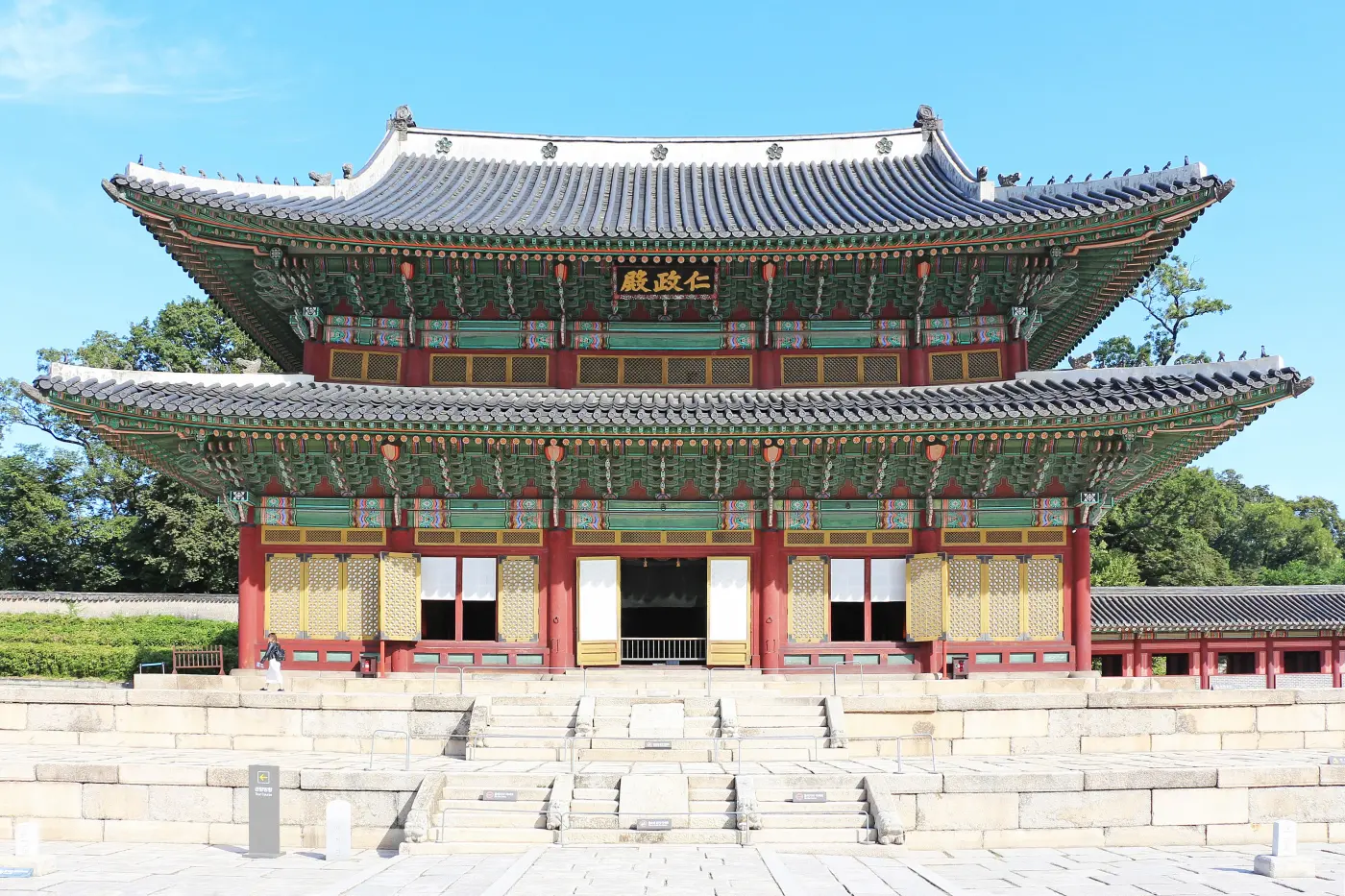
Changdeokgung was built in 1405 as a secondary palace, and after the 1592 invasion it was the first to be rebuilt, in 1610. For the next 270 years or so it served as the kings' main residence. Unlike Gyeongbokgung's straight lines, its buildings bend around the hills, and the official history calls it the most Korean-style of the palaces for the way it fits its surroundings. It became a UNESCO World Heritage site in 1997. It was also home to the last members of the royal family: the official history records Princess Deokhye and Crown Princess Yi Bangja dying here in 1989.
The reason many people choose it, though, is the Secret Garden, Huwon, which Visit Seoul says takes up about sixty percent of the palace grounds. It is a wooded valley of ponds and pavilions, and the view across Buyongji Pond to the two-storey Juhamnu Pavilion is one of the best-known images of Seoul. You can only enter on a guided walk at a fixed time. Each foreign-language session is capped at 100 people, half sold online and half on site.
The Royal Palaces and Tombs Center lists English sessions at 10:30, 11:30 and 14:30 all year, plus 15:30 from March to November, and a Japanese session at 13:30 on Wednesdays, Fridays and Sundays. The walk takes about 70 minutes; the Ongnyucheon area at the far end is currently closed for conservation work until further notice. The meeting point is at the garden entrance, which the official page says is at least a 15-minute walk from the Geumhomun entrance, so do not cut it fine. You also need a regular Changdeokgung ticket on top of the garden ticket.
Online tickets go on sale at 10:00 six days before your visit, first come, first served, until the day before. On-site tickets are sold from 9:00 on the day. The official fees page warns that in April and May, and October and November, both kinds sell out very quickly. Without the garden, plan on about an hour and a half for the palace buildings; with it, half a day. Free tours of the buildings run in English at 10:15 and 13:15 from Tuesday to Sunday, and in Japanese at 11:00 on Wednesdays, Fridays and Sundays.
Changgyeonggung: the quiet neighbour, open late
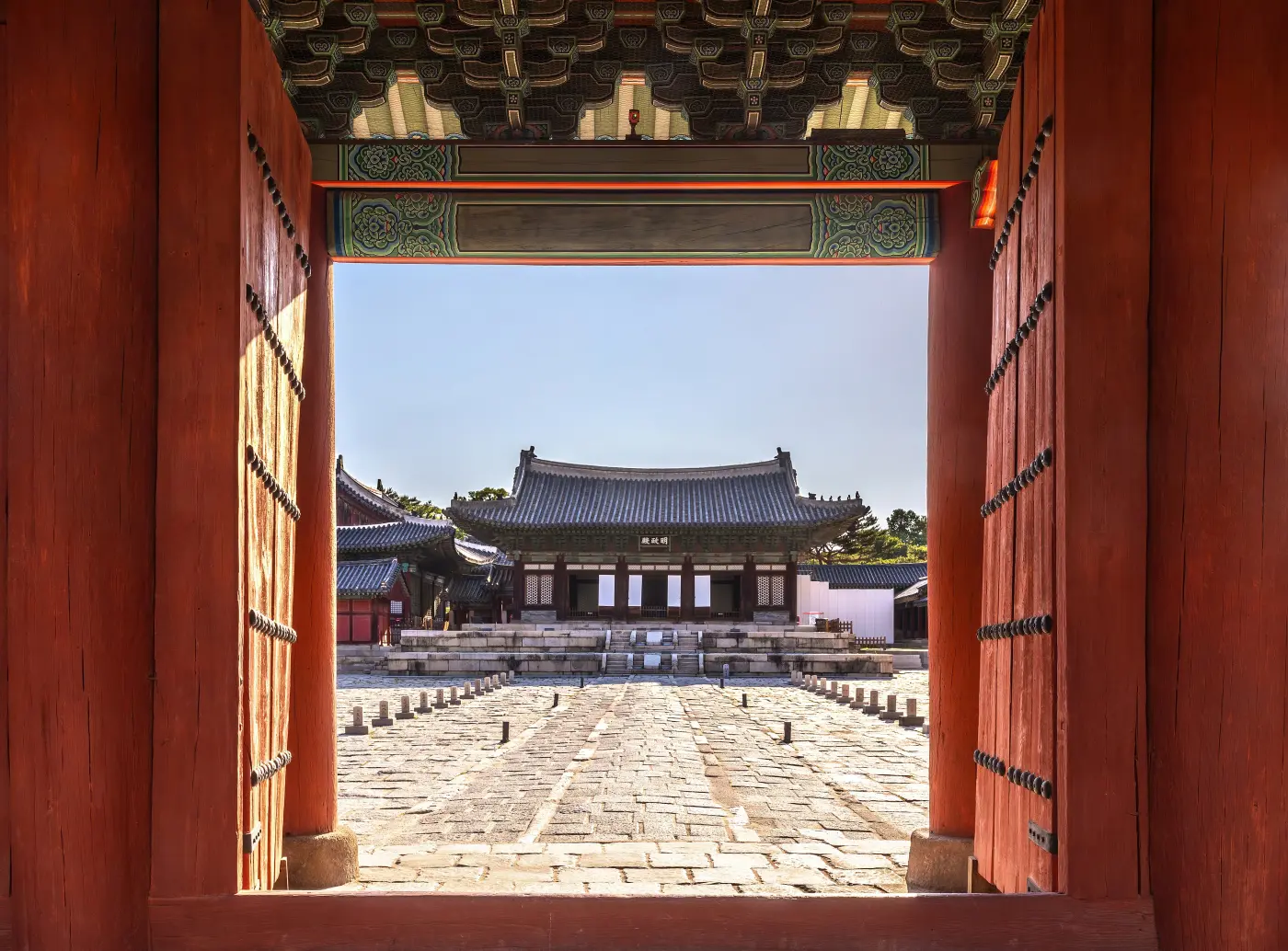
Changgyeonggung sits right next to Changdeokgung, and together they were once called the East Palace. King Seongjong expanded it in 1483 for his grandmother, mother and aunt, so it was mainly a place where royal women lived rather than a seat of government. It also has the most painful modern history. In 1909 a zoo and a botanical garden were built inside, in 1911 it was downgraded to a park called Changgyeongwon, and it only got its name back in 1983, when restoration began.
Today that history gives it a different character. It is greener and calmer than its neighbours, with Chundangji Pond and a white wood-and-glass greenhouse from 1909, which Visit Seoul describes as Korea's first Western-style greenhouse. Myeongjeongjeon, the main hall, is the other highlight. Changgyeonggung is open from 9:00 to 21:00 all year, with last entry at 20:00. In the evening, visitors are moved into a night-viewing area around Honghwamun Gate, Myeongjeongjeon, Tongmyeongjeon Hall, the pond and the greenhouse, and the greenhouse interior closes at 18:00 from December to February.
Free tours run in English at 11:00 and 15:00 and in Japanese at 10:00, from Tuesday to Sunday, starting beside Okcheongyo Bridge and lasting about an hour. On Saturdays, Sundays and public holidays, the official schedule shows a gate on Yulgok-ro open between Changgyeonggung and Jongmyo, so you can combine the two on foot.
Deoksugung: palace meets the modern city
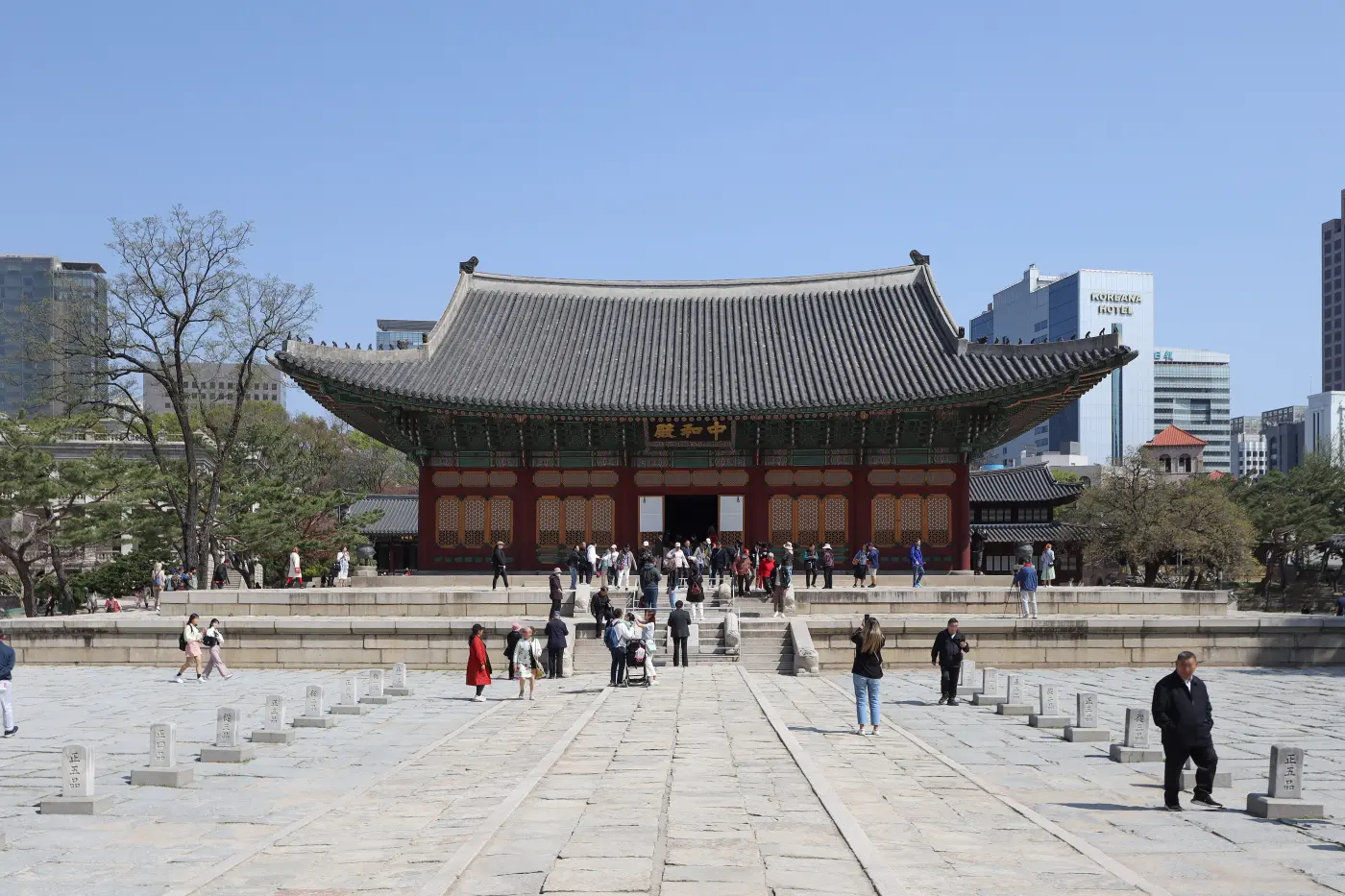
Deoksugung began as a temporary residence in 1593, when every palace in the capital had been destroyed, and became an official palace in 1611. Its big moment came in 1897, when Emperor Gojong declared the Korean Empire and made it the imperial palace. Western-style buildings went up alongside the traditional halls, including Seokjojeon, a stone neoclassical hall completed in 1910. After Gojong was forced to abdicate in 1907 the palace was renamed Deoksugung, and in 1946 and 1947 Seokjojeon hosted the US–Soviet Joint Commission on Korea's future.
That mix is why Deoksugung is worth a visit even if you have seen Gyeongbokgung. You can stand in a Joseon courtyard and look up at glass towers, then walk into a European-style hall. It is beside City Hall Station, and it stays open from 9:00 to 21:00 every day except Monday, with last entry at 20:00, which makes it the easiest palace to fit in after a day of sightseeing. The stone-wall road along its outer wall is a favourite city walk.
Free tours of the grounds run in English at 10:45 and 13:30 and in Japanese at 9:30 and 16:00, from Tuesday to Sunday, and take about 45 minutes. The Daehan Empire History Museum inside Seokjojeon can only be seen on a guided visit booked online in advance, although the official page notes that English sessions at 11:50 and 14:50 can also be booked on site. Visit Seoul lists a royal guard-changing ceremony in front of Daehanmun, the main gate, on every day except Monday, cancelled in rain or extreme heat or cold.
Gyeonghuigung: free, and almost empty
Gyeonghuigung is the palace most visitors miss. Completed in 1623 under King Gwanghae, it was known as the West Palace and once had around a hundred buildings. Most of them were destroyed during the colonial period, and the restored part reopened to the public in 2002. What you see today is the main hall and a handful of restored buildings, a walk of ten to fifteen minutes west of Gwanghwamun Station.
It is smaller and less complete than the others, but it is calm, and Visit Seoul lists admission as free. Hours are 9:00 to 18:00, closed on Mondays and on 1 January. The Seoul Museum of History stands on the former palace grounds, so the two make a natural pair for a rainy or quiet afternoon. Allow 45 minutes to an hour for the palace itself.
Jongmyo Shrine: not a palace, and that is the point
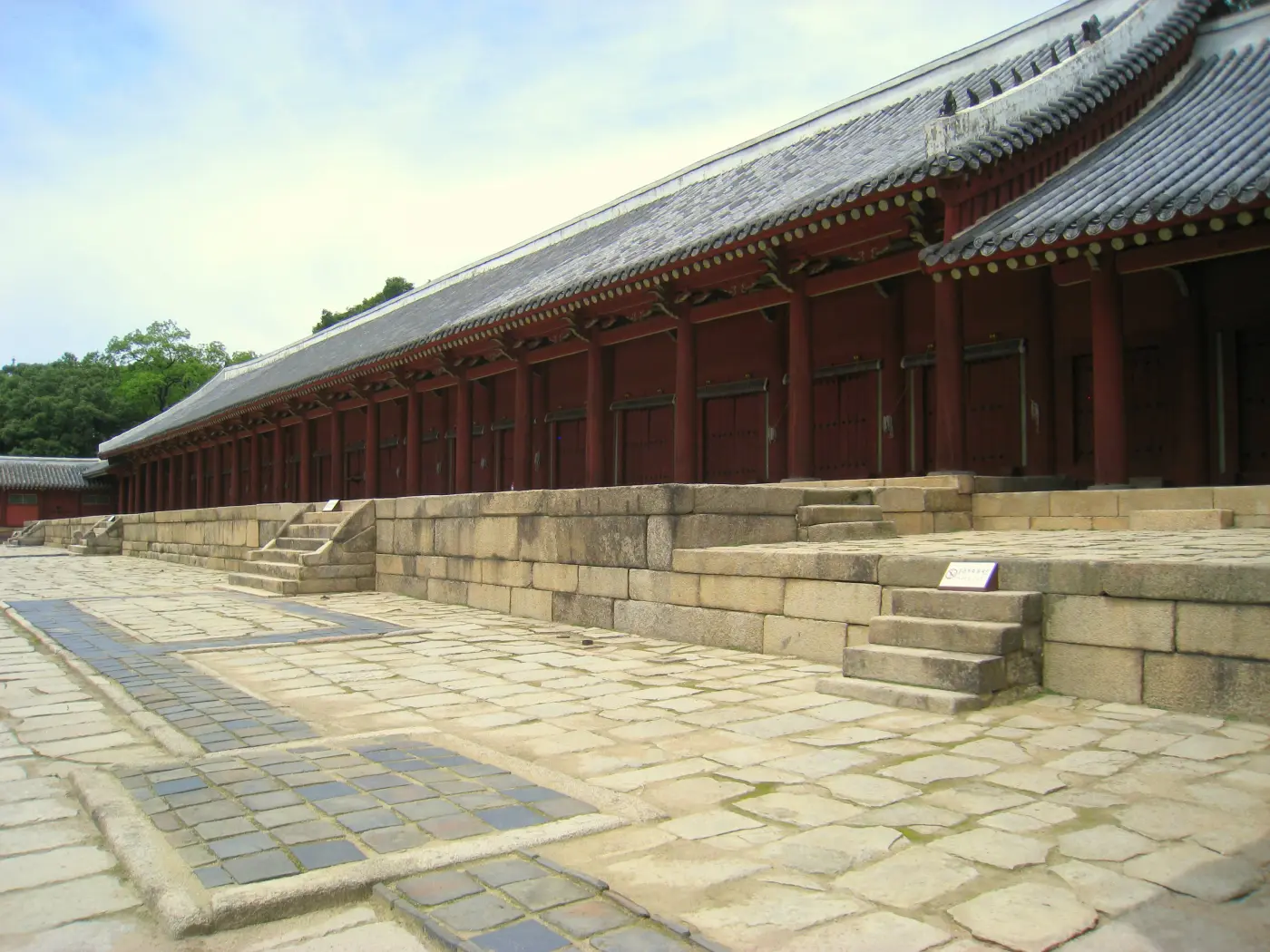
Jongmyo is the royal ancestral shrine, where the spirit tablets of Joseon's kings and queens, and of the emperors and empresses of the Korean Empire, are kept and honoured. It was founded in 1395 following the classical rule that the ancestral shrine stands to the left of the palace and the altar of land and grain to the right. The main hall was extended several times over the centuries and now has 19 bays in one unbroken line; Visit Seoul describes it as about 109 metres long. Jongmyo became a UNESCO World Heritage site in 1995, and its ritual and ritual music were added to UNESCO's intangible heritage list in 2001. According to the shrine's own history, the royal ancestral rite has been held on the first Sunday of May since 1971.
Expect something quieter and plainer than a palace: no colourful throne halls, just long red colonnades, raised stone walkways and old trees. On most weekdays you can only enter at fixed times with a guide. English tours start at 10:00, 12:00, 14:00 and 16:00, and Japanese tours at 9:40, 11:40, 13:40 and 15:40. On Saturdays, Sundays and public holidays you can walk around on your own. The official pages do not quite agree on how Wednesdays work, so check the Jongmyo schedule before you go midweek.
Hanbok, free entry and the combined ticket
Wearing hanbok gets you into Gyeongbokgung, Changdeokgung, Deoksugung, Changgyeonggung and Jongmyo for free, and the official FAQ confirms that this applies to foreign visitors as well. Both traditional and modernised hanbok count, but you need a wrap-collar jacket (jeogori) and a hanbok skirt or trousers worn together, fastened properly. A long overcoat on its own does not qualify, and nor does a jeogori over jeans or a hanbok skirt with a T-shirt. Our K-drama article looks at the palace-in-hanbok experience in more detail.
The official fees page lists other free-admission groups too, including foreign visitors aged 18 and under or 65 and over, with proof of age. It also lists every Wednesday as "Culture Day" with free entry, except at Gyeongbokgung and the Secret Garden. Gyeonghuigung is free on any day it is open.
If you plan to see several palaces, the integrated palace ticket covers one visit each to Gyeongbokgung, Changdeokgung, Changgyeonggung, Deoksugung and Jongmyo within six months of purchase. You can buy it at any of their ticket offices, but it does not include the Secret Garden, and it can only be refunded at the palace where you bought it, before any part has been used.
Night visits
Two palaces are open in the evening as a matter of routine: Deoksugung and Changgyeonggung, both until 21:00 with last entry at 20:00. Gyeongbokgung and Changdeokgung hold special night programmes only in certain seasons, with separate tickets and their own booking rules that change from year to year. Treat any date you read on a blog as a rumour and check the official palace site and its notices for the current season.
So which palace should you choose?
- Only one palace on your first trip: Gyeongbokgung, unless it is a Tuesday.
- Gardens, photography or a slower pace: Changdeokgung with the Secret Garden. Book online six days ahead or arrive at 9:00 for on-site tickets.
- Evening plans: Deoksugung or Changgyeonggung, both open until 21:00 except on Mondays.
- A Monday in Seoul: Gyeongbokgung or Jongmyo. A Tuesday: Changdeokgung, Changgyeonggung, Deoksugung or Gyeonghuigung.
- Small budget or a dislike of crowds: Gyeonghuigung and the Seoul Museum of History.
- A weekend history walk: Jongmyo and Changgyeonggung, linked by the Yulgok-ro gate on weekends and public holidays.
Geography helps too. Changdeokgung, Changgyeonggung and Jongmyo form one cluster on the east side of the old city; Gyeongbokgung and Gyeonghuigung sit to the west; Deoksugung is by City Hall. Two palaces in a day is comfortable, and three is possible only if one of them is a quick visit. Palace grounds involve a lot of walking on gravel and stone, so wear shoes you trust.
Getting there
All of them are easy to reach by subway. For Gyeongbokgung, use Gyeongbokgung Station on Line 3 (Exit 5) or Gwanghwamun Station on Line 5 (Exit 2). Changdeokgung is a short walk from Anguk Station on Line 3 (Exit 3). For Changgyeonggung, Visit Seoul gives Hyehwa Station on Line 4 (Exit 4), about 800 metres away. Deoksugung is next to City Hall Station on Lines 1 and 2. Gyeonghuigung is between Gwanghwamun Station (Line 5, Exit 1) and Seodaemun Station (Line 5, Exit 4), and Jongmyo is a few minutes from Jongno 3-ga Station (Exit 8). Our getting-around guide explains T-money cards and how the subway works.
Fitting palaces around closing days, Secret Garden ticket releases and night openings is exactly the kind of puzzle that eats into a holiday. If you would rather not solve it yourself, Haeva can build a day-by-day plan around your own dates, with the palaces placed on the days they are open.
Comments
Sign in to leave a comment.
Sign in ·No account? Create one
Confirm your email address to comment — it takes one click.
No comments yet.