
Korean Convenience Stores: A Visitor's Survival Guide
Triangle gimbap, in-store ramyeon, 1+1 deals, T-money top-ups and alcohol ID checks: how Korea's convenience stores work and what locals expect of you.
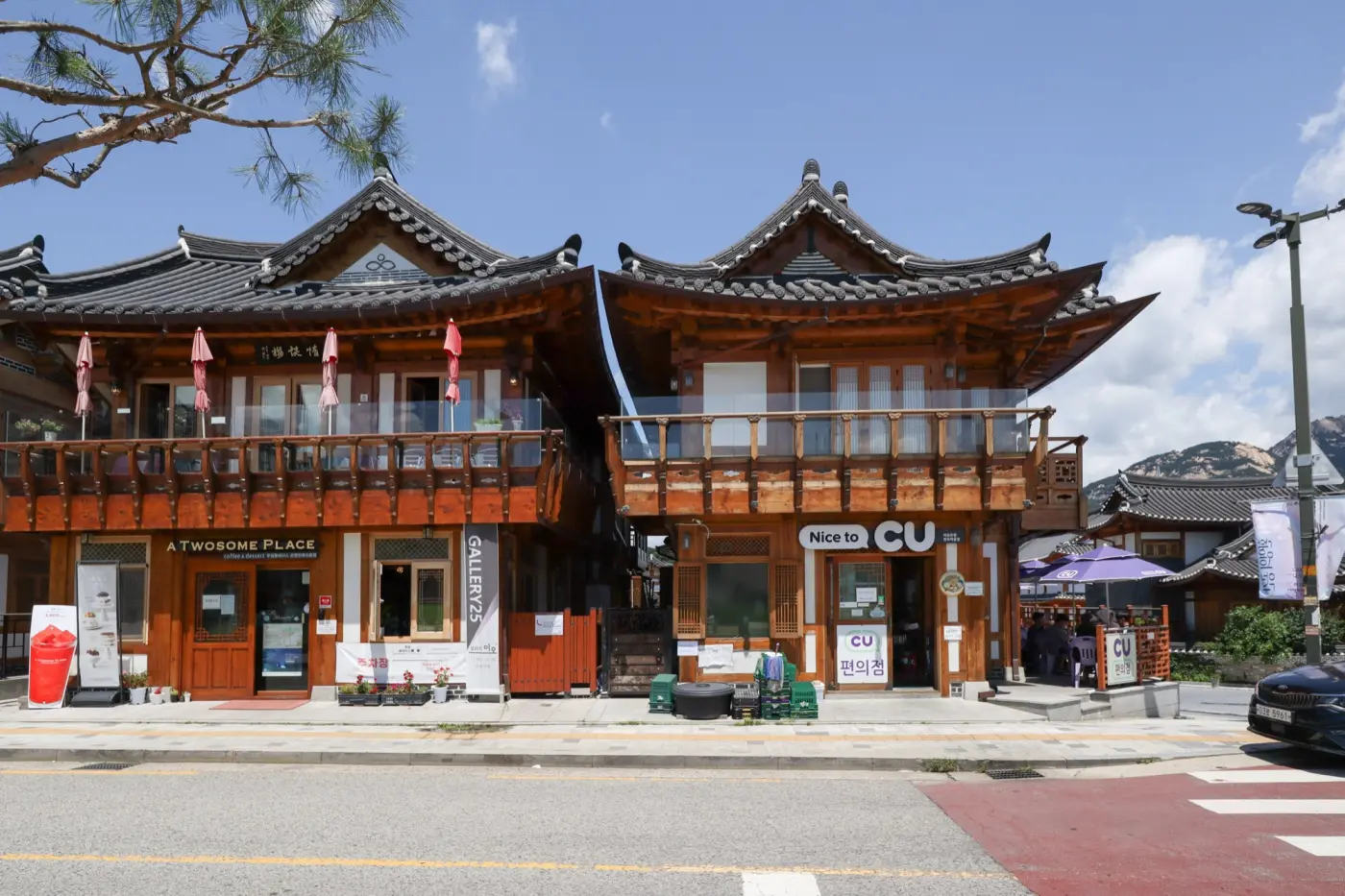
Within an hour of landing in Korea you will have walked past a convenience store, and probably several. They sit on almost every block in the cities, at the bottom of office towers, inside subway stations and next to bus stops in small towns. Koreans call them pyeonuijeom (편의점), and for a traveller they quietly solve more problems than any app: breakfast at six in the morning, a hot meal at midnight, a transit card, cash, a cold drink on a humid afternoon, and somewhere to sit down for ten minutes.
This guide is written by people who live here and use these shops every day. It explains what to eat, how the hot-water machines and microwaves work, what the 1+1 stickers mean, which errands you can run at the counter, what the law says about alcohol, and the small clean-up habits that locals notice. We have kept it practical. If you want the drama version, the ramyeon-by-the-Han-River scene, our K-drama article covers it, and how to pay for things in general is in our money guide, so we will not repeat either here.
The one-minute version
| Need | What to look for | Tip |
|---|---|---|
| A quick, cheap meal | Chilled shelves of triangle gimbap, gimbap rolls and dosirak (boxed meals) | Packaging is in Korean; your phone camera's translation reads labels well |
| Something hot | Microwave and hot-water dispenser near the window counter | Usually self-service; fill cup noodles to the line printed inside |
| A place to sit | Window counter, small tables, sometimes tables outside | Clear up before you leave and sort your rubbish into the bins |
| A bargain | Stickers marked 1+1 or 2+1 on shelf edges and fridge doors | Bring all the items in the deal to the counter together |
| A transit card | T-money or other transport cards at the counter | Bring cash for top-ups; see our money guide |
| Cash | An ATM inside the store | Fees are often higher than at bank ATMs; look for a Global sign |
| Beer or soju | Fridges of beer, soju and makgeolli | Carry your passport; sellers must check age and ID |
| Late at night | Signs reading 24시 (24 hours) | Many stores never close, but not all; stores inside buildings often keep the building's hours |
Reading the sign: 편의점 and 24시
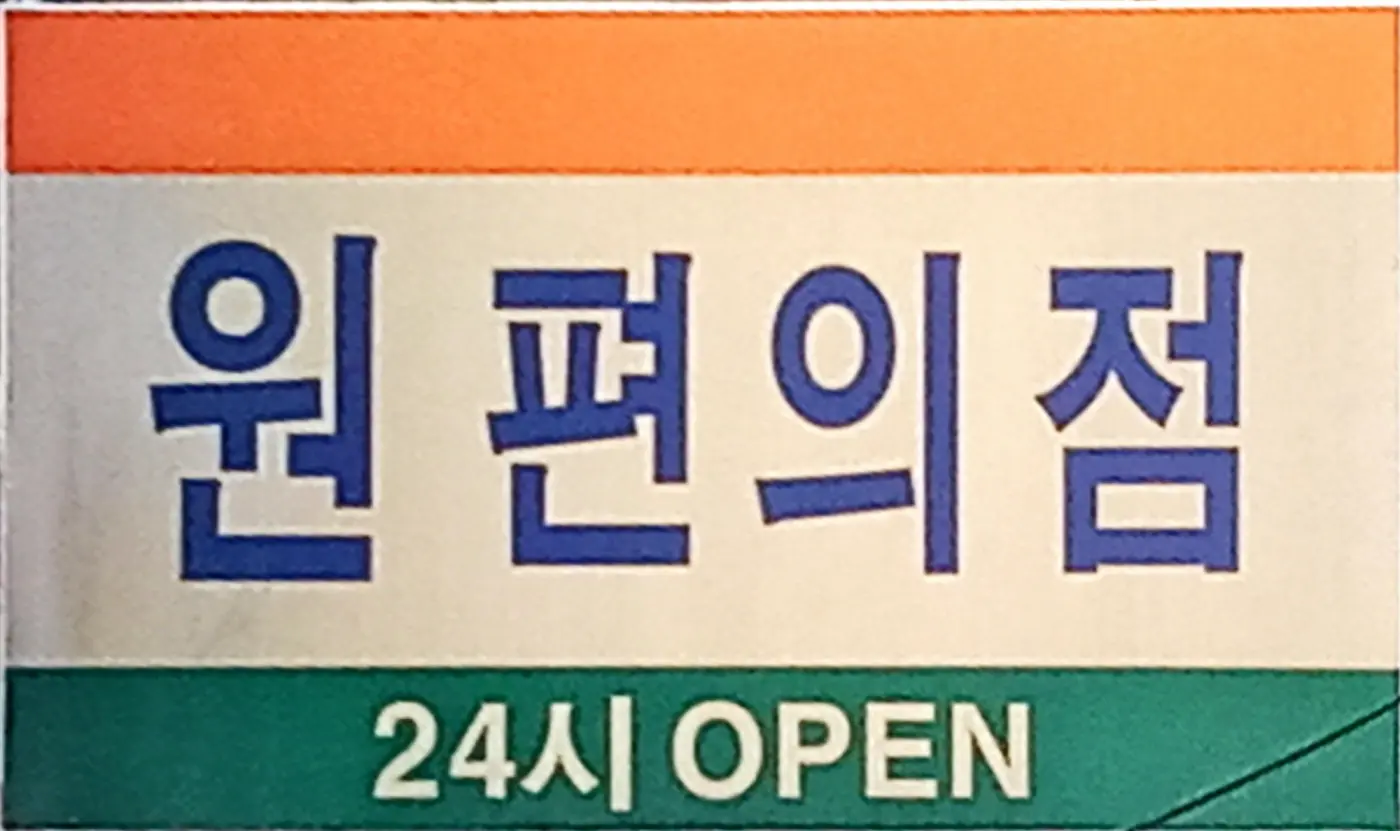
Most stores belong to a handful of national chains with bright, instantly recognisable signs, but it is worth learning the three Hangeul blocks 편의점 anyway. Independent shops and stores tucked into stations or public buildings often use the word rather than a logo, and it shows up on maps and directory boards. The other useful sign is 24시, short for 24 hours.
The Korea Tourism Organization lists round-the-clock shopping as one of the things that make the country easy for visitors: it says many convenience stores, restaurants and ATMs are open 24/7 all year round, so you can buy food and drinks, withdraw cash and charge transportation cards even in the small hours. The key word is many. In practice, stores inside office buildings, universities, hospitals and some stations follow the building's hours, and in quieter towns a shop may simply close at night. If you are arriving on a late flight or train, it is worth noting where the nearest 24시 store is before you need it.
What to eat: the convenience-store menu
Korean convenience stores are serious about food, and the chilled shelves near the counter are where most visitors start. Visit Seoul, the city's official tourism site, describes how the boxed lunches called dosirak have moved on from being simply cheap: you will find sets built around bulgogi or other Korean main dishes with a selection of side dishes, and some with mixed-grain rice. Next to them are rolls of gimbap and the triangle-shaped rice parcels called samgak gimbap, the Korean cousin of the onigiri.
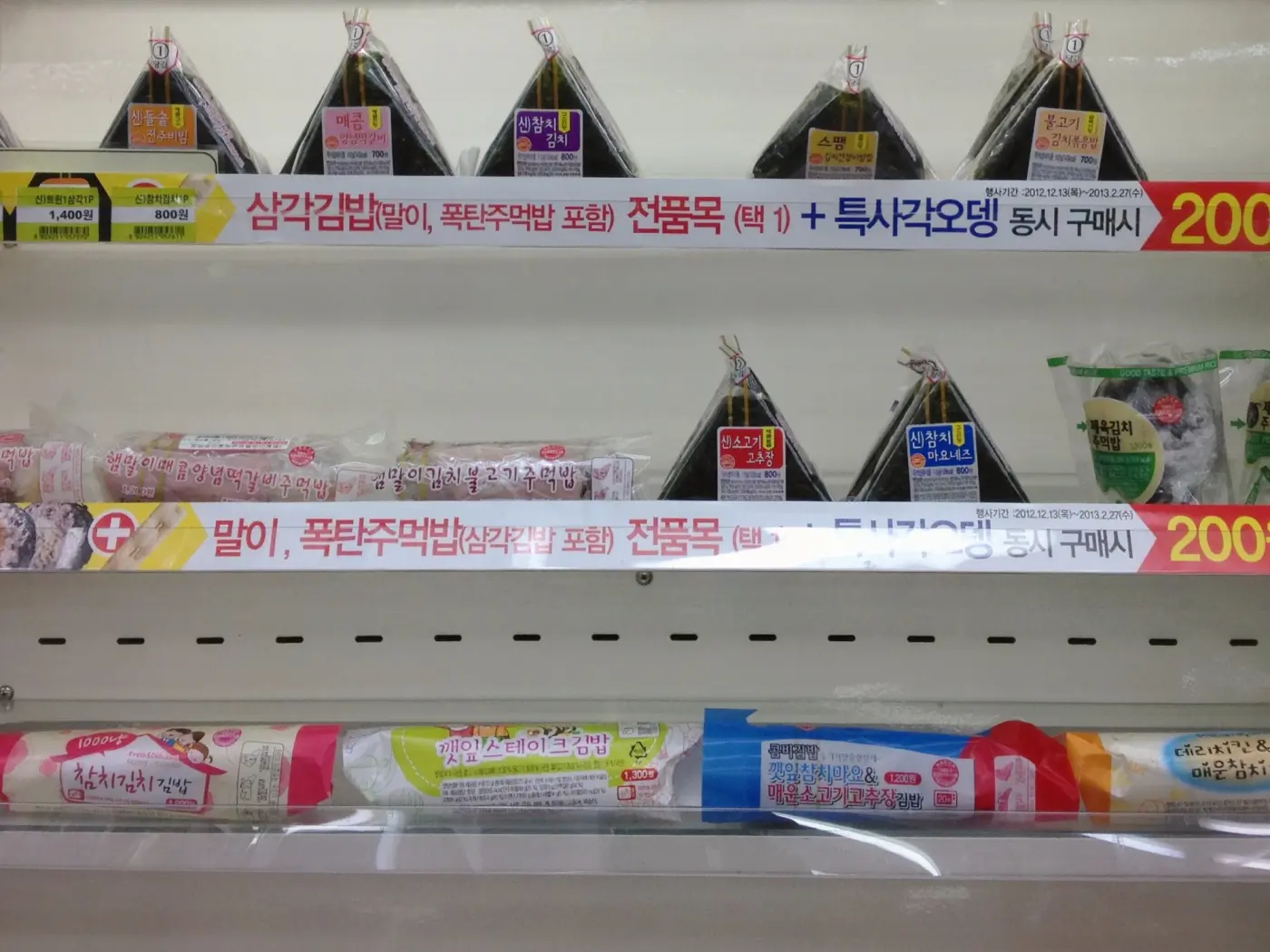
Triangle gimbap wrappers are numbered so the seaweed stays crisp until you eat it. Pull the tab marked 1 down the middle, then peel corners 2 and 3 away to the sides, and the sheet of gim wraps itself around the rice. Fillings are written on the front label, and common ones include tuna with mayonnaise, kimchi, and spicy or bulgogi-style beef. If you cannot read the label, a translation app on your phone's camera handles packaging well.
For drinks, the classic is banana-flavoured milk, which Visit Seoul calls an ever-popular choice, and you will also find iced coffee in pouches, yoghurt drinks, flavoured waters and enormous cases of fizzy drinks. The dessert shelf is better than you might expect: cream buns, roll-cake slices and fruit sandwiches with whipped cream are standard.
A note for anyone with a food allergy or a diet to follow. Packaged food carries an ingredient and allergen panel in Korean, but the law only requires certain allergens to be named. Our food allergy guide explains which ones, and which common Korean ingredients are not on the list, before you rely on a label. The phrase “Could I see the ingredient list?” is linked at the end of this article.
Hot water, microwaves and ramyeon machines
The part of the store that surprises visitors most is the corner by the window. There is usually a hot-water dispenser, one or two microwaves, chopsticks and napkins, and a narrow counter or a few tables. You buy your cup noodles or boxed meal at the till, open it, and prepare it yourself. Staff may offer to heat something for you, but most of the time it is self-service and nobody minds you taking a few minutes.
For cup ramyeon, open the lid halfway, add the soup powder and any flakes, and fill with hot water to the line printed on the inside of the cup, then wait for the time shown on the packaging. Visit Seoul's own convenience-store recipe follows exactly those steps. Korean food law even has a sentence about this ritual: the decree that defines café-style “rest restaurant” businesses specifically excludes convenience stores and supermarkets that simply pour water into cup ramyeon or disposable tea. In other words, pouring hot water on your noodles does not, by itself, turn a shop into a restaurant.
Some stores, especially near the Han River parks and in busy nightlife areas, go further and have a ramyeon cooker that boils packet noodles in a paper bowl. VisitKorea describes the routine at one such store: pay for your noodles along with a paper bowl, put the noodles and seasoning in the bowl, scan the packet's barcode, place the bowl on the cooker, press start, and lift it off when it is done. It also offers a warning worth passing on: noodles labelled mild may still contain some pepper. If you are not used to Korean spice, start with a mild packet or use only half the seasoning. Our ramyeon page explains the main styles.
Where to sit, and how to leave it
Eating in is normal. Office workers have a quick lunch at the window counter, students do homework over a cup of noodles, and on summer evenings the plastic tables outside fill up with friends. You do not need to ask permission to use a table after buying something from the shop, although a quick “Yeogi anjado dwaeyo?” (May I sit here?) is polite when a table is half occupied.
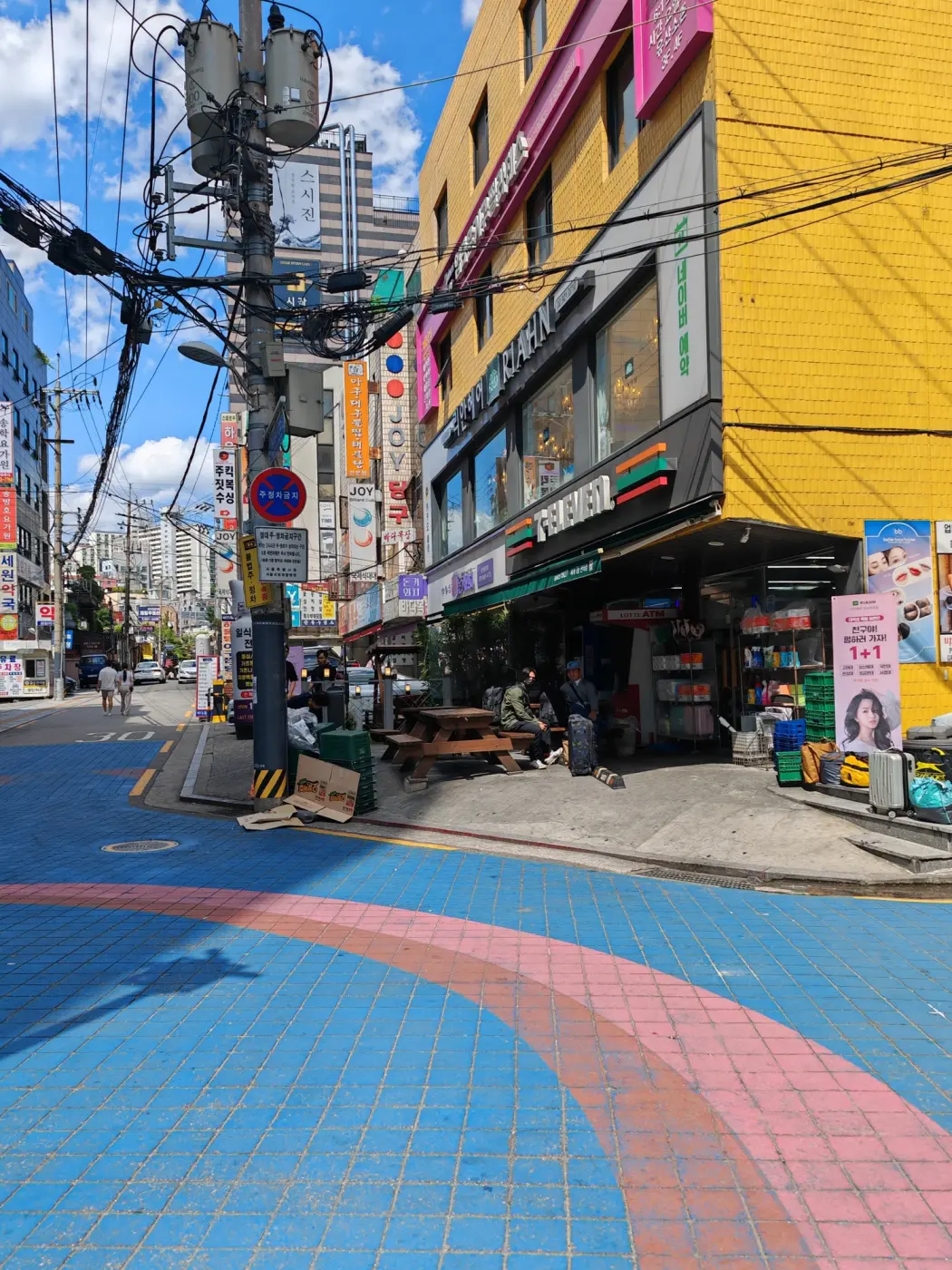
The one habit that really matters is cleaning up. Next to the eating area you will usually find separate bins: a container or sink for leftover soup, a slot for food waste, and bins for recyclables and general rubbish. Pour your broth into the liquid container, put noodles and rice in the food waste, and drop cups, chopsticks and wrappers where the labels or pictures indicate. Seoul's food-waste guidance for residents follows the same logic: it asks people to drain liquid before throwing food away and lists things such as chopsticks, plastic spoons, straws, paper and foil as items that do not belong in food waste.
Leaving a table clean is the convenience-store version of good manners. It is also practical, because public bins on the street can be harder to find than you expect, and the store's own bins are meant for things bought there. If you are taking food to a park, plan to carry your rubbish with you.
1+1, 2+1 and other deals
Walk past the drinks fridge and you will see small stickers reading 1+1 and 2+1. VisitKorea's guide to convenience stores notes that many stores run special promotions such as 1+1 offers, discounts and free gifts, and these are part of everyday shopping here. A 1+1 sticker means buy one and get a second free; 2+1 means buy two and the third is free. In practice you take all the items in the deal to the counter together, and the discount is applied when they are scanned. Within the same promotion you can often mix flavours, but if you are not sure, ask, or just take the items to the till and see what the screen says.
Deals are set by each chain and change regularly, so the same drink can be on offer in one shop and full price across the road. It is a small thing, but it is a fun way to try two kinds of snack for the price of one, and locals pay attention to it too.
Transit cards, cash and other errands
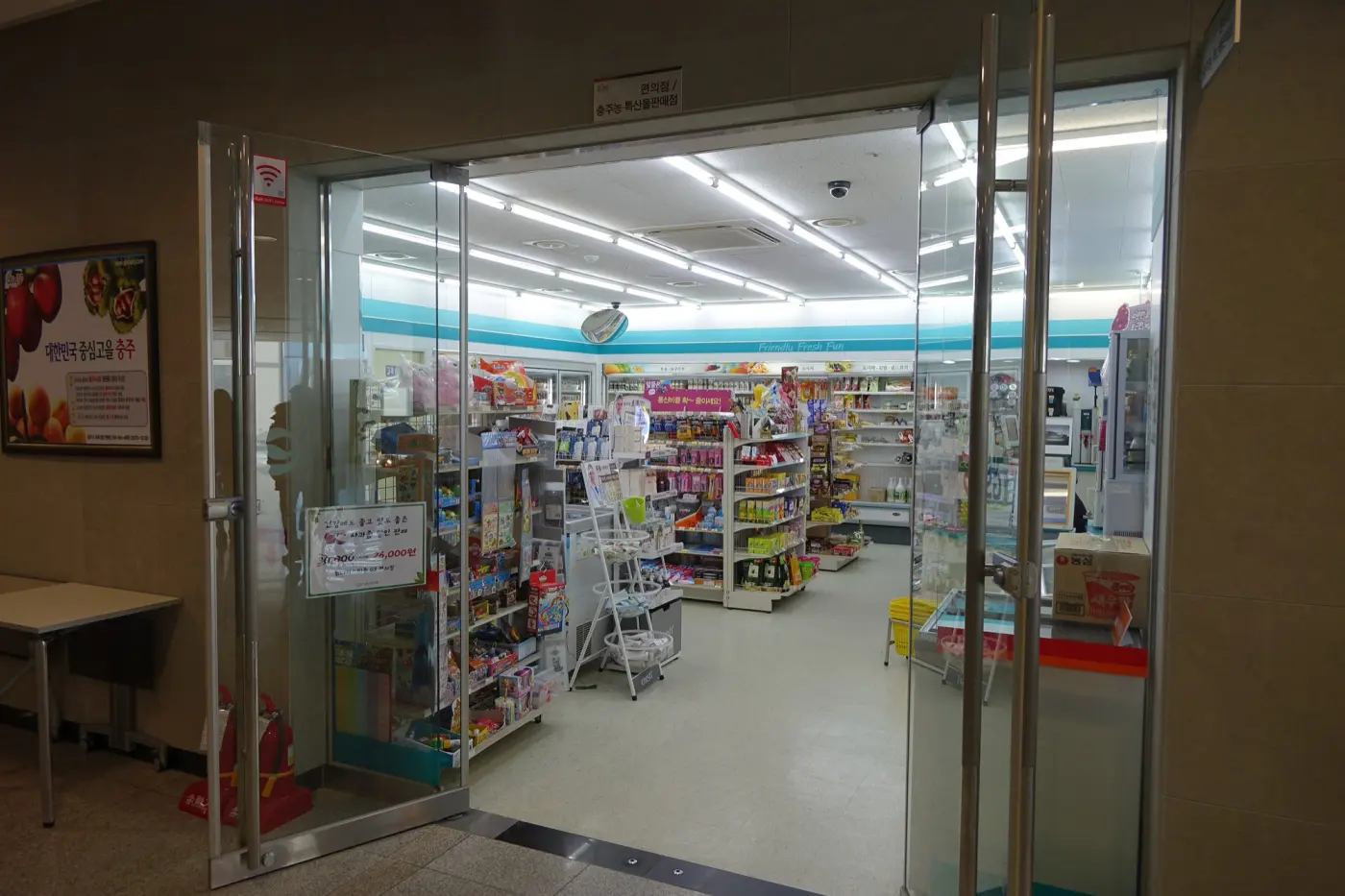
Convenience stores are also where many visitors buy and top up their transit card. According to VisitKorea's transportation card guide, last updated in August 2026, T-money and EZL cards can be bought and loaded at convenience stores nationwide and work on public transport and at affiliated stores. The same page notes that travellers under 18 who want youth fare discounts need to register their date of birth when buying the card, which is done at a convenience store. Our money guide explains how top-ups work and why you should keep some cash for them, and our transport guide explains why you tap off the bus as well as on.
Many stores have an ATM inside, which is handy at night. Visit Seoul notes that convenience-store ATMs often charge higher transaction fees than bank machines, and that machines accepting international cards are marked with a Global sign or the logos of the card networks they take. Use them when you need to, but a bank ATM is usually the better choice in daytime.
You may also read about parcel lockers, app orders and delivery services run through convenience stores. Visit Seoul describes several, but adds that they are aimed mainly at Korean customers and offered only in Korean. On a short trip, treat them as a curiosity rather than a plan.
Paying is easy. The Korea Tourism Organization says that except for a few small family-run businesses, most places accept credit cards, even for small purchases, and convenience stores are no exception. Put your items on the counter, hand over or insert your card, and you will usually be asked a couple of quick questions: whether you need a bag, whether you want the receipt, and sometimes whether you have a points card. Short answers are fine, and the phrases below cover them.
Alcohol: what the law actually says
Convenience stores sell beer, soju, makgeolli and often wine, and buying them is straightforward if you are old enough. Under Korea's Youth Protection Act, a youth is anyone under 19, except that people who have reached 1 January of the year in which they turn 19 are no longer counted as youths. The Act requires sellers to confirm the buyer's age and identity, requires alcohol retailers to display a notice that they do not sell to youths, and asks anyone requested to show proof of age to cooperate. Being asked for ID is routine, not suspicion, so carry your passport when you plan to buy a drink.
Where you drink is a separate question. Whether a particular shop lets customers drink alcohol at its own tables depends on how that shop is set up and licensed, so the simplest rule is to follow any sign on the tables and what the staff tell you. Outdoors, local governments can designate no-drinking zones. Our drinking rules guide explains how those zones work and how to spot them, so we will not repeat the details here.
Small courtesies at the counter
Convenience-store etiquette is light. Queue in a line, put your things on the counter rather than handing them over one by one, and if the staff member is restocking, a quick “Jeogiyo” (excuse me) is fine. Handing your card or cash over with both hands is a small courtesy Koreans notice, which our etiquette article explains. Keep your voice down at the eating counter late at night, when the people around you may be on their way home from a long shift.
Korean for the counter
- 이거 주세요 (igeo juseyo): This one, please.
- 얼마예요? (eolmayeyo?): How much is it?
- 카드 되나요? (kadeu doenayo?): Do you take cards?
- 봉투 필요하세요? (bongtu piryohaseyo?): Do you need a bag? Answer 네 (ne, yes) or 괜찮아요 (gwaenchanayo, I'm fine).
- 영수증 드릴까요? (yeongsujeung deurilkkayo?): Would you like the receipt?
- 데워 주세요 (dewo juseyo): Please heat it up.
- 젓가락 주세요 (jeotgarak juseyo): Chopsticks, please.
- 여기 앉아도 돼요? (yeogi anjado dwaeyo?): May I sit here?
A simple convenience-store routine
- On arrival: find the nearest store marked 24시, buy a transit card, and load it with cash.
- For a meal: pick a triangle gimbap or a dosirak, microwave it yourself, and use the hot-water machine for cup noodles.
- Before you leave the table: soup in the liquid bin, food in the food waste, packaging in the right recycling slot.
- For deals: check the 1+1 and 2+1 stickers and take every item in the deal to the counter together.
- For alcohol: carry your passport, follow the signs about where you may drink, and read our drinking rules guide.
Use the pyeonuijeom the way Koreans do, as a kitchen, a café and an errand desk rolled into one, and it becomes one of the easiest parts of your trip. Pick something you cannot read, heat it up, sit at the window and watch the street. Some of the best small moments of a first visit happen right there.
Comments
Sign in to leave a comment.
Sign in ·No account? Create one
Confirm your email address to comment — it takes one click.
No comments yet.