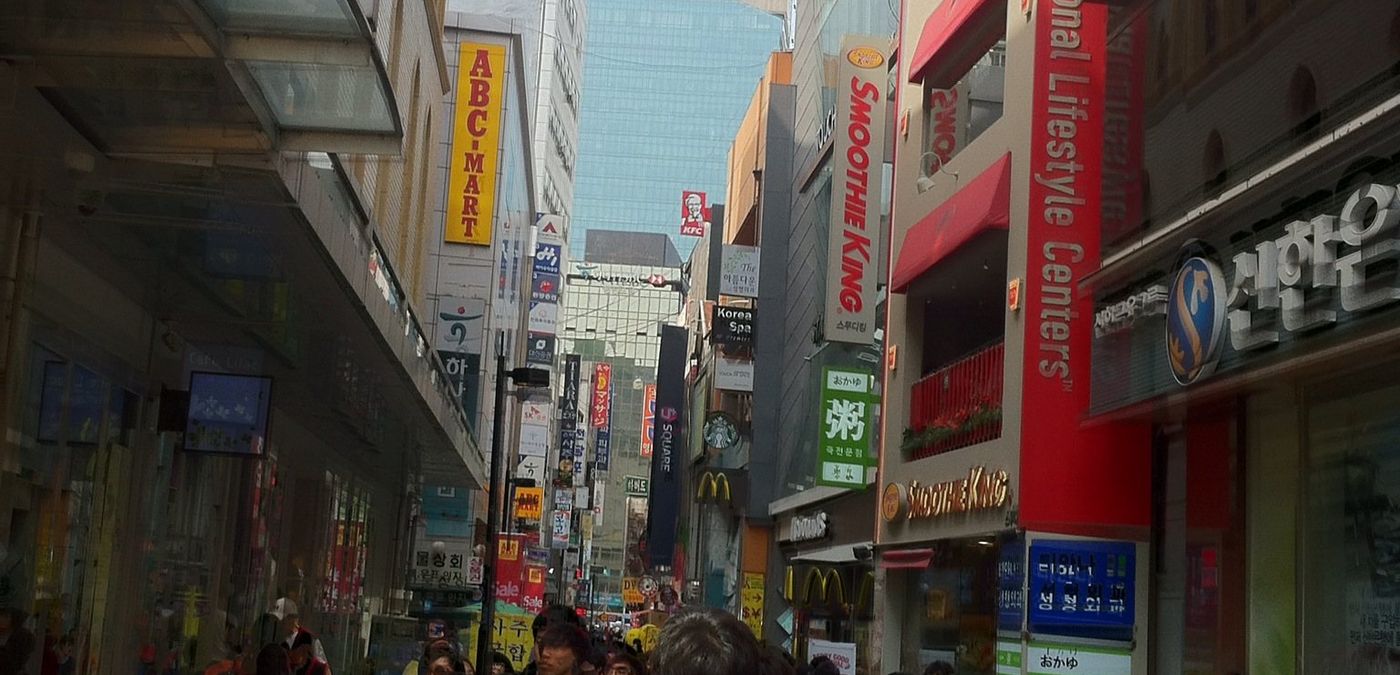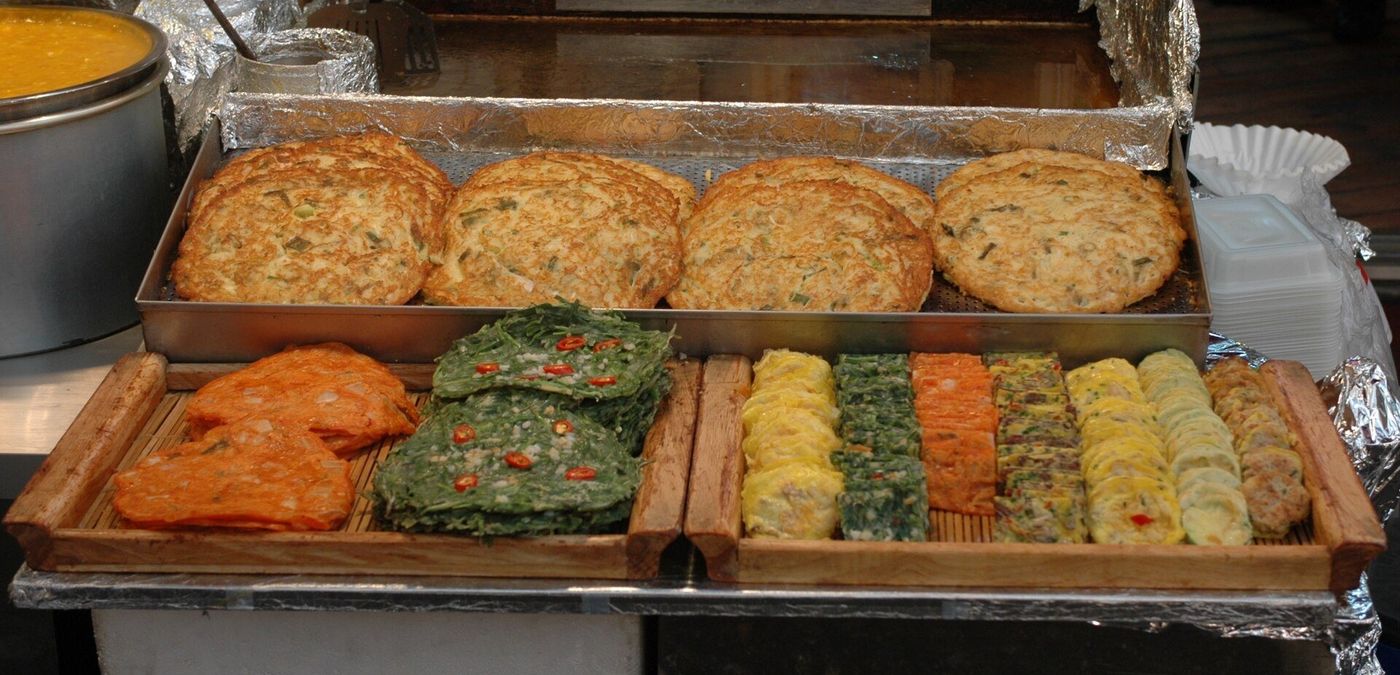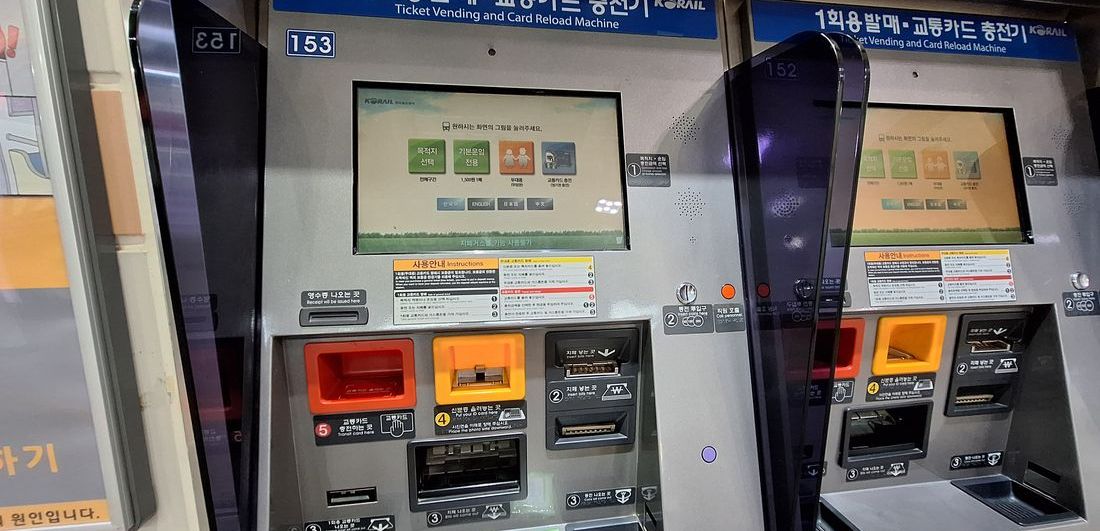
Reading a Korean sign, a Korean menu and a Korean door
Knowing the letters and using them are two different hours. This page is the second one: the same handful of words keeps coming back, and once you can spot them the script stops being a wall.
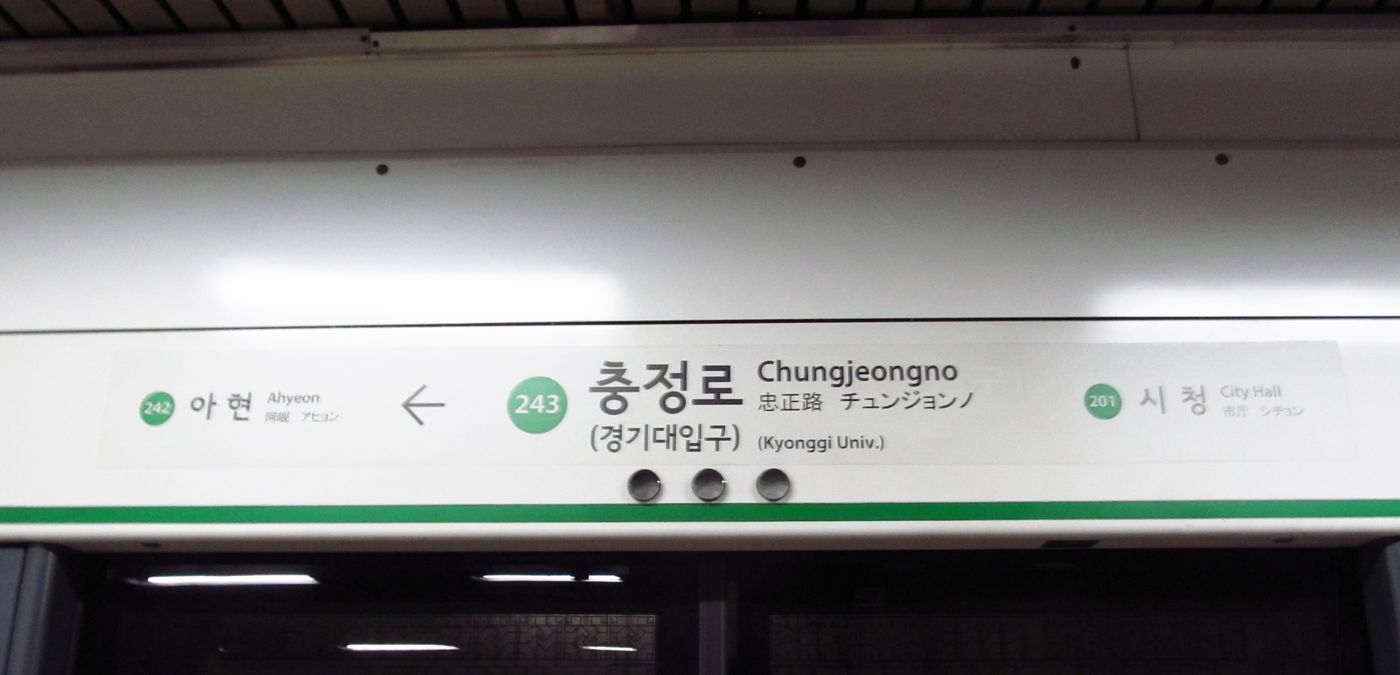
Practice: five station names
Cover the right-hand column. Sound out the squares from left to right, then check yourself. Nobody is timing you.
| On the sign | What you should get |
|---|---|
| 서울역 | seo-ul-lyeok. 역 on the end of a name means station, and it sits on every one of them. |
| 강남 | gang-nam. 강 is river and 남 is south: the part of the city south of the river. |
| 홍대입구 | hong-dae-ip-gu. 입구 means entrance; the station is named for a university gate. |
| 명동 | myeong-dong. 동 marks a neighborhood, and it ends place names all over the country. |
| 이태원 | i-tae-won. Nothing to take apart here. Read the three squares and you have it. |
Read square by square and you’ll land close. Spoken at speed, 서울역 comes out nearer to seo-ul-lyeok, because Korean smooths the seam between two squares. This costs you nothing. Say what you read, and you’ll be pointed to the right platform.
- Line numbers and exit numbers use the digits you already read. 3번 출구 is exit 3, and 번 means number.
- Station signs carry roman letters. Bus stops and street signs often don’t, and that gap is what this chapter is for.
Practice: five things on a menu
A menu is where this starts paying for itself, because dish names are built out of parts and the parts repeat. Read the last square first if you’re in a hurry — it usually tells you what kind of thing you’re about to eat.
| On the menu | How it comes apart |
|---|---|
| 김밥 | gim-bap. 김 seaweed, 밥 rice. |
| 비빔밥 | bi-bim-bap. 비빔 is mixing, 밥 is rice. |
| 불고기 | bul-go-gi. 불 fire, 고기 meat. |
| 냉면 | naeng-myeon. 냉 cold, 면 noodles. |
| 삼겹살 | sam-gyeop-sal. 삼 three, 겹 layer, 살 flesh. The name is a description of the cut. |
The endings that do most of the work
| Ending | What kind of dish |
|---|---|
| 밥 (bap) | Built on rice. |
| 면 (myeon) | Noodles. |
| 국 · 탕 (guk · tang) | Soup, served in its own bowl. |
| 찌개 (jjigae) | Stew — thicker and saltier than a soup, and usually shared. |
| 구이 (gui) | Grilled. |
| 볶음 (bokkeum) | Stir-fried. |
| 튀김 (twigim) | Deep-fried. |
이거 어떻게 읽어요?
igeo eotteoke ilgeoyo?
An ending tells you the shape of a dish, not what’s in it. If you’re avoiding an ingredient, use the written allergy phrases in the eating chapter instead. This page can’t tell you what went into the broth.
Practice: signs and doors
This last set keeps you moving. These words turn up in the same places every time: over a doorway, above a staircase, on a strip of tape across a window.
| On the sign | What it says |
|---|---|
| 출구 | chul-gu. Exit. It sits over every staircase leading out of a station. |
| 입구 | ip-gu. Entrance. You already met it inside 홍대입구. |
| 화장실 | hwa-jang-sil. Restroom. Learn the three squares as one picture and you’ll spot it fast. |
| 남 / 여 | nam / yeo. Men / women. Two squares that decide which door you push. |
| 약국 | yak-guk. Pharmacy. |
| 편의점 | pyeon-ui-jeom. Convenience store. Three squares you’ll pass constantly. |
Read the square on the restroom door rather than the color. 남 is men, 여 is women. The colors and the small figures printed beside them change from building to building; the two Korean words don’t. One second of reading is the whole cost.
여기 뭐라고 써 있어요?
yeogi mworago sseo isseoyo?
Questions people actually ask
- Which Korean words are worth learning to recognize first?
- The ones on doors and station walls, because they repeat everywhere and cost you time when you miss them. The practice tables above are built from exactly those rather than from a vocabulary list.
- Do I need to understand Korean to read a menu?
- No — sounding it out is often enough, because you can type what you sounded out into a phone. Recognition beats comprehension when the goal is ordering the thing you meant to order.