
Bukchon Hanok Village & Insadong: Walking Route and Rules
Walk Bukchon, Samcheong-dong and Insadong the right way: red zone hours (10 a.m.–5 p.m.), the KRW 100,000 fine, lane etiquette and nearest exits.
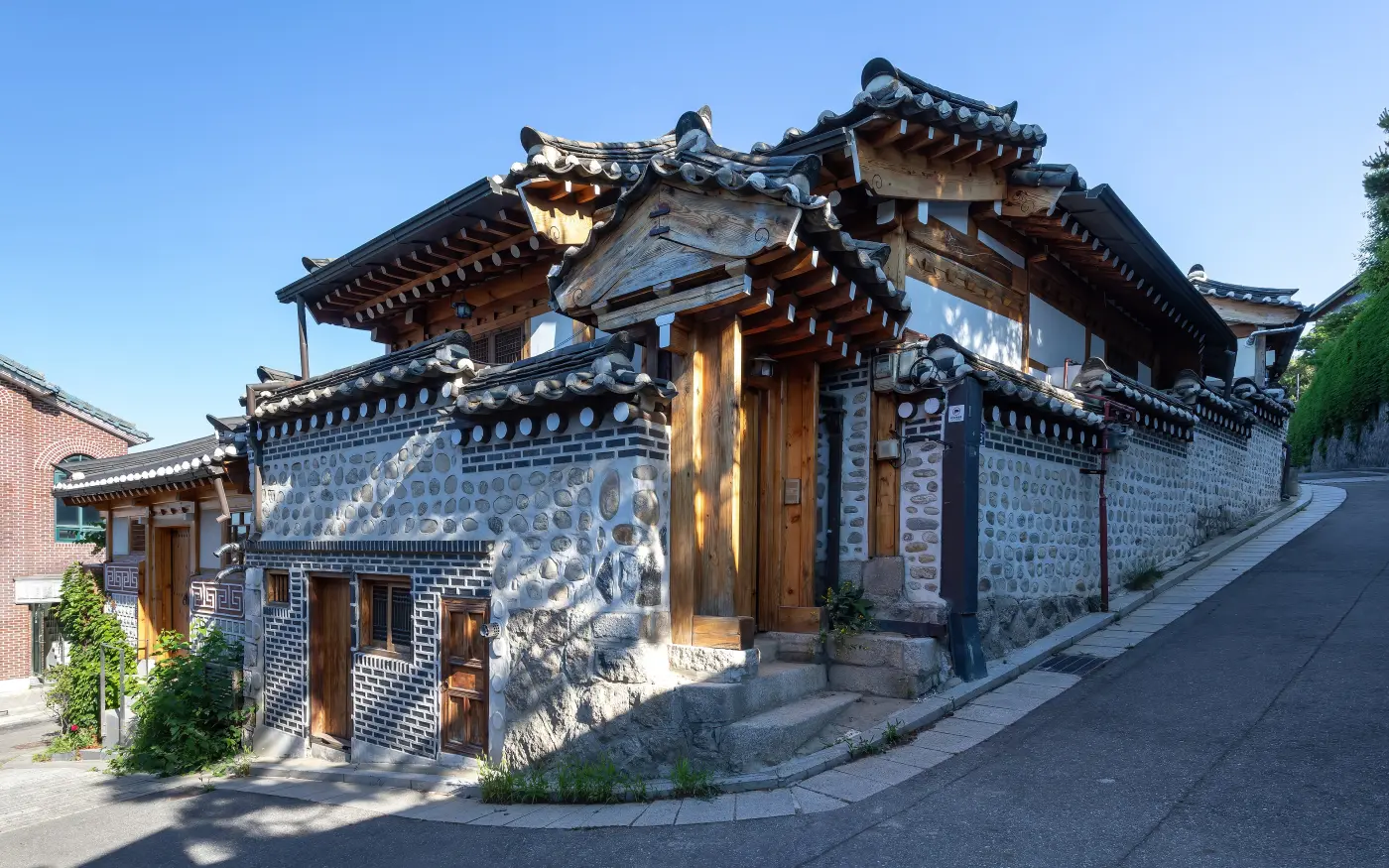
Bukchon is the neighbourhood most people picture when they think of old Seoul: tiled roofs stepping up a hillside, stone walls, heavy wooden gates, and glimpses of the modern city in the gaps between them. It is also, before anything else, a place where people live. Since November 2024 that fact has come with rules attached, and since March 2025 those rules have carried a fine.
This guide explains what Bukchon is, what the visiting restrictions actually say, how to behave in the residential lanes, and how to join Bukchon, Samcheong-dong, Insadong and the royal residence of Unhyeongung into one unhurried walk. Every rule, hour and amount below was checked in October 2026 on official pages from Jongno-gu (the district office that runs the area), the Seoul Metropolitan Government, Visit Seoul and Unhyeongung itself. The rules here have changed more than once in recent years, so the source links at the end are worth a quick look before you set out.
What Bukchon is, and why it is different
The name simply means "north village". In the Joseon-era capital it sat at the centre of the walled city, between Gyeongbokgung Palace to the west and Changdeokgung Palace to the east. Jongno-gu's short history of the area explains that its sunny, south-facing slopes were long considered the best place to build a house, so palace officials and powerful families settled here. Today the name covers several small neighbourhoods, among them Wonseo-dong, Gye-dong, Jae-dong, Anguk-dong, Palpan-dong and Samcheong-dong.
Most of the hanok you will see are not grand mansions but compact urban houses. According to Jongno-gu, they began to go up in clusters around the 1930s, when large plots were divided into small lots, which is why the lanes are narrow and the houses stand shoulder to shoulder. Many hanok disappeared between 1985 and 2000 as multi-family housing and larger buildings replaced them. More recent support for hanok has brought restored and newly built houses, particularly around Gahoe-dong, the part of Bukchon with the densest rows of tiled roofs.
Visit Seoul makes the most important point plainly: unlike Namsangol Hanok Village, Bukchon was not created for tourists. It is a residential village. Some hanok now house galleries, workshops and small restaurants, but the house next door is very likely somebody's home, with a family inside trying to cook, study or sleep.
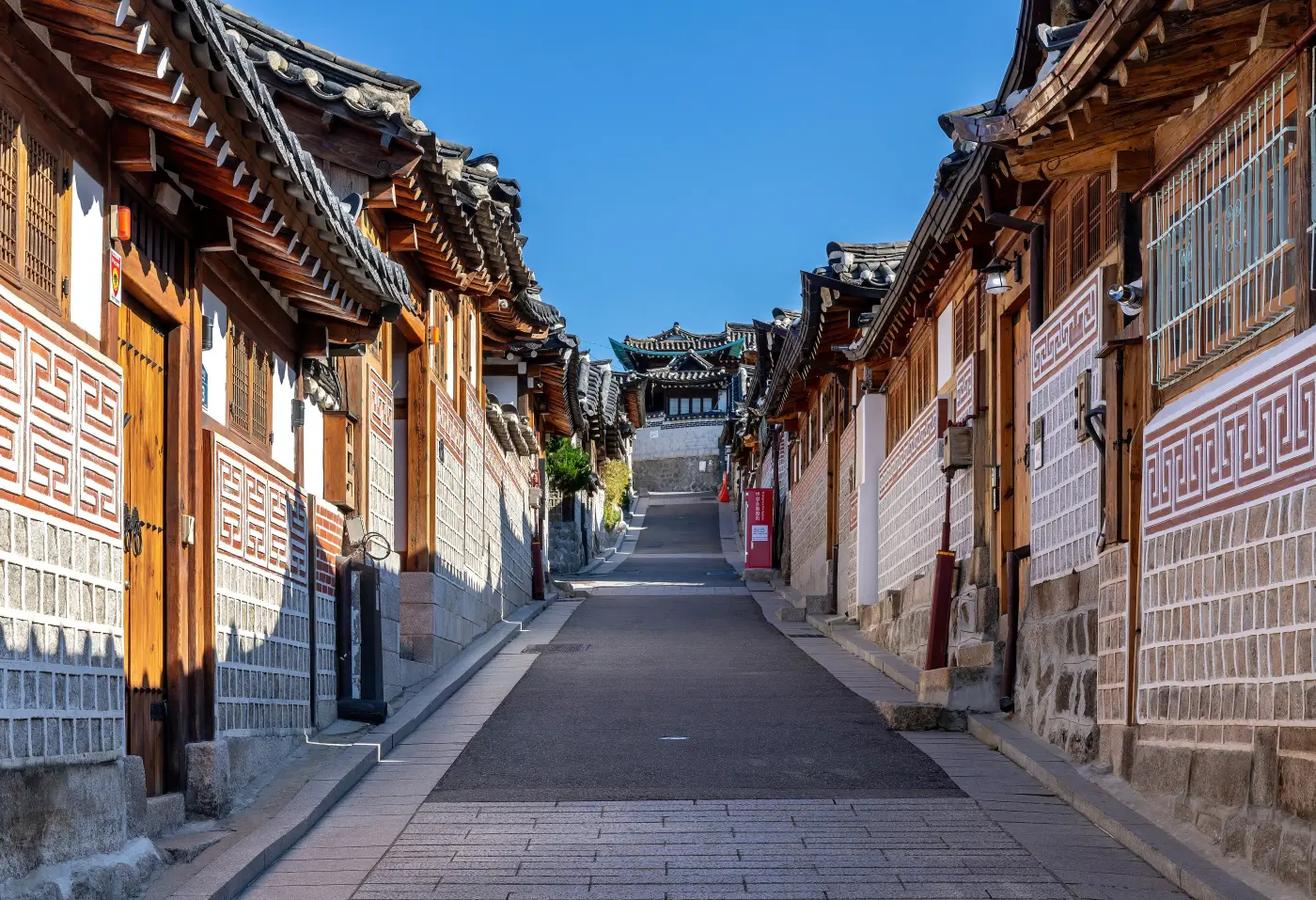
The red zone: visiting hours and fines
Jongno-gu designated Bukchon a Special Management Area under the Tourism Promotion Act on 1 July 2024, with the stated aim of protecting residents' right to a liveable home. The measure that matters most to visitors is the red zone: about 34,000 square metres around Bukchon-ro 11-gil, the steep hanok lane that appears in most photographs of Bukchon. The district office and the Seoul Metropolitan Government give the same details:
- Tourists may visit the red zone from 10 a.m. to 5 p.m.
- From 5 p.m. until 10 a.m. the next morning, tourist visits are not allowed.
- A guidance period ran from 1 November 2024 to 28 February 2025, and fines have applied since 1 March 2025.
- The fine for a violation is KRW 100,000.
Who counts as a tourist? Jongno-gu's FAQ defines it by what you are doing rather than who you are: taking photos or video, lingering to look around, or wandering the lanes for sightseeing rather than to visit a shop. Residents, their family and friends, shop customers, merchants and people simply passing through are exempt, and guests staying inside the zone can show a booking confirmation. The exemption stops the moment someone starts sightseeing, though. A guesthouse guest filming the lane at 8 a.m. can be treated as a tourist and fined.
The FAQ also states that foreign visitors are subject to the same rules. Dedicated enforcement officers first explain the rule and give a warning, and a fine follows if the visitor does not comply. Foreign visitors who are fined are told they can pay on the spot or before they leave Korea.
Two smaller points are worth knowing. The time limit did not appear from nowhere: Jongno-gu says it had asked visitors to keep to 10 a.m.–5 p.m. on Bukchon-ro 11-gil since 2018, with resident volunteers giving guidance, and turned to fines only when voluntary requests were not enough. And the Seoul city notice still carries the line that Sunday is a "rest day" for the alleys. The fine rules themselves are written around the 5 p.m. to 10 a.m. window, but if you want to be considerate, a weekday or Saturday visit to the red zone is the easy choice.
| Zone | Where | What applies | Fine |
|---|---|---|---|
| Red zone | Bukchon-ro 11-gil area, about 34,000 m² | No tourist visits from 5 p.m. to 10 a.m.; fines since 1 March 2025 | KRW 100,000 |
| Chartered bus zone | About 2.3 km of roads, including Bukchon-ro, Bukchon-ro 5-gil and Changdeokgung 1-gil | No chartered buses at any time, weekends and holidays included; fines since 1 January 2026 | KRW 300,000, then 400,000 and 500,000 for repeat violations |
| Orange zone | Designated parts of Bukchon (see the official map) | No time limit, but intensive guidance | None |
| Yellow zone | Bukchon-ro 12-gil area | Intensive monitoring; visitors are asked to come between 10 a.m. and 5 p.m. | None |
The chartered bus rule mostly affects coach tours. If you join one, expect to be dropped outside the zone and to walk in, which is a better way to see Bukchon anyway.
Etiquette in the lanes
Visit Seoul's page on Bukchon asks visitors to practise "silent tourism" and lists a handful of specific requests. None of them is difficult, and together they are what keeps the neighbourhood open to visitors at all:
- Keep noise to a minimum, especially around Gahoe-dong 31, where the hanok are packed most tightly. That includes loud talking, horsing around and filming.
- Do not leave litter. Carry your rubbish with you until you are back on a main road.
- Keep groups small, to ten people at most.
- Do not use microphones, megaphones or speakers.
- Do not photograph or film the inside of houses, even if a door or gate happens to be open.
A few more habits follow naturally from the same idea. Do not sit on doorsteps or lean against gates for photos; they are front doors. Do not try a handle or step into a courtyard, because an open gate is not an invitation. Step aside for residents, delivery riders and cars, since many lanes are shared with traffic. If you are wearing rented hanbok for photos, the same rules apply to you as to everyone else. For the wider picture of everyday Korean manners, from bowing to subway seats, our first-trip etiquette guide covers the basics.
A walking route: Bukchon, Samcheong-dong, Insadong
The route below climbs at the start and is mostly flat or downhill after that, which saves your legs for the browsing at the end. It works best on a day other than Monday, when two of the stops are closed, and with a start between 10 a.m. and noon, so that you reach the red zone comfortably inside visiting hours. At an easy pace, with a tea break, it fills half a day.
1. Bukchon Traditional Culture Center. Leave Anguk Station on Line 3 by Exit 3 and walk up Gyedong-gil to number 37. Visit Seoul describes the centre as a multipurpose space in a hanok that introduces Bukchon and hosts classes, lectures and cultural events, from calligraphy and tea ceremonies to pansori and traditional crafts. Jongno-gu notes that the house once belonged to a powerful late-Joseon family and opened as a culture centre in October 2002 after being restored as closely as possible to its original form. Admission is free, and it is closed on Mondays.
2. Bukchon Village Information Center. If you want a map or directions, the information centre is in part of the Jeongdok Public Library building near the Jaedong Elementary School intersection, at 48 Bukchon-ro 5-gil, closest to Anguk Exit 1. Visit Seoul says it has brochures, free Wi-Fi and interpretation services that include English and Japanese.
3. Gahoe-dong and Bukchon-ro 11-gil. From here, head uphill into the densest hanok lanes. This is the red zone, so keep within 10 a.m.–5 p.m., keep moving rather than staging long photo shoots, and keep your voice low. The upper part of the lane gives the view most people come for: rows of tiled roofs with downtown Seoul beyond them.
4. Samcheong-dong. Continue west and downhill to Samcheong-ro. Visit Seoul describes Samcheong-dong as an area of museums, galleries, restaurants, cafés and small shops, some traditional and some modern, running along the stone wall of Gyeongbokgung toward Samcheong Park. The name, Visit Seoul explains, comes from "sam" (three) and "cheong" (clear or pure), for the mountain, the water and the people's hearts. It is a natural place for a coffee break, and our guide to Korean café culture explains what to order.
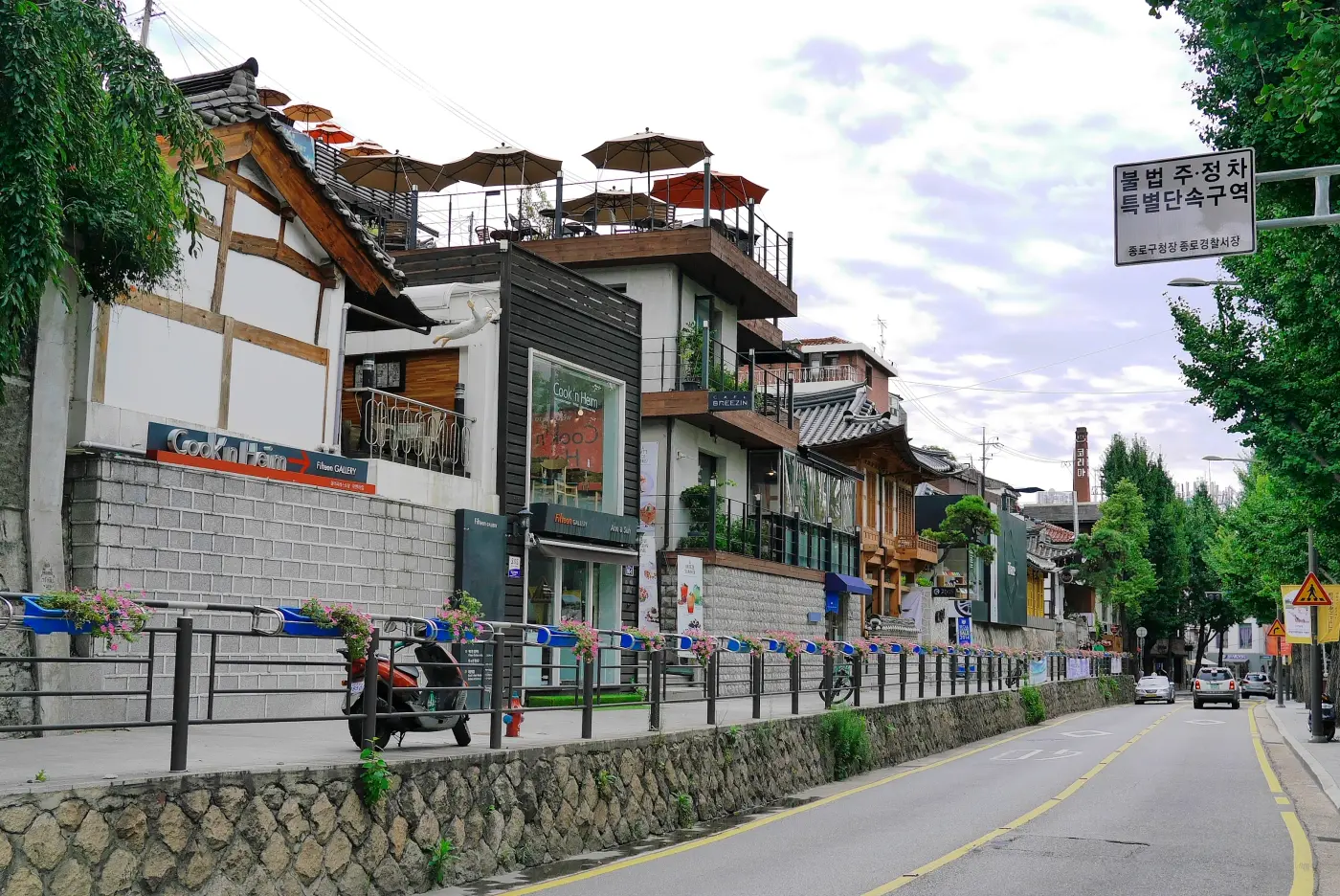
5. Insadong. Walk back south toward Anguk Station and cross the main road into Insadong. Jongno-gu calls Insadong a living street museum. In the Goryeo period a large temple stood here, earning the area the name Jeolgol, or "temple village"; in the Joseon period the Dohwawon, the royal painting bureau, made it a centre of the arts; and in 1919 it was one of the bases of the March 1st Independence Movement. Antique dealers, galleries, framers, brush and stationery shops, craft stores, tea houses and restaurants followed.
6. Unhyeongung. Finish at the royal residence a few minutes from Anguk Exit 4. From there, Anguk Station and Jongno 3-ga Station are both a short walk away for the trip back.
Insadong: crafts, galleries and tea
Insadong-gil is the main street, but much of the interest lies in the narrow alleys on either side. Visit Seoul rates it among the best places in Seoul to buy traditional Korean art and souvenirs, listing antique shops, art galleries, traditional stationery and handicraft shops, pottery and porcelain shops, bookstores and art supply stores. This is where to look for calligraphy brushes and ink, hanji paper goods, ceramics, masks and small boutique galleries, often within a few doors of each other. Visit Seoul also notes that the main street becomes traffic-free on Sundays, when buskers and street performers take over.
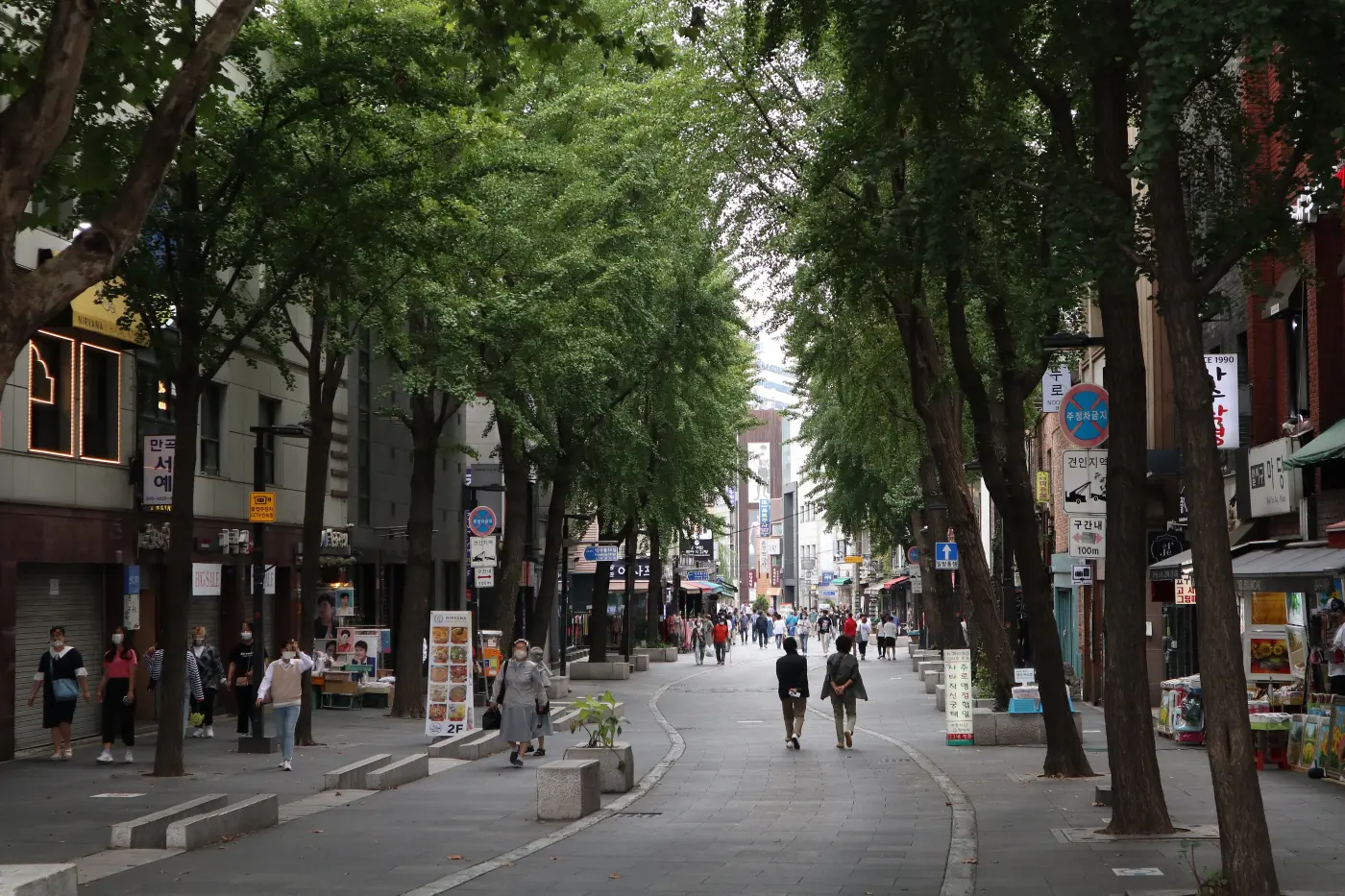
Ssamzie-gil, which Visit Seoul names among the sights on Insadong-gil, is a craft shopping complex at 44 Insadong-gil that opened in 2004. It gathers traditional and modern craft shops and workshops over several floors, and it is a useful stop when the weather turns.
Insadong is also the easiest place in Seoul to sit down in a traditional tea house. Visit Seoul mentions the area's wooden tea houses alongside its galleries, and many of the teas on the menu are not made from tea leaves at all but from fruit, roots or grains. Our Korean café culture article explains the common choices, so you can order with confidence.
Unhyeongung: the regent's residence
Unhyeongung is smaller and quieter than the five main palaces, and that is a large part of its charm. It was the residence of Heungseon Daewongun, the father of King Gojong. Jongno-gu notes that Gojong, the 26th king of Joseon, lived here until he was 12. The site hosts cultural programmes and traditional weddings, and the courtyards around its low halls make a calm end to a busy walk.
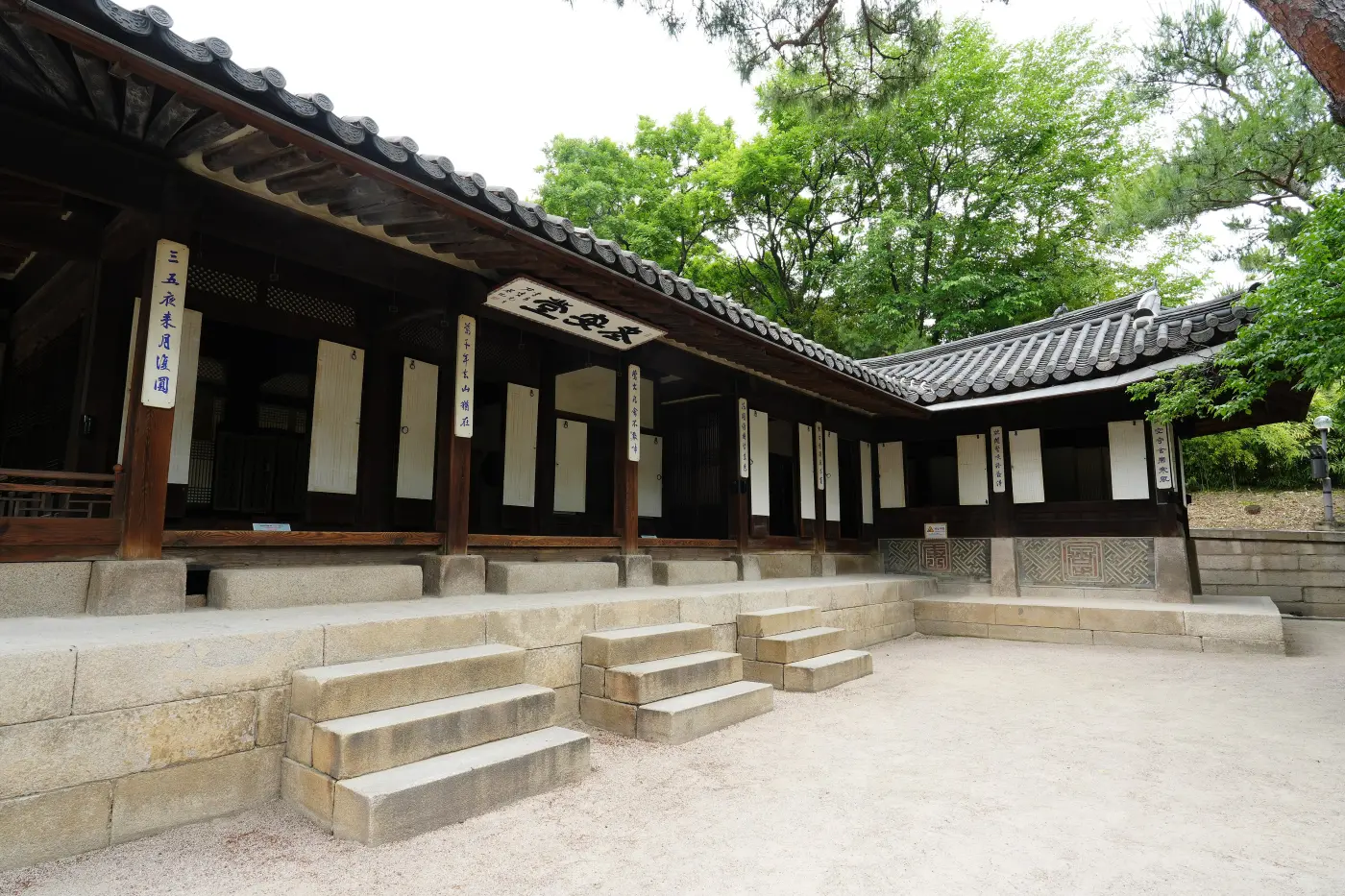
According to Unhyeongung's official site, it is closed on Mondays, and admission was free as of October 2026. The opening hours change with the season, and there are seasonal evening openings; the official site, Visit Seoul and VisitKorea do not list identical hours, so check the official notice page for the month of your visit. The official site gives the nearest stations as Anguk Station Exit 4, about three minutes on foot, and Jongno 3-ga Station Exit 5, about eight minutes.
Stop by stop: stations, exits and notes
| Stop | What it is | Nearest station and exit | Notes |
|---|---|---|---|
| Bukchon Traditional Culture Center | Hanok culture centre with displays and classes on Bukchon and traditional culture | Anguk (Line 3) Exit 3, a short uphill walk | Free; closed Mondays |
| Bukchon Village Information Center | Tourist information, maps, free Wi-Fi | Anguk Exit 1, about 530 m | In the Jeongdok Public Library building; English and Japanese help |
| Bukchon-ro 11-gil (Gahoe-dong) | The densest hanok lanes | Anguk Exit 3, then uphill | Red zone: tourists 10 a.m.–5 p.m. only; KRW 100,000 fine |
| Samcheong-dong | Galleries, cafés and shops along Gyeongbokgung's stone wall | Anguk Exit 2, about 780 m | Outside the red zone |
| Insadong-gil | Crafts, antiques, galleries and tea houses | Jongno 3-ga (Lines 1, 3, 5) Exit 5, about 440 m; Anguk is also close | Traffic-free on Sundays |
| Ssamzie-gil | Craft shopping complex | Anguk Exit 6, about 250 m | Good rainy-day stop |
| Unhyeongung | Residence of Heungseon Daewongun | Anguk Exit 4, about 3 min; Jongno 3-ga Exit 5, about 8 min | Closed Mondays; free as of October 2026 |
Timing and practical tips
- Avoid Mondays if you want the full route: both the Bukchon Traditional Culture Center and Unhyeongung are closed.
- Sunday is a trade-off. Insadong's main street is traffic-free, but official materials also ask that Sunday be a rest day for Bukchon's alleys.
- The red zone closes to tourists at 5 p.m. For an evening walk, head to Insadong or see our guide to Seoul at night instead.
- Bukchon's lanes are steep and sometimes stepped. Wear comfortable shoes and leave large suitcases at your hotel.
- Anguk Station on Line 3 is the hub for this walk; Jongno 3-ga Station (Lines 1, 3 and 5) is handy for Insadong's southern end. A T-money card makes the subway simple.
- Gyeongbokgung and Changdeokgung border the area, so the walk pairs well with a palace morning. The palaces do not share the same closing day, which our palace guide explains.
Doing it in reverse
You can also start in Insadong and finish in Bukchon, but watch the clock. Browsing Insadong's shops and galleries tends to take longer than planned, and the red zone closes to tourists at 5 p.m. If you go in this direction, visit Unhyeongung and Insadong in the morning, eat lunch in Insadong, and leave for Bukchon by early afternoon. Uphill in this direction means the climb comes after lunch, so allow a little more time.
A neighbourhood, not a theme park
The restrictions in Bukchon can sound off-putting, but in practice they ask very little of a visitor: come between 10 a.m. and 5 p.m., keep your voice down, and remember that every gate is somebody's front door. Do that, and Bukchon remains one of the best places in Seoul to see how hanok sit together as a real neighbourhood, with Samcheong-dong's galleries, Insadong's crafts and tea houses, and the quiet courtyards of Unhyeongung all within an easy walk.
If this is your first time in Seoul, our three-day itinerary shows how this walk fits into a first day alongside Gyeongbokgung, and our Seoul region page gives the bigger picture of the city.
Comments
Sign in to leave a comment.
Sign in ·No account? Create one
Confirm your email address to comment — it takes one click.
No comments yet.