Seoul Shopping Districts: Where to Go for What
Myeongdong, Dongdaemun, Hongdae, Insadong, Garosu-gil and underground malls: what each is good for, stations and exits, hours, tax refunds and bargaining.
Seoul does not have one shopping district; it has several, and they are good at very different things. Myeongdong is the classic first stop for a quick look at everything. Dongdaemun is a vast clothing and fabric district that keeps going long after dinner. Hongdae is young and loud, Insadong is where the crafts are, Garosu-gil is for slow browsing, and underneath the city there are long underground shopping centres connected to subway stations.
This guide explains what each district is good for, which station and exit to use, what the official tourism listings say about opening hours, and the practical basics of paying, bargaining and claiming a tax refund. It describes areas rather than shops, and it does not recommend particular brands or department stores. For cosmetics specifically, there is a separate guide to K-beauty shopping in Seoul, and traditional food markets have their own article too.
Seoul shopping districts at a glance
The table below sums up the main areas. Station exits come from the official listings on Visit Seoul, the city's tourism site, and VisitKorea, the national tourism site. Hours are given only where an official page states them; where hours depend on individual shops, the table says so rather than guessing.
| District | Good for | Nearest station & exit | Typical hours (official listing) |
|---|---|---|---|
| Myeongdong | Street stalls, fashion and cosmetics shops packed into a few walkable blocks; an easy first look | Myeongdong (Line 4), Exits 5–10 | Open daily; hours vary by store |
| Myeongdong Underground Shopping Center | Small shops under the streets between Myeongdong and City Hall; useful in rain or heat | Euljiro 1-ga (Line 2), Exit 7 | 09:00–22:00 (listed as of 2025); passage open around the clock |
| Dongdaemun Market area | Clothing, fabric, shoes and accessories, wholesale and retail; late-night shopping | Dongdaemun History & Culture Park (Lines 2, 4, 5), Exit 14 | Listed as 00:00–24:00 daily; each mall and store keeps its own hours |
| Hongdae (R3 area) | Young street fashion and cosmetics, buskers | Hongik Univ. (Line 2, Gyeongui–Jungang Line, Airport Railroad), Exit 9 | Varies |
| Insadong-gil | Crafts, antiques, galleries, traditional stationery | Jongno 3-ga (Lines 1, 3, 5), Exit 5; Anguk (Line 3) is also close | Varies; main street traffic-free on Sundays |
| Garosu-gil | Designer and select shops, galleries and cafés on a tree-lined street | Sinsa (Line 3, Shinbundang Line), Exit 8 | Varies |
| Gangnam Station Underground Shopping Center | Affordable young fashion, accessories and beauty shops | Gangnam (Line 2, Shinbundang Line), Exit 8 | 10:00–22:00 in both official listings; times outside that differ |
| Goto Mall (Express Bus Terminal) | Clothes, cosmetics, accessories, interior goods and flowers | Express Bus Terminal (Lines 3, 7, 9), Exit 8-1 | 10:00–22:00; closed Lunar New Year and Chuseok |
| Namdaemun Market | Everyday goods, clothing and kitchenware at wholesale-style prices | Hoehyeon (Line 4), Exit 7 | Mon–Sat, closed Sundays; hours vary by stall |
One general point: the official listings give no fixed opening times for the big street districts such as Myeongdong, Hongdae, Insadong or Garosu-gil; they say hours vary by store. Underground centres publish set hours instead, and the earliest listed here start at 09:00 or 10:00. If you are planning an early start, use the morning for a palace or a museum and go shopping afterwards.
Myeongdong: the classic first stop
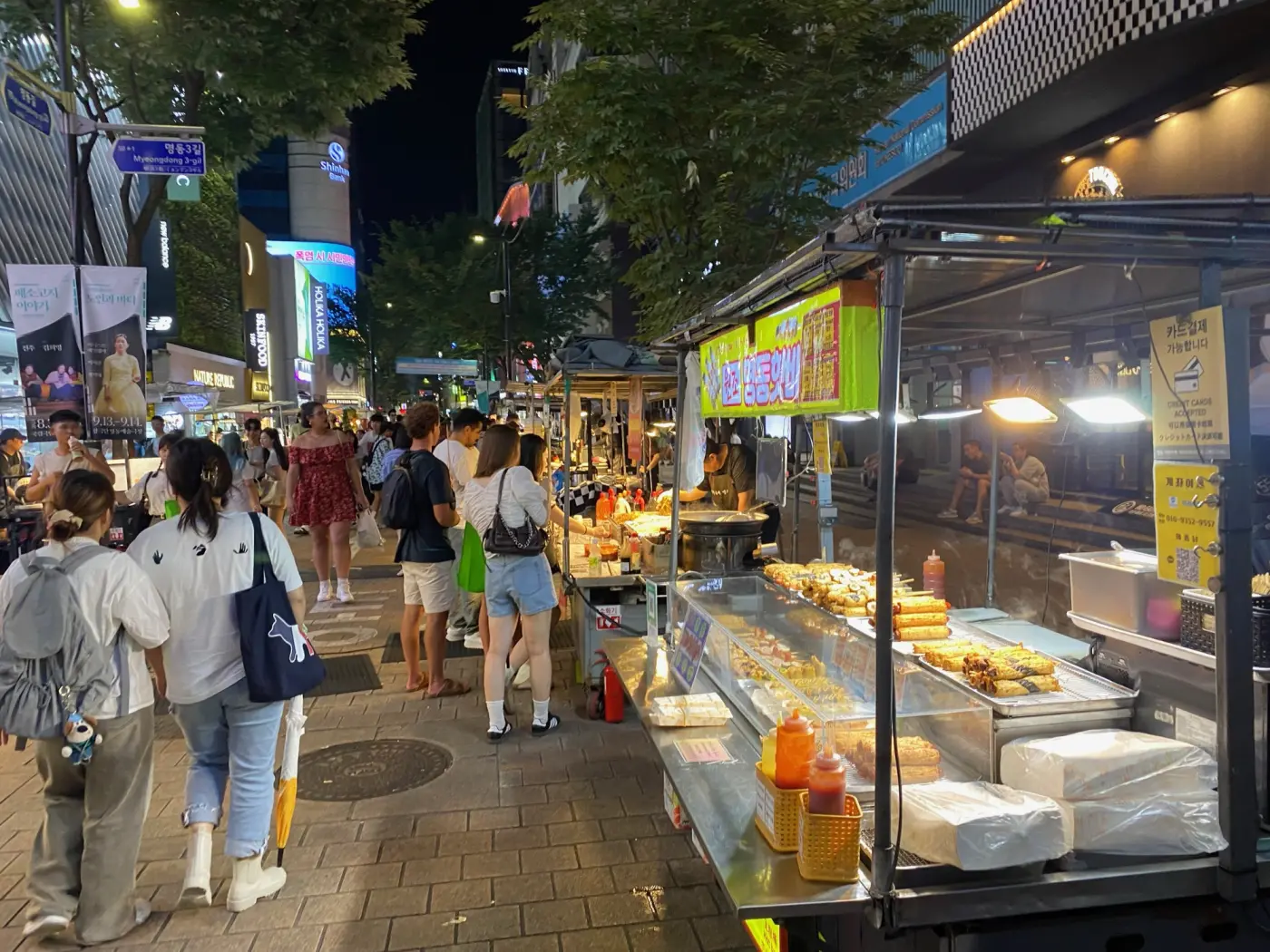
Visit Seoul calls Myeongdong the city's shopping mecca, and describes a mix of street stalls and retail outlets selling everything from high fashion to casual clothes, along with many Korean cosmetics stores. It is also a business and banking district, so the area is busy on weekdays as well as weekends. VisitKorea notes foreign-language services and guides in the area, and singles out its street snacks.
The practical appeal is density. Within a few blocks you can compare clothes, socks, phone accessories, souvenirs and skincare without getting back on the subway, and the street stalls give the evenings a market feel. Visit Seoul lists Myeongdong as open daily with hours varying by store. The nearest station is Myeongdong on Line 4, where Exits 5 to 10 lead into the shopping streets.
Directly underneath, the Myeongdong Underground Shopping Center runs through an underground passage towards City Hall. Visit Seoul describes it as offering much of what you find on the streets above, from nail shops to cosmetics, at slightly lower prices, and lists its shops as open from 09:00 to 22:00 (as of 2025), with the passage itself open 24 hours. The nearest station is Euljiro 1-ga on Line 2.
Dongdaemun: wholesale fashion and late-night shopping
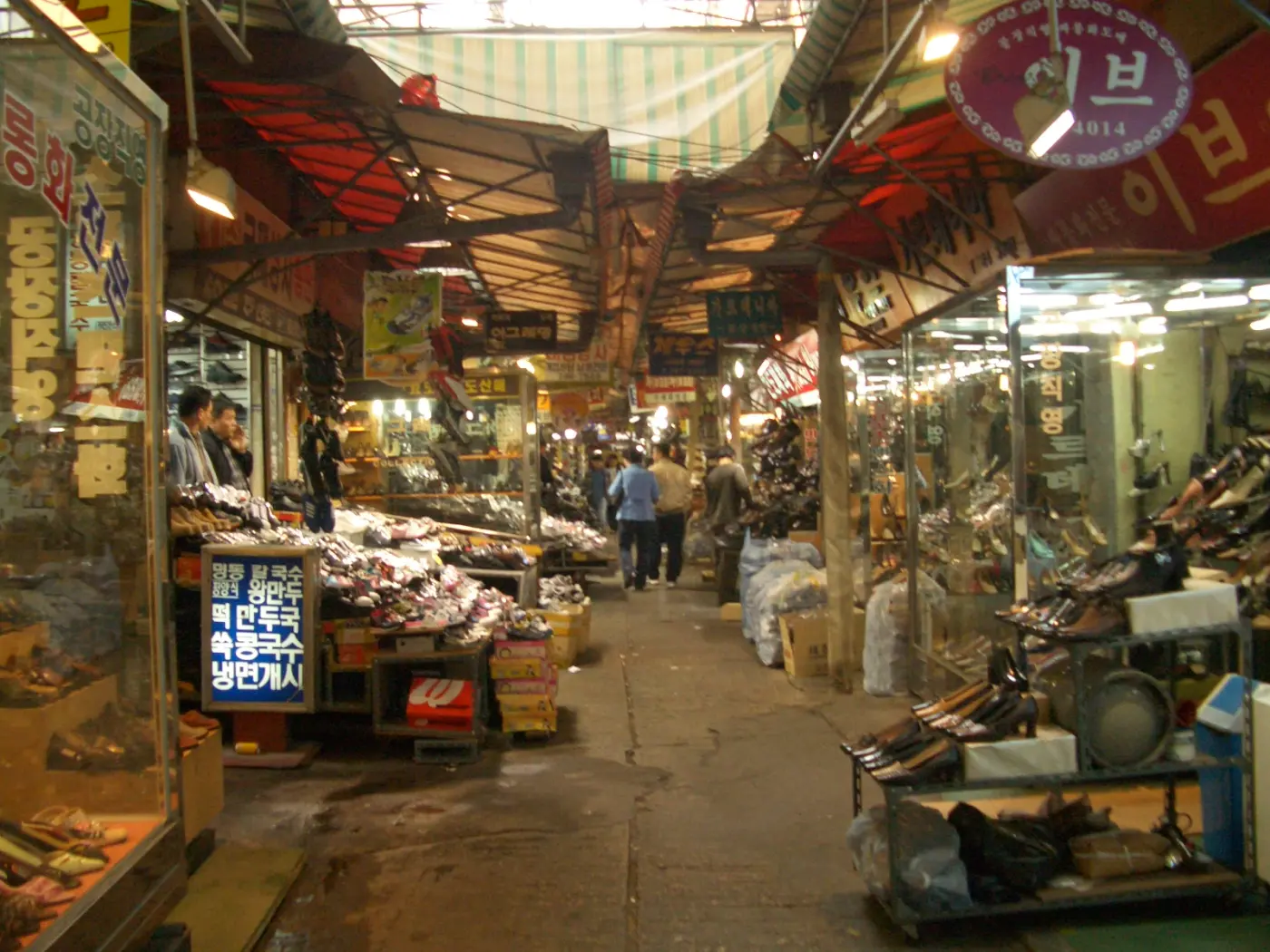
Dongdaemun is less a street than a whole district around Heunginjimun Gate, the old east gate of the city. Visit Seoul describes it as Korea's largest wholesale and retail shopping district, a combination of traditional markets and shopping centres selling silks and fabric, clothes, shoes, accessories, leather goods, sporting goods, toys and much more. The Jung-gu district office adds that the government designated Dongdaemun Fashion Town a special tourist zone in 2002, and that designers, fabric markets and sewing workshops are all concentrated here, which is why new designs turn up quickly.
Dongdaemun is famous for its night market, and Visit Seoul lists the district as open 00:00 to 24:00, every day. Read that carefully, though: the same listing says hours vary by store and mall. The district as a whole never quite closes, but any single building has its own schedule and closing days, so check the building you have in mind before heading out late at night.
The sheer size can be overwhelming. Visit Seoul suggests starting at the Dongdaemun Tourist Information Center, in front of Exit 14 of Dongdaemun History & Culture Park Station (Lines 2, 4 and 5), which provides information in English and Japanese. The curved silver building next to the station is Dongdaemun Design Plaza, a cultural venue; our Seoul at night guide covers its evening light shows.
Hongdae: young fashion and street music
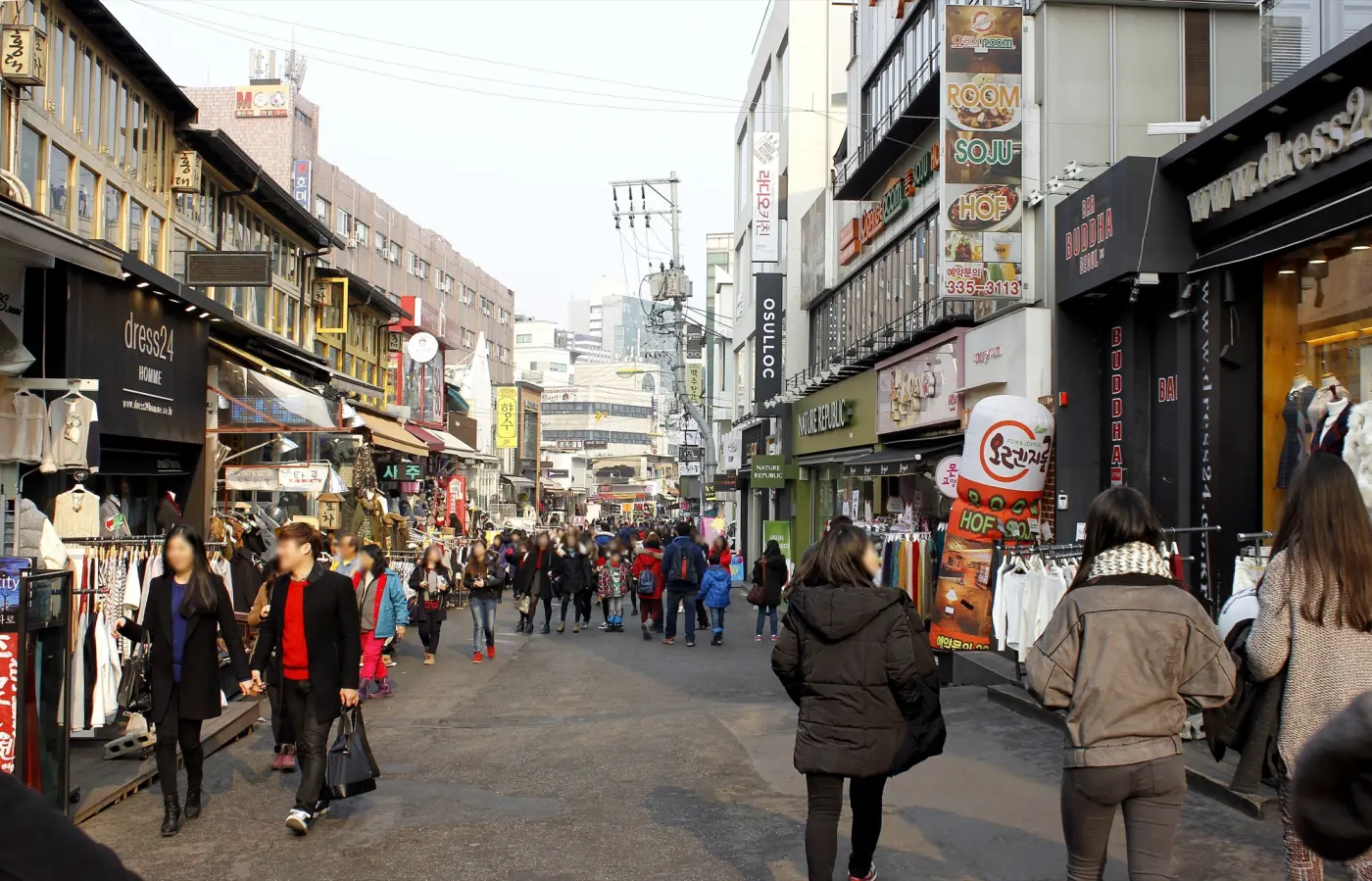
Hongdae takes its name from Hongik University, and the area around it is known for its youthful mood. VisitKorea describes shops selling everything from clothing to cosmetics, with buskers and dance performances on the streets. Visit Seoul highlights the R3 area as a centre for fashion and shopping, densely packed with clothing and cosmetics stores and popular with young people and tourists, with more and more shops following the latest trends.
For shoppers, Hongdae is the place for affordable street fashion and accessories rather than big names. It is also convenient on arrival or departure day: Hongik University Station is on the Airport Railroad as well as Line 2 and the Gyeongui–Jungang Line. Visit Seoul gives Exit 9 as the nearest exit to the R3 area. No official listing gives fixed hours for the area, so treat them as varying by shop.
Insadong: crafts and traditional goods
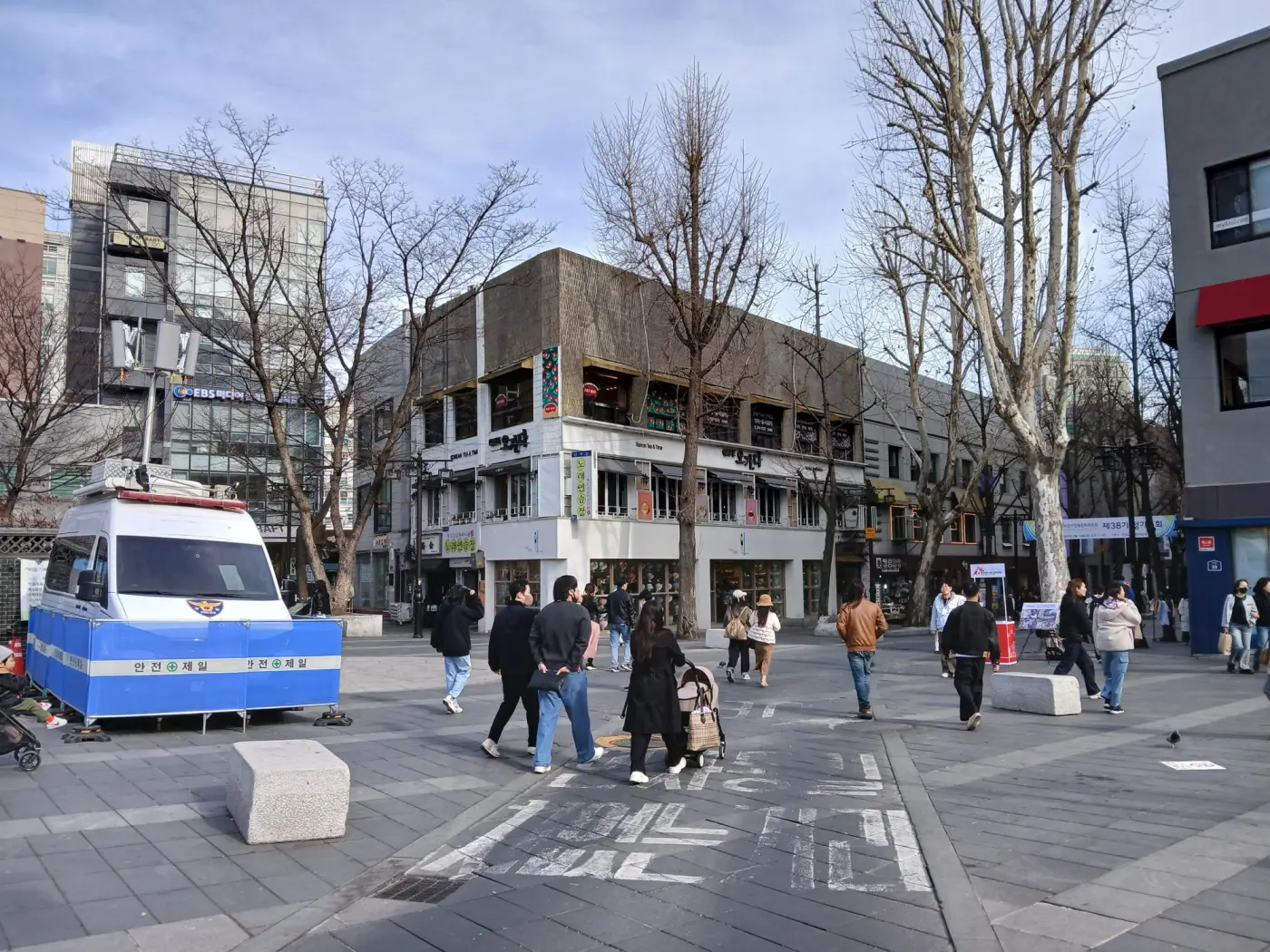
If you want something made in Korea to take home, Insadong is the district built around it. Visit Seoul names it one of the best places in Seoul to buy traditional Korean art and souvenirs, with antique shops, galleries, traditional stationery and handicraft shops, pottery and porcelain, bookstores and art supply stores. VisitKorea mentions vintage items, calligraphy tools and fans. The main street becomes traffic-free on Sundays, according to Visit Seoul.
The nearest stations are Jongno 3-ga (Lines 1, 3 and 5, Exit 5) and Anguk on Line 3. Our Bukchon and Insadong walking guide covers the craft alleys, tea houses and a walking route in detail, so it is not repeated here.
Gangnam and Garosu-gil: browsing south of the river
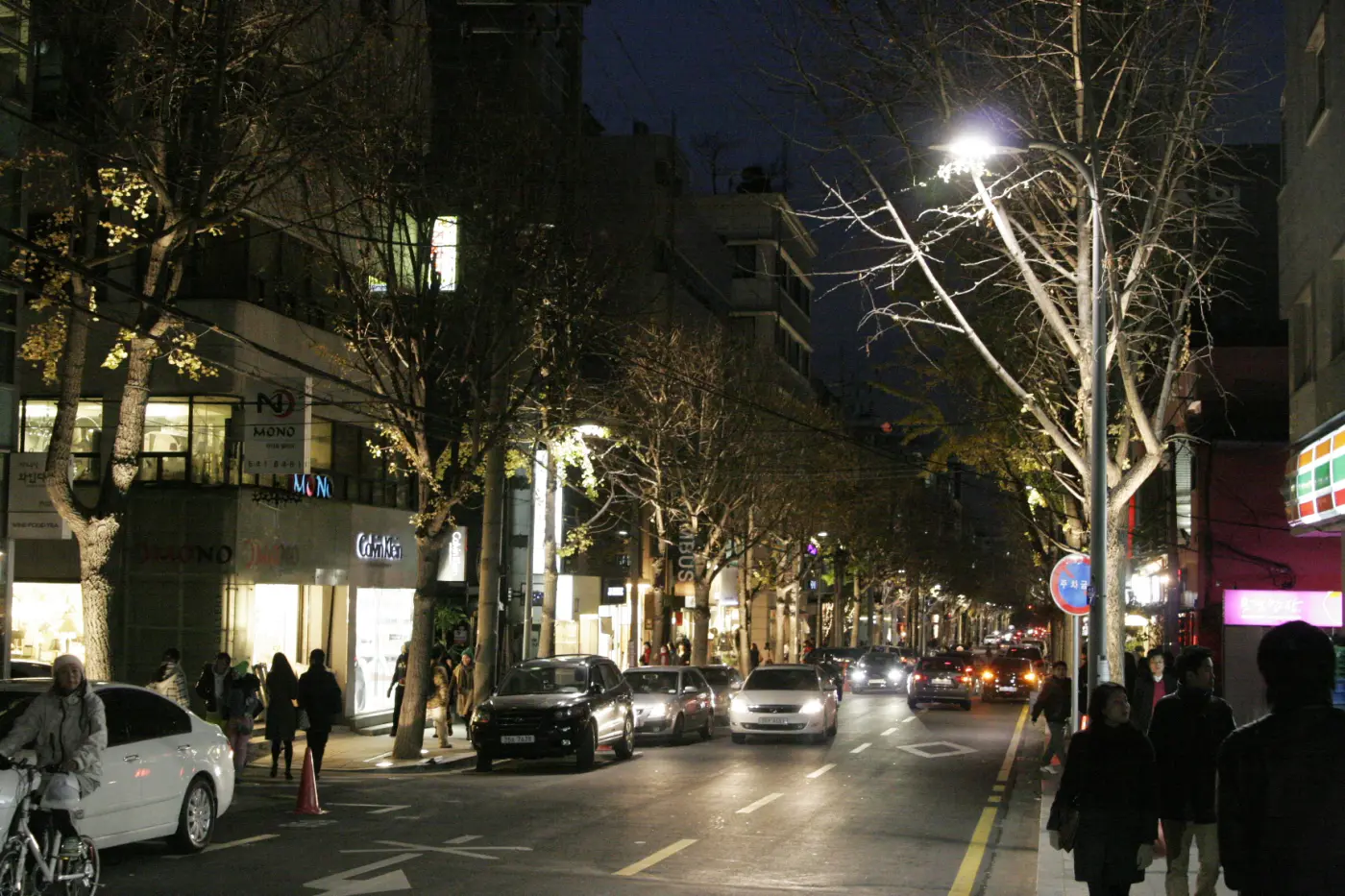
Garosu-gil in Sinsa-dong is a different kind of shopping: slower, more spread out, and mixed with cafés and galleries. Visit Seoul traces its character to the galleries, designer shops, film companies and artists that settled here, and describes a mix of fashion stores, antique furniture shops, bookstores selling foreign books, exhibitions and cafés. VisitKorea mentions select shops and luxury brands. It is a good street for a long walk with a few stops rather than for bulk buying.
Both Visit Seoul and VisitKorea give Exit 8 of Sinsa Station (Line 3 and the Shinbundang Line) as the way in; Visit Seoul also lists Exit 4 of Apgujeong Station. No official page gives hours for the street as a whole, because each shop sets its own.
Around Gangnam Station itself, much of the cheaper shopping is underground. Visit Seoul describes the Gangnam Station Underground Shopping Center as a web of street-style shops and beauty stores whose main customers are students and young office workers, with the nearest exit being Exit 8. Opening hours here are a good example of why it pays to check: Visit Seoul lists 09:00 to 22:00, while Gangnam's own tourism site lists 10:00 to 23:00. Both agree on 10:00 to 22:00, so plan within that window and confirm with the centre if you need earlier or later.
Underground shopping centres
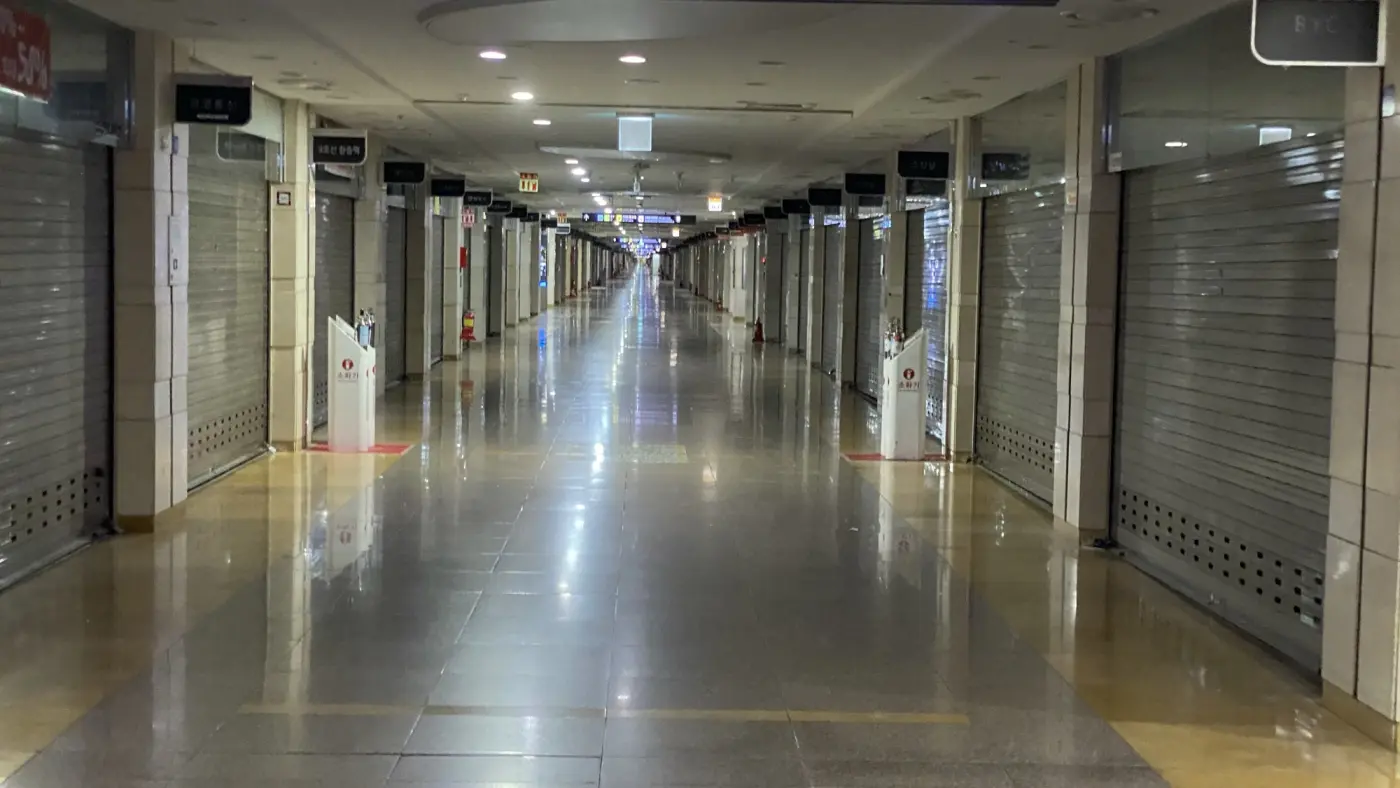
Seoul's underground shopping centres are a useful option on rainy, freezing or very hot days, because they connect directly to subway stations. Besides the Myeongdong and Gangnam Station centres above, the best known is Goto Mall at Express Bus Terminal Station. Visit Seoul calls it the largest underground shopping centre in Gangnam and lists clothes, cosmetics, accessories, interior goods, handcrafted items and flowers.
Visit Seoul lists Goto Mall as open from 10:00 to 22:00 and closed on Lunar New Year and Chuseok, two of Korea's major holidays, so check our holidays guide if you are visiting around those dates. The nearest exit is 8-1 at Express Bus Terminal Station, served by Lines 3, 7 and 9. In the underground passage towards Banpo Hangang Park (Exit G2), the Goto·Sebit Tourist Information Center offers help from interpreters, including English and Japanese, and is listed as open 11:00 to 20:00 every day.
Namdaemun Market: everyday goods in the old centre
Namdaemun Market grew up around Sungnyemun, the old south gate, and Visit Seoul describes it as the largest traditional market in Korea, with over 10,000 stores. Because many shops make their own goods and sell at wholesale prices, it is good for comparison shopping on clothing, kitchenware, everyday items and snacks. Visit Seoul notes that retailers from around the country come at night and local shoppers come during the day. It lists the market as operating Monday to Saturday and closed on Sundays, with hours varying by stall; the nearest station is Hoehyeon on Line 4, Exit 7. Our traditional markets guide covers Namdaemun's food alleys and what to buy, alongside four other markets.
Paying for your shopping
VisitKorea's shopping guide says most Korean stores accept international credit cards, with no minimum purchase. The same page warns that some businesses, such as traditional markets and street shops, may accept only cash, so it advises carrying some. In practice that means a card covers the malls, chain shops and underground centres, while small notes are handy for street stalls in Myeongdong and Dongdaemun and for market vendors. Our guide to money in Korea covers ATMs, exchange and transit cards.
If you are flexible on dates, VisitKorea notes that most stores hold sales in the off-season, roughly June to August and December to February, and that the Korea Grand Sale is a shopping and culture festival aimed at foreign visitors, with dates announced on its own website.
Tax refunds: the basics
Korea refunds part of the tax on many purchases for foreign visitors. According to VisitKorea's tax refund page, non-Korean visitors staying in Korea for less than six months can claim at shops showing a "Tax Free" or "Tax Refund" sign. Show your passport when you pay and ask for a tax refund. The goods must be new, unopened and unused, and you must leave Korea within three months of the purchase date. There is a minimum purchase per receipt, which VisitKorea lists on that page.
Some shops deduct the tax at the counter, which VisitKorea calls an immediate tax refund; it is available only at selected stores and within per-purchase and per-trip limits. Otherwise, you claim when leaving. VisitKorea describes the airport order: check in but do not check your bags yet, show the goods and receipts to customs for an export approval stamp, then check your bags and take your passport and receipts to a refund counter or kiosk. Keep refund purchases unopened and easy to reach until then. Our tax refund guide walks through the steps, and the K-beauty article explains why the unopened rule matters for skincare.
Bargaining: only in the right places
Haggling is not a general Korean shopping habit. A Korea.net feature on traditional markets explains that while bargaining is less common in everyday life, it is still alive in the marketplace, and that it is usually a friendly exchange rather than a battle; a good but not greedy haggler earns respect. VisitKorea says the same about flea markets: some prices are fixed, but many vendors are open to negotiation.
Outside markets and flea markets, treat the price on the tag or shelf as the price. In a market, a polite question about a discount when buying several items is fine, a smile helps, and walking away courteously is always acceptable. Do not push hard over small amounts.
- "Eolmayeyo?" means "How much is it?"
- "Kadeu doenayo?" means "Do you take cards?"
- "Jom kkakka juseyo" means "A small discount, please" (markets only)
- "Taekseu ripeondeu doenayo?" means "Can I get a tax refund?"
Planning a shopping day
The districts pair naturally by geography. Myeongdong, Namdaemun and the Myeongdong underground centre sit within walking distance of each other in the old centre. Insadong fits with a palace morning and the Bukchon lanes. Dongdaemun works well as an evening plan, and Hongdae is easy to combine with your airport train. Garosu-gil, Gangnam Station and Goto Mall are all south of the Han River, and Sinsa and Express Bus Terminal stations are both on Line 3.
A few habits make the day easier: wear comfortable shoes, carry a light bag for purchases, keep receipts together if you plan to claim a tax refund, and ask before paying whether exchanges are possible, especially at market stalls. Most of all, check hours for any specific mall or building you want to visit, since the official listings themselves note that hours vary.
Comments
Sign in to leave a comment.
Sign in ·No account? Create one
Confirm your email address to comment — it takes one click.
No comments yet.