
Seoul Traditional Markets: Where to Eat and What to Buy
Gwangjang, Namdaemun, Tongin, Mangwon and Gyeongdong: what each Seoul market is known for, which subway exit to use, cash or card, and how to order.
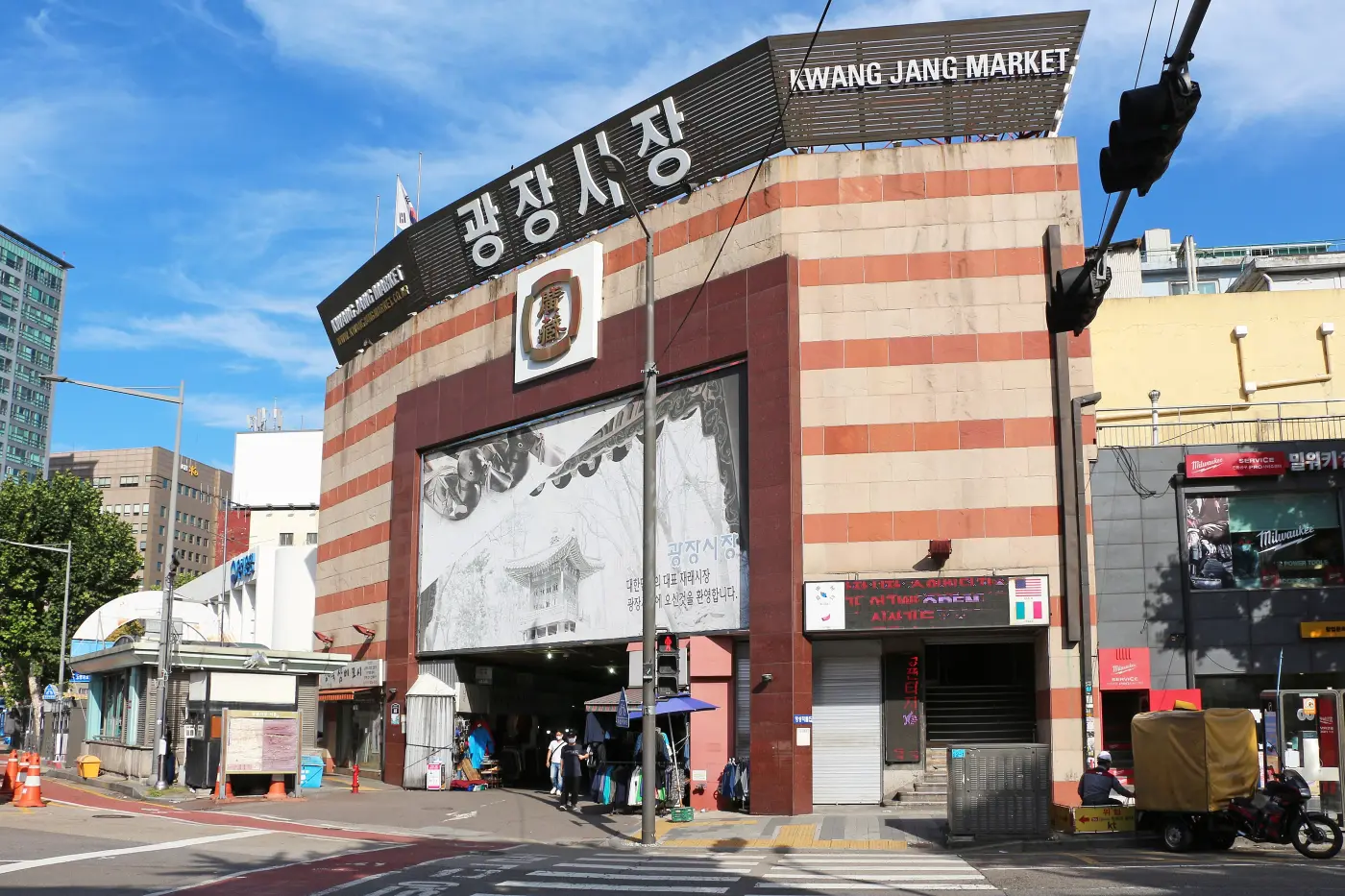
If you only have time for one thing in Seoul that feels completely local, make it a traditional market. Palaces show you the Joseon dynasty and Gangnam shows you the shiny present, but markets are where Seoul actually eats, shops and talks. You sit on a narrow bench next to strangers, point at a pile of something golden and fried, and five minutes later you are eating it off a plate that has been in service for longer than you have been alive.
Seoul has dozens of markets, and they are not interchangeable. Some are famous for food, some for fabric or herbal medicine, and some are simply where a neighbourhood buys its vegetables. This guide covers five that work well for visitors: Gwangjang, Namdaemun, Tongin, Mangwon and Gyeongdong. For each one we explain what it is like, what to eat or look for, and which subway exit to use. Opening days and hours come from Visit Seoul, the city's official tourism site, as listed in October 2026. Markets are made of hundreds of small, independent stalls, so treat hours as a guide rather than a promise.
Five Seoul markets at a glance
| Market | Known for | Nearest station | Good for |
|---|---|---|---|
| Gwangjang Market | Bindaetteok (mung bean pancakes), mayak gimbap, yukhoe, fabrics and hanbok upstairs | Jongno 5-ga (Line 1), Exit 8 | A first market meal; evenings, since the food alley stays open late |
| Namdaemun Market | Almost everything: clothes, kitchenware, ginseng, snacks; the kalguksu alley | Hoehyeon (Line 4), Exit 5 or 7 | Browsing and bargain shopping, a cheap noodle lunch |
| Tongin Market | The dosirak (lunch box) cafe paid with old-style brass coins; oil tteokbokki | Gyeongbokgung (Line 3), Exit 2 | Lunch after Gyeongbokgung or a walk around Seochon |
| Mangwon Market | Fried chicken bites, croquettes, hotteok, takeaway snacks | Mangwon (Line 6), Exit 2 | A relaxed local market and a picnic by the Han River |
| Gyeongdong Market | Ginseng, medicinal herbs, dried goods, produce and seafood | Jegi-dong (Line 1), Exit 2 | Seeing a working wholesale market; buying ginseng or dried goods |
Gwangjang Market: the classic food market
Gwangjang Market is the one most visitors have heard of, and with good reason. The Seoul Metropolitan Government describes it as established in 1905 and the first permanent market in Korea. Today it is a long, covered grid of alleys a few steps from Jongno 5-ga Station, Exit 8 on Line 1. Upstairs there is a wholesale fabric market, hanbok makers and tailors, and a vintage clothing area, but most people come for the food stalls on the ground floor.
The signature dish is bindaetteok, a thick, crisp pancake made from ground mung beans and fried in a generous slick of oil. Visit Seoul also lists mayak gimbap (small, bite-sized rice rolls whose name translates loosely as "addictive"), yukhoe (seasoned raw beef), sundae (Korean blood sausage), tteokbokki and eomuk (fish cake). Many visitors order a pancake with a bowl of makgeolli, the milky rice wine, and that pairing is as much a Seoul ritual as anything at a palace.
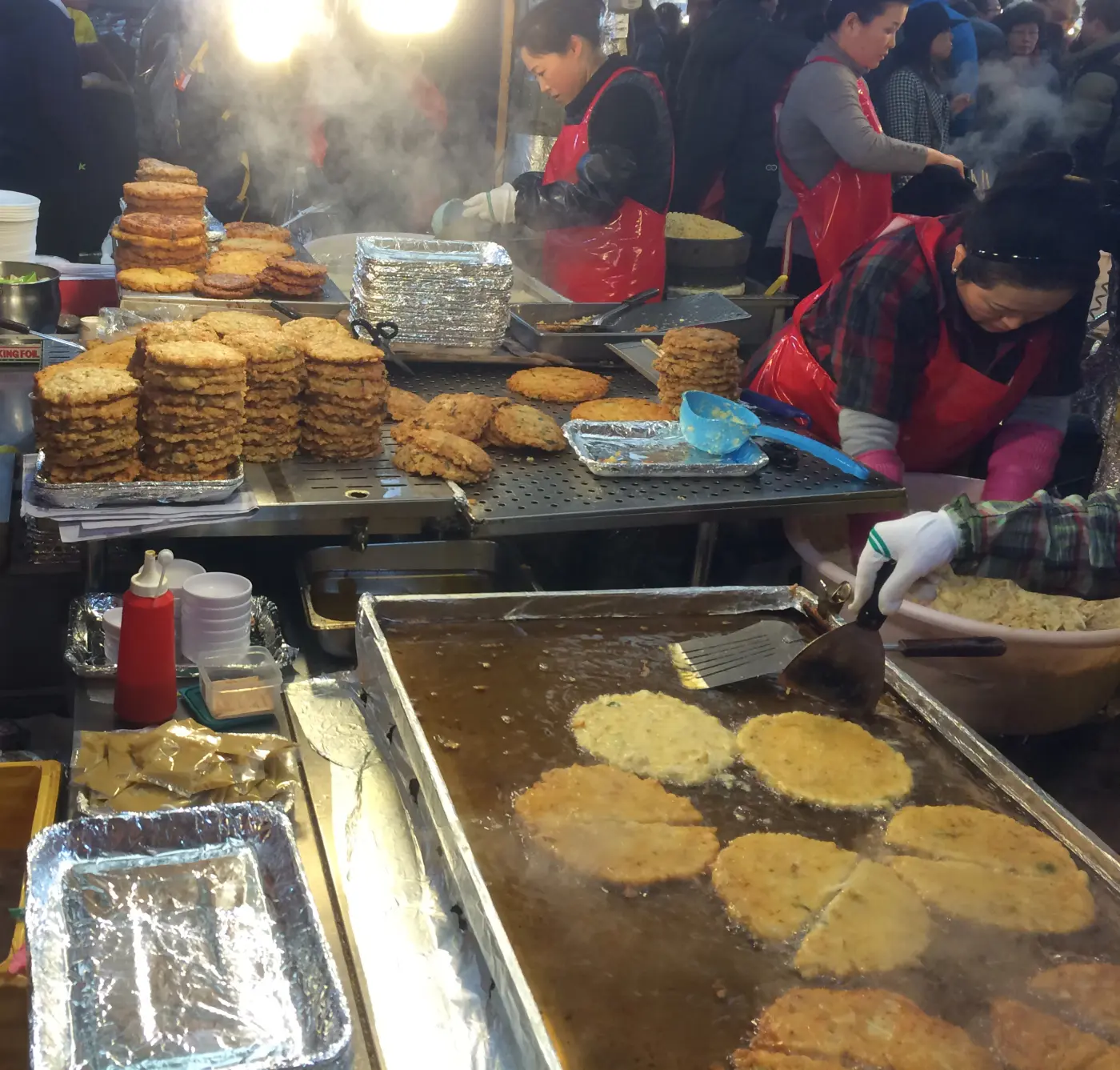
Timing matters more here than anywhere else. According to Visit Seoul, the market's general shops open from 09:00 to 18:00 and close on Sundays, while the food alley runs every day from 09:00 to 23:00. That makes Gwangjang one of the few traditional markets that is genuinely good in the evening. It is also very crowded at weekends and in the early evening, and the official listing reproduces traveller reviews that mention busy aisles and a stolen bag, so keep your phone and wallet zipped away.
Prices at Gwangjang became news in Korea in 2023. In December that year the Seoul government announced measures with the district office and merchants: menus showing weights or quantities next to prices, sample models of signature dishes, mystery shoppers checking prices and portions, and service training that includes not pressuring customers to pay in cash. In practice, this means you can and should check the posted price and portion before you sit down.
Namdaemun Market: a little of everything
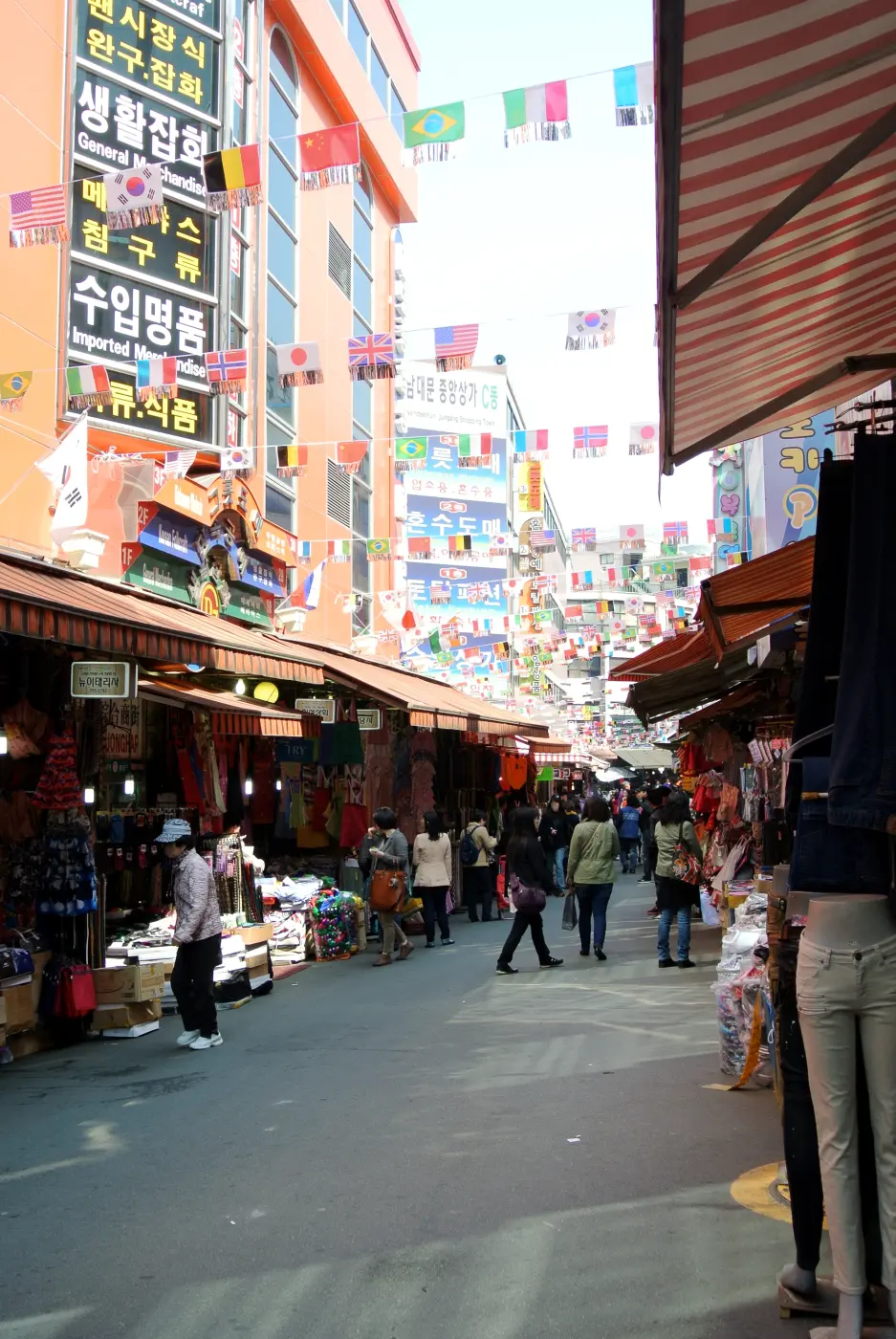
Namdaemun Market sits just east of Sungnyemun, the old south gate of the city wall, and Visit Seoul calls it the largest traditional market in Korea, with over 10,000 stores. The official description says that, apart from construction materials, it sells nearly everything: clothing, accessories, kitchenware, imported snacks, ginseng and traditional medicine. Much of it is wholesale, which is why so many shops are crammed into so few streets. Use Hoehyeon Station on Line 4; Exit 5 puts you near the food alleys and the tourist information centre, and Visit Seoul's market listing also points to Exit 7.
For lunch, find the kalguksu alley near Exit 5. Visit Seoul says it began to take shape after the Korean War, and that the noodles are all made by hand and cooked in an anchovy broth. Space is so tight that you sit shoulder to shoulder with strangers, and seats are hard to find at the lunchtime peak. Order noodles or a rice dish and many stalls add a small portion of the other, which is part of the fun.
Visit Seoul lists Monday to Saturday as Namdaemun's trading days, with Sunday off, and notes that hours vary by stall; some wholesale sections start very early. If you need help, the Namdaemun Market Tourist Information Center, about 80 metres from Hoehyeon Station Exit 5, offers maps, travel information and interpretation in English and Japanese, among other languages, and is open from 10:00 to 19:00.
Tongin Market: build your own lunch box
Tongin Market is small, about 70 to 80 stores along one alley in Seochon, the old neighbourhood west of Gyeongbokgung Palace. It dates back to 1941 and today consists mostly of grocers and small eateries. What makes it special for visitors is the dosirak cafe, a lunch-box system that lets you graze across the whole market without needing Korean.
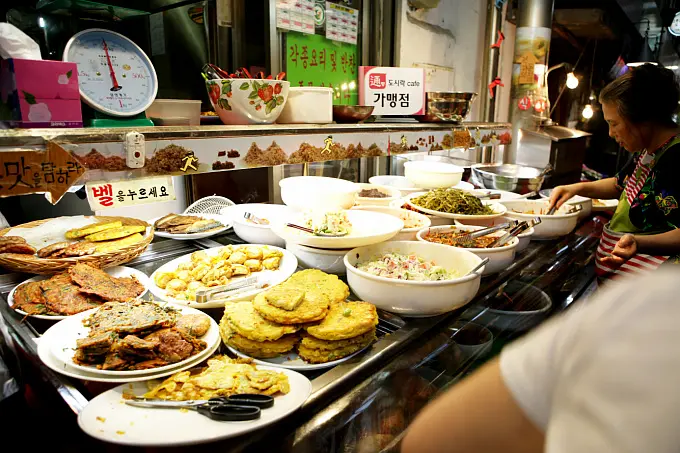
Here is how it works, according to Visit Seoul's guide (information as of July 2026). Walk about 100 metres into the market to the Customer Service Center and go up to the dosirak cafe. Buy a set of brass coins called yeopjeon, modelled on Joseon-era money, which come with an empty lunch box tray. Each coin is worth 500 won, and the guide suggests ten coins are enough for one person. Then walk the alley and trade coins for food at the participating stalls, which display a cafe sign. Return to the cafe to eat; rice, utensils and a microwave are there, and drinks can be bought with coins as well.
Popular picks include gireum tteokbokki (rice cakes stir-fried in oil and chilli rather than in sauce), tteokgalbi (grilled minced beef patties), gimbap and dakgangjeong (sweet, sticky fried chicken). The cafe opens at 11:00 and closes in the mid-afternoon: Visit Seoul gives 15:00 on weekdays and 16:00 on Saturdays, and both of its pages say the cafe is closed on Mondays. The listings disagree slightly on Sundays, so go on a Tuesday to Saturday if you can. The market itself keeps longer hours, from 07:00 to 21:00, varying by store. Use Gyeongbokgung Station, Exit 2 on Line 3; it is about a 500-metre walk.
Mangwon Market: a neighbourhood market by the river
Mangwon Market, in Mapo-gu, is the market Seoul locals send friends to when they want to avoid the crowds at Gwangjang. Visit Seoul says it has been running for more than four decades and is popular with people in their twenties and thirties, and VisitKorea describes it as a great alternative to Gwangjang for street food. Expect crisp fried green chillies, croquettes, hotteok (sweet filled pancakes), dakgangjeong, kalguksu, gimbap and tteokbokki, plus traditional sweets such as yakgwa and hangwa that make good gifts.
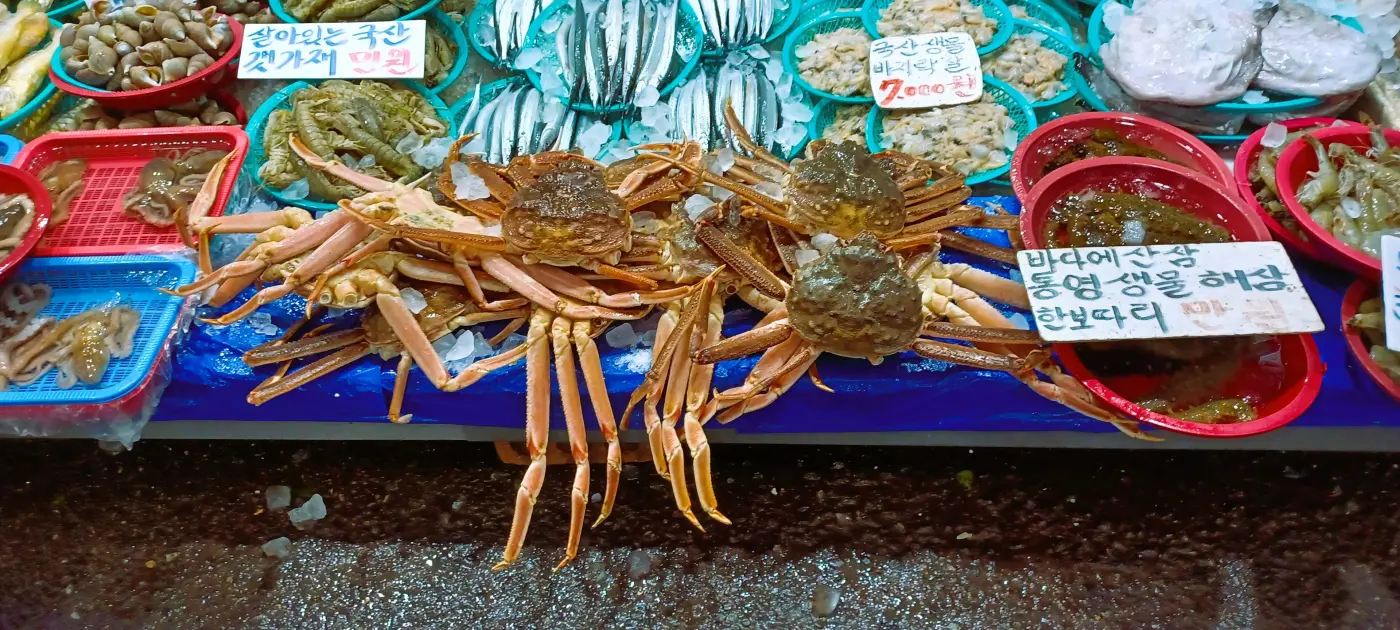
Mangwon is a short walk from Mangwon Station, Exit 2 on Line 6, and Visit Seoul lists it as open daily from 10:00 to 21:00, varying by store. VisitKorea points out two practical things: some shops have seating, but at many stalls you eat standing; and the market is close to Mangwon Hangang Park, so buying takeaway snacks for a picnic by the Han River is a very Seoul way to spend an afternoon.
Gyeongdong Market: ginseng, herbs and the smell of roots
Gyeongdong Market, in the Jegi-dong area near Cheongnyangni, is a different kind of experience. Visit Seoul describes it as Korea's largest ginseng and herbal medicine specialty zone; it was established in June 1960 as an agricultural market and expanded in 1985. Alongside fresh ginseng and dried roots you will find produce, dried goods and seafood. It is a working market, so it is less about snacks and more about watching how Koreans have bought food and medicine for generations.
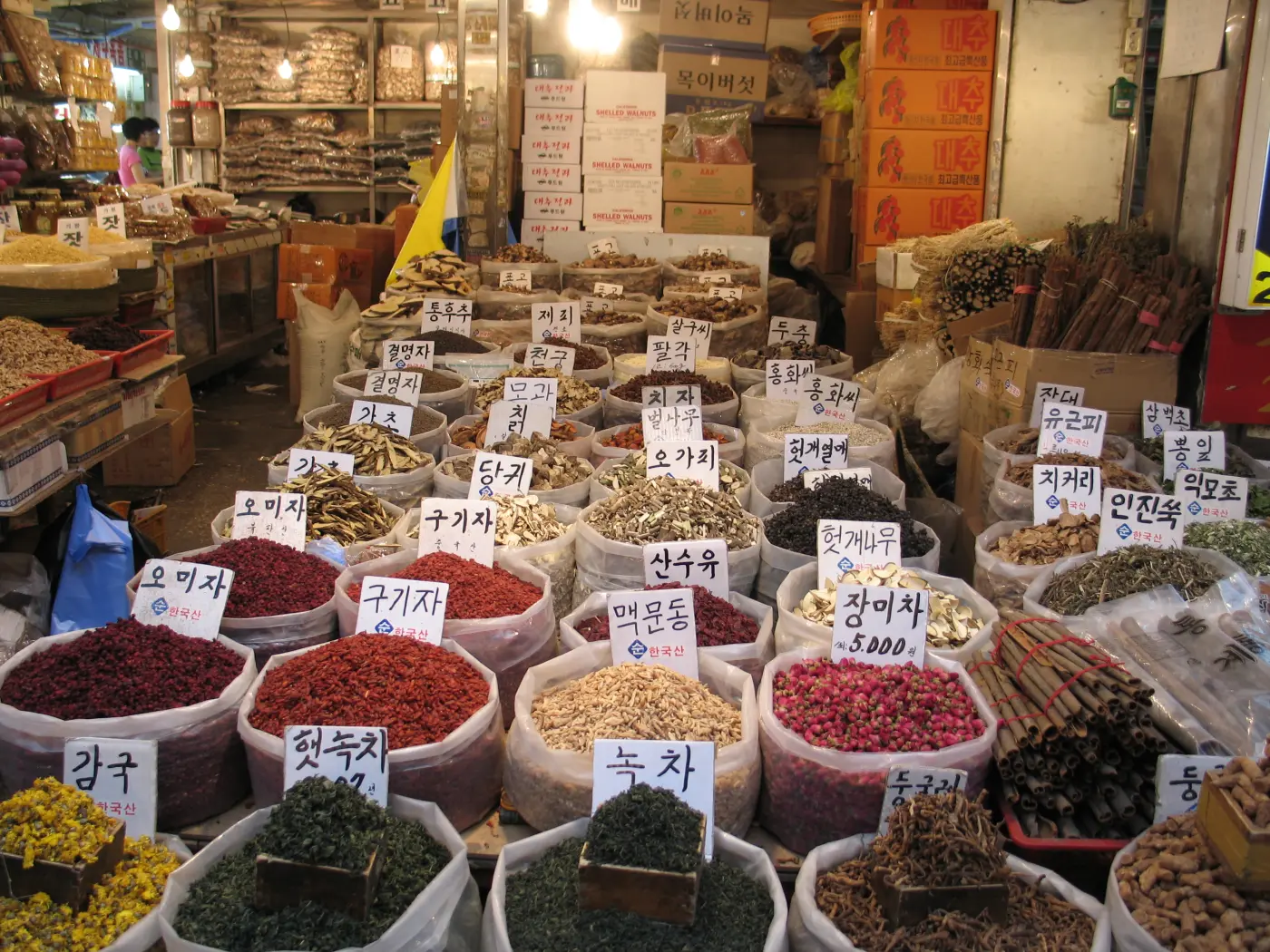
Take Line 1 to Jegi-dong Station and use Exit 2, which Visit Seoul puts about 270 metres from the market. The listed hours are 08:00 to 18:00 daily, but note the closures: every other Sunday and over Chuseok, the autumn harvest holiday. Mornings are the liveliest time.
Cash or card at a Seoul market?
Bring both. VisitKorea's shopping guide says that at most Korean stores you can pay by international credit card without any purchase limit, but that some businesses, including traditional markets and street shops, may only accept cash. At Mangwon, VisitKorea notes that most stalls take cards while a few do not. So it is safest to assume that smaller snack stalls and produce sellers may want cash.
A few 1,000 and 5,000 won notes make life easier, especially at takeaway stalls where queues move fast. If you want to check first, "kadeu doenayo?" (do you take cards?) is the phrase, and "eolmayeyo?" (how much is it?) covers the rest. For the bigger picture, including ATMs and transit cards, see our guide to money in Korea.
How to order at a market stall
Most market stalls work the same way. The food is displayed at the front, often with prices on a board or on handwritten cards, and the seating is a bench or a few stools around the counter. You can simply point and say "igeo juseyo" (this one, please), holding up fingers for the number of portions. If you want to sit, catch the cook's eye and gesture to the bench; if you want to take food away, say "pojanghae juseyo" (to go, please).
At sit-down stalls you usually pay after eating, directly to the person who served you; at takeaway stalls you pay when you order. Fried items like pancakes are often cooked in advance and refried when you order, so it is normal to wait a few minutes. Shared side dishes such as kimchi or pickled onions come with the food. As in any Korean restaurant, there is no tipping.
Etiquette that market vendors appreciate
- Do not block the alley. Market aisles are narrow and also used by delivery carts; step to the side to look, photograph or eat.
- Ask before you photograph people. Food and stalls are usually fine, but vendors are working, so a gesture towards your camera and a nod is polite.
- Do not handle food or produce you are not buying. Point instead, and let the seller pick it up.
- Hand over money and cards with both hands, or with one hand while the other touches your arm. It is a small sign of respect Koreans notice.
- Eat at the stall where you bought the food. Taking one stall's dish to sit at another's bench is awkward.
- When the bench is full and people are waiting, finish and move on rather than lingering over your phone.
- Bring a small bag of your own for takeaway snacks and souvenirs; it saves on plastic and keeps your hands free.
None of this is a strict rule, and vendors are used to visitors who do not speak Korean. A smile, a "gamsahamnida" (thank you) and a little patience go a long way. Our etiquette guide for first-time visitors has more on everyday manners.
Best time to go
| Market | Hours | Closed | Best time |
|---|---|---|---|
| Gwangjang | Shops 09:00–18:00; food alley 09:00–23:00 | Shops on Sundays; food alley open daily | Weekday late morning, or an evening meal |
| Namdaemun | Varies by stall; some sections start very early | Sundays | Weekday morning, then a noodle lunch |
| Tongin | Market 07:00–21:00; dosirak cafe from 11:00 to mid-afternoon | Dosirak cafe on Mondays | Tuesday to Saturday around 11:00–13:00 |
| Mangwon | Daily 10:00–21:00 | Varies by store | Late afternoon, then the riverside park |
| Gyeongdong | Daily 08:00–18:00 | Every other Sunday; Chuseok | Weekday morning |
A few general patterns help. Weekday mornings and late mornings are calmest; weekend afternoons are the busiest everywhere. Lunchtime between noon and 13:00 is when office workers fill the noodle alleys, so arrive a little before or after. Over the big holidays, Seollal and Chuseok, many family-run stalls close for a few days, and Gyeongdong lists Chuseok as a closing day, so check before you plan a holiday visit around a market. And in summer, go early: covered markets can be hot and humid by mid-afternoon.
Putting markets into your Seoul days
Markets pair naturally with nearby sights. Tongin is a lunch stop after Gyeongbokgung Palace and the lanes of Seochon. Gwangjang sits near Jongmyo Shrine and the Cheonggyecheon stream, and our three-day Seoul plan uses it as the start of a market-to-Namsan day. Namdaemun is a short walk from Sungnyemun Gate, Deoksugung Palace and Myeongdong. Mangwon fits an afternoon in Mapo, ending by the Han River. Gyeongdong is for travellers who want to see a side of Seoul that tour buses rarely show.
If you are vegetarian or have allergies, ask before you order: pancakes and dumplings may contain meat or seafood, and broths are often made with anchovy. Our food pages explain what is usually in bindaetteok, gimbap, tteokbokki and hotteok, and our PDF guide Korea, The Basics covers eating out, money and getting around in one place. Then go hungry, bring a few notes, and let the market decide what you have for lunch.
Comments
Sign in to leave a comment.
Sign in ·No account? Create one
Confirm your email address to comment — it takes one click.
No comments yet.