Wearing Hanbok in Korea: Free Palace Entry, Rules, Tips
What hanbok is, the current rule for free palace entry in hanbok, how rental works, where to wear it and what the official guidelines ask of visitors.
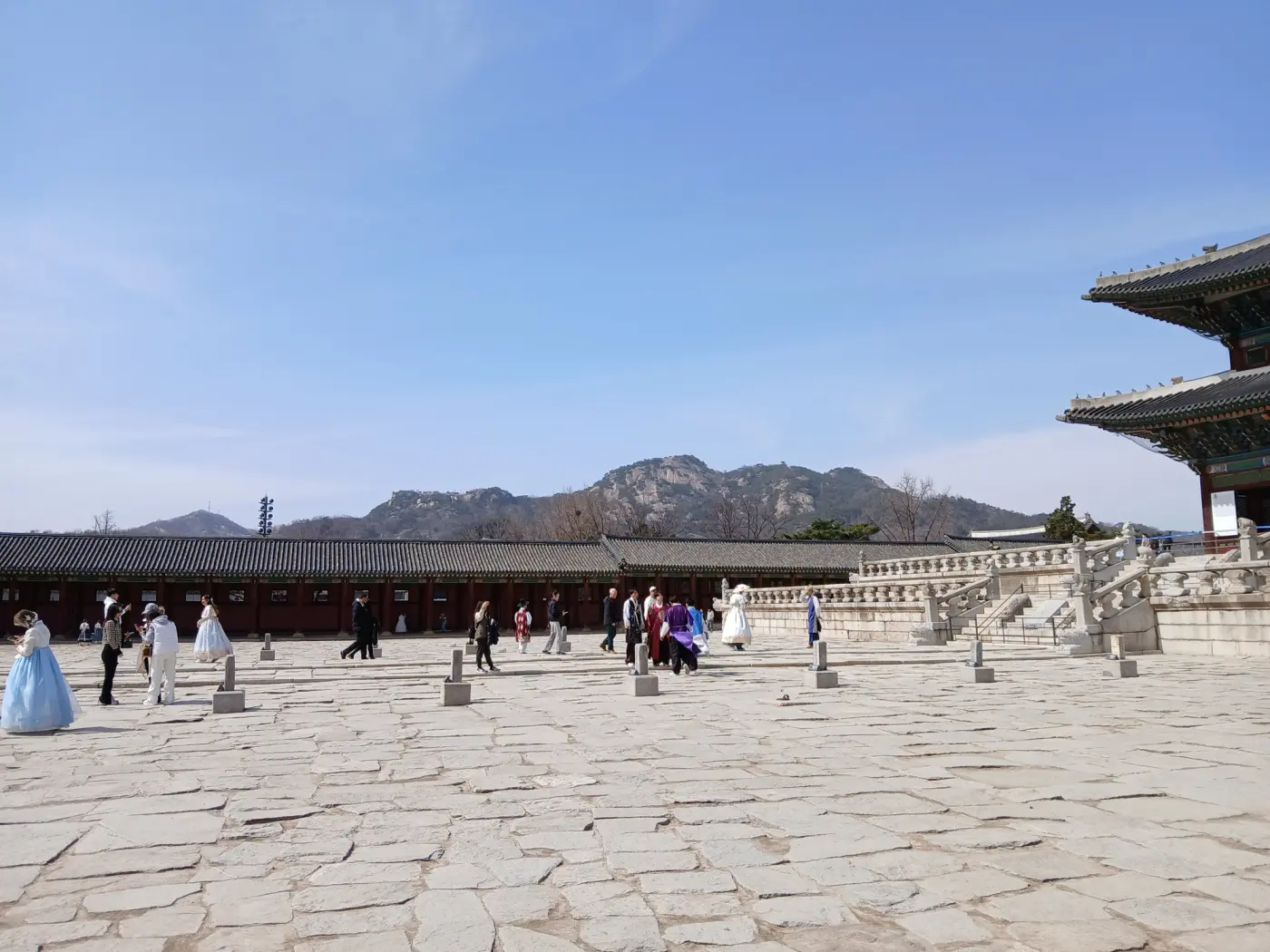
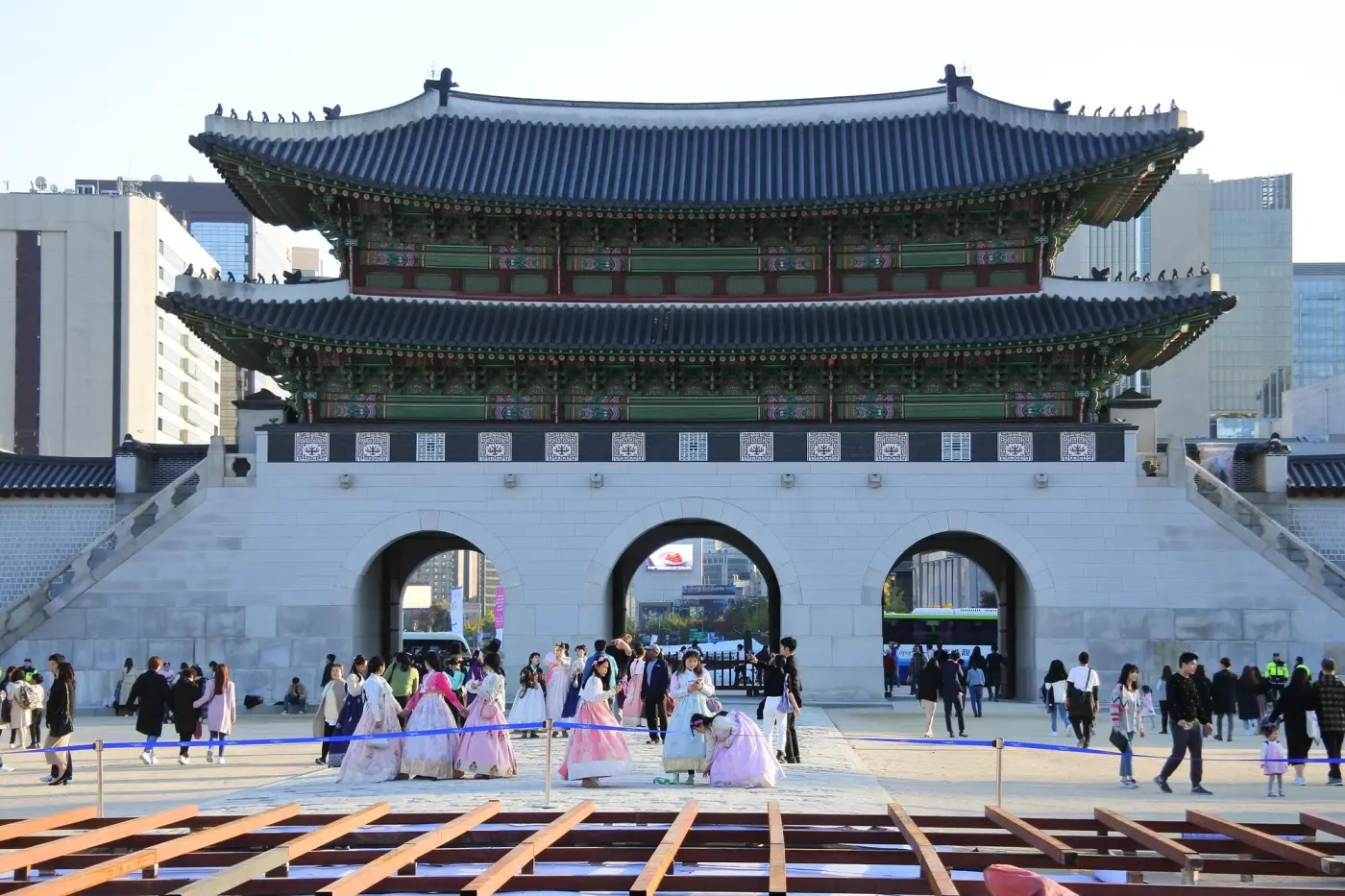
Walk into Gyeongbokgung on almost any day and you will see it: courtyards full of visitors in long skirts, wrap-collar jackets and bright ribbons, Korean and foreign alike. VisitKorea notes that trying on hanbok, Korea's traditional clothing, is growing in popularity among young couples and international visitors, and the royal palaces encourage it by letting people in hanbok enter for free.
That free entry comes with conditions, though, and they are more specific than many visitors expect. A rented jacket over jeans does not count, and neither does an overcoat on its own. This guide explains what hanbok actually is, which pieces you need, what the palace operator's current guideline says, how rental generally works, and where and when people usually wear it. Every rule here comes from the official pages listed at the end, checked in October 2026.
What hanbok is: the four pieces to know
Official descriptions agree on the basic structure. VisitKorea, the Korea Tourism Organization's site, describes hanbok as a jeogori (top) worn with either a chima (skirt) or baji (trousers), with a durumagi (overcoat) completing the look. It also notes that the fabric is cut flat and sewn, yet forms soft curves once it is worn. The National Folk Museum of Korea adds detail to each piece:
- Jeogori: the upper garment. The museum calls it the most basic top, worn by men and women of all ages. On the front are goreum, the long coat strings that are tied to close it.
- Chima: the women's skirt. It widens towards the hem and falls naturally into pleats.
- Baji: the trousers traditionally worn by men. At the ankle a string called daenim was tied to adjust the fit.
- Durumagi: an outer coat worn by both men and women. The museum explains the name as "covered on all four sides". Men going outside also wore other kinds of outer robe, known collectively as po.
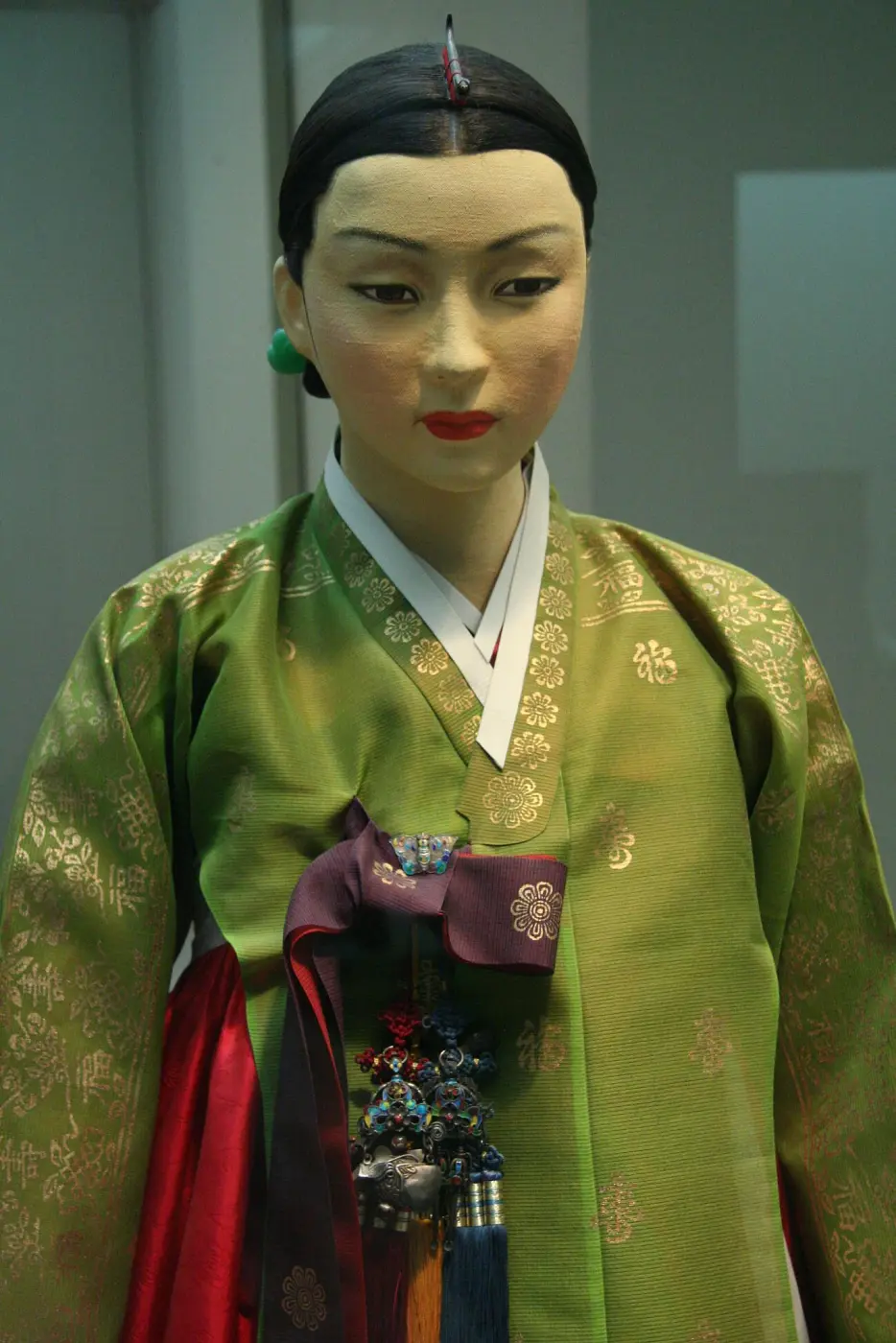
- Extras: a baeja is a short vest that can be worn over the jeogori, and a norigae is a decorative pendant hung from the jacket strings or the skirt waistband.
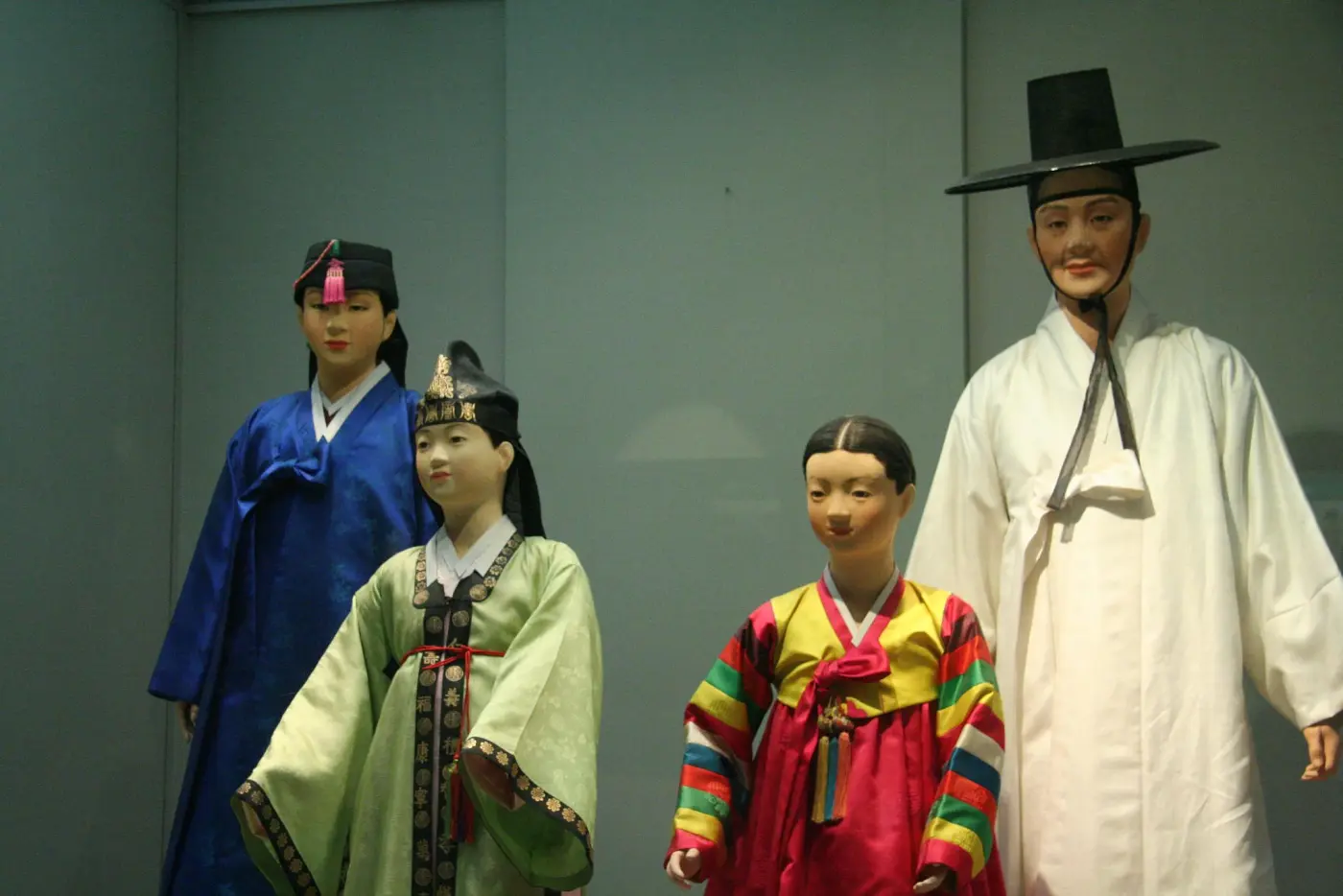
Two practical details from the museum are worth remembering on the day. Hanbok has no pockets, which is why people traditionally carried a small pouch called a jumeoni; a small bag does the same job today. And shoes were meant to match the outfit: unhye for women, taesahye for men, worn with padded socks called beoseon. Most rental outfits come with simpler footwear, but the idea of a coordinated look from head to toe is very much part of the tradition.
Everyday and ceremonial hanbok
Korea.net, the government's official site, summarises the history like this. The two-piece top-and-bottom structure was established by the Three Kingdoms era, the clothing kept evolving, and the form now thought of as hanbok took shape during the Joseon dynasty (1392–1910). The word "hanbok" itself is assumed to have come into use after Korea opened its ports in 1876, to tell native clothing apart from Western dress.
For centuries, then, the jeogori and skirt or trousers were simply everyday clothes. Today they are mostly worn on occasions that call for courtesy: VisitKorea lists traditional holidays, weddings, a baby's first birthday party and ancestral rites. In 2022 the Cultural Heritage Administration, now the Korea Heritage Service, designated Hanbok saenghwal, the culture of making, wearing and enjoying hanbok, as National Intangible Cultural Heritage. It chose not to name any single holder of the tradition, describing it as a custom practised by Koreans as a whole.
Ceremonial dress is a step up again. The National Folk Museum notes that a traditional wedding let the couple wear palace-style attire: the groom in a danryeong robe and samo hat, the bride in a hwarot or wonsam with a hwagwan or jokduri headpiece. That custom survives in pyebaek, a short ceremony after a Western-style wedding where the couple change into these robes and bow to their elders. For a baby's first birthday, or dol, the museum describes a saekdong jeogori with rainbow-striped sleeves, a kkachi durumagi coat and a hogeon or gulle cap.
At the other end of the scale is saenghwal hanbok, sometimes translated as everyday or modernised hanbok: simplified cuts made for daily wear. The palace guideline explicitly accepts both traditional and modernised hanbok, which matters because many rental outfits are modern interpretations rather than historical reproductions.
Free palace entry in hanbok: the current rule
The palaces are run by the Royal Palaces and Tombs Center of the Korea Heritage Service. Its admission page lists "people wearing hanbok" among the categories that enter free, and its guideline FAQ confirms that this applies to foreign visitors too, since the aim is to popularise hanbok in Korea and abroad. VisitKorea's hanbok page names the same four palaces: Gyeongbokgung, Changdeokgung, Changgyeonggung and Deoksugung.
What counts as hanbok? The guideline, published in Korean and English, sets out these points:
- Both traditional and modernised hanbok qualify.
- You need an upper garment (jeogori) and a lower garment (skirt or trousers) worn together.
- A durumagi overcoat on its own is not accepted as hanbok.
- The jacket must keep the wrap-collar shape and be worn closed. According to the Korean FAQ, a jeogori without ribbon ties still counts, and the fastening method does not matter.
- A T-shirt-style jacket does not count. Trousers should follow the shape of traditional hanbok trousers; a zip waist or missing ankle ties is fine.
- Any style of hanbok skirt is accepted, wrap or not. A wrap-around skirt with a jeogori counts, but the jacket must come down to the waist.
- A one-piece hanbok-style dress without a jeogori does not count.
- Mixing pieces does not qualify: a jeogori with jeans, or a hanbok skirt or trousers with a T-shirt, means paying the normal fee.
- The Korean guideline recommends hanbok that suits the dignity of the palace and rules out excessive exposure; the English version asks visitors to keep the jeogori on at all times.
- Staff may refuse entry to anyone dressed inappropriately or behaving badly.
Two details catch people out. First, free entry covers the ordinary palace admission, not every ticket inside. At Changdeokgung, the Secret Garden (Huwon) has its own free-admission list, and hanbok wearers are not on it, so you still need a Secret Garden ticket. At Deoksugung, the art museum inside the grounds is ticketed separately. Second, closing days differ. Under the visitor regulations, Gyeongbokgung and Jongmyo close on Tuesdays, while Changdeokgung, Changgyeonggung, Deoksugung and most royal tombs close on Mondays. When a closing day falls on a public holiday, the site opens and closes on the next non-holiday day instead.
What about Jongmyo Shrine and the Joseon royal tombs? The operator's own site shows its hanbok guideline under tabs for Jongmyo and the royal tombs as well as the palaces, and the hanbok category appears on the admission pages for those sites. VisitKorea's list, however, names only the four palaces. Because the two official sources are not identical, the safe approach is to check the operator's admission page for Jongmyo or the tomb you plan to visit before you go.
Hanbok-friendly places at a glance
| Place | Hanbok benefit or note | Condition confirmed on the official page |
|---|---|---|
| Gyeongbokgung | Free admission in hanbok | Full set: wrap-collar jeogori plus skirt or trousers. Closed Tuesdays |
| Changdeokgung | Free admission to the palace buildings | Secret Garden (Huwon) still needs its own ticket. Closed Mondays |
| Changgyeonggung | Free admission in hanbok | Same dress rule. Closed Mondays |
| Deoksugung | Free admission in hanbok | Art museum inside is ticketed separately. Closed Mondays |
| Jongmyo and Joseon royal tombs | Covered by the operator's own guideline pages | Not on VisitKorea's four-palace list; check royal.khs.go.kr first. Photography can be restricted |
| Bukchon red zone (Bukchon-ro 11-gil) | No benefit; people in hanbok count as tourists | Tourist visits 10 a.m.–5 p.m. only. KRW 100,000 fine since 1 March 2025 |
| Gyeonggijeon Shrine, Jeonju | 50% off admission | On the fourth Saturday of each month, Jeonju's "Hanbok Day" |
| Hanbok Culture Week (2026: 19–25 October) | Events nationwide; discounts at some attractions for people in hanbok | Announced by the Ministry of Culture, Sports and Tourism; dates change each year |
How hanbok rental generally works
VisitKorea notes that hanbok rentals are easy to find near royal palaces, hanok villages and other historical sites, and that shops offer a wide range of designs and colours, from traditional costumes to contemporary hanbok. It also says most rental shops lend accessories and can do your hair to match the outfit. Styles and fees vary from place to place, so VisitKorea's own advice is to check in advance.
Because every shop sets its own terms, it helps to ask a few questions before you pay. None of these is a rule; they are simply the points that differ between shops:
- How long is the rental, and when must the outfit be back? Rentals are usually counted in hours, so plan your route and travel time around the return.
- What is included: jacket and skirt or trousers only, or also a petticoat, outer layer, bag, hair accessories or styling?
- Is an ID or a deposit needed? Some shops may ask for one; bring what they request and keep your passport safe.
- Does the outfit meet the palace guideline? A modern outfit that is a one-piece dress, or a jacket that stops above the waist, will not get you free entry.
- What happens if it rains, or if the outfit is stained? Ask before you leave the shop, not when you return.
If you only want to try hanbok on rather than wear it all day, VisitKorea's hanbok programme page also lists cultural centres where you can try one on for a short session, including the Korea Traditional Culture Center at Incheon Airport, which our airport layover guide covers.
Wearing it respectfully: what the official rules say
There is no official dress code beyond the free-entry guideline, but the palace visitor regulations and the Ministry of Culture's own campaigns point in the same direction. During Hanbok Culture Week 2026 the ministry ran a campaign at Gyeongbokgung called "Wear Hanbok the Right Way", promoting both the beauty of hanbok and proper wearing etiquette. In practice, the official guidance comes down to a few points:
- Wear the set properly: jacket closed, skirt or trousers on, nothing too revealing.
- Souvenir photos by visitors are treated as permitted. Filming for TV, film, drama or advertising needs a permit, and so does souvenir photography using non-everyday costumes or props such as character outfits or mascot suits.
- Staff can restrict photography in particular areas to prevent crowding, and Jongmyo, the royal tombs and Chilgung may limit photography because of the nature of those places.
- Drone photography is limited to public agencies and cases the operator approves, so leave the drone at the hotel.
- The grounds are non-smoking throughout. Alcohol, mats, tents and cooking gear can be refused at the gate, and food is allowed only in designated areas.
- Shouting, rowdiness and anything that disturbs other visitors can lead staff to stop your visit.
Beyond the rules, the general manners of any Korean heritage site apply: keep paths clear for other visitors, do not climb on stone platforms or lean on painted woodwork for photos, and step aside for staff. Our first-trip etiquette guide covers the wider basics, from bowing to two-handed giving.
Where people usually wear it
Gyeongbokgung is the obvious choice: it is the largest of the palaces, close to many rental shops, and its courtyards and gates are what most people picture when they imagine hanbok photos. Changdeokgung and Changgyeonggung lie to the east, and Deoksugung sits in the middle of the city near City Hall. Our Seoul palaces guide compares all five and explains opening hours and the combined ticket.
Bukchon Hanok Village, between Gyeongbokgung and Changdeokgung, is the other classic backdrop, but it is a residential neighbourhood with rules of its own. Since 1 November 2024 the Seoul Metropolitan Government has limited tourist visits to the red zone around Bukchon-ro 11-gil to 10 a.m.–5 p.m., with fines of KRW 100,000 applying since 1 March 2025. Wearing hanbok does not change any of this: you are a visitor in somebody's street, so keep your voice down, do not pose on doorsteps, and leave by 5 p.m. Our Bukchon and Insadong walk has the full rules and a route.
Outside Seoul, Jeonju Hanok Village is the best-known place to wear hanbok, with rental shops among its lanes. Gyeonggijeon Shrine, which holds the portrait of the Joseon dynasty's founder, offers 50 percent off admission on the fourth Saturday of every month to mark Jeonju's own "Hanbok Day". Our Jeonju guide covers the village, the shrine and how to get there.
Season by season
Spring and autumn are the most comfortable seasons for hanbok, and also the busiest at the palaces. Our guide to the best time to visit Korea explains the cherry blossom and autumn foliage periods, the rainy season and the big holidays when sites get crowded.
Summer in Korea is hot and humid, and layered hanbok can feel heavy. The palace FAQ notes that ramie clothing (mosi), the light summer fabric that older Koreans wear, counts as hanbok as long as it meets the guideline. Go early in the day, carry water, and remember that a long skirt and wet stone paving do not mix well after a summer shower.
Winter is cold, especially in the open palace courtyards. A durumagi overcoat on its own does not count, but worn over a full jeogori and skirt or trousers it is both traditional and warm. Thermal layers underneath help, and closing times are earlier in the winter months, so check the hours before you set off. Our winter in Korea guide covers temperatures, snow and what to pack.
Hanbok Culture Week and Hanbok Day
The Ministry of Culture, Sports and Tourism runs Hanbok Culture Week with the Korea Craft and Design Foundation. The 2026 edition, the ninth, ran from 19 to 25 October with exhibitions, hands-on programmes and performances at about 410 venues in Korea and abroad. Hanbok Day fell on 21 October, with an opening ceremony at the National Museum of Korea. During the week, some attractions offered discounts to visitors wearing hanbok, and regional hanbok culture centres, including one in Jeonju, held their own programmes. Dates change each year, so check Korea.net or the event's official site (in Korean) if your trip falls in October.
Wearing hanbok is entirely optional, and nobody will think less of a visitor in ordinary clothes. If you do want to try it, the essentials are simple: a full set with a proper wrap-collar jacket, an eye on the closing day and the return time, and the same courtesy you would show anywhere people live, pray or remember their history.
Comments
Sign in to leave a comment.
Sign in ·No account? Create one
Confirm your email address to comment — it takes one click.
No comments yet.