
Day Trips from Seoul by Train and Subway: 4 Easy Picks
Suwon's fortress, the Korean Folk Village, Nami Island and Incheon's seafront: how to reach each from Seoul by public transport and how long to allow.
Seoul can easily fill a week, but most visitors reach a point, usually around day three or four, when another palace or another shopping street starts to blur into the last one. That is the moment for a day trip. The good news is that you do not need a car, a tour or a second hotel. Several of the best places around the capital sit at the end of a subway line or a short train ride, and you can be back in your Seoul room for dinner.
This guide covers four realistic one-day trips by public transport: the fortress city of Suwon, the Korean Folk Village in Yongin, Nami Island and the gardens of Gapyeong, and the seafront and new city of Incheon. For each one we explain how to get there in general terms, how much time to allow, what it is best for, and when you might want to choose something else. Transport details come from the official pages of each site or city, listed at the end; bus numbers and timetables do change, so check them again on the day.
The four trips at a glance
| Destination | Best for | Getting there (general) | Time needed |
|---|---|---|---|
| Suwon: Hwaseong Fortress | Walking an 18th-century fortress wall; history without crowds of tour buses | Seoul Subway Line 1 to Suwon Station, then a city bus to the Hwaseong Haenggung stop | Most of a day; the wall walk alone takes 2–3 hours |
| Yongin: Korean Folk Village | Late-Joseon village life, performances, travelling with children | Suin-Bundang Line to Sanggal Station, then a local bus; or a direct bus from central Seoul | Half a day on site, a full day door to door |
| Gapyeong: Nami Island | Tree-lined walks on a river island; autumn colour | ITX-Cheongchun train or Gyeongchun Line to Gapyeong Station, then a short ride or walk to the ferry | A full day |
| Gapyeong: Garden of Morning Calm | Themed gardens and seasonal flowers; winter light displays | ITX-Cheongchun train or Gyeongchun Line to Cheongpyeong Station, then bus 30-6 or a taxi | Half a day on site, a full day door to door |
| Incheon: Wolmido and Songdo | Sea views, a monorail ride, a seawater park; easy on a departure day | Seoul Subway Line 1 to Incheon Station; Incheon Subway Line 1 for Songdo | Half a day to a full day |
A quick rule of thumb before you choose: Suwon and Incheon are the easiest, because they are reachable on the same subway network you already use in Seoul. The Folk Village needs one bus at the end. Gapyeong is the furthest and works best with an early start. Pick one per day. Trying to stack two of these into a single day usually means spending more time on trains than at either place.
Suwon: walk the wall of Hwaseong Fortress
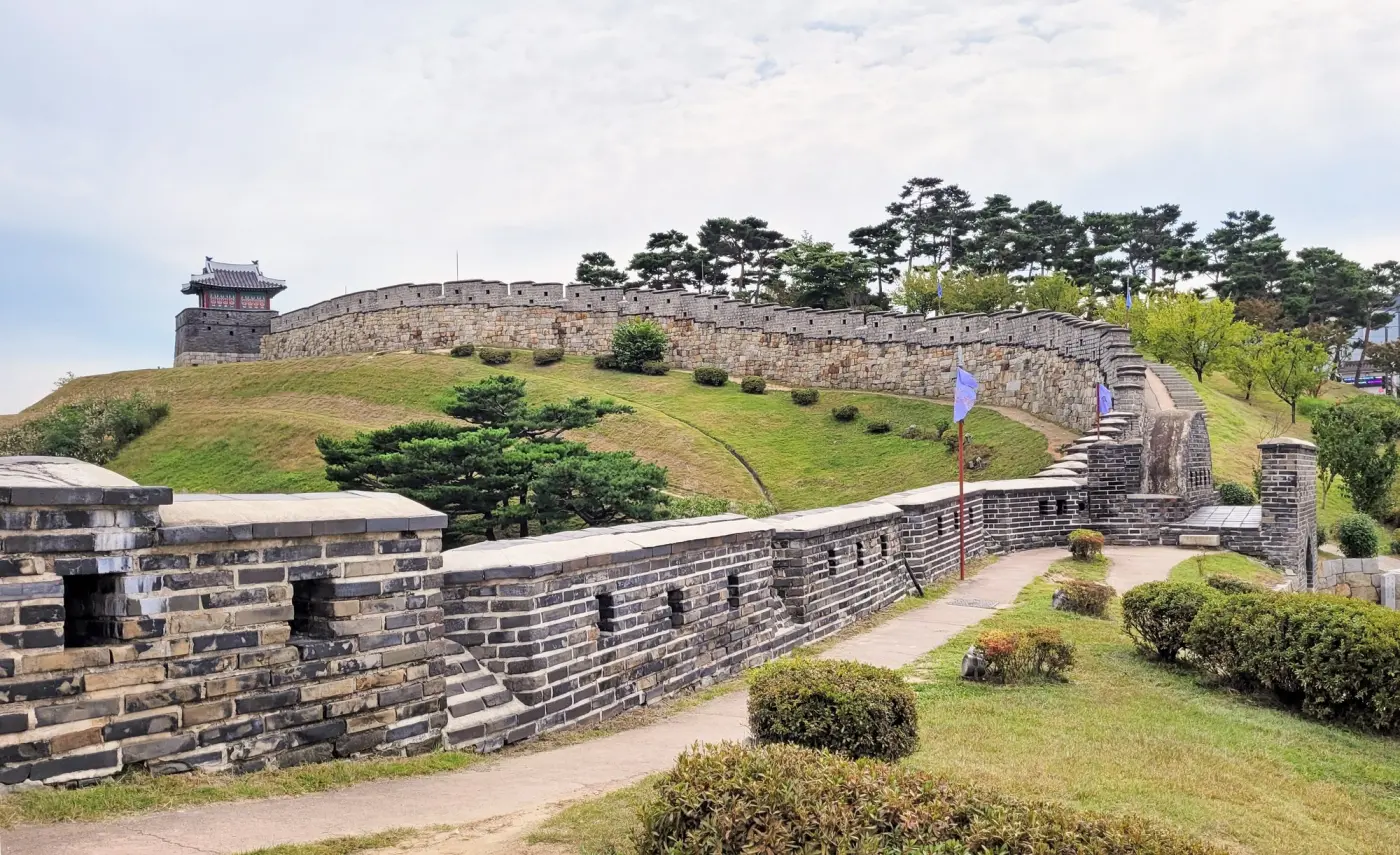
If you only take one day trip, make it Suwon. Hwaseong Fortress was built between 1794 and 1796 by King Jeongjo of the Joseon dynasty, partly to honour his father and partly as a planned new city. UNESCO added it to the World Heritage list on 12 December 1997. What makes it special for a visitor is that it is not a ruin behind a fence. The walls stretch for about 5.7 kilometres around the old town, and a path runs along much of the top, past gates, watchtowers, command posts and pavilions, with ordinary city life carrying on underneath.
VisitKorea describes the main fortress trail as about 5.1 kilometres and two to three hours on foot. The circuit takes in Paldalsan, the hill at the heart of the old town, so expect some climbing and wear proper shoes. Inside the walls is Hwaseong Haenggung, the fortress's temporary palace, which you can visit on the same day. If your legs are not up to the full loop, a tourist trolley runs a short circuit that starts and ends at Yeonmudae; VisitKorea lists it as operating from Tuesday to Sunday, every 20 minutes during the day.
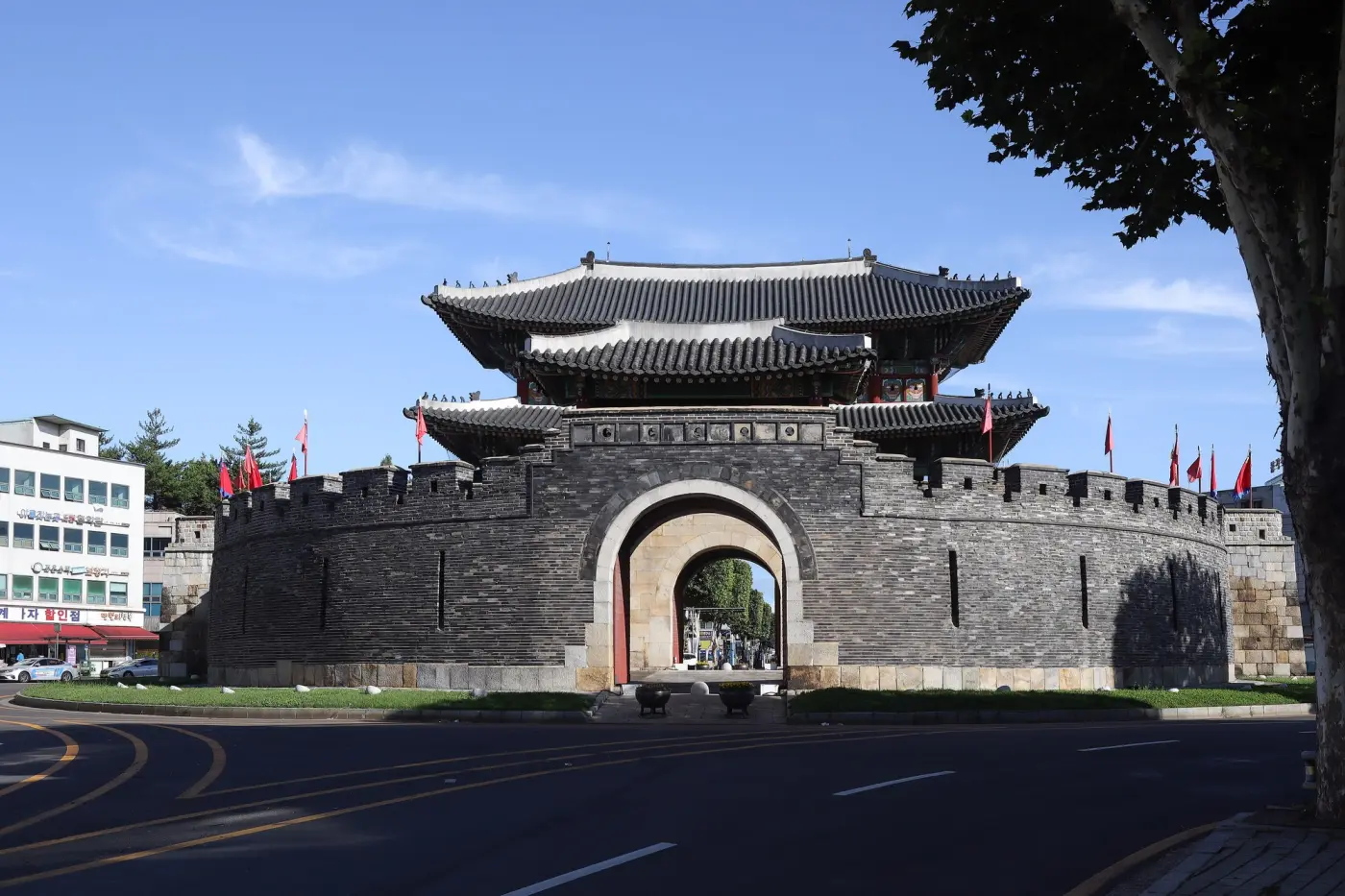
Getting there: take Seoul Subway Line 1 towards Cheonan, Byeongjeom or Seodongtan and get off at Suwon Station. The Suwon Cultural Foundation's directions page lists city buses 11, 13 and 13-4 from the stop near Exit 4 to the 'Hwaseong Haenggung' stop, which puts you in the middle of the old town. The same page lists red express buses from Gangnam, Sadang and Jamsil stations in Seoul if you are staying south of the river. Both VisitKorea and the foundation list walking the fortress wall itself as free.
Best for: anyone who likes history but is tired of palace queues, and walkers who want views over a whole city. Allow most of a day: the wall, the palace and a slow lunch in the old town fill it comfortably.
When not to go: midsummer middays are hard on the exposed sections of wall, so start early or late in July and August. If you are counting on the trolley, avoid Mondays. On the other hand, autumn is a lovely time to come; the Suwon Hwaseong Cultural Festival takes place every autumn, which makes the old town busier but lively. Our Suwon, a City Guide PDF goes deeper on the fortress, the old town and where to eat if you want more than one day's worth.
Yongin: a day in the Korean Folk Village
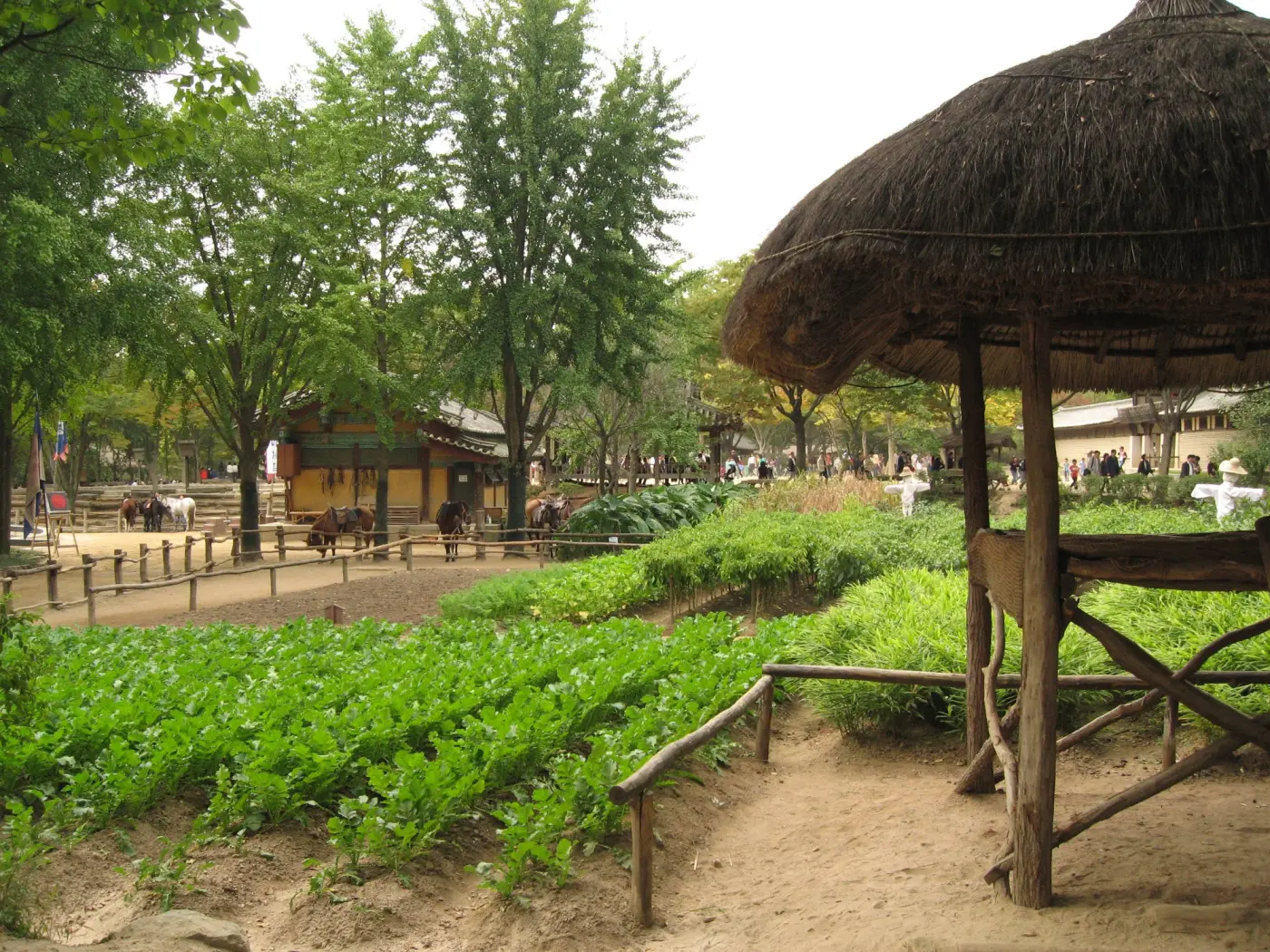
The Korean Folk Village is an open-air museum of late-Joseon life that has been running since 1974. VisitKorea counts over 270 traditional structures, and it is not a quiet heritage site. Performers in period costume wander the lanes playing nobles, peasants and beggars, and may stop to talk to you; traditional performances take place at the main performance hall and a pavilion. There are restaurants modelled on an old market, teahouses, a folk museum and a pottery exhibition hall, and activities such as horse riding, natural dyeing and traditional swings.
Getting there: the simplest subway route is the Suin-Bundang Line to Sanggal Station; VisitKorea's directions say to use Exit 3 and transfer to bus 10-5 or 37. The same page lists direct buses: 5001-1 from Sinnonhyeon Station on Line 9 in Gangnam, and 4101 from Sungnyemun Gate near Seoul Station. Either way, the last leg is by bus, so allow a little extra time.
Best for: families, first-time visitors who want a lot of traditional Korea in one place, and anyone who enjoys K-dramas set in the Joseon era and wants to walk through that world for a day. Give it at least half a day on site; with travel it becomes a full day.
When not to go: the village opens at 10:00 every day, but closing time changes with the season and is later on evenings when the nighttime programme runs (in 2025 that was Fridays, weekends and public holidays from spring to autumn), so check the official site before you plan an evening there. Almost everything is outdoors, so a rainy day is a poor choice. If you would rather see a living, lived-in village than a museum, this is a recreation; the Yongin, a City Guide PDF covers the Folk Village alongside the rest of the city.
Gapyeong: Nami Island and the Garden of Morning Calm
Gapyeong is the green, river-and-mountain trip of the four, and the one that rewards an early alarm. Two places dominate: Nami Island, a wooded river island famous for its tree-lined avenues, and the Garden of Morning Calm, an arboretum of themed gardens set against the mountains. They are in different directions from different stations, so for a relaxed day choose one.
A small surprise: Nami Island itself lies in Chuncheon, Gangwon Province, but you reach it from a ferry dock in Gapyeong, Gyeonggi Province. The crossing takes about five minutes. According to the island's timetable, the first boat to the island leaves at 08:00 and the last at 21:00, with sailings every 10 to 20 minutes through the middle of the day. In the 2026 autumn season, from 18 September to 22 November, the first boat leaves at 07:30 every day.
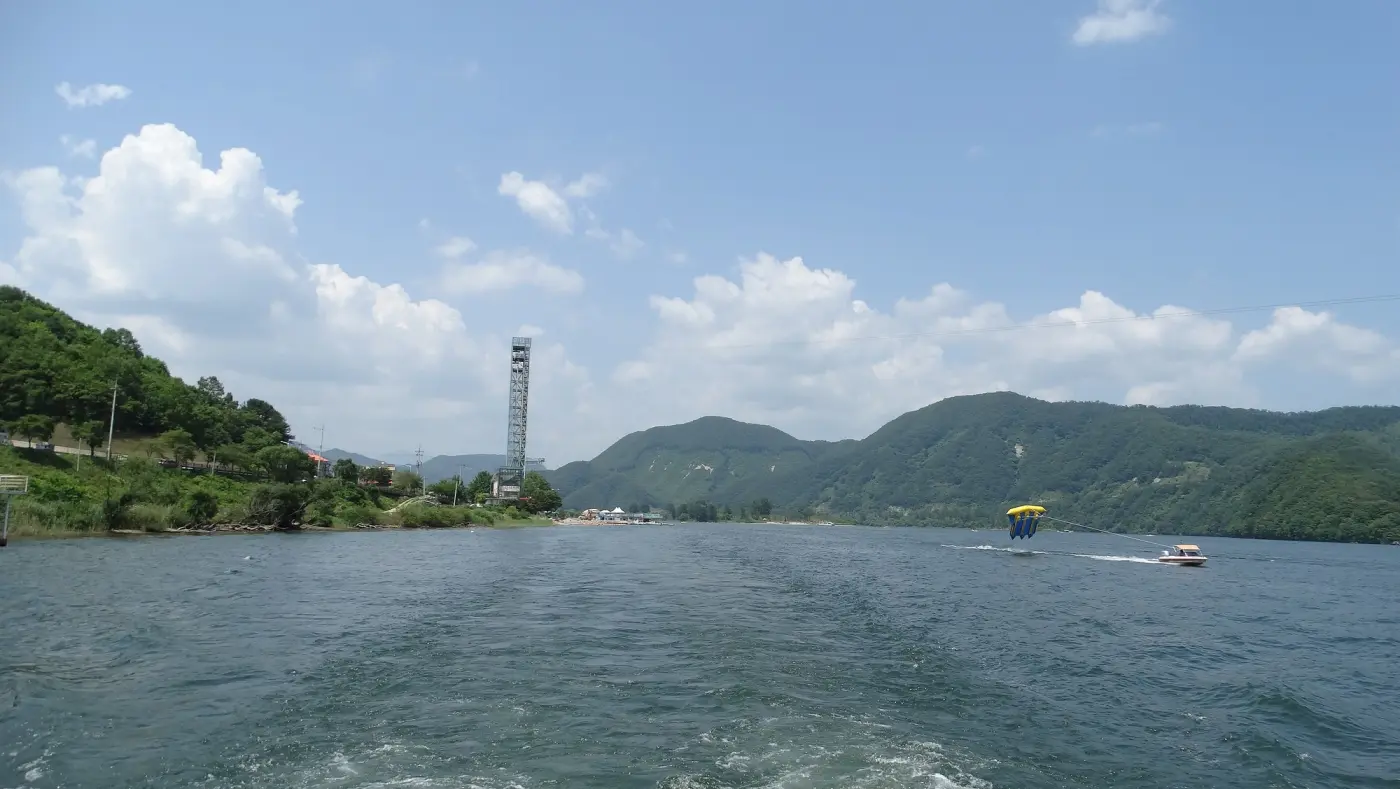
Getting to Nami Island: Nami Island's own directions page gives two rail options to Gapyeong Station. The ITX-Cheongchun train takes about an hour from Yongsan Station or about 42 minutes from Cheongnyangni Station. The Gyeongchun Line, which is part of the commuter subway network, takes about 50 minutes from Sangbong Station. From Gapyeong Station the ferry dock is about 1.5 kilometres away: roughly 20 minutes on foot, or about five minutes by city bus 10-4 or taxi. The island also lists a reservation-only direct shuttle bus from Hongdae, Myeongdong and Dongdaemun in Seoul.
Getting to the Garden of Morning Calm: take the ITX-Cheongchun train from Yongsan or Cheongnyangni, or the Gyeongchun Line, to Cheongpyeong Station instead. City bus 30-6 runs from Cheongpyeong Terminal past Cheongpyeong Station to the garden, which is the last stop; a taxi takes about 20 minutes. The garden's page also mentions the Gapyeong City Tour Bus, a loop between the county's main sights, which does not run on Wednesdays.
Best for: Nami Island is best for walking and photographs among tall trees, especially in autumn; the Garden of Morning Calm is best for flowers and for its winter light displays. The garden is open every day of the year from 08:30 to 19:00 (last entry 18:00). From early December to mid-March it switches to 10:00–21:00 for its lighting season, staying open until 23:00 on Saturdays. Tickets are sold only at the gate, and pets are not allowed.
When not to go: autumn foliage weekends at Nami Island are the busiest of the year, which is why the island adds earlier boats; if you go then, aim for the first ferry. Avoid both places on the big holiday weekends of Seollal and Chuseok if you can, when trains out of Seoul are heavily booked. Gapyeong deserves more than a day if you like the outdoors; our Gapyeong in Three Days PDF covers Nami Island, the zip line and water sports for a longer stay.
Incheon: Wolmido, the sea train and Songdo
Incheon is where your plane lands, which is exactly why most visitors never see it. It is also the easiest of these trips, because Seoul Subway Line 1 runs all the way there, and it works well on a departure day. Two areas suit a first-timer: Wolmido, an old seafront strip with cafes and seafood restaurants, and Songdo, a new district on man-made land built around a large park.
Getting to Wolmido: take Seoul Subway Line 1 to Incheon Station. The Wolmi Sea Train starts from Wolmi Sea Station by Incheon Station and runs a 6.1-kilometre elevated loop around Wolmido, which its operator describes as the longest urban tourist monorail in Korea. A full loop takes roughly 35 to 45 minutes, with stops at Wolmi Park, Wolmi Culture Street and a museum stop near the Museum of Korea Emigration History.
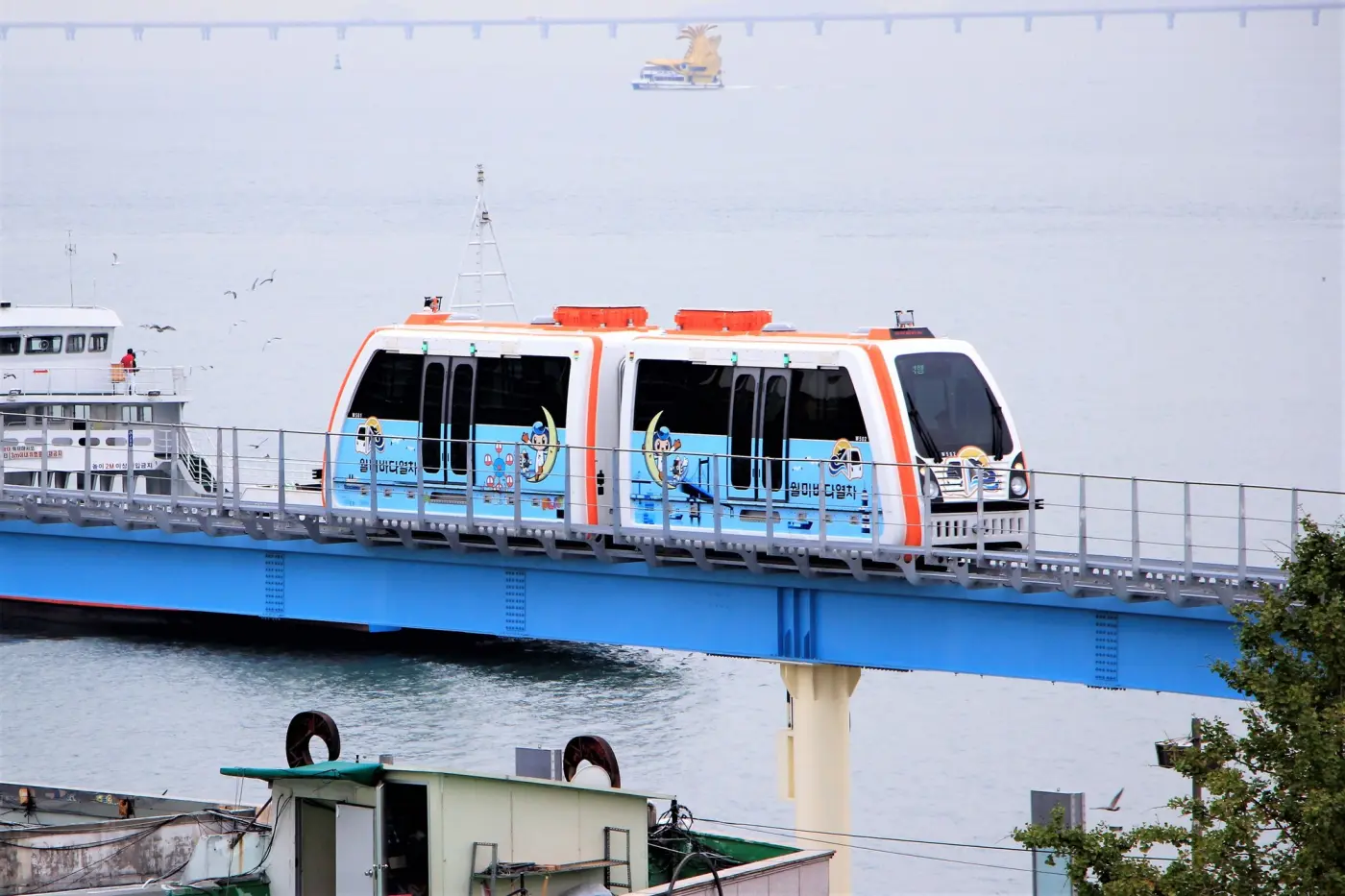
Getting to Songdo: Incheon has its own subway system. The city's transport page notes that you can change from Seoul Subway Line 1 to Incheon Subway Line 1 at Bupyeong Station, and Incheon Subway Line 1 runs south into Songdo. Songdo Central Park, which the city describes as the first seawater park in Korea, has water taxis, canoes and paths along the canal, and there is no charge to enter the park itself.
Best for: sea air after days of city streets, a ride that small children enjoy, and a last half-day before an evening flight. Wolmido and Songdo are in different parts of the city, so choose one for a half-day, or do both at a relaxed pace for a full day.
When not to go: the Wolmi Sea Train is closed on Mondays. From April to October it runs from 10:00 to 18:00 on Tuesday to Thursday and until 21:00 from Friday to Sunday and on public holidays; from November to March it runs from 10:00 to 18:00. A grey, windy day takes most of the pleasure out of a seafront trip. For more on the port's history and neighbourhoods, the Incheon, a City Guide PDF is the place to go.
Practical tips for any day trip
- Start before 9:00. Every one of these trips involves at least an hour each way, and the last bus or boat back matters more than the first one out.
- Use the transport card you already use in Seoul. All the routes above start on the Seoul subway network; our getting-around guide explains how tapping in and out and transfers work.
- Check the day of the week. Mondays are the day to avoid in Incheon if you want the sea train, and Wednesdays if you were counting on the Gapyeong tour bus.
- Save the station names in Korean. Bus stops and ticket screens outside Seoul are not always in English: Suwon (수원), Sanggal (상갈), Gapyeong (가평), Cheongpyeong (청평), Incheon (인천).
- Keep one day trip per day. Suwon and the Folk Village look close on a map, but each deserves its own day.
- Watch the holiday calendar. Seollal and Chuseok weekends fill trains and roads out of Seoul; our holidays guide lists the dates.
What we left out, and why
You will see other day trips recommended from Seoul, including the border area around Imjingak in Paju and tours into the demilitarised zone. Those are a different kind of day, organised as tours rather than built around a simple train timetable. We have not covered them here because we could not confirm current visitor arrangements on an official page; our Gyeonggi page has the basics. For longer journeys, such as Gyeongju or Busan, the KTX makes a day trip possible but tiring, and those cities are much better with at least one night.
If you are still deciding how to fit a day trip into your week, our three-day Seoul plan leaves room for one at the end. Put Suwon or Incheon on any day, keep Gapyeong for a clear morning, and you will come home with a much broader picture of Korea than the capital alone can give you.
Comments
Sign in to leave a comment.
Sign in ·No account? Create one
Confirm your email address to comment — it takes one click.
No comments yet.