
Accessible Travel in Korea: Wheelchair & Mobility Guide
Wheelchair rental, step-free subway tips, accessible taxis, KTX wheelchair spaces and palace routes in Korea, from official sources for travellers.

Korea can be a very workable destination for wheelchair users, travellers who tire easily or walk with a stick, and older visitors. Seoul's subway has elevators at nearly every station, the main airport lends wheelchairs at its information desks, KTX trains have dedicated wheelchair spaces, and the city runs a tourism centre that exists specifically for travellers with access needs. At the same time, some of the places visitors most want to see are old, hilly or paved with uneven stone, and several support services were designed first for residents.
This guide gathers what the official operators themselves say: the Seoul Tourism Organization's Seoul Danurim service, Incheon Airport, the Seoul Facilities Corporation, KORAIL, Seoul Metro, the Royal Palaces and Tombs Center and the National Museum of Korea. Where a page does not clearly say whether a short-term foreign visitor can use a service, this guide says so, and the honest advice is to confirm with the service before you rely on it. Services, booking windows and phone numbers change, so the source links at the end are worth opening while you plan.
Who to contact for what
| Need | Where to get help | How to reach them | Notes |
|---|---|---|---|
| Wheelchair, portable ramp or shower chair for your stay in Seoul | Seoul Danurim travel assistive device rental | Book on seouldanurim.net; English line +82-10-2753-1877; [email protected] | Book 2 months to 14 days ahead; 3–7 day rentals; refundable deposit; delivery in Seoul available. Confirm eligibility when you book |
| Wheelchair-lift van from the airport to your Seoul hotel | Danurim Mini Van (Seoul Tourism Organization) | Reservation menu on seouldanurim.net; [email protected] | Free; for wheelchair users and their group; runs in announced monthly periods; driver speaks Korean |
| Wheelchair or escort inside Incheon Airport | Incheon Airport information desks | Help desk 1577-2600, any information desk or help phone | Free wheelchairs at all information desks; electric carts and wheelchair escort on request |
| Shorter security queue at Incheon | Your airline's check-in counter | Ask when you check in | Walking disabilities, seniors over 70, pregnant women, children under 7, plus up to 3 companions |
| Wheelchair-accessible taxi in and around Seoul | Seoul Facilities Corporation disabled call taxi | 1588-4388 or 02-2024-4200; online and app booking | Lists foreign wheelchair users as eligible, with a passport check; demand is high, so waits can be long |
| Lift or help at a subway station | Station office | Ask staff at the station office | Wheelchair lifts at older stations are operated by an attendant |
| Help boarding and leaving a KTX train | KORAIL station staff | Request at least 30 minutes before the train, at the station or via the call centre +82-1599-7777 | For wheelchair users and visually impaired travellers travelling without a companion |
| Travel information and interpretation | 1330 Korea Travel Hotline (Korea Tourism Organization) | Dial 1330 | For emergencies, call 119 instead |
Start with Seoul Danurim
Seoul Danurim is the Seoul Tourism Organization's accessible tourism programme, and its English website is the most useful single planning tool for Seoul. It covers transport, accessible attractions, suggested itineraries and guidebooks, and it runs the two services most likely to matter to a wheelchair user: device rental and an airport van. There is also a walk-in Seoul Danurim Accessible Tourism Center with a tourist information desk, a rest area and coin lockers; its listed phone hours are Monday to Friday, 9 a.m. to 6 p.m. Korea time. The general inquiries line, 1670-0880, is listed as domestic calls only, and email ([email protected]) works from anywhere.
The travel assistive device rental lends manual wheelchairs and shower wheelchairs, portable ramps in four lengths, a patient lift, a shower chair and a stroller. You book online between two months and 14 days before the rental date, check the stock calendar, and wait for an administrator to approve the booking. Rentals last three to seven days. A deposit, which varies by item, is paid in person by card or cash and refunded when you return the equipment, and free delivery to a location in Seoul can be arranged. The rental station is in Yongsan-gu, not at the walk-in centre, and only the person who made the booking can collect and return the device. The page describes users simply as people who need accessible tourism services, for use within Seoul. It does not spell out the position of short-stay foreign tourists, so mention that you are visiting from abroad when you book.
The Danurim Mini Van is a nine-seat van with a wheelchair lift. Danurim's FAQ says any wheelchair user, or a group that includes at least one wheelchair user, can use it, and that the airport pickup is free and runs between 9 a.m. and 6 p.m. The latest notice describes trips between Incheon Airport (both terminals), Gimpo Airport and accommodation in Seoul, with bookings opening in monthly batches between two weeks and two months ahead. The driver speaks only Korean, and wheelchairs must fit within 130 × 76 cm. Because the service runs in announced periods rather than every day, check the notices page before you fix your flights.
Arriving at Incheon Airport
Incheon Airport's page for travellers with reduced mobility is detailed and in English. Free wheelchair rental is available at all information desks in the airport. For longer distances, the airport offers an electric cart and wheelchair transport service: contact the help desk on 1577-2600 before you arrive, or ask at an information desk or one of the help phones. Carts run between the third-floor entrances and the check-in counters, and in the duty-free zone from the departure entrances to the boarding gates. Every restroom in the passenger terminals has at least one accessible toilet, and there are charging points for electric wheelchairs in both terminals.
On departure, the priority security lane is open to people with walking disabilities, children under seven, seniors over 70 and pregnant women, plus up to three companions. You confirm eligibility at your airline's check-in counter and receive a priority card. In-flight assistance is arranged with your airline, so request it when you book your flight. For the journey into the city, Danurim notes that the airport railroad's stations and trains are accessible with wheelchair areas, while most airport buses are not fully accessible. Our guide to getting from the airport to Seoul compares the options, and the Incheon layover guide covers the terminals.
Getting around Seoul by subway
For most travellers with limited mobility, the subway is the backbone of a Seoul trip. Danurim's transport page says nearly all stations can be reached by elevator. Typically one elevator runs from the street to the ticket level and a second one from there to the platform. If an elevator entrance has transit card readers inside it, that elevator connects straight to the platform side. Street-level elevators are often not signposted, but they are easy to spot as large glass boxes near the station exits.
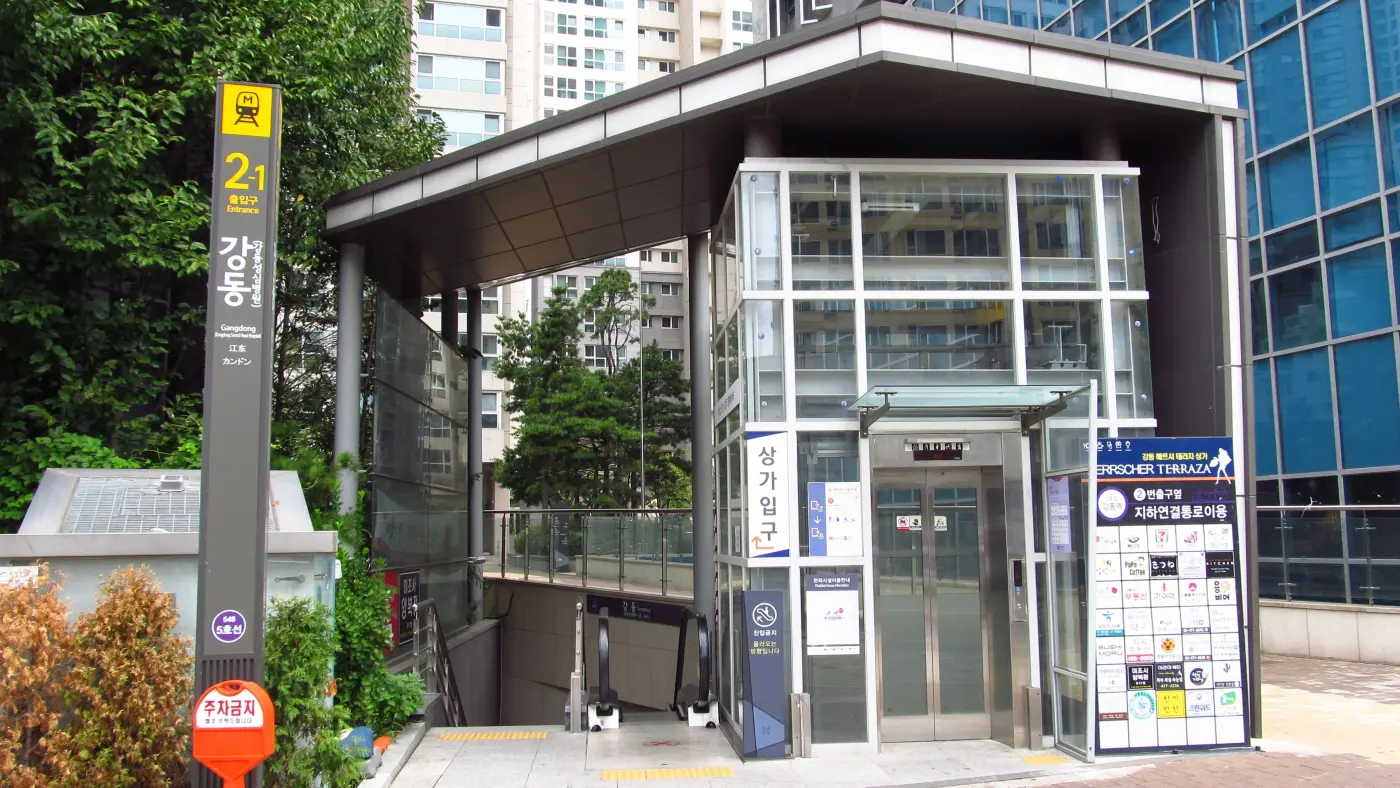
Older stations that still have turnstiles also have wider gates for wheelchair users, opened with a transit card. Some older stations without elevators use wheelchair lifts on the stairs; you call an attendant from the station office to operate them. Danurim's advice to wheelchair users is plain: check the accessibility of your departure, arrival and transfer stations in advance, and avoid stations where a lift is the only option. Platform screen doors are fitted at almost all stations, every carriage has priority seats at each end, and trains have spaces for wheelchairs and strollers, marked with a large blue wheelchair sign on the screen doors.
Seoul Metro's own etiquette rules ask passengers to offer their seats to pregnant women, people with children and passengers with physical difficulties, and its transport terms exempt wheelchairs and strollers from the size limits on large items. For route planning, the Seoul Metropolitan Government launched the Seoul Dongheng Map in November 2024. According to the city, it suggests routes that avoid steps, slopes and narrow pavements by using level paths and subway elevators and escalators, and it shows accessible toilets. The announcement is in Korean, so check which languages the app supports.
Buses and taxis
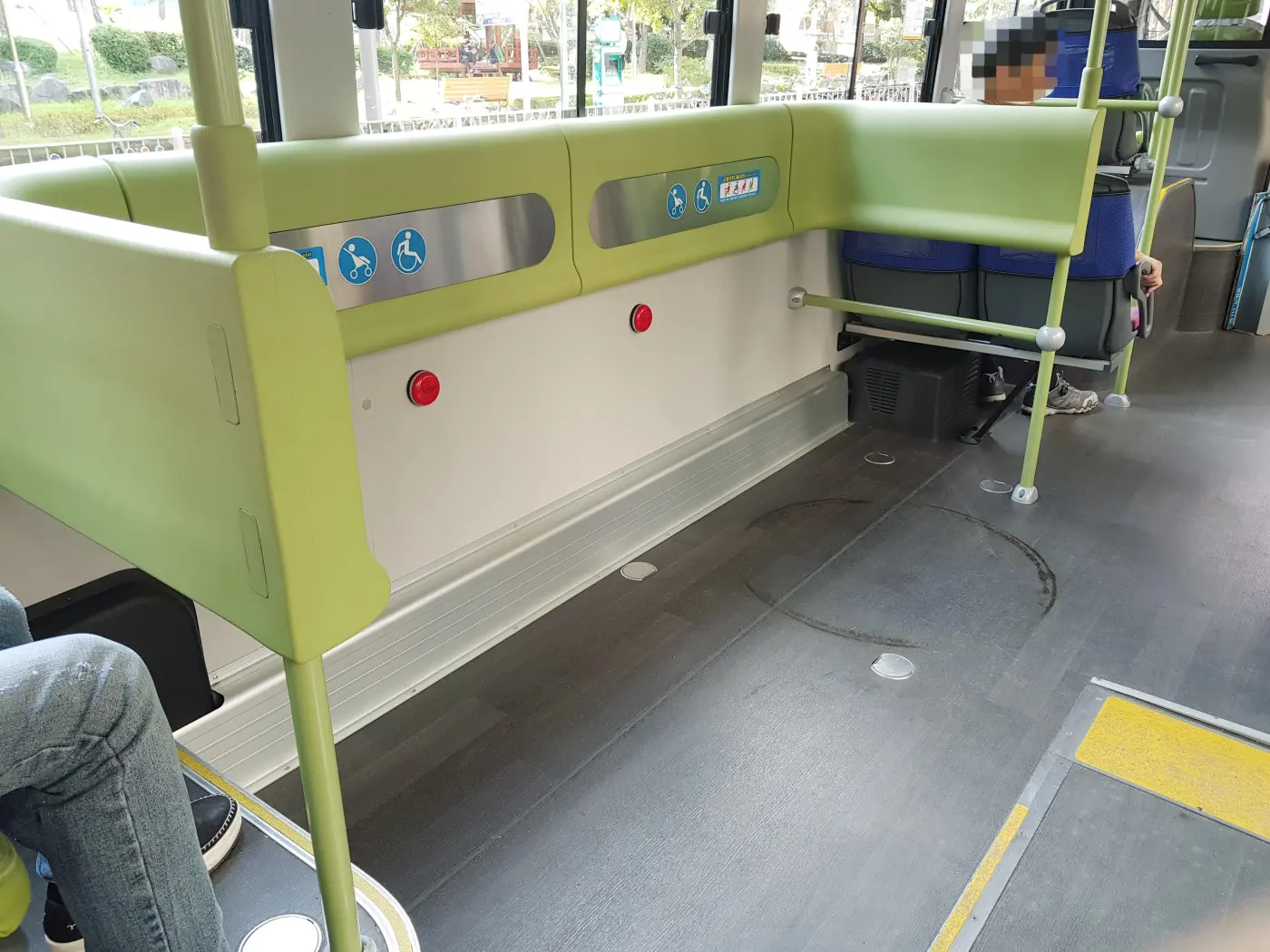
Seoul has many low-floor buses with ramps and space to secure a wheelchair. Danurim's transport page puts low-floor vehicles at more than 70 percent of the city's buses as of 2023, but it still advises wheelchair users to favour the subway and taxis, because you cannot always count on a low-floor bus arriving and bus stops have little English signage.
The Seoul Facilities Corporation runs Seoul's disabled call taxi, a fleet of vans with ramps or lifts. Its eligibility page lists foreign nationals with a disability who use a wheelchair, with a passport or other proof checked before boarding, alongside residents with severe walking disabilities. Since December 2023 the service area has been extended beyond Seoul into the wider capital region. You book by phone or text on 1588-4388, online or through its app. The website is in Korean, and it is not clear how much English support the call centre offers, so you may want 1330 or your hotel to help with the first call. Danurim warns that demand exceeds the number of vehicles and quotes average waits of 30 to 60 minutes, so these taxis work better as a back-up than as your only way of getting around.
Ordinary taxis may not be able to carry a folded wheelchair because the gas tank takes up much of the boot. Danurim suggests jumbo taxis, which are larger vans that need to be called in advance, if you are travelling with a wheelchair and want a private vehicle.
KTX and other long-distance trains
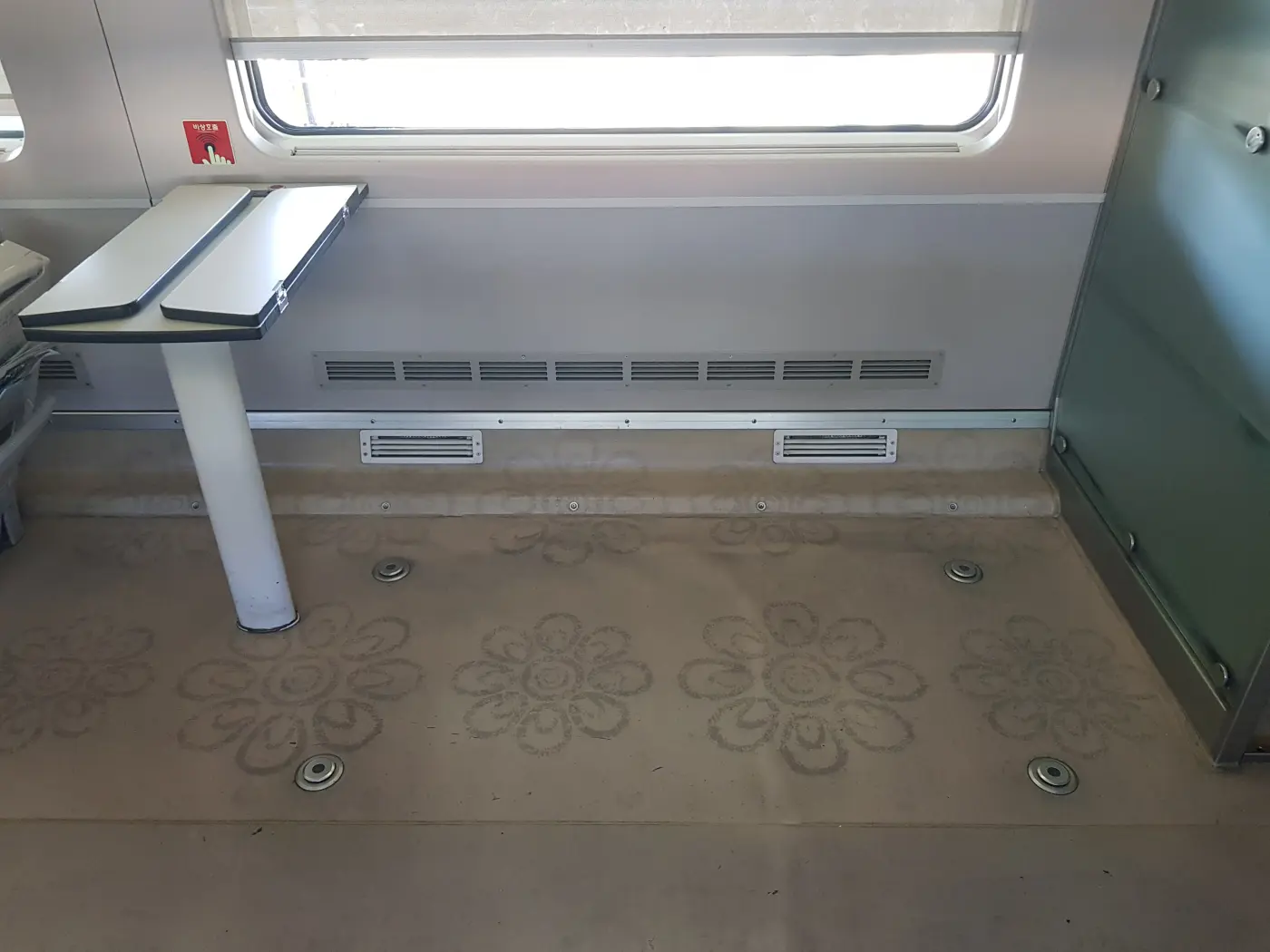
KORAIL's page on services for passengers with reduced mobility lists two kinds of space on its main train types: a power wheelchair space, where the chair is fixed to floor anchors with no seat, and designated wheelchair seats. On standard KTX trains both are in car 2; on KTX-Sancheon they are in car 1; on KTX-Eum they are in car 3. ITX, Nuriro and Mugunghwa trains have them too, but the older Saemaeul trains and commuter trains do not.
Station staff will also escort you on and off the train. KORAIL describes this helper service for wheelchair users, visually impaired passengers and others with mobility difficulties who are travelling without a companion: request it at least 30 minutes before your train, station staff hand you over to the train crew, and staff at your destination guide you to the exit. KORAIL's page does not spell out the booking channel in English, so ask at the station ticket office or the call centre. Stations also have priority ticket windows for older and disabled passengers. Be aware that KORAIL's disability and senior discounts follow Korean registration rules, and its English FAQ indicates they do not apply to most foreign visitors. The English call centre number is +82-1599-7777, listed as open from 8 a.m. to 8 p.m. Our KTX guide explains booking in general.
Palaces and museums
Gyeongbokgung is the most manageable of Seoul's palaces for many visitors with limited mobility. Danurim describes the main entrance as wide and step-free but with a steep slope, with ramps throughout the palace and some unpaved paths and rough stone surfaces. The official visitor map on the Royal Palaces and Tombs Center's Korean-language site marks wheelchair and stroller rental points, wheelchair lifts, toilets and a line showing the paths wheelchairs and strollers can use. Danurim lists single-user accessible toilets at Heungbokjeon.
Changdeokgung is more demanding. Its buildings follow the slope of the hill behind them, and Danurim warns of sandy paths, arched stone, uphill stretches and pavilions. Wheelchair and stroller rental is available near the main entrance, and it lists accessible toilets near Geumhomun Gate, Nakseonjae and Buyongji. For older travellers, one detail is worth knowing: the palaces' fee page lists foreign visitors aged 65 and over, and 18 and under, among those who enter free, with proof of age. Disability-based free entry is defined under Korean law, and the Secret Garden tour at Changdeokgung lists free entry for disabled visitors as applying to Korean nationals, so ask at the ticket office rather than assuming. Our palace guide compares all five.
The National Museum of Korea lends wheelchairs and strollers free of charge in its Great Hall, and certified service dogs are permitted. From Ichon Station, the museum notes an elevator on the side of Exits 1 and 2 and an underground walkway towards the museum. The museums guide has more on Seoul's free national museums.
Accessible toilets
Accessible toilets are easiest to find where the official pages already list them: in the airport, where every restroom block in the passenger terminals has one; in subway stations, where Danurim lists accessible restrooms among the standard facilities, while warning that some smaller and older stations are not fully up to date; and in the palaces and national museums, whose maps mark them. The Seoul Dongheng Map also shows accessible toilets. In restaurants and small cafés, assume nothing and ask, or plan breaks around stations and larger public buildings.
Plan around the hills
Much of old Seoul is built on slopes. Bukchon, the hanok neighbourhood between Gyeongbokgung and Changdeokgung, climbs a hillside, and its best-known lane, Bukchon-ro 11-gil, is steep. It is also a residential area with rules: in that red zone, tourist visits are not allowed from 5 p.m. to 10 a.m. If you want to see hanok rooftops with less climbing, Gyeongbokgung's broad courtyards and the paths around its ponds are a gentler alternative. Our Bukchon and Insadong walk describes the route if you do go.
A few general habits help: cluster sights by neighbourhood to cut down on transfers, travel outside the morning and evening rush, and build in a rest stop every couple of hours. If you are travelling with children as well as an older parent, the families guide covers strollers, nursing rooms and lifts.
Beyond Seoul
Outside the capital, Korea's Ministry of Culture, Sports and Tourism has designated Barrier-Free Tourist Destinations since 2015, adding paths, ramps and other facilities so that people with disabilities, older adults and families with young children can visit more easily. The Korea Tourism Organization publishes information on its Travel for All platform (access.visitkorea.or.kr). The site is in Korean, but you can search by need, including mobility, vision, hearing, families with infants and older travellers, and a browser's translate function makes it usable. Danurim's Korean Accessible Tourism page also links to regional barrier-free sites.
When you need help on the day
For travel questions, directions or interpretation, the 1330 Korea Travel Hotline, run by the Korea Tourism Organization, is the number to save. It can help you explain your needs to a taxi driver, a station or a ticket office. In a medical emergency, call 119. Our emergency guide lists the numbers and what each one is for.
Accessible travel in Korea mostly rewards preparation. Book Danurim's equipment or van early, check your stations, choose the flatter sights first and keep the 1330 hotline handy, and a trip that includes palaces, museums and the KTX is well within reach. If you would like a day-by-day plan built around step-free routes and shorter walking days, our custom plans can take that into account.
Comments
Sign in to leave a comment.
Sign in ·No account? Create one
Confirm your email address to comment — it takes one click.
No comments yet.