
Korea with Kids: A Practical Guide for Families
Child fares on the Seoul subway and KTX, mild dishes kids eat, free children's museums, Han River parks, fine dust and emergency numbers.
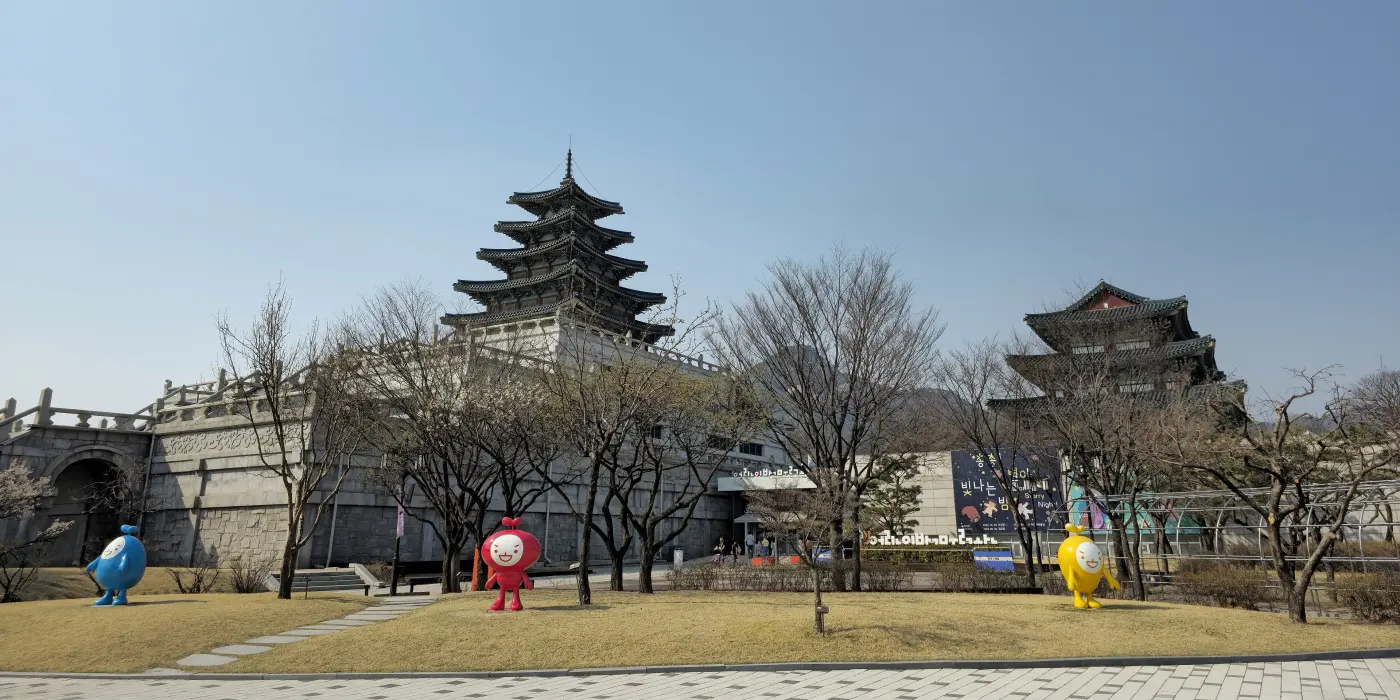
Korea is one of the easier countries in Asia to travel with children, and not only because it is safe and clean. Public transport is frequent and cheap, food arrives quickly and is made for sharing, and the two national museums in central Seoul have whole spaces designed for young children, free of charge. What catches families out is rarely danger. It is the small logistics: which child pays what on the train, which museums need a booking made in Korean, which dishes are safe to order without checking for chilli, and how far a five-year-old can realistically walk through a subway transfer.
This guide is written from Seoul for parents planning a first trip. Everything with a number in it, from fares to ages to booking rules, was checked on the operator's or museum's own pages in October 2026. Rules do change, so treat this as a starting point and confirm anything that would ruin your day if it turned out to be wrong.
The short version, by age
| Age group | Works well | Plan around |
|---|---|---|
| Babies and toddlers (0-2) | Riverside walks with a stroller; borrowing a free stroller at the National Museum of Korea; nursing rooms inside many Seoul Metro stations | Exits without a lift, rush-hour trains, galleries where food and drink are not allowed |
| Preschoolers (3-5) | Free rides on the Seoul subway (up to three per adult) and on the KTX on an adult's lap (one per adult); parks and outdoor play spaces | The children's museums need an online booking; the National Museum of Korea's is aimed mainly at ages 5-9, and under-fives must stay with an adult |
| Primary age (6-12) | Child fare on the subway, 50% off on the KTX, hands-on children's museums, traditional games outdoors | Long palace and market walks; dishes where chilli is the point |
| Teenagers (13-18) | Youth fare on the Seoul subway, Han River bike paths, the main museum galleries | Adult fare on the KTX from age 13; build in time on their own terms |
Two points in that table are worth underlining. First, the age lines are the same on the Seoul subway and the KTX: under six rides free, and six to twelve counts as a child. Second, the best children's spaces in Seoul are free but booked online, sometimes only in Korean, so that part of the planning happens before you fly, not on the morning itself.
Getting around Seoul by subway
Seoul Metro's fare rules are generous to small children. Children under six ride free, up to three per accompanying adult; a fourth child under six pays the child fare. Children aged six to twelve, roughly primary-school age, pay the child fare, and teenagers from 13 to 18 pay a youth fare. As of October 2026, Seoul Metro lists the basic transport-card fare for trips within 10 km as 1,550 won for an adult, 900 won for a teenager and 550 won for a child, so the children in a family add surprisingly little to a day of riding.
The catch is that the fare follows the type of card or ticket you tap, not the person holding it. If your child is six or older, stop at the customer service centre inside the station on your first day and ask how to pay the child rate with the card or ticket you are using. It takes a few minutes once and saves paying adult fares for the whole trip.
Strollers work on the subway with a little planning. Stations have lifts, but often only at some exits, and a transfer between lines at a large interchange can mean a long walk through corridors. Look for the elevator sign, 엘리베이터 in Korean, on the platform and in the concourse, and check the station map by the ticket gates before you choose an exit. With a stroller it is worth avoiding the morning and evening rush, when carriages are packed and there is simply no room to move.
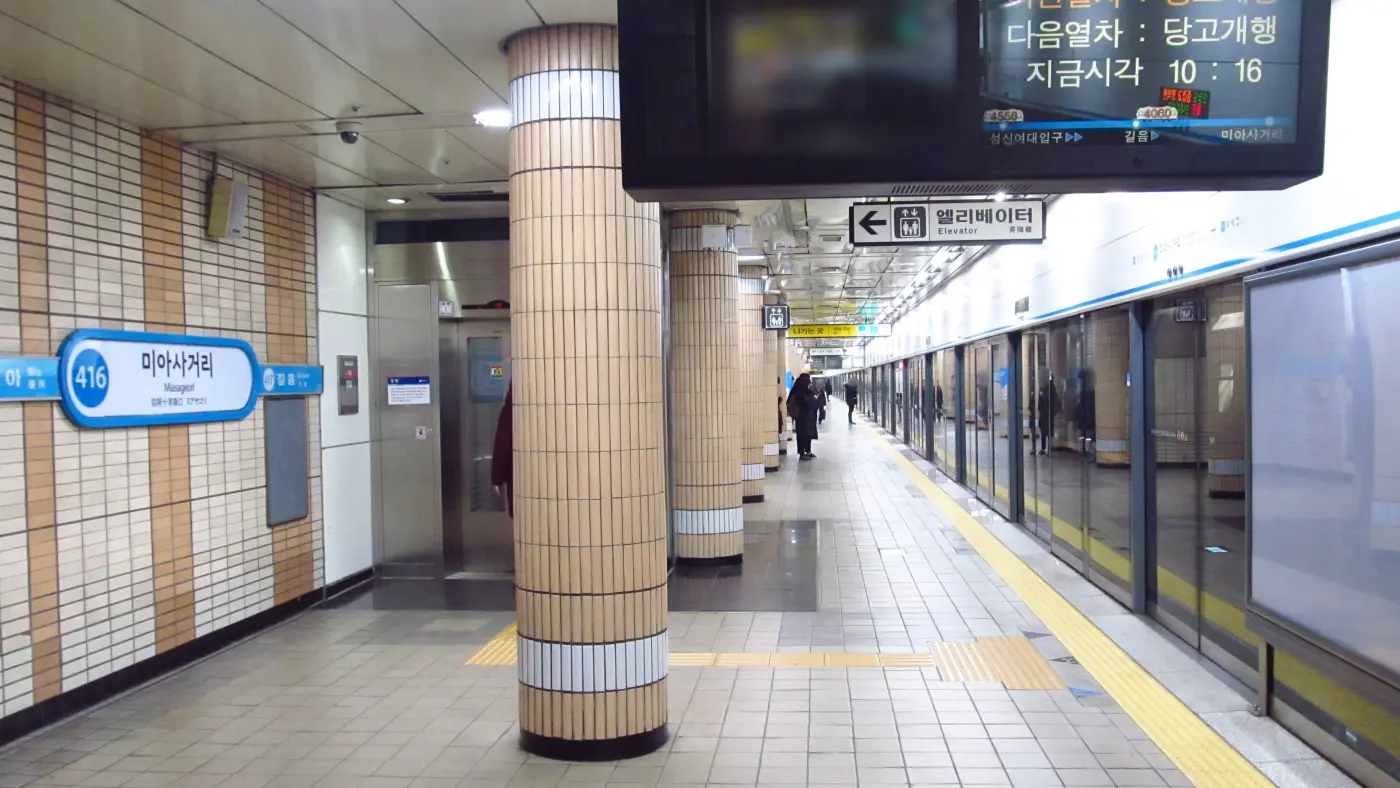
Every carriage has priority seats at its ends, and Seoul Metro's own etiquette guide asks passengers to offer their seats to pregnant women, people with children and people with disabilities. If you are holding a toddler on a moving train, sitting down is the safe choice, and nobody will think it odd.
For babies, Seoul Metro runs nursing rooms inside the customer service centres of dozens of its stations. Its own description mentions a baby bed and a sofa, and says the rooms can be used whenever you need to look after your baby, not only for feeding. The list includes many stations travellers pass through anyway, such as Seoul Station, City Hall, Gwanghwamun, Itaewon, Hapjeong, Gangnam, Jamsil and Children's Grand Park.
Taking the KTX with children
Korail's rules have the same shape. Children aged six to twelve get 50 percent off the fare. A child under six can travel free with an adult, one per adult, as long as they do not need a seat of their own. If you want a reserved seat for a child under six, or you have more under-sixes than adults, you buy an infant ticket at 75 percent off. Korail also notes that these public discounts cannot be combined with its sales promotions, such as online specials.
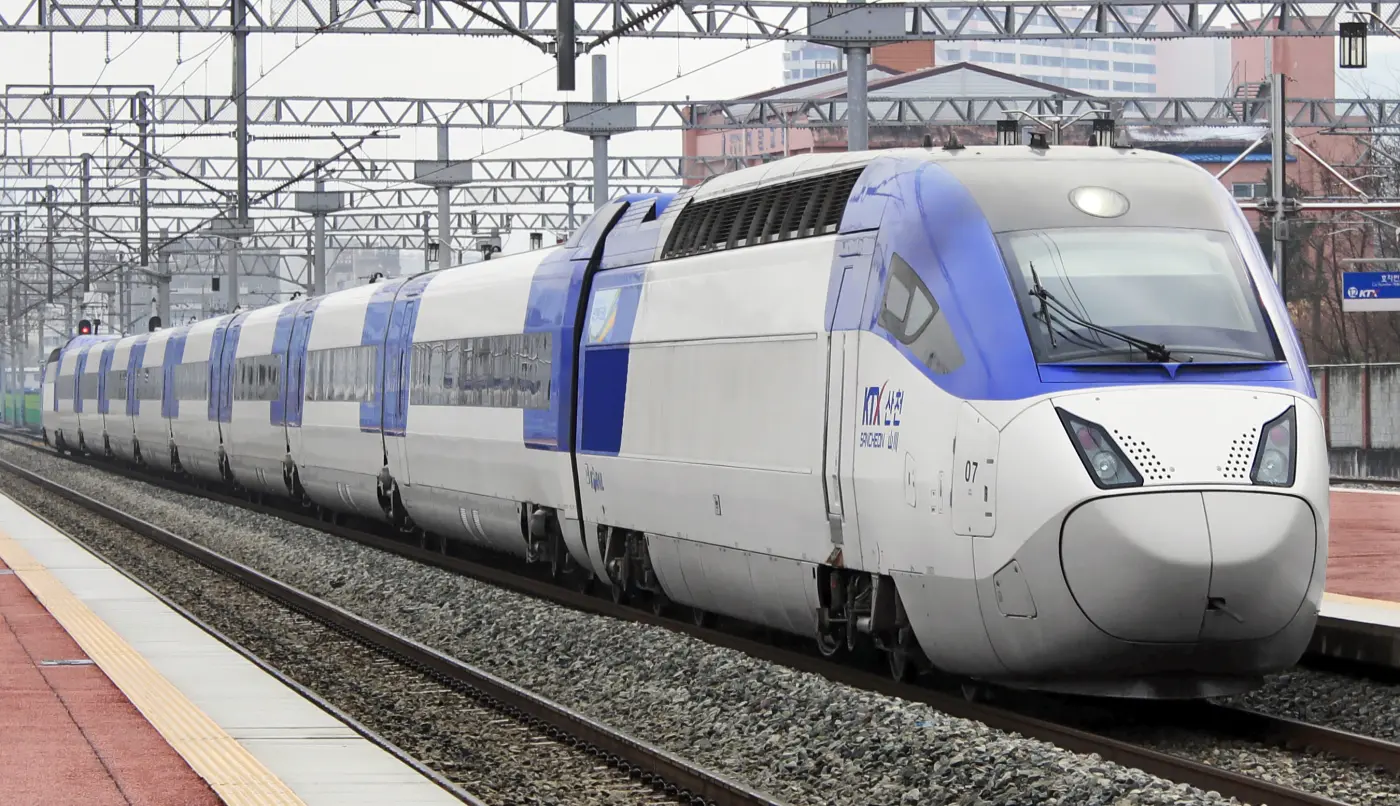
The practical question for parents is whether a lap is realistic. For a short ride it usually is. For a longer journey, a seat of their own at 75 percent off can be the better buy, if only for the space. Book early for weekends and public holidays, when popular trains sell out, because a family split across a carriage makes for a long trip. Our KTX guide explains how booking works if you have not used it before.
Food children will actually eat
Korean food has a reputation for heat, but a lot of the everyday menu is not spicy at all. Soups are the easiest win: galbitang is a clear beef-rib soup with glass noodles, seolleongtang is a milky beef-bone broth that arrives unsalted so you season it at the table, samgyetang is a whole young chicken stuffed with rice, and mandutguk is dumplings in clear beef broth. Bulgogi in its sweet soy marinade, gimbap rolls and gyeranmari, a rolled omelette sliced into rounds, are also reliable with children.
Kimchi and many side dishes do contain chilli, but rice, soup and grilled meat usually do not, and it is perfectly normal to ask. "An maepge hae juseyo" means "please make it not spicy". For a dish where the chilli is the whole point, such as tteokbokki, the honest answer may be no, and that is your cue to order something else.
If your child has a food allergy, read our food allergy guide before you leave home. It explains how allergen labelling works on packaged food, but in restaurants the ingredients that cause trouble are often invisible: anchovy or clam in a broth, or wheat in the soy sauce. A short note in Korean naming the allergen, shown at the start of each meal, is worth more than any app.
Carry snacks for the gaps between meals, but eat them in the right place. Food is not allowed in museum galleries, the National Folk Museum's Children's Museum does not allow even water inside its exhibition halls, and the National Museum of Korea's Children's Museum has a separate Lunch Lounge for food you bring yourself.
Museums made for children
The National Museum of Korea in Yongsan is free for its permanent galleries and unusually well set up for families. Wheelchairs and strollers can be borrowed free of charge in the Great Hall, with the strollers taking children up to 15 kg, and there is a lactation room on the first floor of the Great Hall. On Wednesdays and Saturdays the museum stays open until 9 pm, which can rescue a rainy evening.
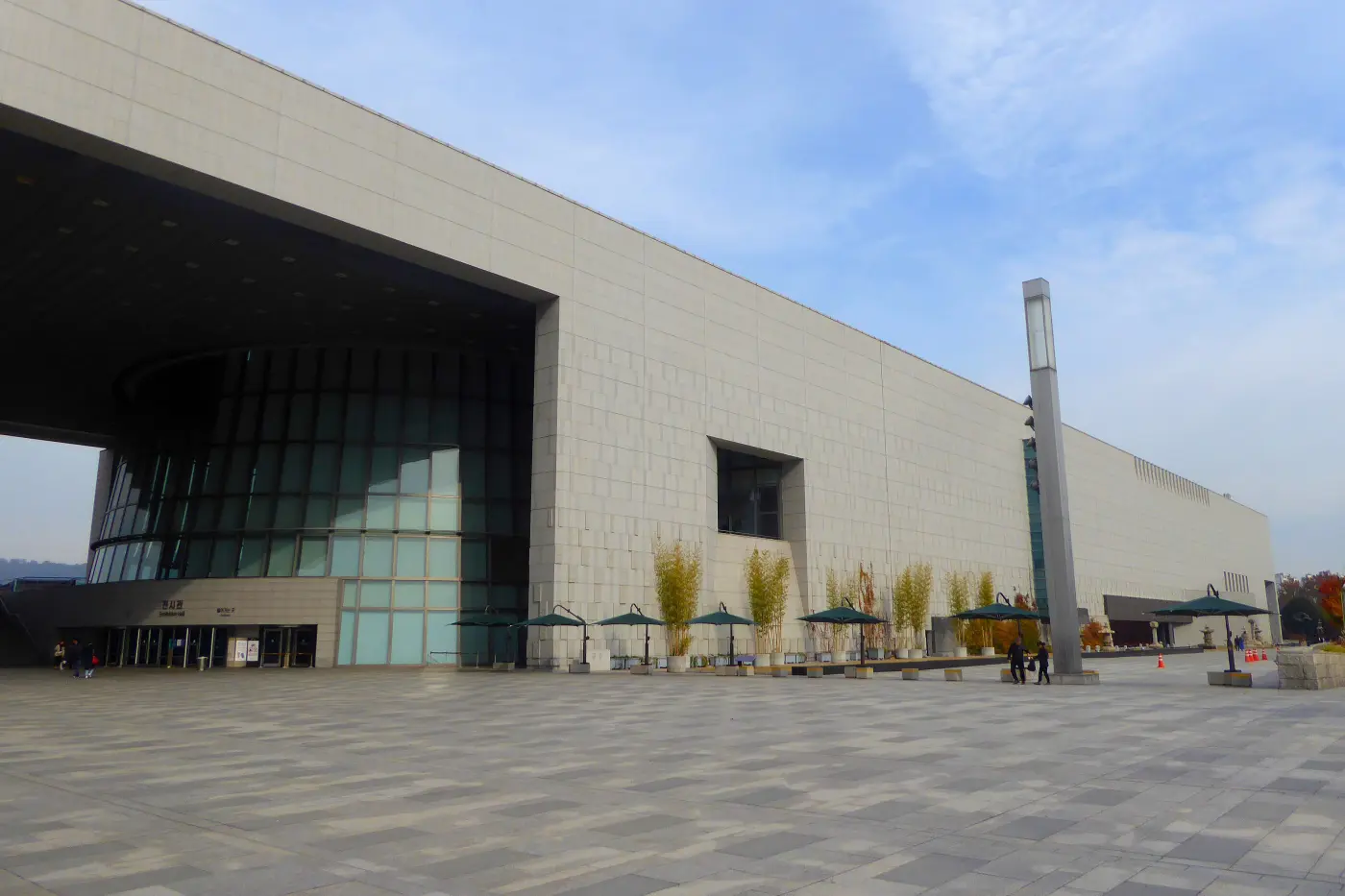
Its Children's Museum is a separate hands-on space aimed mainly at children aged five to nine. Entry is free but must be booked online: individual bookings open at midnight 14 days before your visit, each booking covers up to five people, and visits run in five sessions of 80 minutes through the day. Children under five need an adult beside them at all times. One important caveat: when we checked in October 2026, the main museum's visitor page said the Children's Museum was temporarily closed until 14 December, so confirm it is open before you build a day around it.
The National Folk Museum of Korea, beside Gyeongbokgung Palace, has its own free Children's Museum. Booking online is required, and the museum is candid that its reservation system works only in Korean and relies on mobile identity verification that needs a Korean phone number. If you cannot book, it asks you to go to the Children's Museum information desk. Children must come with an adult, food and drink are not allowed in the halls, and a booking is cancelled if you have not entered within 30 minutes of the start time.
From March to November, weather permitting, the Folk Museum's outdoor playground lets children try Korean traditional games such as jegi kicking, top spinning, hoop rolling and arrow throwing, and there is a picnic area for packed lunches in the same months. For a primary-school child this is often the most memorable part of the visit.
Parks, the Han River and Children's Grand Park
Seoul's biggest free playground is its river. The city runs 11 Hangang Parks along the banks, each with its own lawns, paths and facilities, and on a mild day they fill with families on picnic mats. Some parks have outdoor swimming pools and playgrounds that open in summer, and there are long bike paths if your children are old enough to ride.
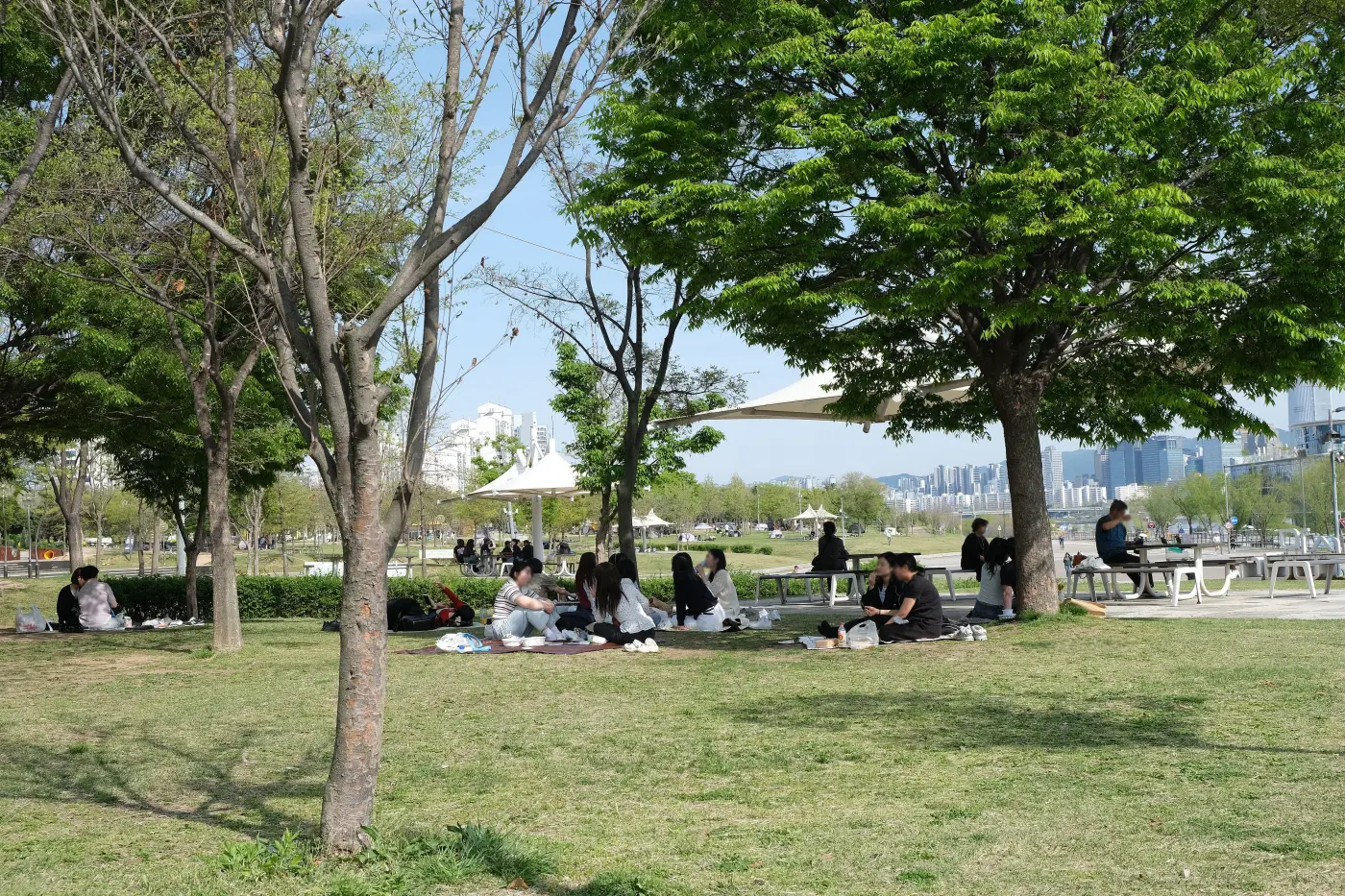
On spring and autumn weekends, Seoul also sets up outdoor play areas for children aged four to nine, called Yeogijeogi Seoul Kids Café, at 30 sites that include eight Hangang Parks. In 2026 they run from April to June and from September to November. Most places are booked in advance through a Korean-language city portal, with a share kept for on-site registration, and the city warns that schedules may change with the weather and the air quality.
Seoul Children's Grand Park in Gwangjin-gu has been free to enter since October 2006, apart from some paid facilities. Inside there are a zoo, a botanical garden, a music fountain and the Seoul Children's Museum, which charges for entry and needs booking. The park is reached from Children's Grand Park Station on Line 7, which is also one of the stations with a Seoul Metro nursing room.
Outside Seoul the same habits apply. The national museum system has branches in cities such as Gyeongju, Gongju, Buyeo and Jeonju, and with children travelling at half fare, a KTX day trip is affordable for the whole family. The trick is to keep the day about one place, not three.
Weather and fine dust
With children, the two things to watch are heat in high summer and the air quality on any given day. Fine dust is reported as a daily grade, and Korean families genuinely adjust their plans by it. The city's own outdoor programmes do the same: the weekend Kids Café schedule can change with the weather and air quality, and the Folk Museum's outdoor play spaces do not open in a heat wave, heavy snow or rain.
So keep one indoor option ready for every day of the trip. Museums make the best backup because most of the big ones are free. Our fine dust guide explains the four grades, good, moderate, bad and very bad, so you can read the forecast at a glance even when it is in Korean.
If a child gets sick or hurt
In an emergency, call 119 for an ambulance or the fire service, and 112 for the police. The Korea Tourism Organization's advice for non-Korean speakers is to say "English please" or "Interpreter please" as soon as the call connects, and you will be put through to a professional interpreter. It also helps to know where you are, so use a nearby building name or your phone's location.
For anything that is not an emergency, such as explaining symptoms at a pharmacy or finding a clinic that can see a child, the 1330 Korea Travel Hotline runs 24 hours a day. Bring a small kit of the children's medicines you already know, with the doses written down, and check that your travel insurance covers the children. Our emergency page puts the numbers and the key Korean phrases in one place, and our guide to safety in Korea covers the rest.
Pacing: plan less than you think
The biggest difference between an easy family trip to Seoul and a hard one is pace. The city is large, and much of the walking hides underground: a transfer between two subway lines can be a real walk, and a day that visits three neighbourhoods is a day of six station walks. One main thing per day, built around meals and nap times, beats a long list.
- Book the children's museums first, then plan the rest of the day around the session time.
- Pair a structured morning, such as a museum or a palace, with an open afternoon in a park.
- Avoid rush hour with a stroller and treat lifts as part of the route, not an afterthought.
- Eat a little before the lunch crowd, when tables are easier to find and service is calmer.
- Keep a rainy-day or bad-air-day plan in your pocket, and do not feel bad about using it.
Our three-day Seoul itinerary is written for adults, but it slows down well: take one block a day instead of two and add a Han River afternoon. If you would rather have the days built around your children's ages and your dates, that is exactly what our planning service is for.
Families who come prepared tend to find Korea easy. The trains are on time, the parks are free, children's fares are low, and people are used to seeing strollers in the subway. Do the bookings early, keep the days short, and leave room for the moments nobody plans, like an hour of hoop rolling outside a museum or a long lunch of soup and rice that everyone actually eats.
Comments
Sign in to leave a comment.
Sign in ·No account? Create one
Confirm your email address to comment — it takes one click.
No comments yet.