
Yeosu Travel Guide: Odongdo, Cable Car and Night Sea
How to reach Yeosu from Seoul by KTX, bus or plane, plus Odongdo, the sea cable car, Hyangiram, the night sea, local food and a 1-night plan.
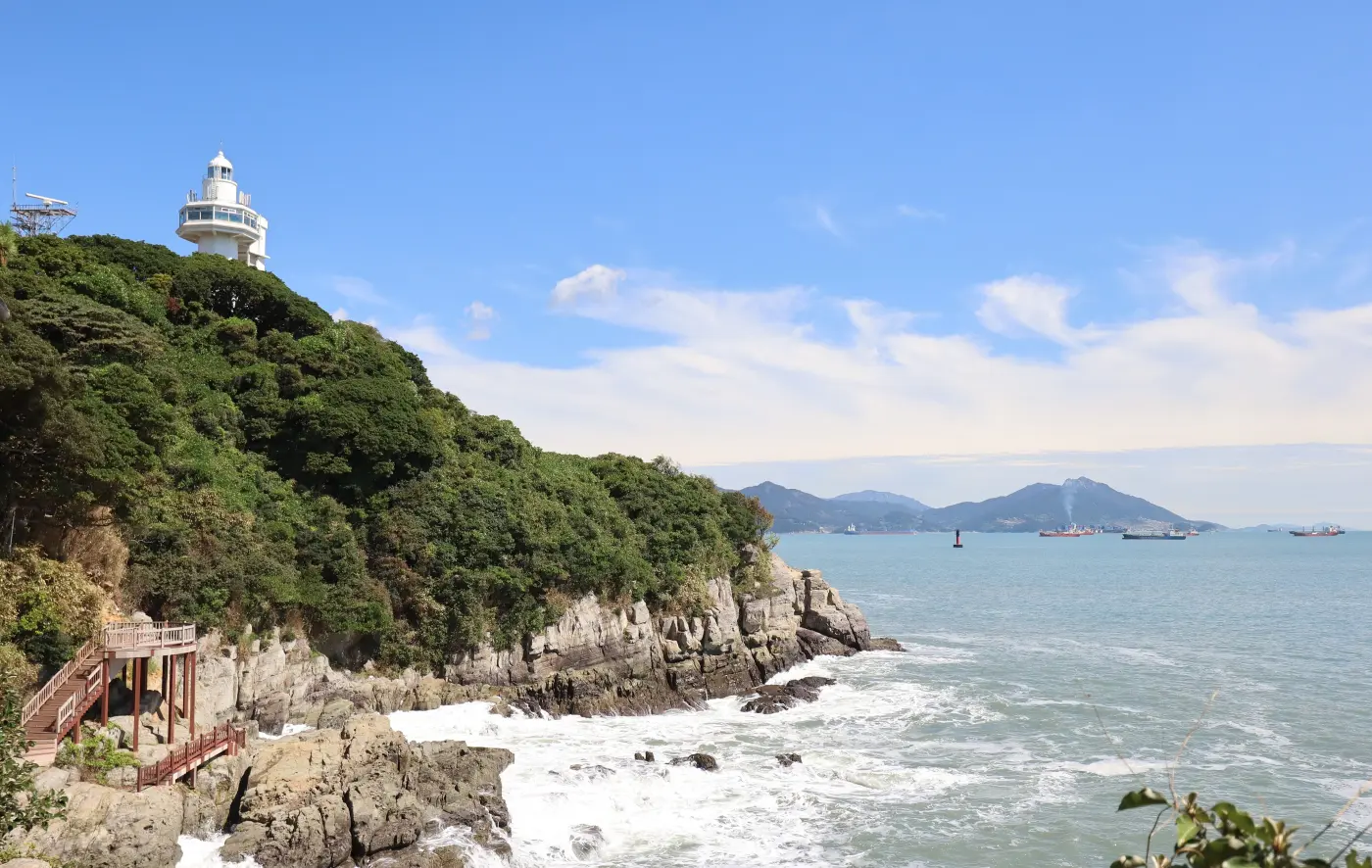
Yeosu sits at the tip of a peninsula on Korea's south coast, in the Jeonnam region, with islands scattered across the water in every direction. Most Koreans know it for three things: the sea at night, the seafood, and Admiral Yi Sun-sin, who based his navy here in the 1590s. For a foreign visitor it is one of the easiest coastal cities to reach from Seoul by train, and its main sights sit close enough together that one night is enough for a first look.
This guide covers how to get there, the places the city itself puts at the top of its list, what to eat, and a simple one-night, two-day plan. Everything factual below comes from Yeosu City's official tourism pages or the operators' own sites, which are linked at the end. Opening details change, so treat the hours here as a starting point and check the linked pages before you go.
Getting to Yeosu from Seoul
The train is the simplest option. KTX high-speed trains on the Jeolla Line run from Seoul to Yeosu-EXPO Station, the terminus at the edge of the old Expo site. In the city's own timetable, last updated in September 2026, some trains start at Yongsan Station and others at Seoul Station or Haengsin, so check which station your ticket is for. The fastest KTX services in that timetable take a little over three hours from Yongsan. Slower ITX and Mugunghwa trains also run on the line and can take around five hours. Our KTX guide (linked below) explains how to book and how to read the departure boards.
Yeosu-EXPO Station is well placed. The operator of the Expo site says the grounds are about a five-minute walk from the station: cross at the crosswalk in front of it and go straight. Odongdo and the cable car station beside it are a short ride further.
Express and intercity buses arrive at Yeosu's bus terminal. The city's transport page does not publish a Seoul timetable itself; it points to the terminal and to Korea's national bus booking sites, KOBUS and BUSTAGO, where you can see current departures and book seats. The bus is worth considering if trains are sold out on a holiday weekend.
Yeosu also has a small domestic airport. The city's flight table lists daily flights between Gimpo Airport in Seoul and Yeosu, and between Jeju and Yeosu, for the 2026 summer schedule. Airlines, times and even the number of daily flights change with each seasonal schedule, so look at the current timetable rather than relying on an old one. From the airport, the Expo operator lists city bus routes 31, 32, 33, 34, 35 and 330 from Sangok stop, across the road from the terminal, to Dongchodeung School stop, followed by a walk of about 13 minutes.
The main sights at a glance
| Place | What it is | How to get there | Hours / closed days |
|---|---|---|---|
| Odongdo | Small island of camellia forest, coastal paths and a lighthouse, joined to the mainland by a 768 m breakwater | Walk along the breakwater (about 15 minutes from the entrance car park) or take the Dongbaek train | Music fountain in the central plaza runs from March to October |
| Yeosu Maritime Cable Car | About 1.5 km of cable car over the sea between Dolsan Park and Jasan Park, with standard cabins and glass-floored crystal cabins | Board at Dolsan Park on Dolsan Island or at the Odongdo parking tower | Not listed on the city page; check the operator before you go |
| Hyangiram | Buddhist hermitage on cliffs at the southern tip of Dolsan Island, known for sunrise views | City buses 111, 111-1 or 116 to Impo (Hyangiram) stop, then steep stone steps | Not listed on the city page |
| Dolsan Park and Dolsan Bridge | Hilltop park overlooking the lit cable-stayed bridge to Dolsan Island | Taxi or bus to Dolsan Park, or the cable car to its Dolsan station | Bridge lights after dark |
| Jongpo Ocean Park and Romantic Pocha | Roughly 1.5 km of waterfront promenade, with a row of licensed food stalls beneath Geobukseon Bridge | Jongpo waterfront in Jonghwa-dong; navigation address Hamel-ro 102 | Pocha: 18:00 to 01:00 all year; regular closure on the first Wednesday of the month, except in holiday periods and from April to June and August to October |
| EXPO Ocean Park | Site of the 2012 World Expo, with the Big-O show, Sky Tower and an aquarium | About five minutes on foot from Yeosu-EXPO Station | Varies by facility |
| Jinnamgwan | National Treasure; a large 1599 hall built on the site of Yi Sun-sin's naval headquarters | Old town, Dongmun-ro | Under long-running restoration; access to the hall has been restricted, so check the official page |
Odongdo: camellias, a lighthouse and a breakwater walk
Odongdo is the picture most people have of Yeosu. The city describes it as an island whose shape from a distance resembles a paulownia leaf, the odong of its name, and which is covered in camellia trees. It lies within Hallyeohaesang National Park and is joined to the mainland by a breakwater 768 metres long. From the entrance car park it takes around 15 minutes to walk across; if you would rather ride, a small Dongbaek (camellia) train runs along the same route.
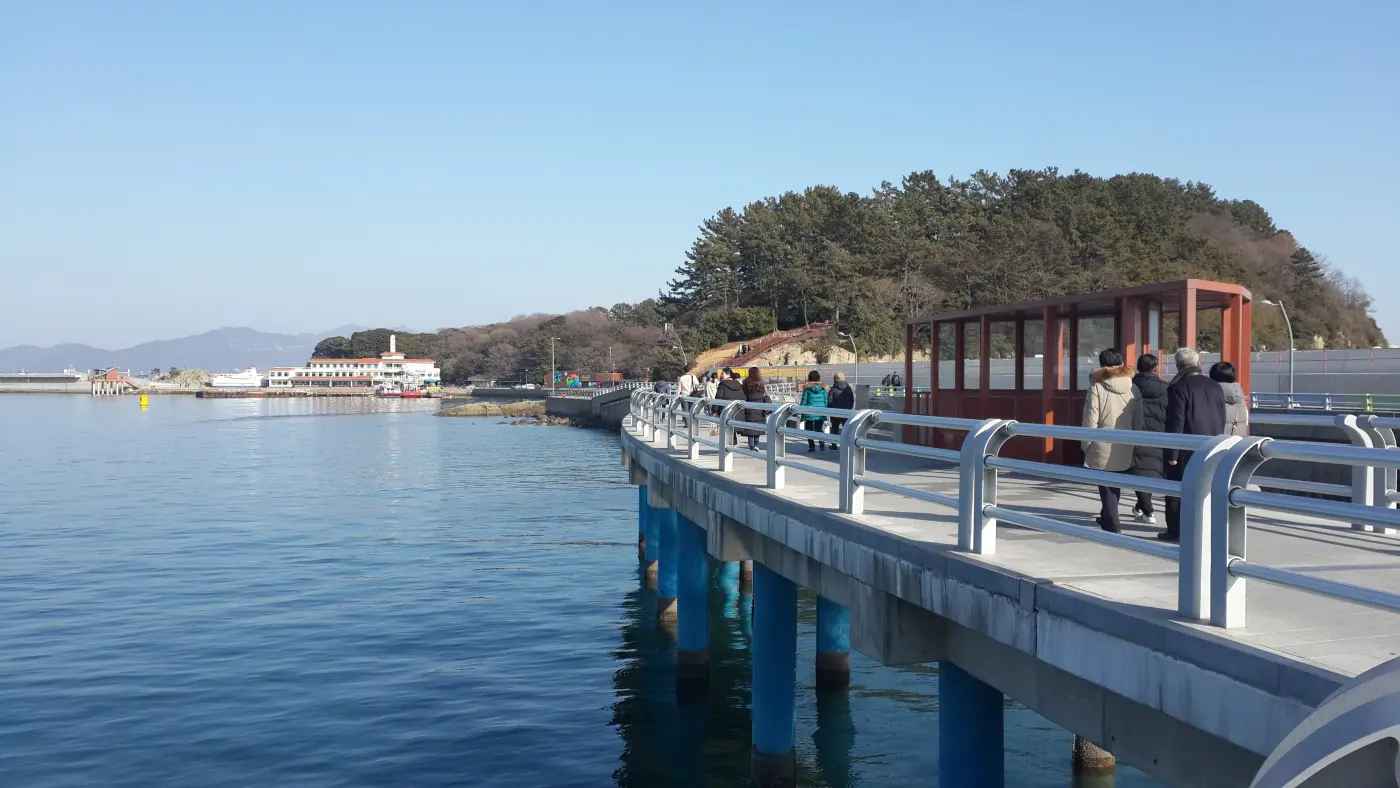
Once on the island, a network of forest paths, about 2.5 km in total according to the city, loops around rocky shoreline and up to the white Odongdo lighthouse at the top. The city counts some 3,000 camellia trees. Its Korean and English pages differ slightly on when they start to flower, so the safe summary is late winter, with both pages naming March as the peak. Look out for the tunnel of dense bamboo along the way; the city's page connects it with Admiral Yi Sun-sin, who is said to have cut bamboo here for arrows.
The central plaza has replicas of a turtle ship and a panokseon, the Joseon navy's main warship, and a music fountain. According to the city's night tour page, the music fountain runs from March to October, which matters if you plan to come back in the evening.
The Yeosu Maritime Cable Car
The cable car crosses about 1.5 km of sea between Dolsan Park, on Dolsan Island, and Jasan Park, beside the Odongdo entrance. The city describes it as Korea's first cable car to run over the sea between an island and the mainland. There are two kinds of cabin: standard ones and so-called crystal cabins with a transparent floor. The city's Korean and English pages give different splits between the two types, though both put the fleet at 50 cabins in total. If a glass floor is not for you, simply ask for a standard cabin.
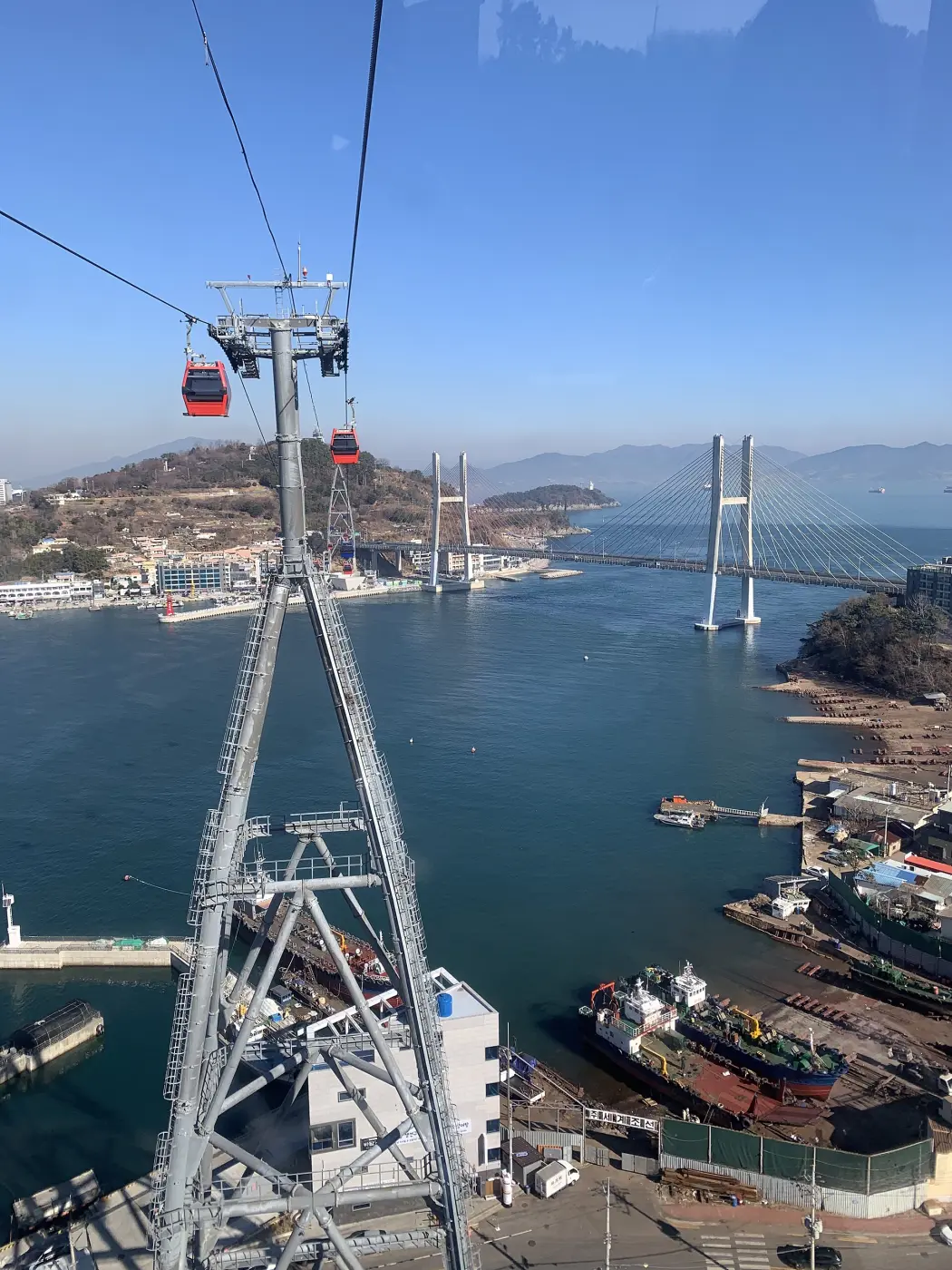
The line runs alongside Geobukseon Bridge, and from the cabins you look down on the harbour, Janggundo islet and the Expo site. You can board at either end: the city lists the Dolsan Park station and the Odongdo parking tower. Fares and operating hours are set by the operator and are not on the city page, so check the operator's own website on the day.
Hyangiram: a hermitage on the cliffs
At the far southern end of Dolsan Island, Hyangiram clings to the rocky face of Geumosan. The city calls it one of Korea's four major prayer sites dedicated to Gwaneum, the bodhisattva of compassion. Tradition holds that the monk Wonhyo founded it during the reign of Queen Seondeok of Silla under another name; it received its present name, meaning roughly 'hermitage facing the sun', in 1715. Monks based here are recorded as supporting Admiral Yi Sun-sin during the Imjin War. A fire in December 2009 destroyed many buildings, which have since been rebuilt.
Getting up involves a climb. The city's page describes steep stone steps from the car park and narrow passages through the rock that you have to stoop to pass. Wear proper shoes and allow time. Many Koreans come for the sunrise, especially on New Year's Day, when the city holds a sunrise festival; from the cliffs you can also watch the sun set over the sea.
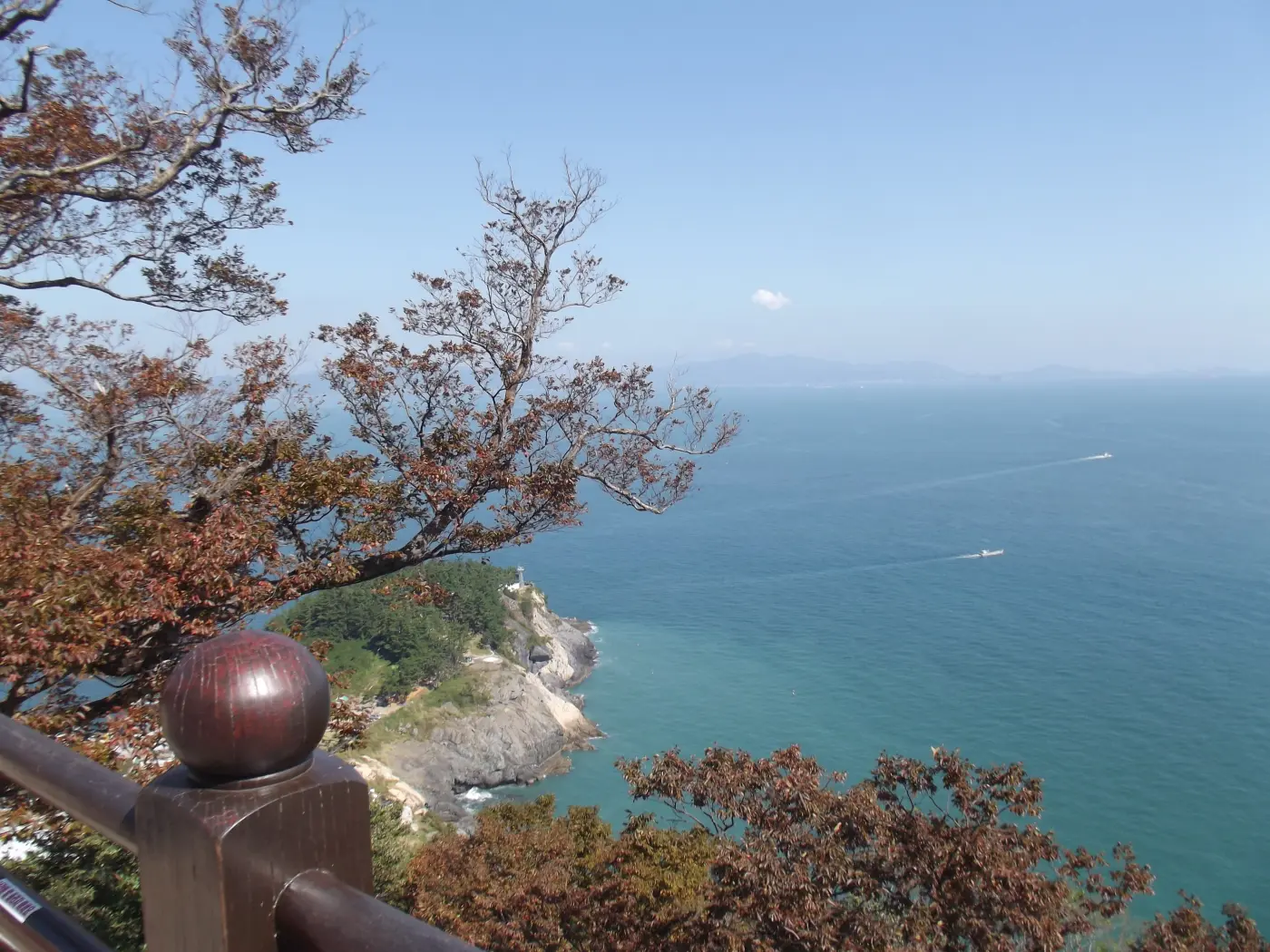
By public transport, city buses 111, 111-1 and 116 go to Impo (Hyangiram) stop. Only a few early-morning departures of 111 and 111-1 start at the Yeosu-EXPO Station stop; more start from the intercity bus terminal stop. Another option on the city's page is bus 2 from the station, changing to 111 at Seogyo-dong Catholic Church stop. Timetables change, so check the current one on the city's Hyangiram page before setting out.
Yeosu at night: Dolsan Bridge, Jongpo and the pocha
The city's own night-sea page opens by quoting a well-known Korean pop song about Yeosu at night. The practical version: the coastline curves, so lights from the bridges, the harbour and the hills reflect across the water from many angles, and most viewpoints are close to the old town.
Dolsan Bridge, completed in December 1984 and 450 metres long, links the mainland to Dolsan Island. It is a cable-stayed bridge, and since October 2000 it has been lit after dark with a programme of changing colours. The classic view is from Dolsan Park, on the hill at the island end, which also overlooks Geobukseon Bridge. Below the bridge is Janggundo, a small islet where, according to the city, an underwater wall was built in 1497 against raiders.
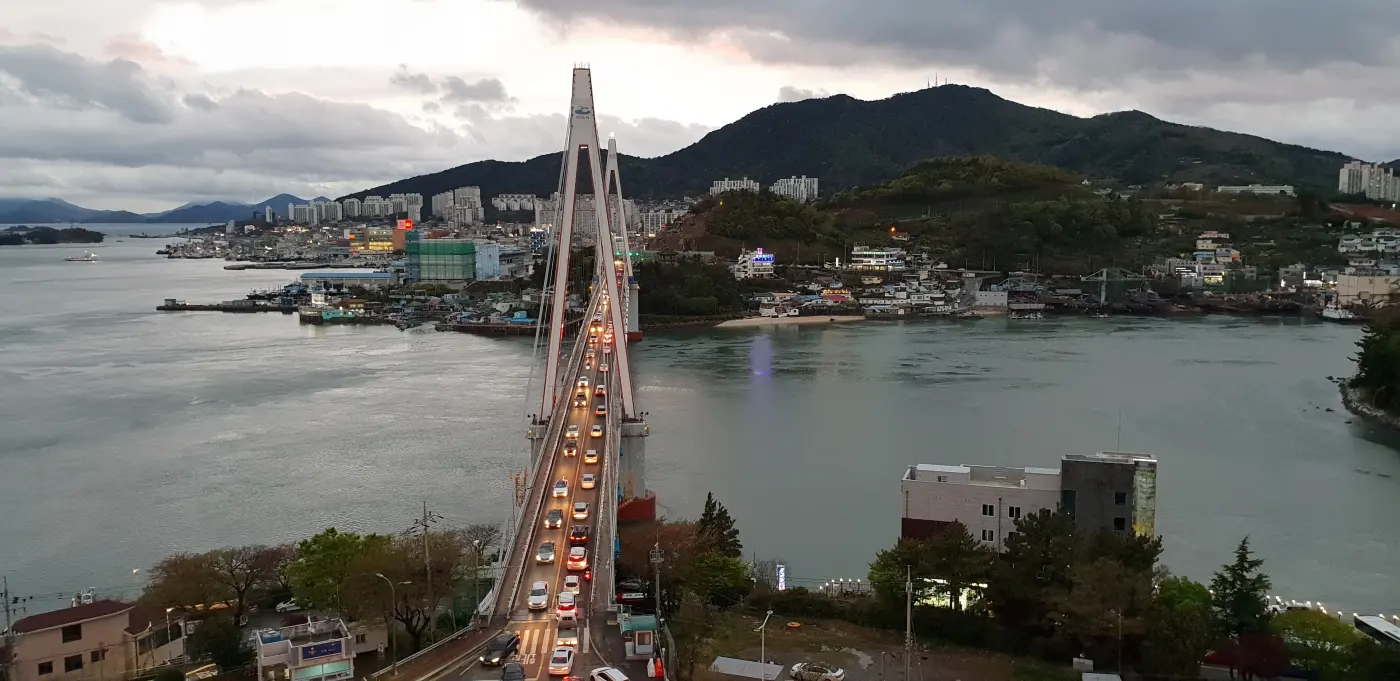
Across the water, Jongpo Ocean Park in Jonghwa-dong is a promenade of roughly 1.5 km with benches along the sea wall and views of the Hamel lighthouse, the cable car, both bridges and Janggundo. At its end, on the plaza beneath Geobukseon Bridge, is Romantic Pocha (Nangman Pocha), a group of 18 food stalls licensed by the city. According to the city page, they open year-round from 18:00 to 01:00, take card payment as standard, and close on the first Wednesday of each month except in holiday periods and from April to June and August to October. They also close when severe weather warnings are issued. The stalls focus on seafood dishes.
If you would rather not plan your own evening, the city runs a night tour bus. It leaves Yeosu-EXPO Station at 19:30 (19:00 from November to February) and takes about two hours, with stops at Odongdo, a viewpoint over the national industrial complex, whose lights the city promotes as a night view in their own right, and Namsan Park. Advance booking is recommended.
EXPO Ocean Park and the 2026 island fair
Yeosu hosted the 2012 World Expo, and the waterfront site next to the station is now a public park. The city highlights the Big-O, a multimedia show of water screens, fountains, lasers and lights; the Sky Tower, a 67-metre observatory converted from an old cement silo and fitted with a large pipe organ; and an aquarium. Facilities have their own hours, so check the operator's page.
In autumn 2026 the city is also hosting the World Island Fair Yeosu Korea, from 5 September to 4 November 2026, with venues in the Jinmo district of Dolsan, on the islands of Gaedo and Geumodo, and at EXPO Ocean Park. If your dates overlap, expect more events and visitors than usual.
Admiral Yi Sun-sin and Jinnamgwan
Yi Sun-sin was posted to Yeosu in 1591 as commander of the Jeolla Left Naval Command, a year before the Imjin War began, and the city counts eight years, from 1591 to 1598, that he spent based here. The city calls Yeosu the place from which the turtle ship first set out. At Yi Sun-sin Square, by the old harbour, a statue of the admiral stands beside a full-scale, two-deck replica of a turtle ship, 35.3 metres long, completed in 2014.
In the old town nearby stands Jinnamgwan, a National Treasure. It was built in 1599 on the site of the admiral's former headquarters and rebuilt in 1718. At 15 bays wide, the city describes it as the largest surviving local government building of its kind in Korea. It has been under a long restoration project, and the city's page still carries a notice restricting entry, with dates that have not kept pace with the work, so check the current status on the official page or call the 1330 travel hotline before planning around it. Other sites linked to the admiral include Gosodae, where he is said to have directed naval training, and Chungminsa, a shrine to him founded in 1601.
What to eat in Yeosu
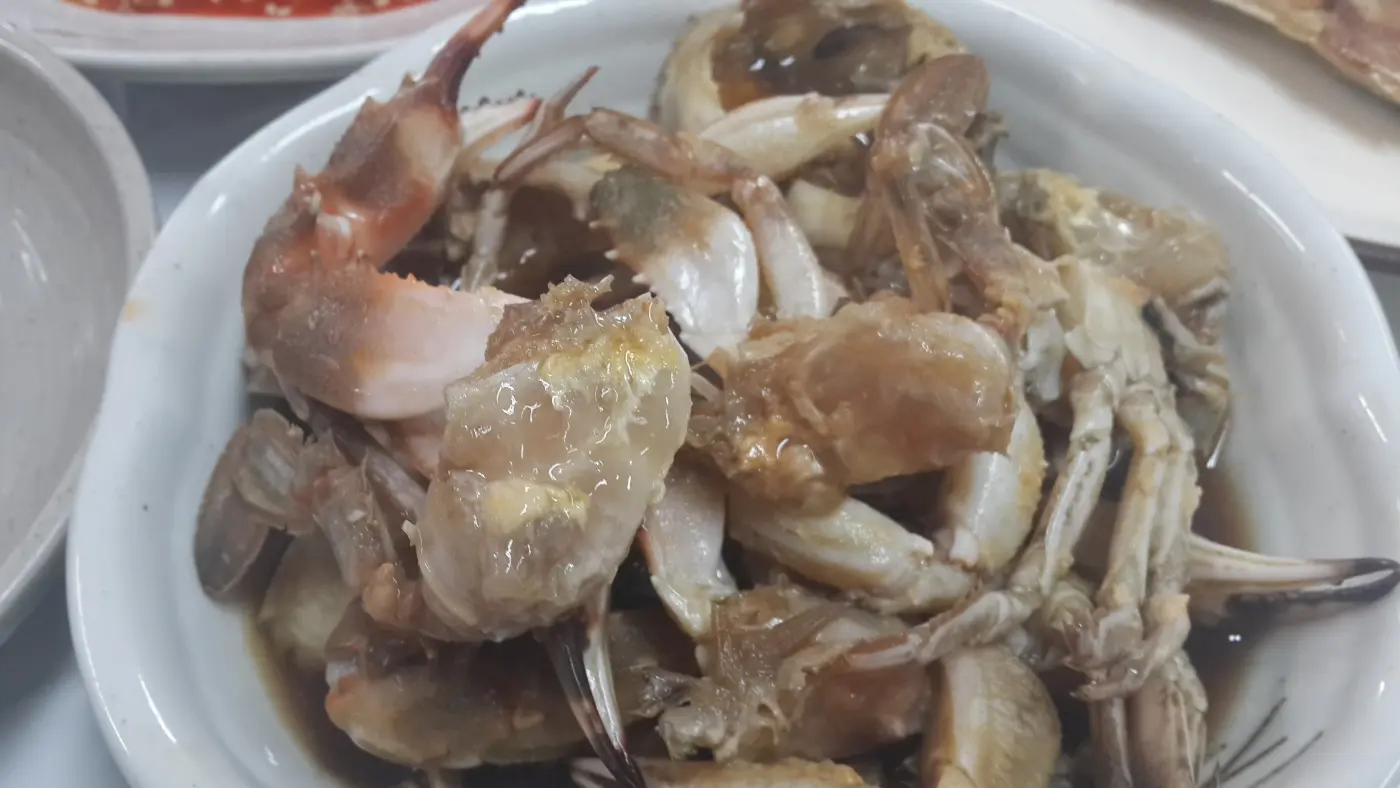
The city publishes its own list of ten local foods, and two of them are easy for visitors to find. Gejang baekban is a set meal built around marinated raw crab. The city describes several kinds: spicy yangnyeom gejang, ganjang gejang marinated in soy sauce, and a version made with doenjang, often using the small, hard-shelled rock crab of the area. If you have a shellfish allergy, this is the dish to skip, and our food allergy guide explains how to say so.
The other is Dolsan gat kimchi, made from a mustard leaf grown on Dolsan Island. The city explains that a Japanese mustard-green variety was introduced in 1954 and only became widely known after Dolsan Bridge opened in 1984, when growers could take it to market. It was registered as a geographical indication in 2010. The kimchi is seasoned with garlic, ginger, chilli and anchovy fish sauce, and has a sharp, peppery bite. According to the city, signs advertising it become more and more frequent as you approach Dolsan.
The city's list also includes grilled eel and eel soup, braised cutlassfish (galchi-jorim), seasoned raw fish salad (seodae-hoe), grilled oysters, and a local set menu (hanjeongsik). Prices vary by restaurant and season, so this guide does not list them.
A simple one-night, two-day plan
| When | Plan | Notes |
|---|---|---|
| Day 1 morning | KTX from Seoul or Yongsan to Yeosu-EXPO Station | Leave luggage at your hotel first |
| Day 1 midday | EXPO Ocean Park, then walk to Odongdo | Breakwater walk takes about 15 minutes from the entrance car park |
| Day 1 late afternoon | Cable car from the Odongdo side to Dolsan Park | Go before dusk to see the harbour by day and the lights coming on |
| Day 1 evening | Dolsan Park view, then Jongpo Ocean Park and dinner | Romantic Pocha opens at 18:00; or join the night tour bus |
| Day 2 early | Bus to Hyangiram | Steep steps; the bus ride and the climb take up a good part of the morning |
| Day 2 midday | Gejang baekban lunch, Yi Sun-sin Square | Check Jinnamgwan access in advance |
| Day 2 afternoon | KTX back to Seoul | Book the return in advance at weekends |
Yeosu also works as part of a longer trip along the south coast. Suncheon Bay and the Boseong tea fields are in the same region, and our regional page for Jeonnam covers them. If you would like a pocket reference while you walk, our Yeosu city guide PDF collects the main areas and local notes in one place.
Comments
Sign in to leave a comment.
Sign in ·No account? Create one
Confirm your email address to comment — it takes one click.
No comments yet.