
Jjimjilbang 101: How to Use a Korean Bathhouse
Nervous about your first Korean bathhouse? Where to be naked, what the key band does, hot rooms, the scrub, kids, tattoos and what to bring.
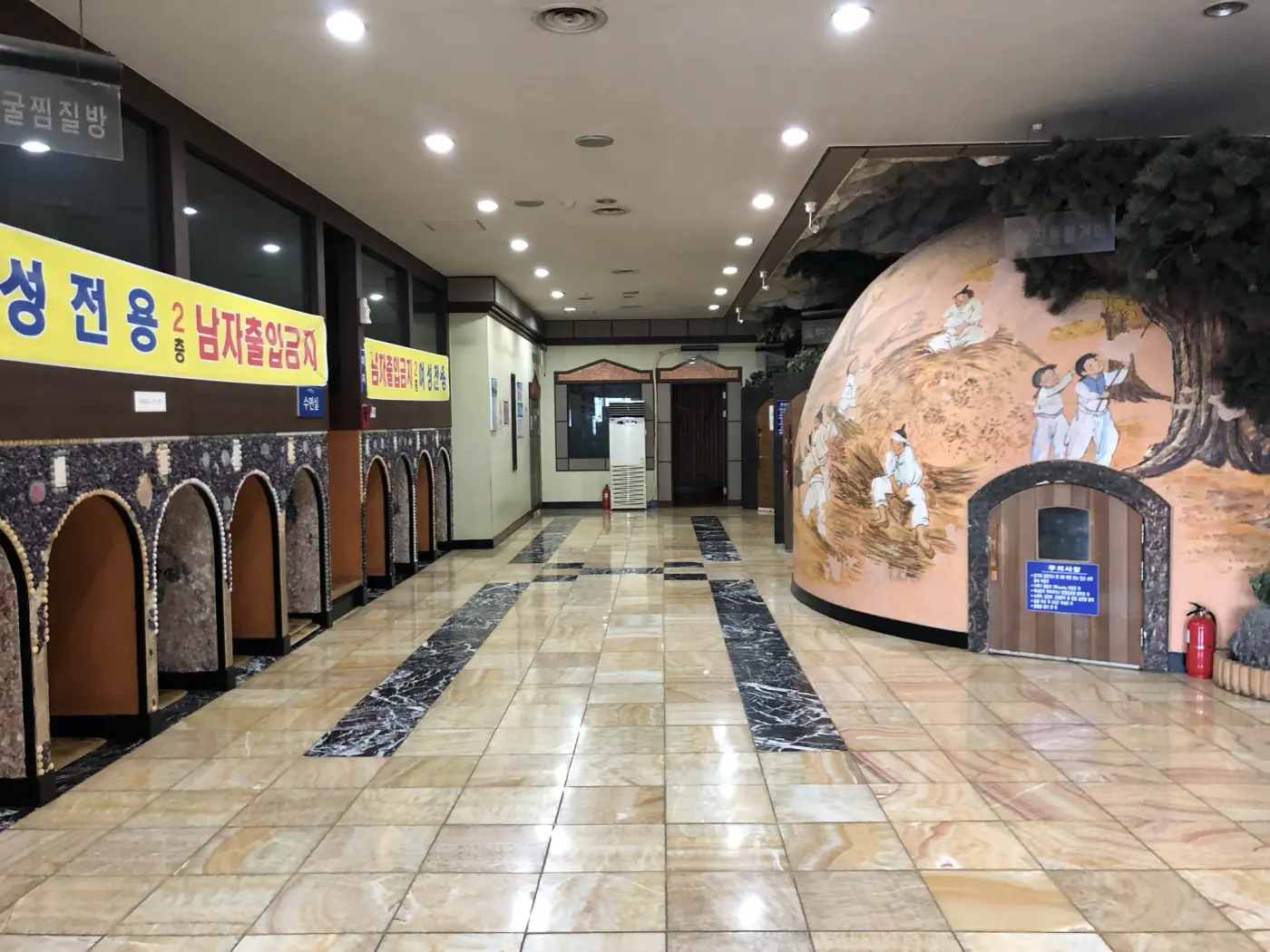
A jjimjilbang is one of the best things you can do in Korea for very little effort: a few hours of hot rooms, warm baths, cold drinks and naps on a heated floor, surrounded by families, students and office workers doing exactly the same thing. It is also the activity first-time visitors feel most nervous about. Where do the shoes go? Is everyone naked? What is the band on my wrist for? Will I do something embarrassing?
This guide walks you through a whole visit in order, from the front door to the last shower, and explains which parts are clothed, which are not, and what is optional. We already looked at the drama version of the jjimjilbang, the sheep-head towels and roasted eggs, in our K-drama article. This is the practical companion: what actually happens, so you can walk in relaxed instead of watching everyone else for clues.
Jjimjilbang, mogyoktang or sauna: what is the difference?
Korea has two kinds of public bath that visitors tend to mix up. A mogyoktang is the neighbourhood bathhouse: a gender-separated room of showers, hot and cold pools and often a small dry sauna, used mainly for getting properly clean. Many buildings label this part simply "sauna". A jjimjilbang adds a large shared area on top of that. Korea.net describes it as a bathhouse with hot tubs and kiln saunas, with separate facilities for men and women, and VisitKorea calls it a Korean-style sauna that combines a traditional bathhouse with a hot steam room.
A Korea.net column describes the jjimjilbang as something like a spa, community centre, recreation centre and cheap hotel wrapped together, and that is a fair summary. In larger places the shared floors can include snack bars, restaurants, massage chairs, reading corners, game rooms and sleeping rooms. Visit Seoul lists arcades, PC rooms, karaoke rooms, movie rooms, comic book rooms and gyms among the amenities you may find, and notes that jjimjilbangs are enjoyed by people of all ages and genders. Small neighbourhood places are simpler; big resort-style ones can fill a whole day.
In some buildings the bath and the jjimjil hall are on different floors, and admission can be sold for the bath only or for both. If you want the full experience, say so at the counter. Our phrase page for "The jjimjilbang floor too, please" has the exact Korean.
The whole visit at a glance
| Zone | What you wear | What happens |
|---|---|---|
| Entrance and counter | Your own clothes, shoes off | Shoes go in a shoe locker; you pay and receive a locker key band, towels and a set of jjimjil clothes |
| Changing room (men / women) | You undress here | Clothes and valuables go in your locker; the key stays on your wrist or ankle |
| Bath area (men / women) | Nothing; a small towel is optional | Shower first, then hot and cold pools, saunas and the optional paid scrub |
| Jjimjil zone (shared) | The T-shirt and shorts from the counter | Hot rooms, cool or ice rooms, lounges, snack bar, TV and rest areas |
| Sleeping area (where offered) | Jjimjil clothes | Naps or an overnight stay on mats on the floor, if the venue is open around the clock |
| Leaving | Your own clothes again | Shower if you like, dress, and settle any extras charged to your key at the counter |
Step by step: from the front door to the hot rooms
The order is the same almost everywhere, and once you have done it once it becomes automatic.
- Take off your shoes at the entrance. Most places have rows of small shoe lockers just inside the door. Lock your shoes away and keep the key.
- Pay at the counter. Staff hand you towels, a set of jjimjil clothes and a locker key, usually on a plastic band. In many places you exchange your shoe-locker key for it.
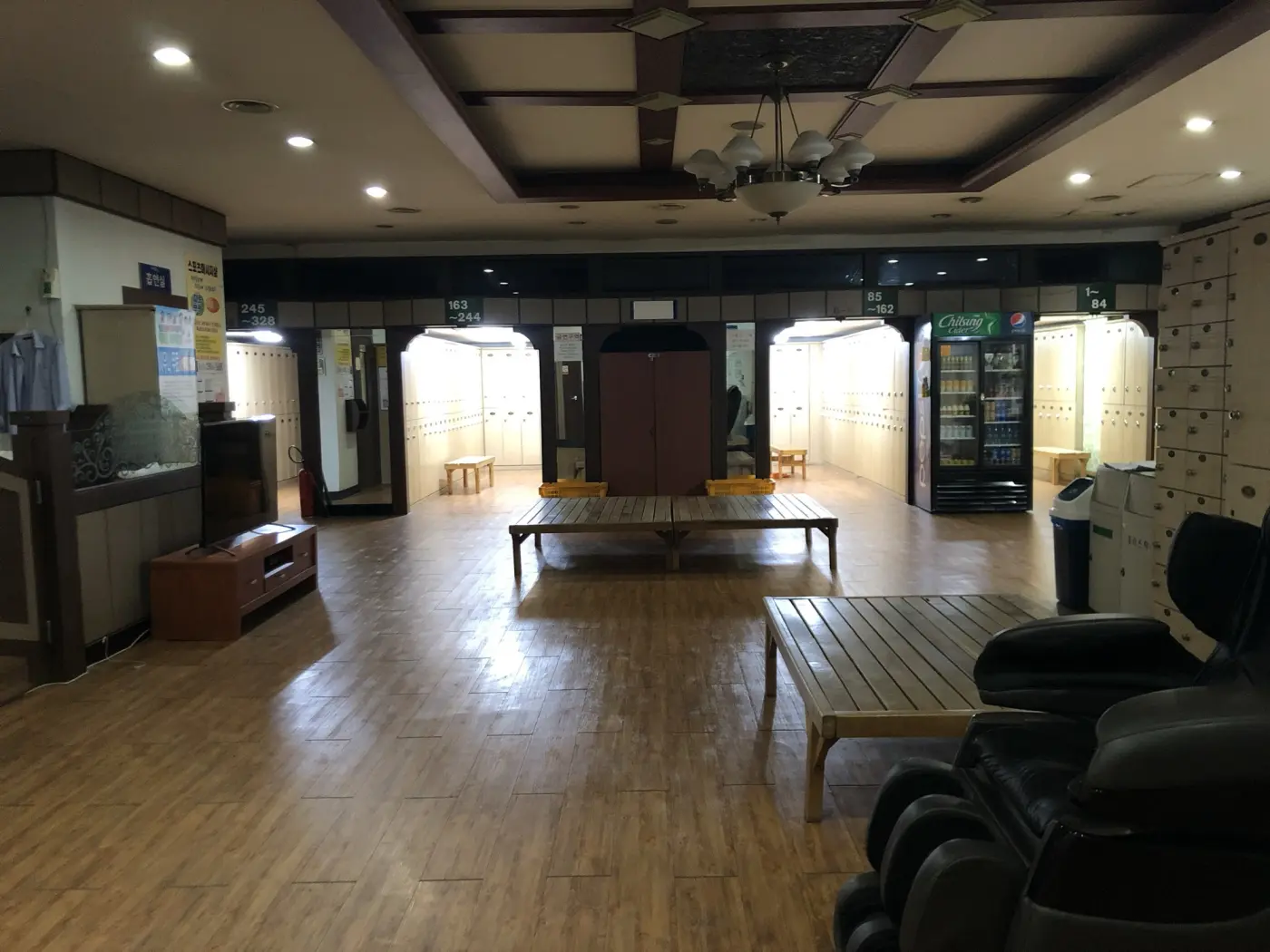
- Go to the changing room for your gender. Undress completely, put everything in your locker, and keep the key band on. VisitKorea notes it is usually worn on the wrist or ankle.
- Walk into the bath area and shower first. Washing before you get into any pool is the basic rule of every Korean bath.
- Soak, sweat and rinse as long as you like. The pools are usually set at different temperatures, with at least one cold one.
- When you are ready for the shared zone, dry off, go back to your locker and put on the jjimjil T-shirt and shorts. Then head to the jjimjil floor.
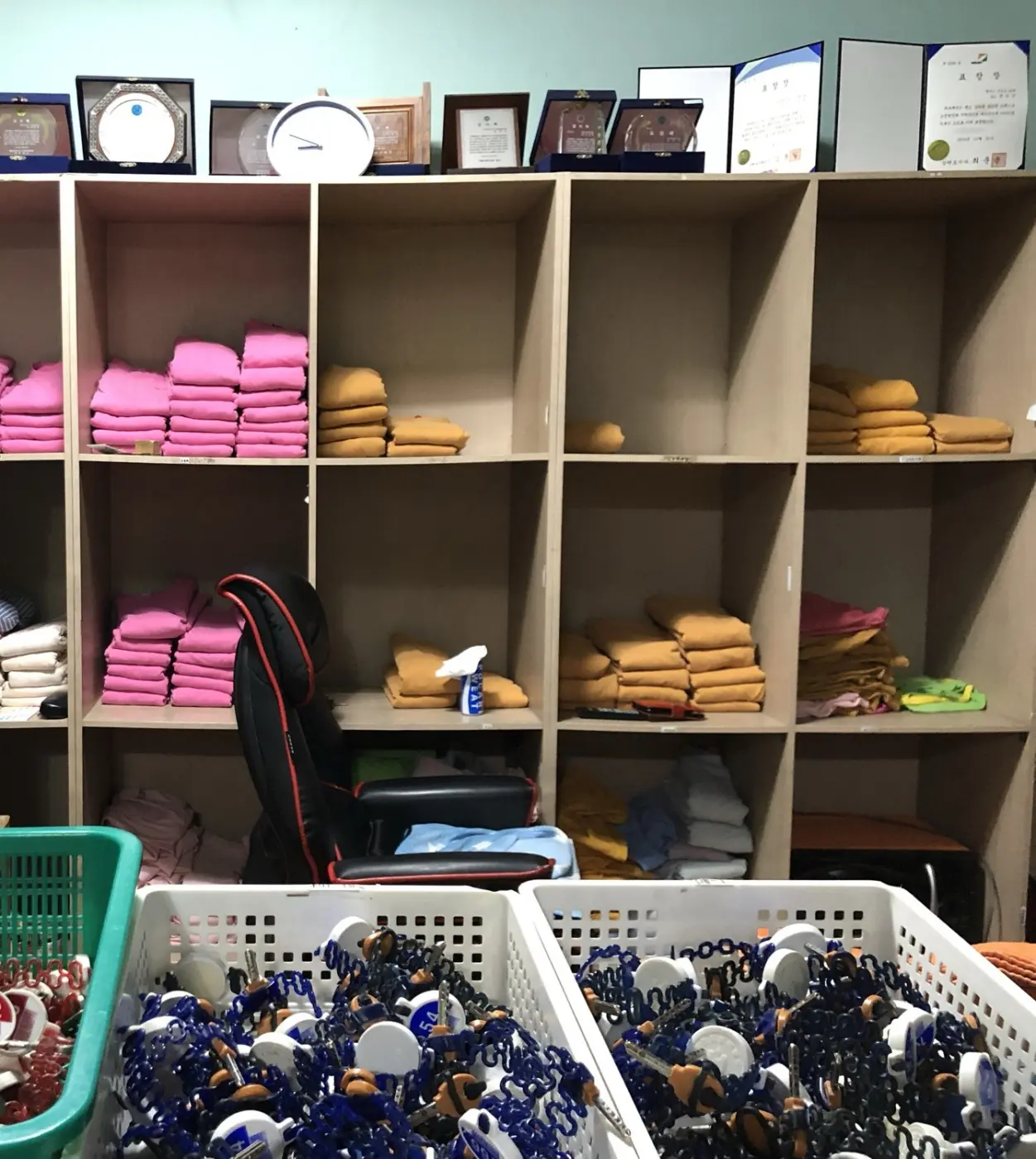
That key band is more useful than it looks. According to VisitKorea it also lets you use extras such as the snack bar, massage chairs, coin karaoke and photo booths. Instead of carrying money around in your shorts, purchases are recorded against your number, and you settle everything at the counter when you return the key on the way out. Do not lose it, and do not leave it lying in a hot room.
Some things are still cash-only. In Korea.net's account of a visit, the friends note that most bathhouses want cash upfront for the scrub, so it is worth keeping a little cash in your locker.
Where people are naked, and where they are not
This is the part most visitors worry about, so here it is plainly. The changing rooms and the bath areas are separated by gender, and inside them everyone is completely naked. Nobody wears a swimsuit in a Korean bath, and you will stand out more by keeping one on than by taking it off. People carry a small towel around, but it is for drying off, not for covering up, and it never goes into the pool.
The shared jjimjil zone is the opposite: everyone is dressed, in the matching outfits handed out at the counter. A Korea.net column notes that these facilities always provide uniforms, often a T-shirt and shorts, and that in mixed jjimjilbangs men's and women's outfits are different colours. This is where couples, friends and families meet up again, lie on the heated floor and share snacks. So the rule is simple: naked with your own gender in the baths, dressed with everyone in the jjimjil hall.
The hot rooms (and the cold one)
The jjimjil zone is built around a series of heated rooms, each with a different temperature and theme. You will find kiln-style domes heated like a traditional charcoal oven, rooms lined with red clay, salt or stone, steam rooms, and usually one cold room to cool down in. VisitKorea's own examples include a red clay room, salt room, heated stone room, amethyst kiln room and a stalactite ice room, but every venue has its own mix and names.
Rooms are often marked with the temperature on the door. VisitKorea's advice for first-timers is to start with the cooler rooms, around 30 to 40°C, and work your way up. It also warns that in rooms above 60°C you should limit your time to about 20 minutes to avoid burns or dehydration. At one charcoal-kiln jjimjilbang in Seoul, VisitKorea notes that the hottest room carries a risk of skin burns and advises wearing socks and cotton gloves to go in. Lie on a towel, keep your head on the wooden block or mat provided, drink water between rooms, and step out the moment you feel dizzy.
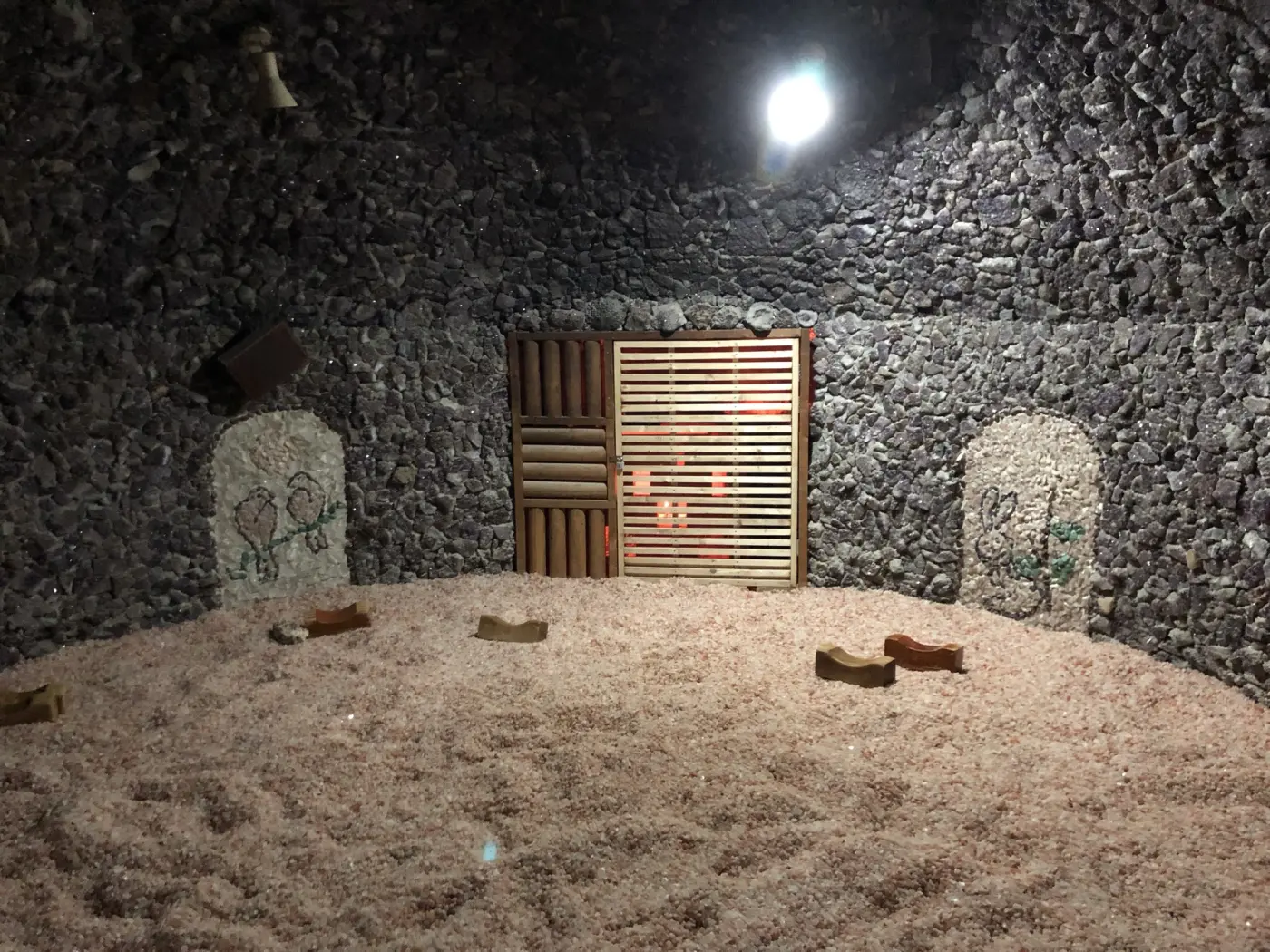
If the floor of your room is too hot to lie on, you are not the first. Our phrase page for "The floor is too hot" covers how to say it to staff, and "One more towel, please" is just as useful when you need something extra to lie on.
Sikhye and roasted eggs
Food is a serious part of the jjimjilbang. Visit Seoul points out that most visits last for hours, so food is always available, and calls roasted eggs and sikhye the two most typical jjimjilbang foods. Sikhye is a sweet, chilled rice drink with soft grains of rice floating in it, and the eggs are slow-roasted until the whites turn tan and slightly chewy. VisitKorea describes the pair as affordable and satisfying, with the drink perfect for a dry mouth after sweating.
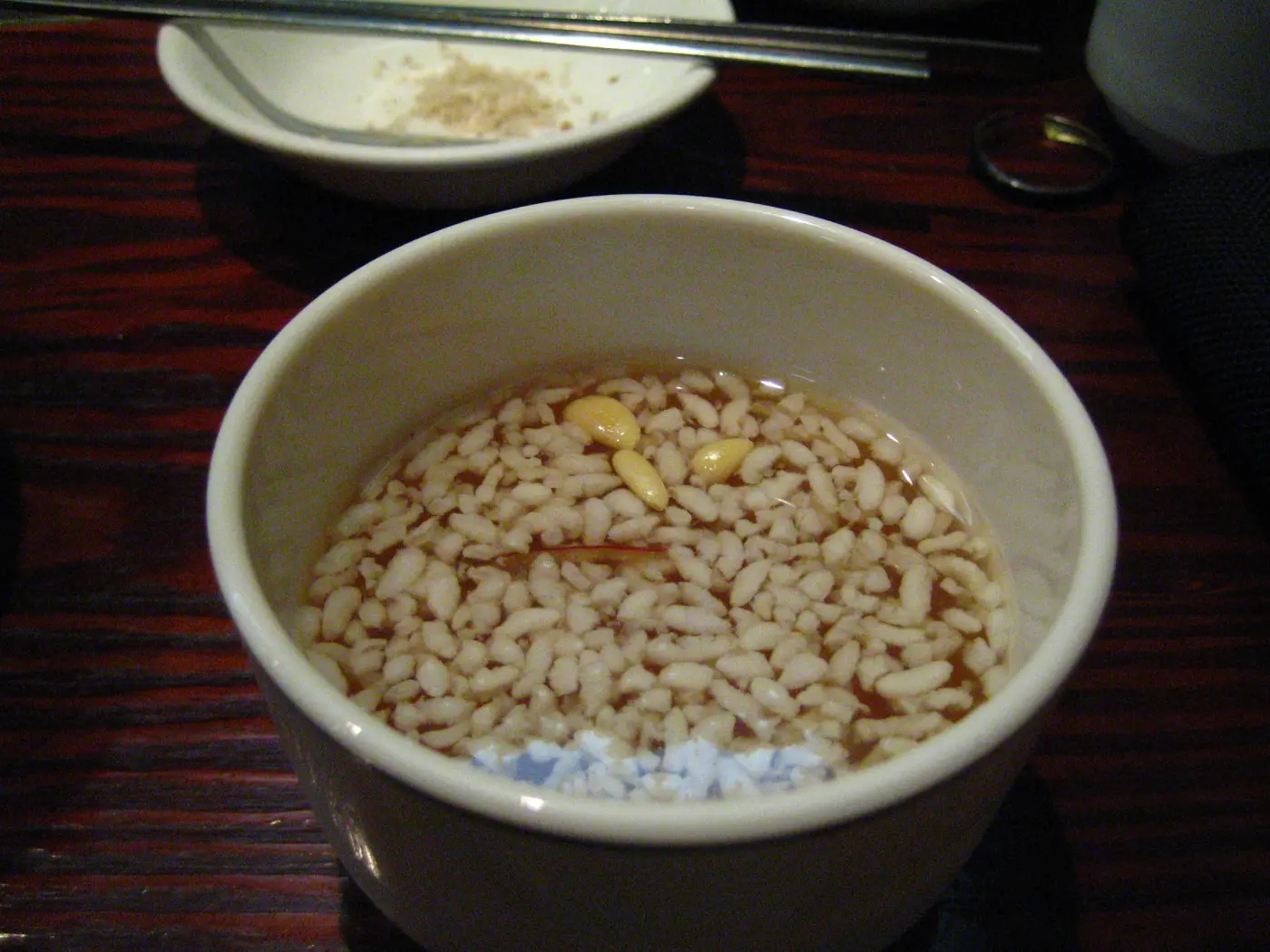
Larger places go much further. The snack bar usually has cup noodles, gimbap, tteokbokki and ice cream, and some jjimjilbangs run a full restaurant with dishes like seaweed soup. Everything goes on your key band, which makes it dangerously easy to order a second round of eggs.
The scrub: seshin, optional and paid
In the bath area you will probably notice a corner with a couple of padded tables and a staff member in work clothes. That is the scrub station. Seshin is a full-body exfoliation with a rough, textured mitt, done by a professional. Some people call the scrubbers ttaemiri, but that is a casual word; seshinsa is the more neutral term. It is completely optional and paid separately.
Korea.net's guide to seshin explains how it works. You tell the scrubber how many people want it and which parts, since some places offer a full body or back only, and many add aroma or oil massages at extra cost. Services and prices vary by bathhouse. Before your turn you soak in the warm pool so the skin softens, and the scrubber will call you by your locker number. The first time can feel a little rough, so do not be shy about saying it hurts. Most people come out feeling, as the Korean word goes, siwonhae: refreshed. If you want to ask for it in Korean, use our "I'd like the scrub" phrase page.
Sleeping over: what a night really looks like
Some jjimjilbangs are open around the clock, and some people do use them as a cheap place to sleep. The Korea.net column above notes that even a more upscale jjimjilbang is still considerably cheaper than a hotel, which is why workers and travellers use them, and that whole families can be found there at night. Before you plan on it, though, know what it is: you sleep on a mat on the floor in your jjimjil clothes, often in a large shared hall or a separate darker room set aside for sleeping. Pillows may be small firm blocks. Lights, snoring and late arrivals are part of the deal.
Not every venue is open 24 hours, and the rules on how long one ticket lets you stay differ from place to place. Check with the specific place first. It works well as an adventure for one night or after a late train, but it is not a substitute for a real bed for your whole trip. Earplugs and an eye mask help.
Tattoos
There is no single national rule we can point you to about tattoos at jjimjilbangs. Policies vary from venue to venue, and some places may ask guests with large tattoos to cover up or decline them. The respectful approach is to ask at the counter before you pay. Our phrase page for "I have a tattoo" gives you a polite way to do that in Korean.
Bringing children
Jjimjilbangs are very family-friendly, and you will see kids running between the hot rooms and the snack bar. There is one firm rule to know. According to Korea's Ministry of Health and Welfare, children aged four (48 months) and older may not go into the bathing and changing rooms of the opposite sex. In practice, a father with a five-year-old daughter, or a mother with a five-year-old son, cannot take them into their own bath area; plan the bath part of the visit around that, then meet up in the shared zone.
Korean rules also restrict teenagers' access to 24-hour bathhouses late at night, with the exact hours now set by each city or province. If you are travelling with teens and thinking of an overnight stay, ask the venue first.
Etiquette that matters
- No photos or videos in the changing rooms or bath areas, ever. Leave your phone in the locker until you are dressed in the jjimjil zone.
- Shower before you get into any pool, and rinse off after the sauna before going back in.
- Tie up long hair so it does not touch the water, and keep towels out of the pools.
- Keep your voice down. Jjimjilbangs are social, but people come to rest, and many are napping.
- Do not hog a hot room or a spot on the floor with your belongings.
- Return borrowed towels and outfits to the collection bins rather than leaving them on the floor.
For more of the everyday manners that make life easier in Korea, from shoes to photos, see our guide to Korean etiquette.
If you are nervous about nudity
You are not alone, and Koreans know it. In Korea.net's episode on bathhouse culture, a visitor admits that undressing in a public bath feels a bit embarrassing, and a Korean friend replies that some foreign friends skip it altogether, including for religious reasons. Both are treated as completely normal.
A few things make the first time easier. Nobody is looking at you; people are busy with their own routine, and bodies of every age and shape are in the room. Go with a friend of the same gender if you can. Keep your small towel with you as you walk around. And remember that the baths are optional: you can shower quickly, dress in the jjimjil clothes and spend your whole visit in the shared zone with the hot rooms, the snacks and the heated floor. Plenty of visitors do exactly that.
What to bring
- A little cash for the scrub and extras, even if the counter takes cards.
- Your own toiletries if you are particular. Some places provide soap and shampoo, others sell single-use items.
- A hair tie and a comb.
- Water, or money for drinks, to stay hydrated between hot rooms.
- Clean underwear and socks for afterwards.
- Earplugs and an eye mask if you plan to sleep over.
You do not need a swimsuit, a bathrobe or towels; towels and jjimjil clothes are handed out at the counter, although some places charge a little extra for an outfit or more towels.
Your first visit, in one sentence
Shoes in the shoe locker, pay, undress with your own gender, shower, soak, put on the matching clothes, and go and find the eggs. After that, it is just a long, warm afternoon. If you only try one very Korean thing on this trip, this is a good candidate.
Comments
Sign in to leave a comment.
Sign in ·No account? Create one
Confirm your email address to comment — it takes one click.
No comments yet.