
Damyang Day Trip from Gwangju: Bamboo, Gardens, Food
Plan a day in Damyang from Gwangju: Juknokwon bamboo garden, Gwanbangjerim, the Metasequoia road, Soswaewon, gasa pavilions, tteokgalbi and buses.
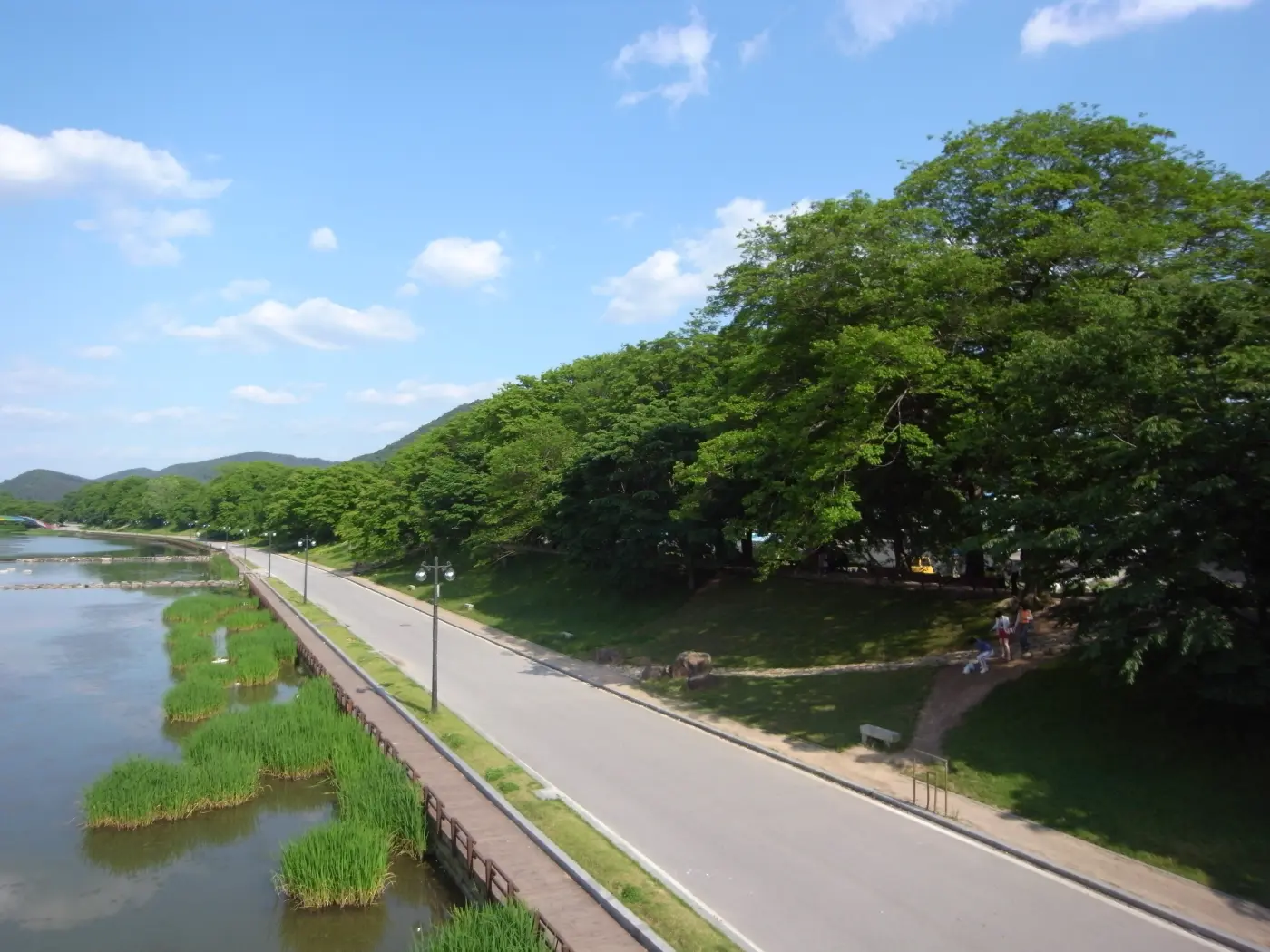
Damyang is a rural county just north of Gwangju in Korea's southwest, and for most Koreans the name means one thing: bamboo. The county town is wrapped in bamboo groves, its riverbank is lined with an old flood-control forest, and the road out of town runs between tall metasequoia trees. A little further south, closer to Gwangju than to Damyang town itself, are Joseon-era gardens and pavilions where scholars of the 1500s wrote poetry in Korean. It makes an easy day out from Gwangju and fits well into a slower trip through the southwest with Suncheon, Yeosu or Jeonju.
This guide covers how to get there by train and bus, what each place actually is, how long to give it, and what to eat. Opening hours come from the official Juknokwon site, Damyang County's tourism pages, the Soswaewon garden site and VisitKorea; bus numbers come from the county and the site operators. Hours change by season, so check again just before you go. A note on names: Damyang's official addresses now begin with "Jeonnam-Gwangju Special Metropolitan City", the merged region that VisitKorea also uses in English, while many maps and older signs still say Jeollanam-do. Spellings vary too: the county's older English pages write Juknokwon as "Jungnogwon".
Damyang at a glance
| Place | What it is | How to get there | Time to allow |
|---|---|---|---|
| Juknokwon | Bamboo garden with 2.4 km of trails in eight themed paths, plus a poetry and pavilion village | Bus 311 from Gwangju (U-Square terminal or Gwangju Station); bus 11-2 from Damyang Bus Terminal, about 20 min | About 1 hour for the trails (VisitKorea); longer with the village |
| Gwanbangjerim | Riverside forest on a flood levee, a Natural Monument since 1991 | On foot from Juknokwon's main gate, along the same road | A short stroll; the historic levee is about 2 km |
| Metasequoia road | Avenue of metasequoias first planted in 1972; walking section called Metasequoia Land | East of Gwanbangjerim; walk on from the town or take a taxi | Open 09:00–18:00; a walk of your choosing |
| Soswaewon | Garden built around 1530 by the scholar Yang San-bo; a national Scenic Site | Gwangju city bus 187 (about hourly) or bus 225 from Gwangju | An hour or so |
| Sigyeongjeong and the Gasa Literature Museum | Pavilion of 1560 linked with the poet Jeong Cheol; a national Scenic Site | Buses 187 and 225, which also serve Soswaewon | Combine with Soswaewon for a half day |
| Myeonangjeong | Song Sun's teaching pavilion of 1533, rebuilt in 1654; a regional monument | Bongsan-myeon; a taxi from Damyang town is simplest | A short visit |
| Noodle street | Small noodle restaurants by Gwanbangjerim, near Hyanggyo bridge | On foot from Juknokwon | A meal |
Getting there: KTX or SRT to Gwangju, then a bus
Most visitors come through Gwangju. High-speed trains on the Honam line stop at Gwangju Songjeong Station: SR's route map lists it on the SRT Honam line from Suseo in southeast Seoul, and Damyang County's transport page lists KTX services from Seoul and Yongsan stations to Gwangju. Our KTX guide explains how booking works.
From Songjeong, the official Juknokwon directions say to make your way across the city to either Gwangju Station or the U-Square bus terminal, then take bus 311 from the stop in front of U-Square's main entrance (or from Gwangju Station) to Juknokwon. The 311 belongs to a family of rural seat buses numbered 311, 311-1, 311-2 and so on, so check the destination board before boarding. The county also lists direct buses between Gwangju and Damyang about every 15 minutes, from early morning (05:50 from Gwangju) until late evening. The official pages give frequencies rather than journey times, so a map app's transit search is the easiest way to see the current timing. Our getting-around guide covers transit cards and city buses in general.
From Seoul there is also a direct express bus: the county lists four departures a day from Central City terminal (Honam line side) to Damyang Bus Terminal, taking about 3 hours 30 minutes. The departure times printed on two official county pages do not match, so check the terminal timetable when you book. From Damyang Bus Terminal, bus 11-2 reaches the Juknokwon stop in about 20 minutes, according to the county.
Inside Damyang, taxis are the practical way to link places that buses do not join up well, such as the Metasequoia road, the Gasa pavilions and Myeonangjeong. The county's transport page lists local call-taxi companies by district.
Juknokwon: walking through the bamboo
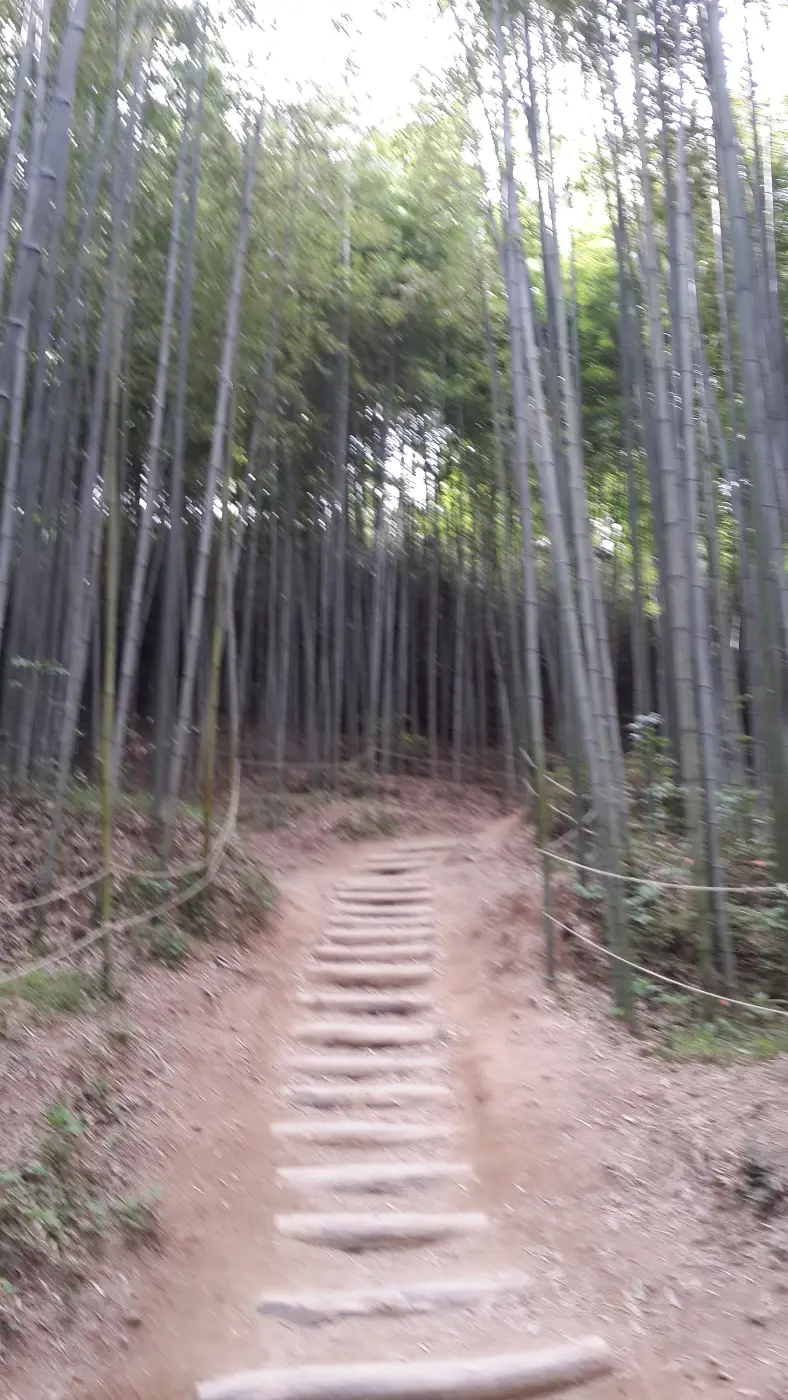
Juknokwon is the county's bamboo garden on the edge of Damyang town. According to its official site it opened in March 2005 and covers about 31 hectares, with observation points, seven pavilions, rest areas, two hanok cafés and a hanok stay. The walking paths add up to 2.4 km, divided into eight themed trails with names such as the "good luck path" and the "path where love never changes". VisitKorea describes the circuit as about an hour at a leisurely pace. The paths rise and fall over a low hill, with stone steps near the entrance, and the grove is noticeably shadier than the street outside; the official site says the bamboo forest is around 4 to 7 degrees cooler than outside. It also points out jukrocha, a green tea grown under the bamboo and said to take in the dew from the leaves.
Beyond the bamboo trails lies the Sigamunhwachon, a poetry and song culture village that gathers Damyang's literary heritage in one place. It reproduces the area's best-known pavilions, including Myeonangjeong, Sigyeongjeong, Songgangjeong, Hwanbyeokdang and Soswaewon's Gwangpunggak, alongside a hall for traditional pansori singing, a bamboo-dew tea room, a park of poetry stones and the hanok stay. It is a useful preview if you will not have time for the originals. The official site recommends this area to wheelchair and pushchair users because of the hilly terrain elsewhere, and wheelchairs can be borrowed and returned at the rear-gate ticket office.
Opening hours are 09:00–19:00 from March to October (last entry 18:00) and 09:00–18:00 from November to February (last entry 17:30), with no closing day. Outside these hours the grounds are closed, and visitors leaving at closing time are asked to exit via the art centre. The house rules are strict: no smoking anywhere, no outside food or cooking, no bicycles or electric scooters, no carving on the bamboo or picking bamboo shoots, and dogs only if small and carried.
Gwanbangjerim and the streets around Juknokwon
In front of Juknokwon, a line of large old trees follows the north bank of the Damyangcheon stream. This is Gwanbangjerim, a forest planted on a levee to protect the town from floods. The Korea Heritage Service lists it as a Natural Monument, designated in 1991, and says the historic levee runs about 2 km. Most of the trees are muku trees (Aphananthe aspera), with hackberries, cherry trees and a few other species. On its origins, the heritage record credits the smaller trees to the magistrate Hwang Jong-rim, who worked on the levee in 1854, and the county adds that the embankment was first built in 1648 by an earlier magistrate, Seong I-seong. In 2004 the forest received the grand prize at a national beautiful-forest contest run with the Korea Forest Service.
The levee path is flat, shaded and good at any time of day. Near Hyanggyo bridge, between Gwanbangjerim and Juknokwon, is what the county calls the noodle street. A bamboo goods market used to be held here; after it closed, the cluster of small noodle restaurants became the attraction, serving anchovy-broth noodles and spicy bibim noodles, often at bamboo platforms set out under the trees. The Korea Bamboo Museum, open 09:00–18:00, covers the bamboo crafts that made Damyang's name.
The Metasequoia road
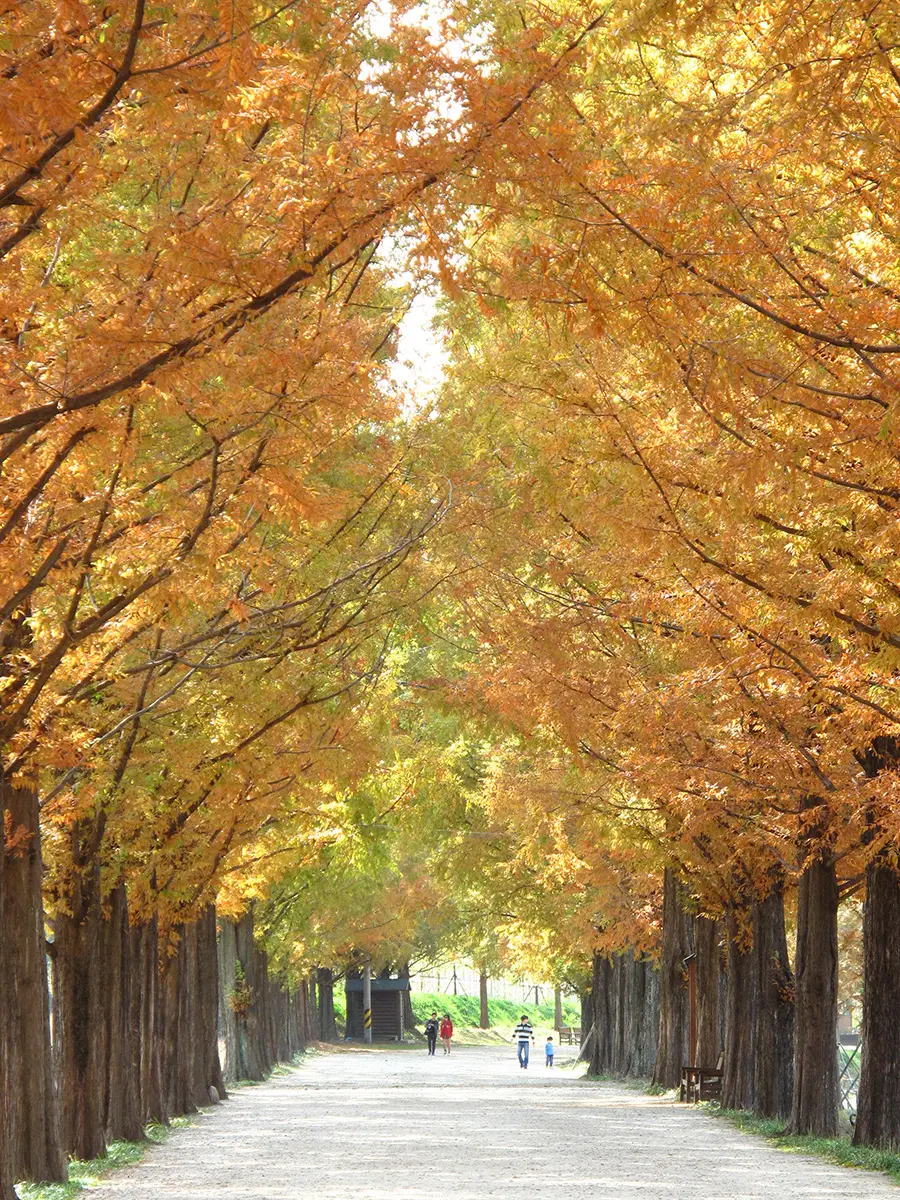
East of Gwanbangjerim, the old road out of town runs between rows of metasequoias 10 to 20 metres tall. According to the county, the first 1,300 young trees were planted in 1972 along National Road 24, when the county found the money despite a tight budget, and more were added along roads leading into town over the following years. When a later road project threatened the avenue, local opposition led the new route to be moved. Part of the old road is now a car-free walking section called Metasequoia Land, open 09:00–18:00 with a small admission fee.
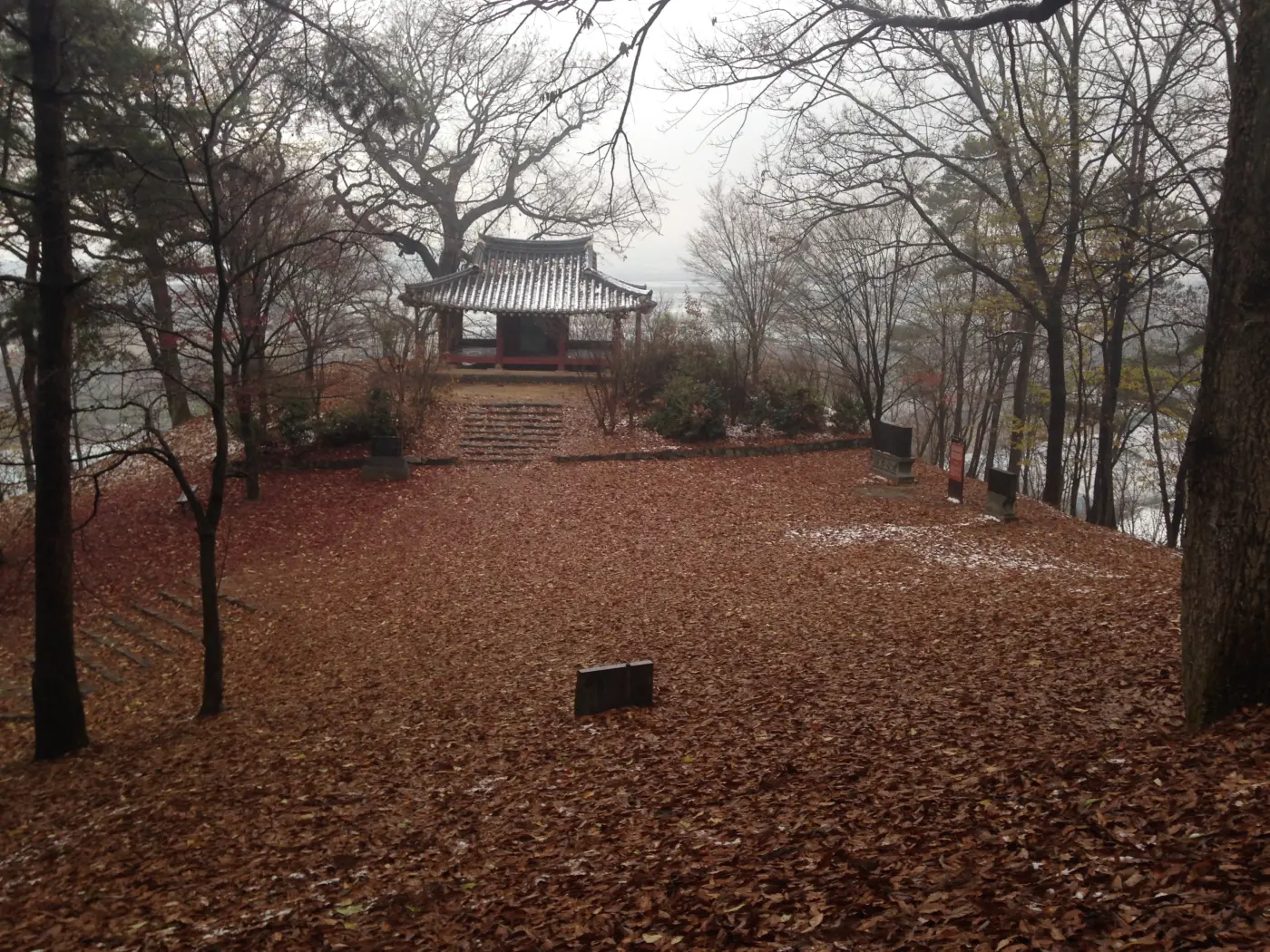
The county recommends summer, when the trees form a deep green tunnel. In late autumn the needles turn a rusty orange, as in the photo below, and in winter the bare trunks make a clean outline against the sky. The avenue is flat and suits a walk or a bicycle ride; it is not a place to stand in the road for photos where cars still run.
Soswaewon: a Joseon scholar's garden
Soswaewon is one of Korea's best-known private gardens from the Joseon period, designated a national Scenic Site in 2008. The Korea Heritage Service and the county tell the same story: when the reformist scholar Jo Gwang-jo was exiled and died after the purge of 1519, his student Yang San-bo (1503–1557) gave up on an official career and returned home to build a garden in the woods, around 1530. The name, meaning roughly "clear and clean", was given by Song Sun, the poet of Myeonangjeong. The garden is laid out along a mountain stream that flows in under its earthen wall.
Of the ten or so original structures, only a few remain: Gwangpunggak, a pavilion for guests beside the stream; Jewoldang, the owner's study on higher ground; and the small Daebongdae near the entrance. A woodblock image carved in 1755 shows how the whole garden once looked. The heritage record gives an area of about 4,060 square metres, so a visit is about slowing down rather than covering ground. The approach is through a bamboo grove.
Hours vary by month: 09:00–18:00 in March, April, September and October; 09:00–19:00 from May to August; and 09:00–17:00 from November to February. The county, the garden's own site and VisitKorea all give the same times, and none of them lists a regular closing day. Soswaewon is in Gasamunhak-myeon, on the Gwangju side of the county. The garden's site lists Gwangju city bus 187, which runs about once an hour, and bus 225 from Gwangju's bus terminal, with seven runs on weekdays.
Gasa pavilions: Sigyeongjeong and Myeonangjeong
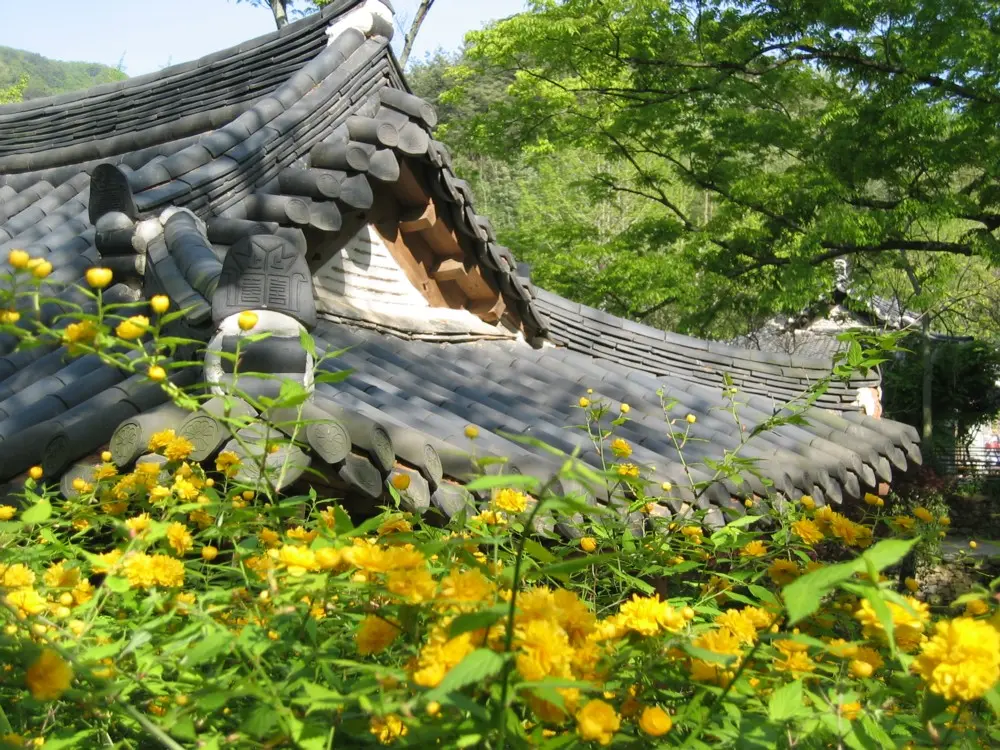
Damyang presents itself as the birthplace of gasa, a form of long verse in Korean that flourished in the middle Joseon period. The county explains that poets such as Song Sun and Jeong Cheol built pavilions and gardens here and wrote some of their best-known works in them. These are quiet places: a small pavilion on a rise, a view over water or fields, and boards of poems hanging under the eaves.
Sigyeongjeong, near Soswaewon, was built in 1560 by Kim Seong-won, and its name, "resting shadow", was given by his father-in-law, Im Eok-ryeong. The Korea Heritage Service credits Jeong Cheol with writing Seongsan Byeolgok and other poems here, and the area was designated a national Scenic Site in 2009. The Korea Gasa Literature Museum stands on the same road. Buses 187 and 225 both stop at the museum as well as at Soswaewon, so the three combine naturally into one half day.
Myeonangjeong, in Bongsan-myeon, is where Song Sun retired in 1533 to teach and discuss learning with visiting scholars. According to the heritage record, the original pavilion was destroyed in 1597 during the Imjin War and rebuilt by his descendants in 1654; the plain three-bay building is now a regional monument. A taxi from Damyang town is the simplest way to reach it. The county's one-day gasa course links Soswaewon, the Gasa Literature Museum, Sigyeongjeong, the slow-city village in Changpyeong, Myeongokheon garden (known for its crape myrtles in summer), Songgangjeong and Myeonangjeong, which is realistic with a car or taxi.
What to eat in Damyang
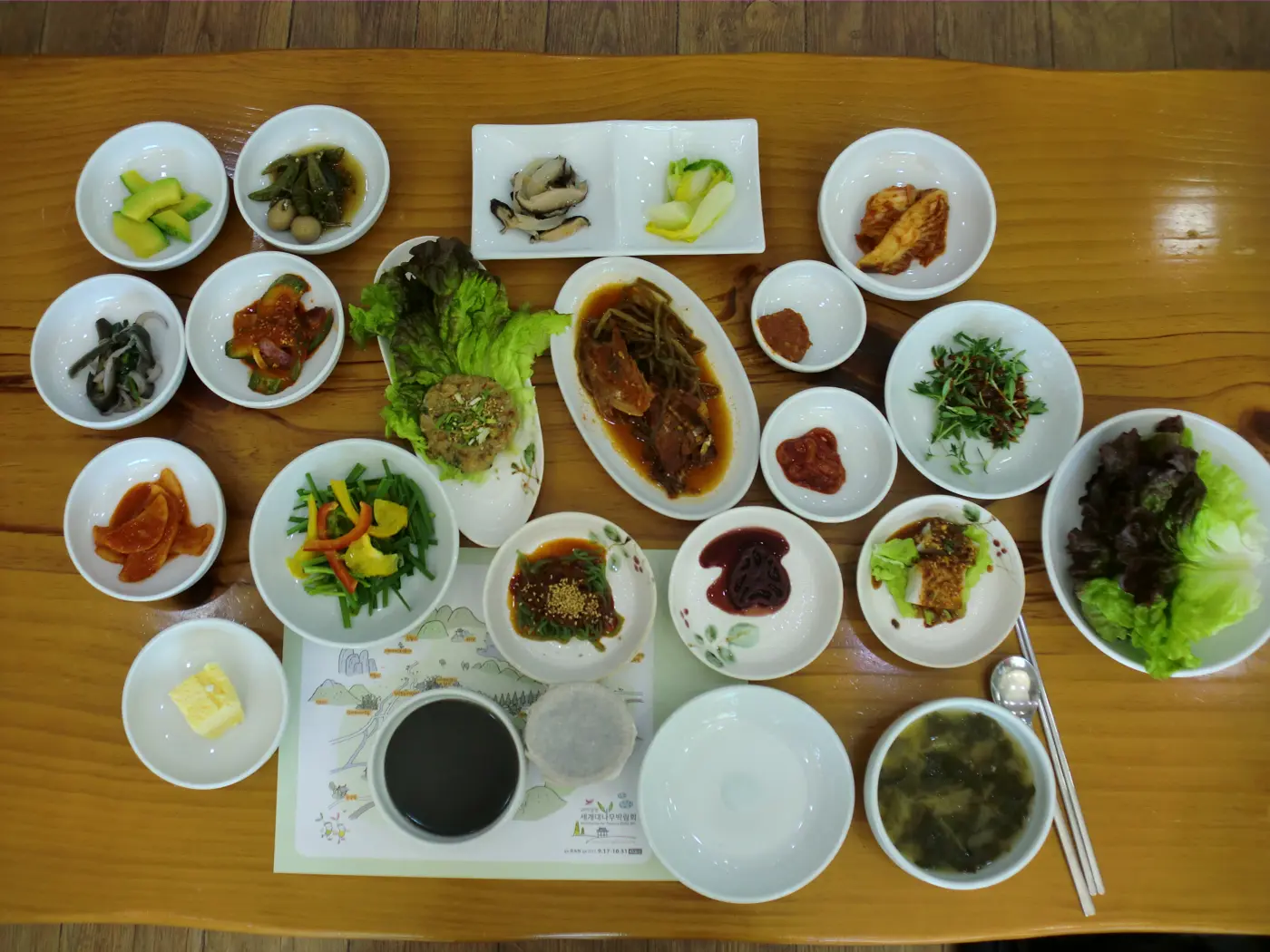
The county keeps a list of signature dishes, and two stand out for visitors. Tteokgalbi is the best known: the county describes beef rib meat cut from the bone, minced, shaped into a round patty and set back on the bone to grill. Pork and duck versions appear on the same list. Daetongbap is rice steamed inside a section of thick bamboo together with glutinous rice, ginkgo nuts and chestnuts; it usually comes as a set meal with many side dishes, and lifting the thin cover releases the scent of the bamboo.
Other dishes on the county's list include bamboo-shoot dishes, the anchovy and bibim noodles of the Gwanbangjerim street, braised catfish, and gukbap rice soup in Changpyeong, which has its own gukbap street. Our guide to eating out in Korea covers ordering and side dishes, and our food page on galbi explains the marinated rib dish that shares its name with tteokgalbi.
A day trip from Gwangju
Damyang splits naturally into two halves: the bamboo town in the north and the gardens and pavilions in the south. Doing both in one day by bus is possible but rushed, so pick one, or add a taxi between them.
- Bamboo day, morning: bus 311 or a direct bus from Gwangju to Juknokwon. Walk the trails and the culture village.
- Bamboo day, midday: noodles under the trees by Gwanbangjerim, or tteokgalbi or daetongbap in town.
- Bamboo day, afternoon: walk along Gwanbangjerim toward the Metasequoia road, then take the bus back to Gwangju.
- Garden day: bus 187 from Gwangju to Soswaewon, then on to the Gasa Literature Museum and Sigyeongjeong, which are on the same route. Return by 187 or 225, and check the timetable first, as both are infrequent.
- With a taxi or car: follow the county's gasa course from Soswaewon to Myeonangjeong, and finish at Juknokwon before last entry.
Damyang with Suncheon and the south coast
Damyang pairs well with Suncheon for two or three days in the region. One approach is to take the train from Seoul to Gwangju Songjeong, spend a day or a night in Damyang, then continue to Suncheon, which is on the Jeolla line: SR's route map lists Suncheon and Yeosu EXPO on the SRT Jeolla line from Suseo, so you can return to Seoul from there without doubling back. For the leg between Gwangju and Suncheon, check current intercity bus and train timetables. Our Suncheon Bay guide covers the wetland, the national garden and the temples, and our Yeosu guide covers the harbour city at the end of the line. Further north, Jeonju's hanok village is another classic stop, covered in our Jeonju guide; our Jeonju PDF city guide puts the city's main areas in one place.
When to go
Bamboo stays green all year, so Juknokwon works in any season; in summer the shade is the point, and in winter the shorter hours matter (last entry 17:30). The Damyang Bamboo Festival, held at Juknokwon and nearby venues, ran from 1 to 5 May in 2026, according to VisitKorea; check the festival listing for future dates. Late autumn brings rust-coloured metasequoias and fallen leaves around the pavilions, and Myeongokheon's crape myrtles flower in summer. Our guide to the best time to visit Korea covers weather by season.
Practical notes
- Damyang County's website has English and Japanese sections with short introductions to the main sights; the county's tourism pages in Korean are more detailed and more up to date.
- Juknokwon, Soswaewon, Metasequoia Land and the Korea Bamboo Museum charge small admission fees. The county's admission page lists current rates and the categories that enter free.
- Juknokwon's paths include steps and slopes; wear shoes with grip, especially after rain.
- Soswaewon and the pavilions are historic sites. Stay on the paths, do not climb on walls or stones, and keep voices low.
- Buses to the garden area are infrequent, so note the return times before you set off, particularly in winter when Soswaewon closes at 17:00.
Comments
Sign in to leave a comment.
Sign in ·No account? Create one
Confirm your email address to comment — it takes one click.
No comments yet.