
Vegetarian and Vegan in Korea: How to Eat Well
Anchovy broth and salted shrimp hide in Korean food. Which dishes are safe, what to say in Korean, and why temple food is a vegetarian's best friend.
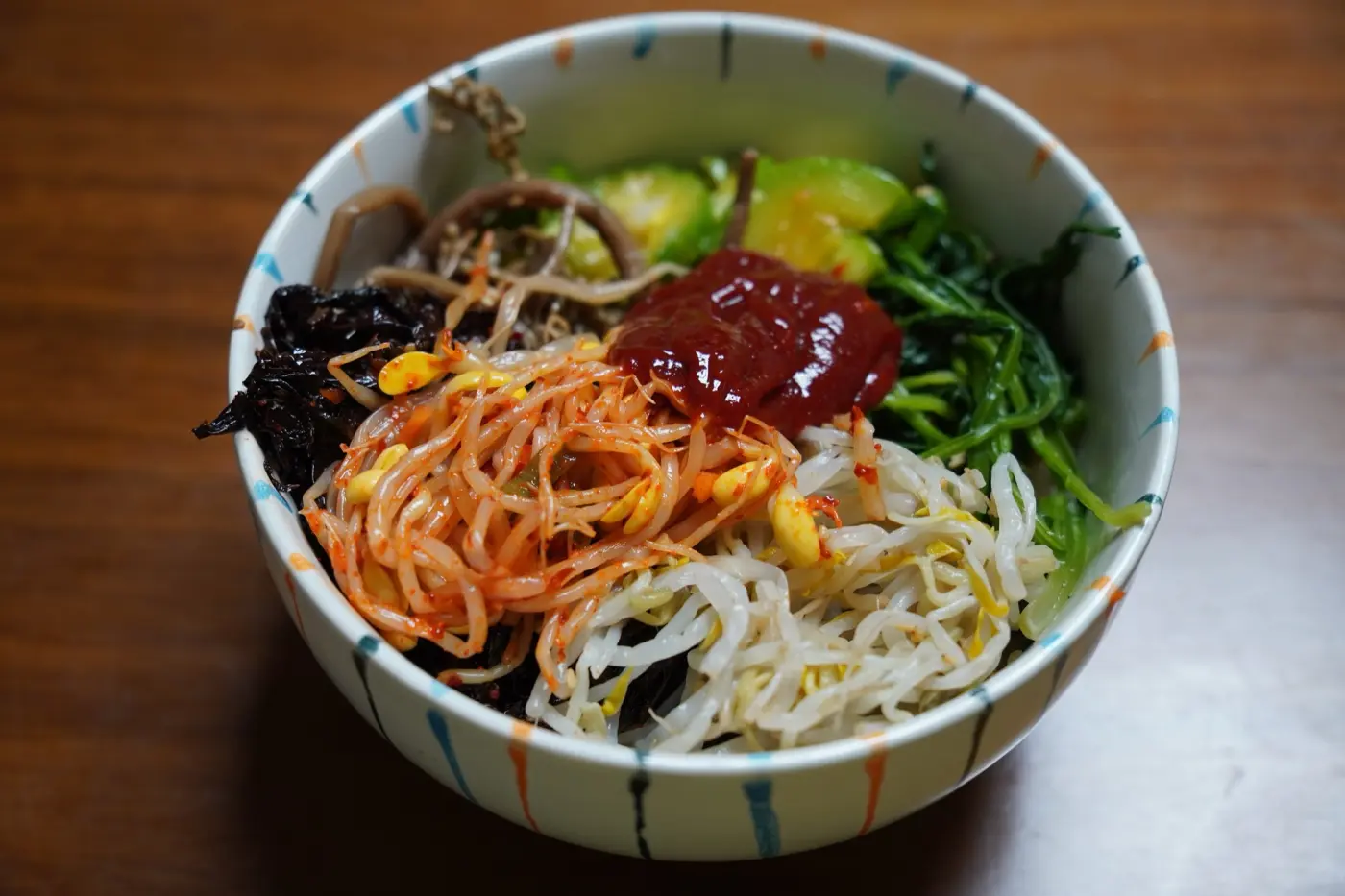
Korean food looks like a vegetarian's dream at first glance. A table fills up with little dishes of greens, sprouts, radish and spinach, there is tofu in half the stews, and the most famous rice dish in the country is a bowl of mixed vegetables. Then someone tells you that the kimchi has fish in it, the clear noodle soup was made with anchovies, and the "vegetable" pancake had seafood in the batter, and the dream gets complicated.
We live here, and we will be honest with you: eating strictly vegetarian, and especially vegan, takes more effort in Korea than in many Western cities. But it is entirely doable, and it is getting easier. The official VisitKorea guide for vegetarians notes that the number of vegetarians in Korea keeps rising and that vegetarian restaurants, bakeries and dessert cafés are increasing with it. This guide explains where animal products hide, which dishes are naturally plant-based or easy to adapt, why temple food is the safest tradition to lean on, and exactly what to say and show when you order.
Why it can be tricky: the parts you cannot see
The problem is rarely the meat you can see. It is the flavour that was built before anything reached the bowl. VisitKorea puts it plainly: Korean food is often prepared with meat and fish broth, and many restaurants do not have separate menus for vegetarians. A pot of soup or stew usually starts with stock made from dried anchovy, clams or beef bone. Once the dish is served, none of that can be picked out, and a bowl of noodles in a clear broth can be standing on fish.
The second hidden layer is jeotgal, salted and fermented seafood. Tiny salted shrimp, anchovy sauce and other fish sauces are used as seasoning far beyond the dishes that taste of the sea. VisitKorea's vegetarian guide warns that many people assume kimchi is vegetarian, when in fact kimchi seasoning most often contains salted seafood, fish sauce, meat broth or similar flavouring ingredients, and some regional recipes add abalone, cutlass fish or pork. The same guide notes that tofu dishes such as soft tofu stew and braised tofu mostly have salted shrimp added for flavour.
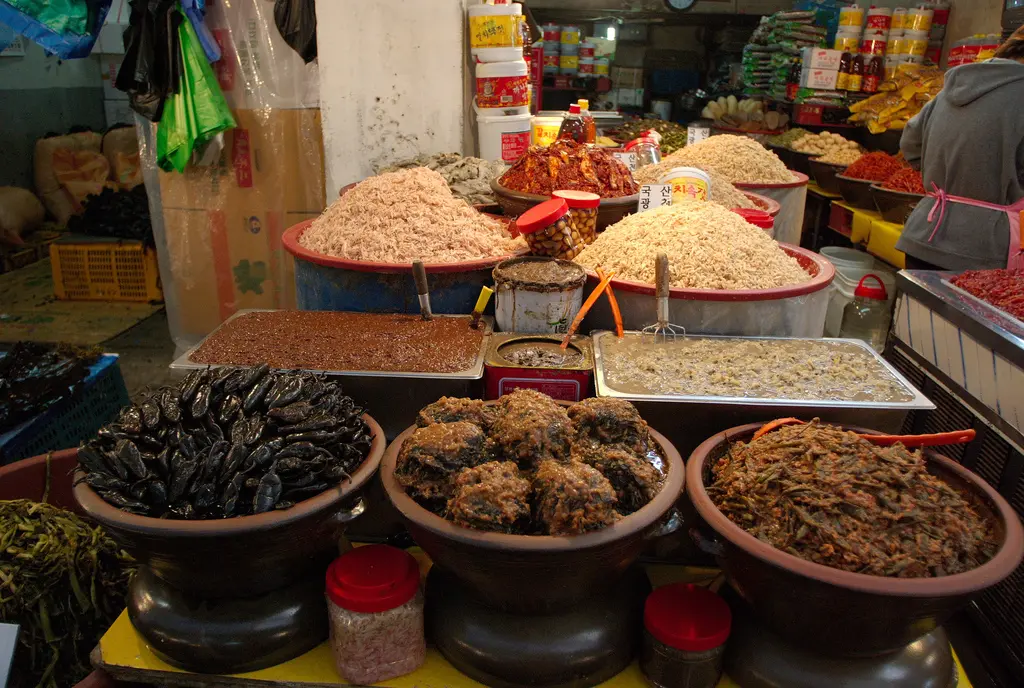
Third, small amounts of meat turn up where you would not expect them: a little minced pork in a stew, ham in a "vegetable" roll, a fried egg on top of a bowl of greens. None of this is anyone trying to trick you. In many Korean kitchens, a dish "without meat" simply means a dish without visible chunks of meat, and the stock or the seasoning does not count as an ingredient in the cook's mind. That is why the questions you ask matter more than the menu name.
Dishes that are vegetarian, or close: a quick guide
The good news is that a handful of everyday dishes are plant-based, or can be made that way with one sentence. Use this table as a starting point, not a guarantee; recipes change from kitchen to kitchen.
| Dish | Usually vegetarian? | Watch out for |
|---|---|---|
| Bibimbap (비빔밥), rice with mixed vegetables | Can be, on request | Most versions are topped with meat and egg. Ask for both to be left out. |
| Yachae gimbap (야채김밥), vegetable rice roll | Often | Some shops still add ham, egg or imitation crab. Check before ordering. |
| Kongguksu (콩국수), noodles in cold soybean broth | Often | An egg may be added as a garnish. |
| Jeon (전), savoury pancakes: vegetable, potato, green onion, mushroom | Often | Egg is sometimes mixed into the batter. Seafood pancake (haemul pajeon) is not vegetarian. |
| Muk (묵), acorn or mung bean jelly, often as a salad | Often | Check what is in the seasoning sauce. |
| Namul (나물), seasoned vegetable side dishes | Often | Seasoning can include fish sauce. Ask if you are strict. |
| Kimchi (김치) | Rarely | Usually seasoned with salted seafood or fish sauce, sometimes meat broth. |
| Tofu stews and braised tofu | Not as usually served | Salted shrimp is common; soft tofu stew often has clams or pork. |
| Soups, stews and noodle soups | Rarely | Anchovy, clam or beef-bone stock, even when the visible ingredients are vegetables. |
| Temple food (사찰음식) | Yes, by tradition | No meat or fish, but dairy is not excluded, so vegans should ask. |
Bibimbap, gimbap and noodles: easy wins with one sentence
Bibimbap is the obvious first order. VisitKorea describes it as mixed vegetables and rice with gochujang (chili paste) or soy sauce, and advises that because most versions come with meat and egg on top, you should ask for those to be left out when you order. Versions built around wild mountain greens, often called sanchae bibimbap, are a particularly good choice because the vegetables are the whole point of the dish.
Gimbap, rice and fillings rolled in seaweed, is the snack you will see everywhere from train stations to 24-hour snack shops. The name usually tells you the special ingredient: chamchi gimbap has tuna, cheese gimbap has cheese. The official recommendation for vegans is the basic vegetable roll, yachae gimbap, which mostly contains carrot, burdock root, spinach and pickled radish. Even so, some shops add ham, egg and imitation crab to their vegetable version, so ask.
In summer, look for kongguksu, wheat noodles in a cold, thick broth of ground soybeans. VisitKorea lists it as suitable for vegetarians, with the caveat that an egg may be placed on top. Savoury pancakes (jeon) are another reliable option: vegetable, potato, green onion and mushroom pancakes are all on the official list, though some recipes put egg in the batter, which matters if you are vegan.
Side dishes, muk and tofu
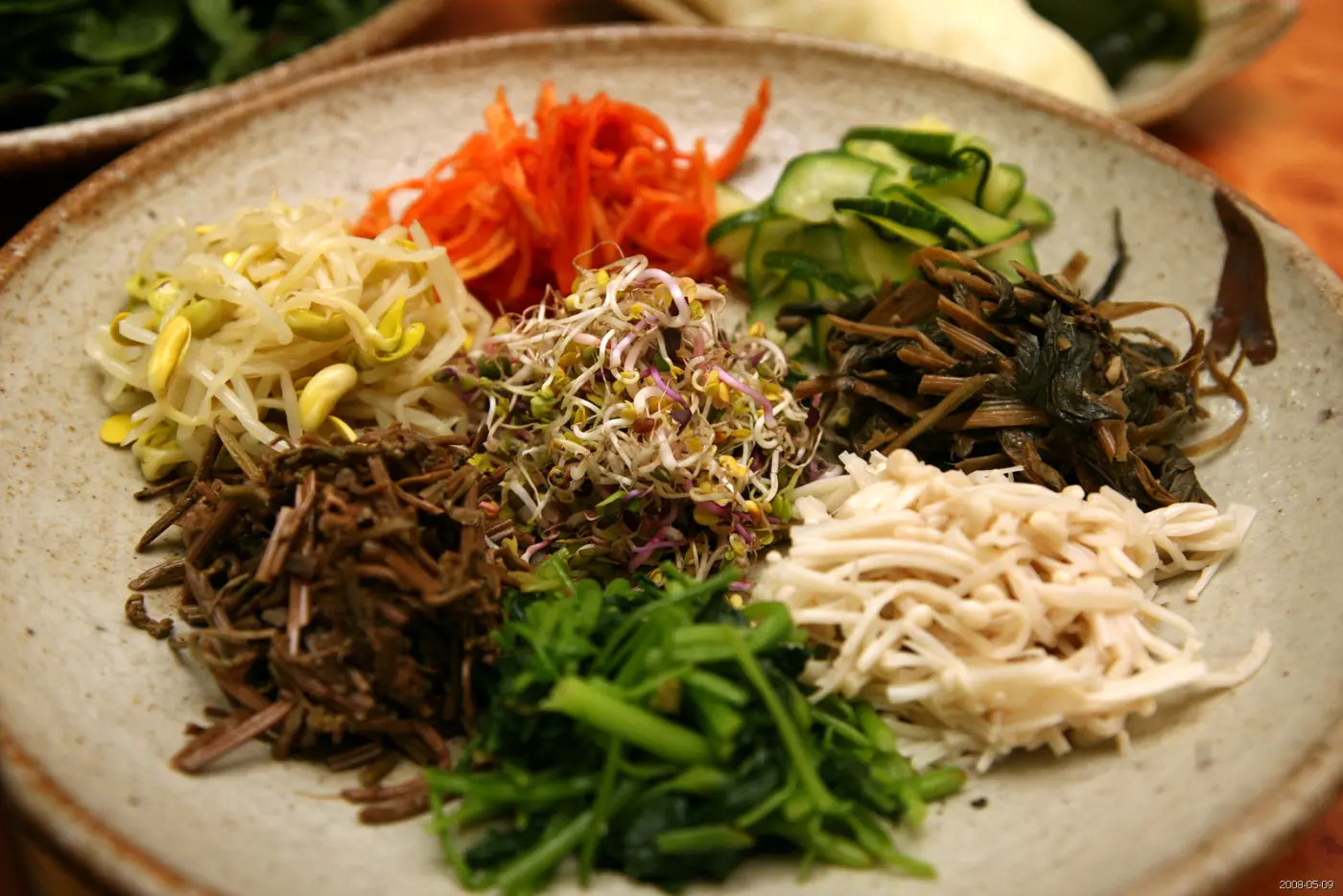
Banchan, the free side dishes that come with most meals, are where vegetarians often eat best. Seasoned soybean sprouts, spinach, bracken and radish are common; soybean sprouts, for example, are usually just blanched and dressed with sesame oil. The catch is that they change from restaurant to restaurant and nothing on the table tells you how each one was seasoned. If you avoid fish completely, ask about fish sauce before you dig in, and treat kimchi as not vegetarian unless you are told otherwise.
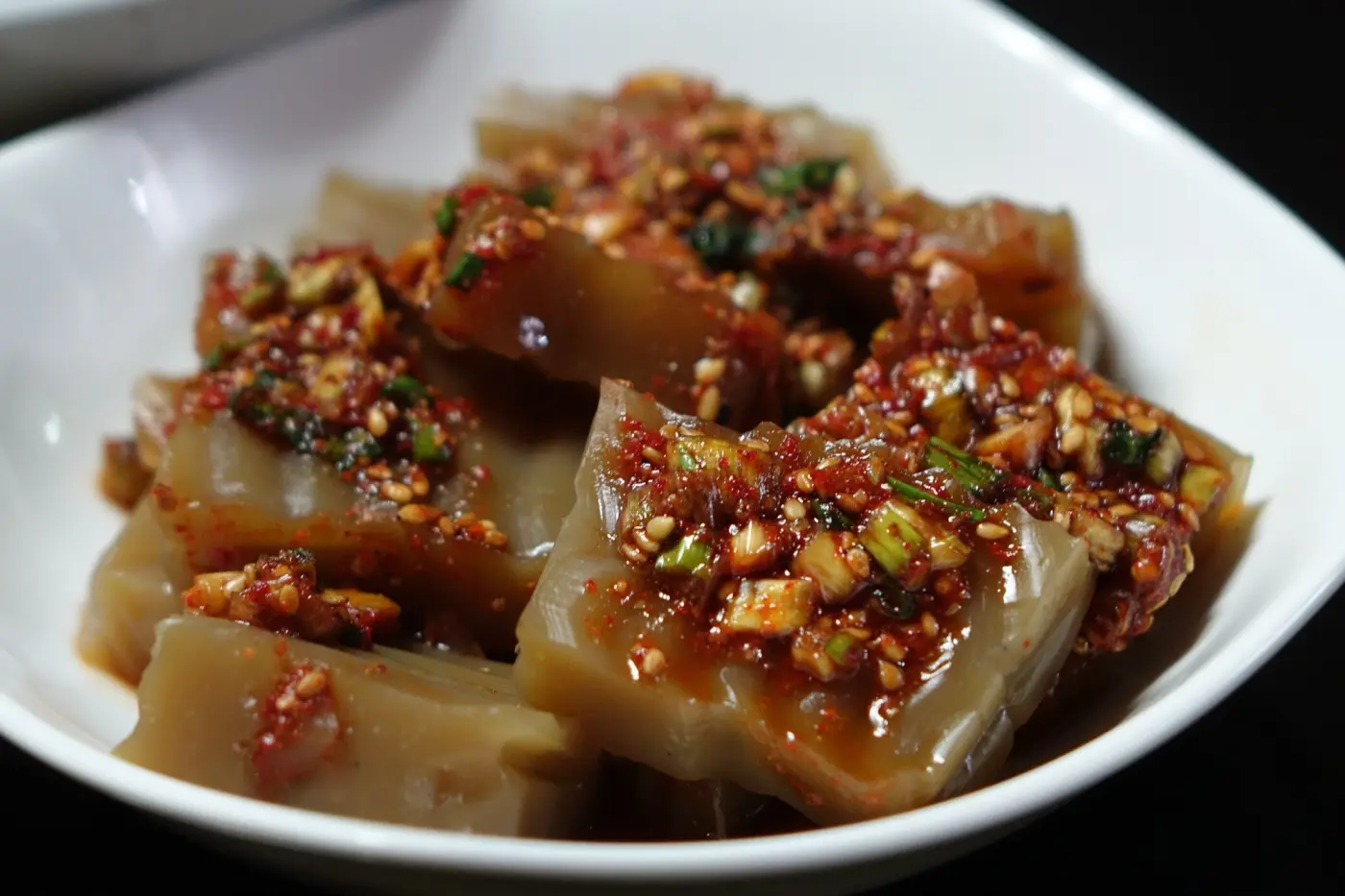
Muk is a soft jelly made from acorn, buckwheat or mung bean starch. The most common version, dotori muk muchim, is acorn jelly tossed with fresh vegetables and a soy-based dressing, and it turns up both as a side dish and as a dish of its own. Tofu is everywhere too, and VisitKorea suggests vegetarians enjoy it plainly, either soft with soy sauce or pan-fried in slices, since many cooked tofu dishes include salted shrimp.
Temple food: the safest tradition
If one corner of Korean cooking was designed with you in mind, it is sachal eumsik, Buddhist temple food. In May 2025 the Korea Heritage Service designated temple food as a National Intangible Cultural Heritage. According to Korea.net, it is based on Buddhist precepts: it is vegetarian and excludes meat and fish, as well as the five pungent vegetables, garlic, green onion, chives, Korean wild chives and a type of leek called heunggeo, which monks traditionally avoid. Korea.net adds that during the Joseon dynasty temples were major producers of fermented foods such as tofu, meju and soybean pastes, and that recipes differ from temple to temple.
There is one detail vegans should notice. VisitKorea's temple food guide says the cuisine excludes animal-based ingredients except dairy. In practice most temple dishes are built on vegetables, mushrooms, kelp, beans and grains, but if you avoid dairy entirely, it is still worth asking. Garlic and onion lovers should also expect gentler flavours than at a typical Korean restaurant.
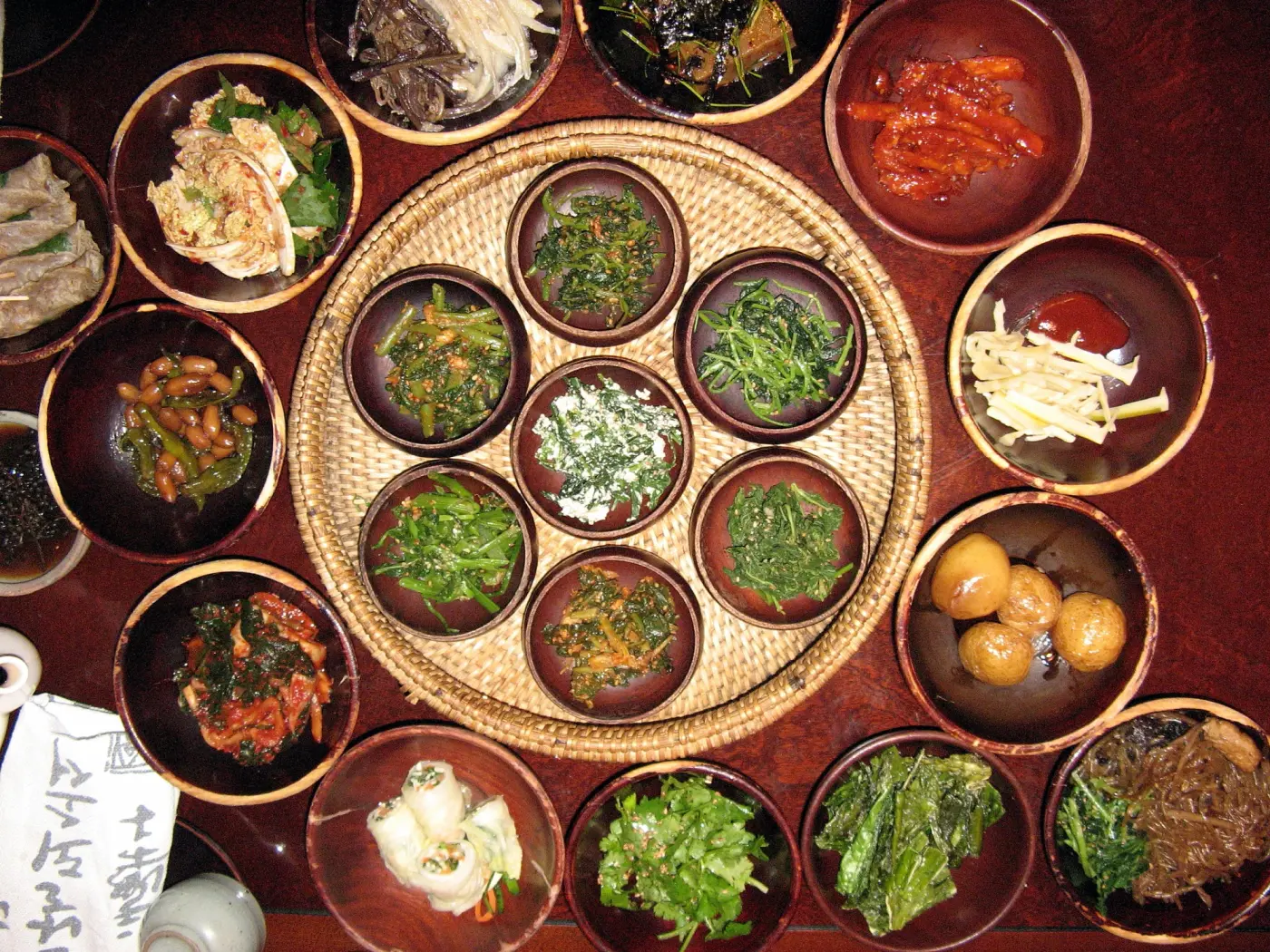
You can taste temple food in three ways. The first is a temple food restaurant. VisitKorea highlights Balwoo Gongyang, a restaurant operated by the Jogye Order of Korean Buddhism opposite Jogyesa Temple in central Seoul. The second is a cooking class: the same VisitKorea guide points to the Korean Temple Food Center in Jongno, Seoul, which runs exhibitions and classes. The third, and the most immersive, is to eat it where it was born, during a templestay. Our templestay guide explains what the meals are like and how the formal monastic meal works.
How to ask: phrases that actually work
VisitKorea's advice is to tell the server about your diet clearly and in advance, and to list exactly which ingredients must be left out, preparing the phrases before you go. We agree, with one addition: show the Korean on your phone rather than relying on pronunciation. Written words get a clearer answer at a busy counter. These are the lines we would use:
- 저는 채식주의자예요 (jeoneun chaesikjuuijayeyo): I am a vegetarian.
- 저는 비건이에요 (jeoneun bigeonieyo): I am vegan.
- 고기 없이 만들 수 있어요? (gogi eopsi mandeul su isseoyo?): Can this be made without meat?
- 고기랑 계란 빼 주세요 (gogirang gyeran ppae juseyo): Please leave out the meat and egg.
- 이 국물에 멸치나 조개가 들어 있어요? (i gungmure myeolchina jogaega deureo isseoyo?): Is there anchovy or shellfish in this broth?
- 젓갈이나 액젓이 들어 있어요? (jeotgarina aekjeosi deureo isseoyo?): Does this have fermented seafood or fish sauce in it?
- 잘 모르시면 안 먹을게요. 괜찮습니다. (jal moreusimyeon an meogeulgeyo. gwaenchansseumnida.): If you are not sure, I will skip it. That is fine.
Notice that the most important question is about the broth, not the visible ingredients. "Without meat" often produces a dish with no meat on top and the same stock underneath. Ask before you order, too: once a dish is cooked, a question becomes a problem for the kitchen.
The allergy-card approach
Strict vegetarians and vegans can borrow a trick from travellers with food allergies: carry a short written card that lists what you do not eat, in Korean, and hand it over before ordering. It is worth knowing the legal background, which our food allergy guide covers in detail. Korea's labelling rules list a fixed set of allergens for packaged food, but most ordinary restaurants have no duty to declare ingredients at all, so the question has to come from you. Also note that fish other than mackerel is not on that allergen list, so an allergen box will not warn you about anchovy.
Convenience stores and supermarkets: reading labels
Packaged food is easier, because the label has to tell you what is inside. Under Korea's food labelling standards, ingredients are listed under 원재료명 (wonjaeryomyeong) in order of the amount used. One catch for strict eaters: a compound ingredient, such as a seasoning mix, may be shown by name with at least five of its components in brackets, and if it makes up less than five percent of the product, only its name may appear. Your phone's camera translation handles these labels well. Words worth recognising include 돼지고기 (pork), 쇠고기 or 소고기 (beef), 닭고기 (chicken), 멸치 (anchovy), 새우 (shrimp), 액젓 (fish sauce), 우유 (milk) and 계란 or 달걀 (egg).
For vegans, VisitKorea suggests looking for a certified vegan logo, and names several certification bodies that issue such marks, including the Korea Agency of Vegan Certification and Services, The Vegan Society and V-Label. A logo saves you reading the small print altogether.
Vegan restaurants in Seoul
Seoul now has a real vegan scene, and the city's official tourism site, Visit Seoul, carries listings for dedicated vegan restaurants. Among them are Vegan Kitchen in Myeongdong, which serves plant-based Korean dishes such as stir-fried noodles and soft tofu rice; PLANT, a fully vegan restaurant and bakery café in the Itaewon area; and Cosmos Shop Seongsu, a vegan brunch café with a grocery corner of plant-based products. Itaewon in particular has several vegan places within a short walk of each other. Hours and menus change, so check the current listing before you go. Outside Seoul, temple food restaurants and the dishes in the table above are your best bet.
Korean barbecue is less of a dead end than it sounds, too. The lettuce, perilla leaves, garlic and many side dishes are plant-based, although the soybean-paste stew served at the end is usually made with stock. Our barbecue guide explains how the table works.
What to relax about
Nobody in Korea will think your diet is strange, and servers are generally happy to help once they understand what you need. What makes it hard is invisibility, not hostility. Decide in advance how strict you need to be: if a trace of fish sauce in a side dish is acceptable to you, eating out becomes very easy; if it is not, lean on temple food, dedicated vegan restaurants, the safer dishes above and clearly labelled packaged food. Either way, a few written sentences and a little patience will take you a long way, and the vegetables here, from mountain greens to acorn jelly, are worth the effort.
Comments
Sign in to leave a comment.
Sign in ·No account? Create one
Confirm your email address to comment — it takes one click.
No comments yet.