
Gyeongju in Two Days: A First-Timer's Itinerary
A realistic two-day plan for Gyeongju, Korea's old Silla capital: royal tombs, Cheomseongdae, Wolji Pond at night, Bulguksa and how to get around.
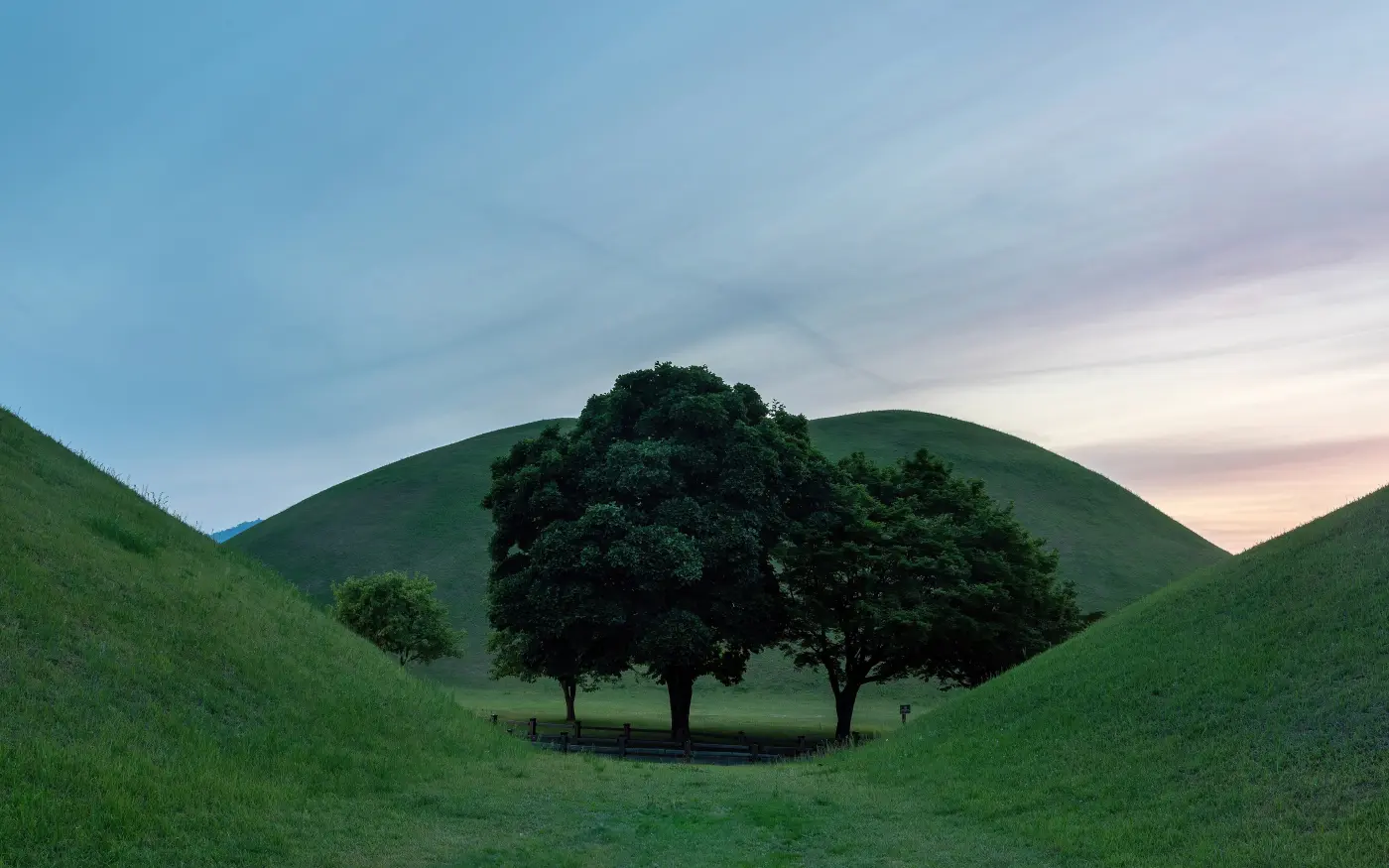
Gyeongju is the city Koreans visit on school trips, and the one foreign visitors most often squeeze into a single rushed day from Busan. It deserves a little more than that. For close to a thousand years it was the capital of the Silla kingdom, and the old capital was never fully built over: grass-covered royal tombs rise between ordinary houses, a seventh-century stone observatory stands in an open field, and the great temple in the hills outside town is still a working temple.
This guide is for a first visit with two days. It follows the shape most locals would suggest: the flat old centre on foot on day one, finishing at Wolji Pond after dark, and the two mountain sites, Bulguksa and Seokguram, on day two. It is also honest about what to drop if you only have one day, because plenty of people do.
Why Gyeongju matters
Silla ruled from here from 57 BC to AD 935. What survives of that capital is grouped as the Gyeongju Historic Areas, which UNESCO added to its World Heritage List in November 2000. VisitKorea, the national tourism organisation, explains that the listing is divided into five areas: Namsan, the mountain south of town scattered with rock-carved Buddhas and pagodas; Wolseong, the old palace district that includes Cheomseongdae Observatory and Donggung Palace and Wolji Pond; the Daereungwon tomb area; the site of Hwangnyongsa Temple; and the Sanseong area, the remains of the capital's mountain fortress. Between them they hold 52 designated cultural assets.
A second, separate World Heritage listing, made in December 1995, covers Bulguksa Temple and Seokguram Grotto in the hills outside the centre. Put simply, the first group is the royal city and the second is its Buddhist high point. The practical difference for a visitor is that most of the first group sits in a compact, flat part of town you can walk in an afternoon, while the second needs a bus or a taxi.
Getting there: the KTX, and a station name that confuses everyone
VisitKorea's rail guide describes the Gyeongbu Line, the 447.1-kilometre route between Seoul and Busan, as the busiest in the country and notes that it gives easy access to culture-rich cities such as Gyeongju. High-speed trains stop at Gyeongju Station (경주역). The first thing to know is that the station is not in the old centre. The city's own transport page lists its address in Geoncheon-eup, west of town, so plan on a city bus or a taxi at the end of the train ride. If you are coming from Busan it works the same way in the other direction, which is why Gyeongju is so often paired with Busan on a longer trip.
The second thing is the name. The high-speed station used to be called Singyeongju (신경주, literally "New Gyeongju"), while the name Gyeongju Station belonged to an older station in the middle of town. A city bulletin from 2022 explains that the old downtown station stopped operating when a new double-tracked line through the city opened, and the name has since moved to the high-speed station. Older maps, blog posts and even some official pages still say Singyeongju. If you see it, it is the same place.
Booking works as it does anywhere else in Korea, and our KTX guide covers it. If you would rather take the bus, express buses from Seoul arrive at the bus terminals on the edge of the old centre, which saves the transfer from the station.
Getting around: walk, cycle, then bus or taxi for the hills
Inside the old centre, walk. The tomb park, Hwangnidan-gil, Cheomseongdae, Gyochon village and Donggung Palace are close together, and the ground is flat. That flatness is also why our regional page recommends a bicycle here more than almost anywhere else in Korea.
Gyeongju's tourism site suggests a gentle half-day cycling route of about 10.7 kilometres that strings together Bunhwangsa Temple, the Hwangnyongsa temple site, the national museum, Woljeonggyo Bridge and Hwangnidan-gil. It says rental shops cluster near the express bus terminal, near the old downtown station and near Daereungwon. One rule catches visitors out: under Korean road law a bicycle counts as a vehicle, so where there is no bike path you ride on the road, keeping to the right, not on the pavement.
For the hills, the city points visitors to two bus routes, 10 and 11, which run the same loop in opposite directions: from the bus terminals through the Cheomseongdae area and the Bomun Lake resort to Bulguksa and back past the national museum and Donggung Palace. The city puts the gap between buses at roughly 20 minutes and the trip from the terminal to Bulguksa at around 35 to 45 minutes depending on traffic, and it suggests checking live arrivals in a bus-information app rather than waiting at the stop on faith. Taxis fill the gaps, especially to and from the KTX station and up to Seokguram. Having the Korean names ready on your phone makes every ride easier.
Day 1: the old centre, ending at Wolji Pond
Start at the Daereungwon tomb park in the morning, while it is quiet. The mounds here are the graves of Silla royalty, and walking between them is the moment Gyeongju starts to make sense. VisitKorea notes that Cheonmachong, excavated in 1973, is the only tomb in the park with its interior open to the public, and nearby Hwangnamdaechong is a pair of twin mounds thought to belong to a married couple. At the time of writing (October 2026), VisitKorea lists the park itself as free and Cheonmachong at 3,000 won for adults, with opening hours of 09:00 to 22:00.
Next to the tomb park is Hwangnidan-gil, a few streets of cafés, restaurants, photo studios and small shops, many in traditional-style buildings. It is the obvious place for lunch, and it can be crowded at weekends. Shops change quickly here, so rather than chase a particular name, walk a block or two away from the main street and see what is open.
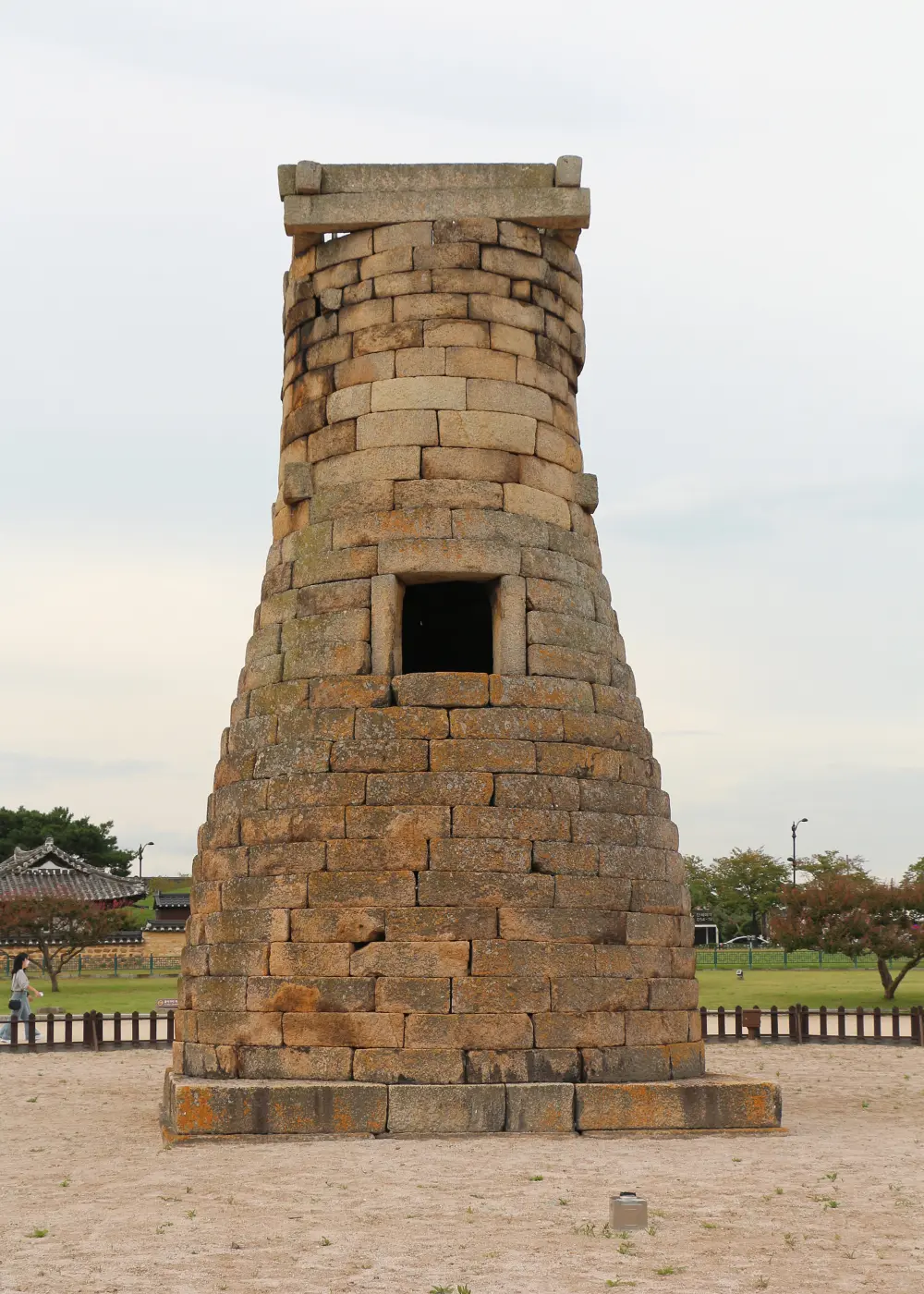
In the afternoon, cross to Cheomseongdae. VisitKorea dates it to the reign of Queen Seondeok (632–647) and gives its height as about nine metres. The same page reads meaning into the masonry, linking the number of stones to the days of the year and the 27 courses to Queen Seondeok as Silla's 27th ruler. It is one of the oldest surviving astronomical observatories anywhere. The grounds are free and open into the evening (VisitKorea lists 09:00 to 22:00 in summer and to 21:00 in winter), so if the light is better later, come back.
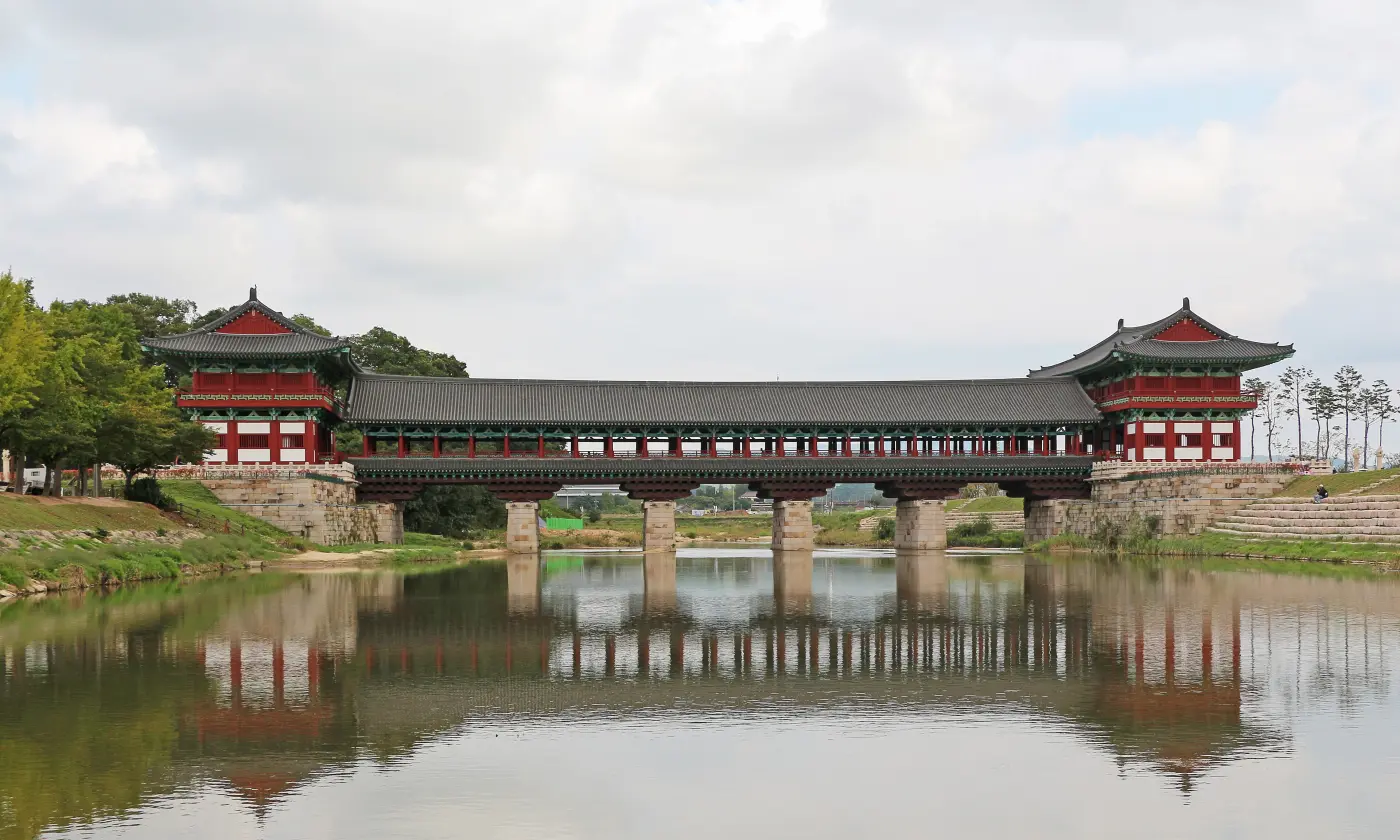
From there the paths lead past the woods and fields of the old palace district towards Gyochon, a village of traditional houses best known for the old house of the Choi family, and the river crossing at Woljeonggyo Bridge. The bridge is a reconstruction: VisitKorea records that it was built in 760, burned down during the Joseon dynasty and reopened in April 2018 after years of research, as the largest wooden bridge in Korea. It is free to walk across and open until 22:00, and it is lit at night.
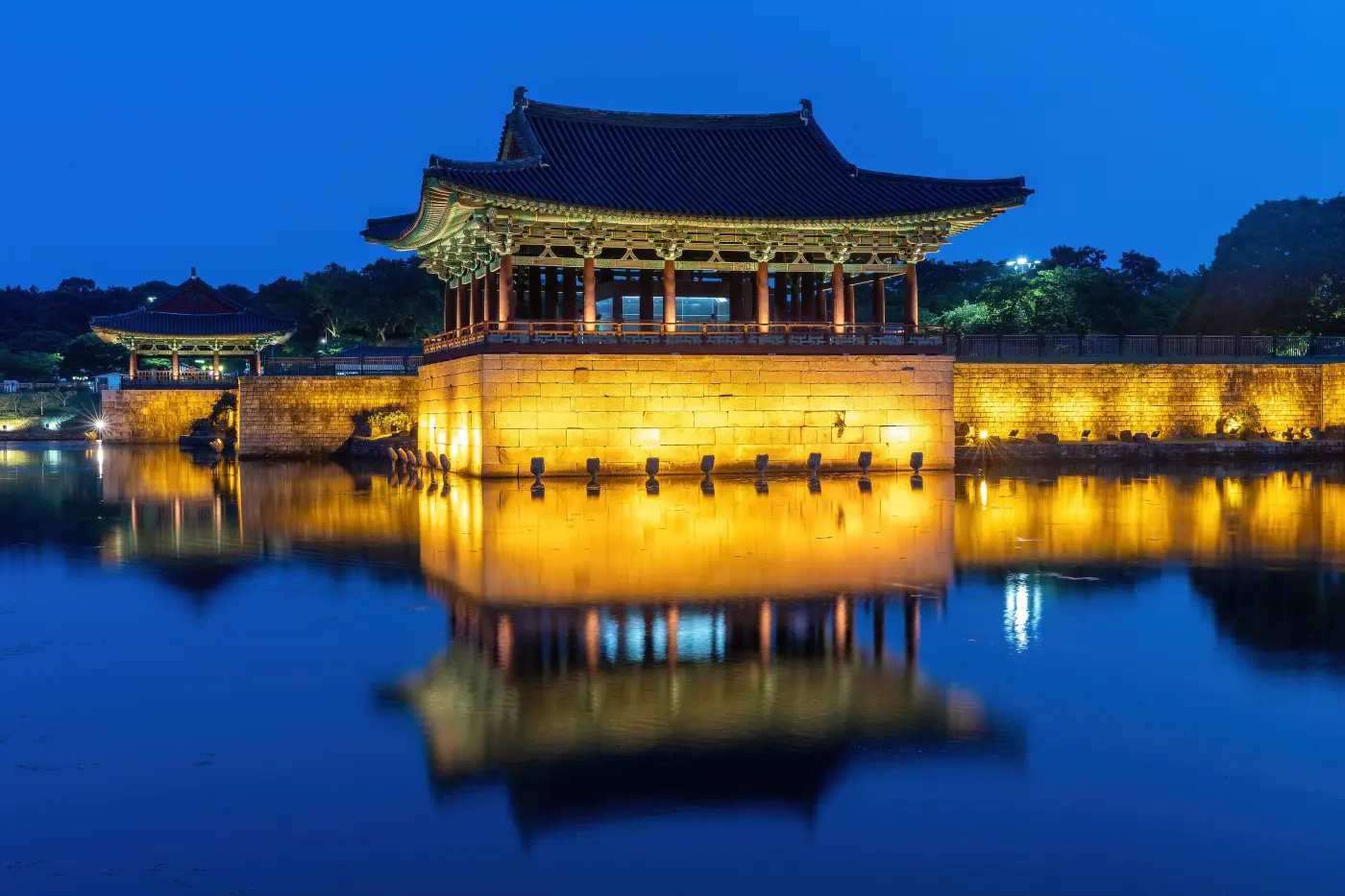
Save Donggung Palace and Wolji Pond for after dark. This was a secondary palace where the crown prince lived and where banquets were held. VisitKorea says King Munmu had the pond dug in 674, after Silla unified the three kingdoms, with three small islands in the middle. For centuries it was known as Anapji; pottery inscribed with the word Wolji, "a pond that reflects the moon", was found in the 1980s, and the old name returned. As of October 2026 VisitKorea lists hours of 09:00 to 22:00 with last admission at 21:30, and admission of 3,000 won for adults. Expect company at dusk: the city's tourism site calls it Gyeongju's number-one night view.
Day 2: Bulguksa and Seokguram
Head for Bulguksa early. VisitKorea traces the temple to the reign of King Beopheung, with a major rebuilding in 751 under Kim Dae-seong. It burned during the Imjin War of 1592 to 1598, and restoration work has continued since the twentieth century. Today it holds seven national treasures. Take time over the stone terraces and staircases beneath the wooden halls, not just the halls themselves. VisitKorea lists entry as free and hours of 09:00 to 18:00 at the time of writing; arriving at opening time beats the tour buses.
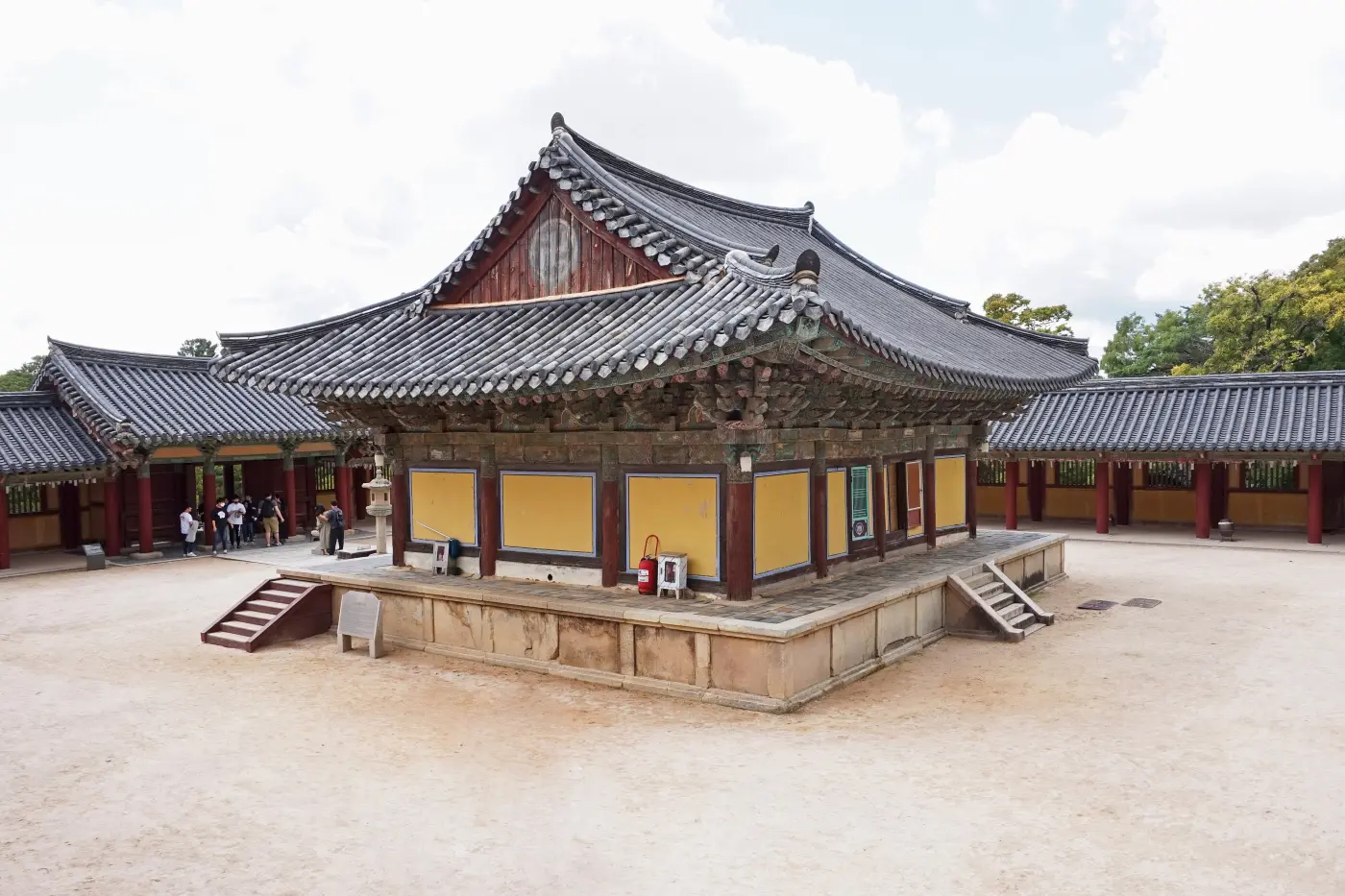
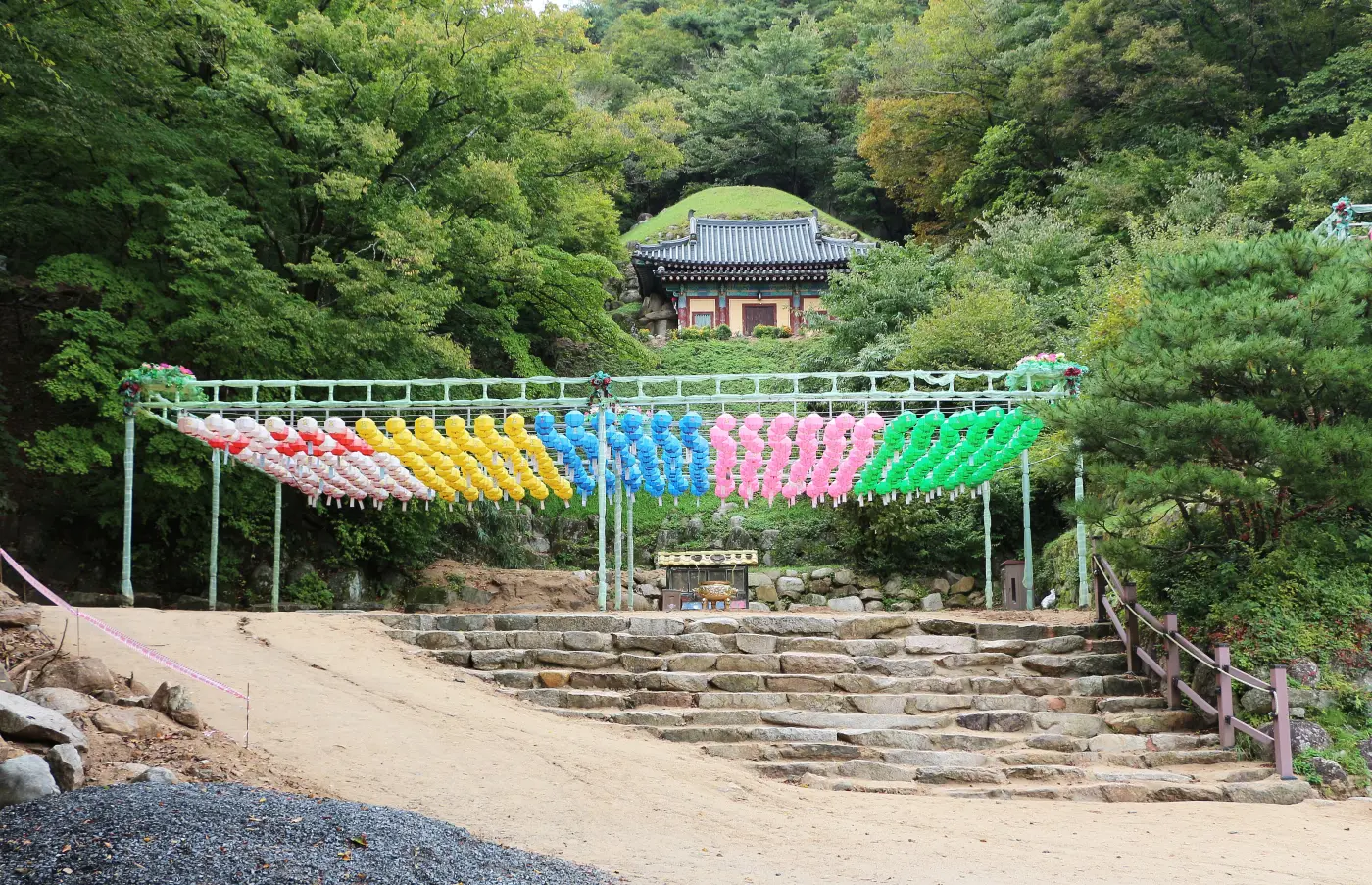
Seokguram is the grotto above the temple: a granite seated Buddha in an artificial cave, built under King Gyeongdeok (742–765), again by Kim Dae-seong, and facing towards the East Sea. VisitKorea puts it 3 kilometres from Bulguksa by hiking trail and 9 kilometres by road. A sensible plan is to go up by bus or taxi and walk down the trail, which is the easier direction, or to skip the walk entirely if the weather is bad. The grotto itself is a short visit; the mountain setting and the walk are half the experience.
Back in town for the afternoon, you have two good options. The Gyeongju National Museum, near Donggung Palace, is the place to see what came out of the ground you walked on yesterday. Alternatively, the Hwangnyongsa temple site is an open field that once held what the city calls the largest temple in East Asia, built over about a century from King Jinheung to Queen Seondeok and lost during the Mongol invasions of the Goryeo period. Its wooden pagoda is said to have stood more than 80 metres tall. The history hall beside the site, with a one-tenth scale model of the pagoda, helps you picture it. Then leave enough time to get back out to the station for an evening train.
The two days at a glance
| Day | Area | Highlights | Good to know |
|---|---|---|---|
| Day 1 morning | Daereungwon tomb park | Royal Silla mounds; Cheonmachong, the one tomb you can enter | Park free; Cheonmachong 3,000 won (adults); 09:00–22:00 |
| Day 1 midday | Hwangnidan-gil | Lunch and cafés in traditional-style buildings | Can be crowded at weekends; shop hours vary |
| Day 1 afternoon | Cheomseongdae and the palace district | Seventh-century stone observatory | Free; open into the evening |
| Day 1 late afternoon | Gyochon and Woljeonggyo | Traditional houses; rebuilt wooden bridge | Bridge free, 09:00–22:00, lit at night |
| Day 1 evening | Donggung Palace and Wolji Pond | Lit pavilions reflected in the pond | Last admission 21:30; 3,000 won (adults) |
| Day 2 morning | Bulguksa | Stone terraces and main halls | Free entry; 09:00–18:00; go at opening |
| Day 2 late morning | Seokguram | Granite Buddha in a man-made grotto | 3 km by trail, 9 km by road from Bulguksa |
| Day 2 afternoon | National museum or Hwangnyongsa site | Silla finds, or the site of a vanished giant temple | Allow time to reach the KTX station |
Short on time? What to skip
If you only have one day, keep the centre and drop the hills, or do the reverse; trying to fit everything in usually means seeing everything badly. Some honest suggestions:
- One day, arriving by KTX: go straight to Bulguksa by taxi or bus, then spend the afternoon in the old centre and finish at Wolji Pond before the train back. Leave Seokguram for another trip.
- One day, no early start: stay in the centre only. Tombs, Cheomseongdae, Gyochon and Wolji Pond at dusk make a complete day on their own.
- Skip the Bomun Lake resort area on a first visit. It is where many large hotels and leisure facilities are, and pleasant if you are staying there, but it is not where the history is.
- Do not try to squeeze Namsan into half a day. The mountain is an entire area of the UNESCO listing, with dozens of Buddhist relics spread across its valleys; it deserves a full day and proper shoes.
- Do not tack Andong on as a side trip. It is a separate journey, as our Gyeongbuk page explains.
When to go and where to stay
Spring and autumn are the comfortable seasons for a city you explore on foot and by bike, and summer heat makes midday cycling hard work; our season-by-season guide goes into the details. Sleeping in or near the old centre means you can walk back from Wolji Pond at night instead of hunting for a bus, and it puts Hwangnidan-gil on your doorstep for dinner. If you would like to spend a night at a temple instead, our templestay guide explains how booking works and which temples run programmes in English.
If you want the city explained in more depth, what each Silla site is and why it sits where it does, our PDF guide Gyeongju, a City Guide covers that in one book. And if two days still feels short, that is a good sign. Gyeongju rewards slow walking more than ticking off sights, and it is an easy city to come back to.
Comments
Sign in to leave a comment.
Sign in ·No account? Create one
Confirm your email address to comment — it takes one click.
No comments yet.