
Danyang Travel Guide: Day Trip or One Night from Seoul
How to reach Danyang from Seoul by KTX-Eum or bus, see Dodamsambong, Gosu Cave and Guinsa, eat local garlic dishes, and plan a day trip or one night.
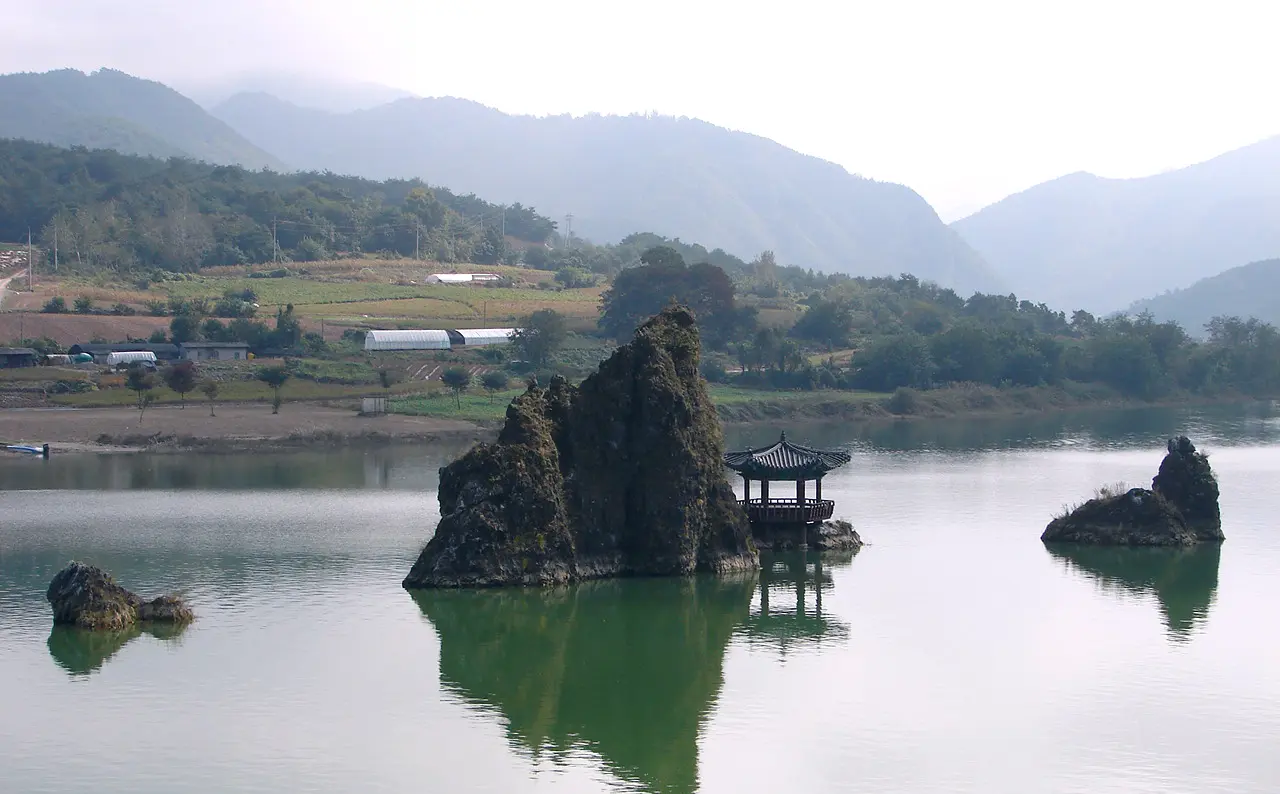
Danyang is a small county in the mountains of North Chungcheong Province, where the Namhangang River loops between limestone cliffs. Koreans know it for a set of river views that Joseon-era scholars wrote poems about, for its caves, and for its garlic. Many foreign visitors know it from a single photograph: three rock peaks standing in the river, the middle one topped by a small pavilion.
That photograph is Dodamsambong, and it is a good place to start, but Danyang rewards a little more time than one viewpoint. This guide covers getting there from Seoul by train or bus, how to move between the sights without a car, what each main stop is like, what to eat, and two realistic plans: a long day trip and a calmer overnight stay.
Why Danyang is worth the trip
Danyang County's English tourism pages organise the area around the Eight Scenic Views of Danyang, a list of river and valley landscapes that includes Dodamsambong, the Seokmun stone arch, the Gudambong and Oksunbong peaks, Sainam Rock and three rock formations in the Seonam valley. A Second Eight Scenic Views adds places such as Ondal Fortress and the Bukbyeok cliffs. Several of them are tied to Toegye Yi Hwang, one of Korea's best-known Neo-Confucian scholars, who served as county chief here: the county credits him with naming Haseonam and with a poem about Dodamsambong at sunset.
Underneath it all is limestone. That is why the river is lined with pale cliffs, why the hills hide caves, and why Danyang is a UNESCO Global Geopark, as the county's geopark website states. In practice a trip here mixes easy riverside viewpoints with cool underground walks, which makes Danyang a reasonable choice in both summer heat and winter cold.
Getting to Danyang from Seoul
By train, Danyang is on the Jungang Line. The county's English transport page lists trains from Cheongnyangni Station in eastern Seoul to Danyang Station, and the fast service on the line is the KTX-Eum. On the station timetable that Danyang County publishes, KTX-Eum trains from Cheongnyangni reach Danyang in about an hour and twenty minutes, while slower conventional trains take around two hours. That file dates from 2022 and Jungang Line timetables have been revised since, so use it as a guide to the order of magnitude and check current departures on Korail before you book. Our KTX guide explains how booking works for visitors.
The same KTX-Eum trains continue south to Andong, so Danyang pairs naturally with Andong and Hahoe Village if you have a few days in this part of Korea.
By bus, intercity buses run between Dong Seoul Bus Terminal and Danyang Intercity Bus Terminal. The county's current terminal timetable gives the trip as about 2 hours 20 minutes. These buses run through Danyang to Guinsa Temple, which is handy if the temple is your main goal. The timetable also shows that some departures do not run on certain weekdays, so check it before you plan a tight day. It lists a couple of buses a day from Danyang to Incheon Airport via Jecheon as well, taking about four hours, which can save a transfer on the way home.
Which to choose? For most visitors the train is faster and easier to follow, and Cheongnyangni is well connected by subway. The bus is the simpler option if you are staying near Dong Seoul or heading straight on to Guinsa.
Getting around Danyang
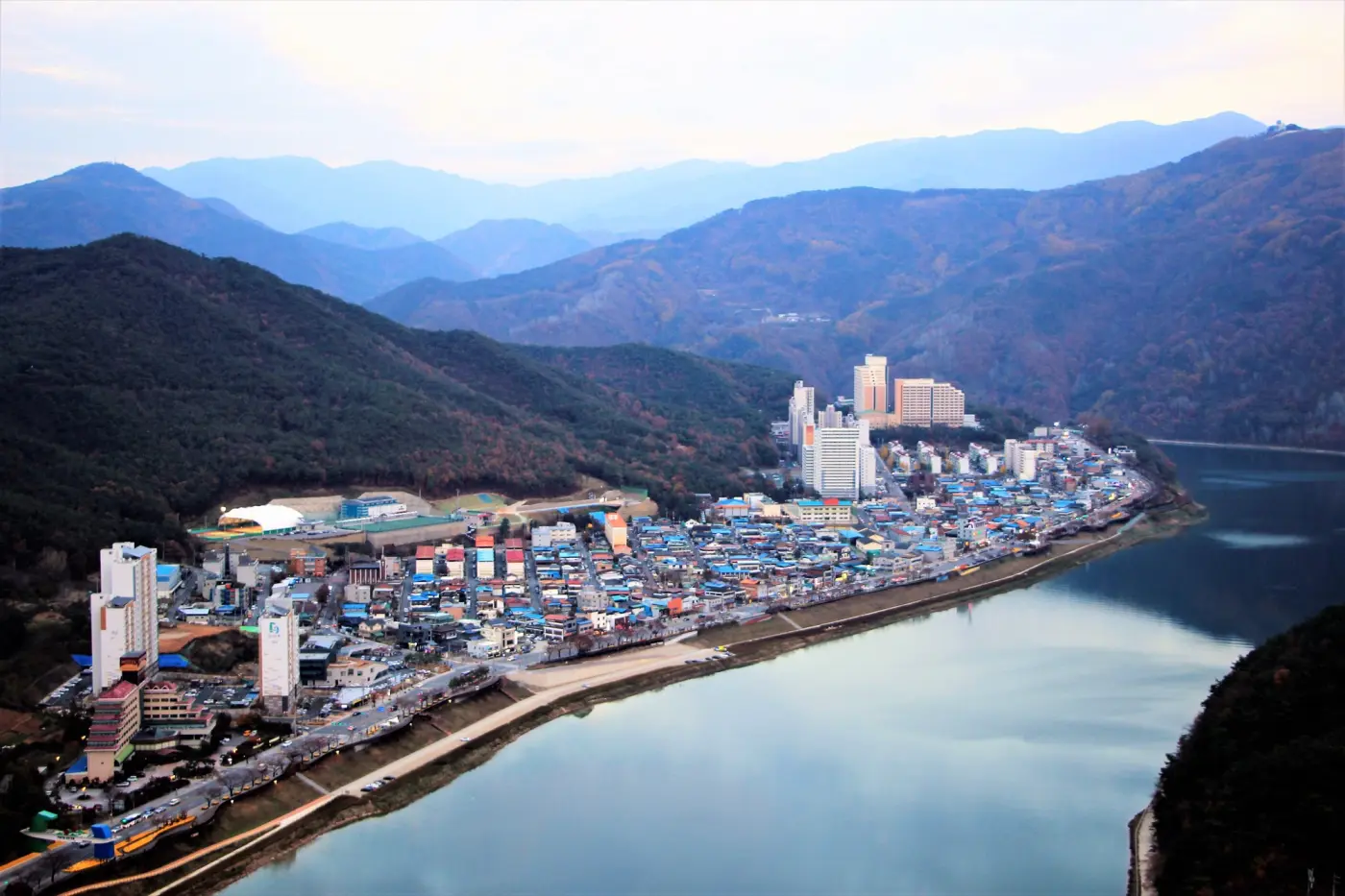
Danyang-eup, the main town, is compact and sits on a bend of the river. Danyang Station is not in the town centre, so plan on a bus or a taxi from the station. The Gosu Cave operator's directions describe taking a bus from the station towards Gosu Bridge and getting off at the Danuri Center stop in town.
Local buses exist but are spread thinly through the day, and route numbers have changed over the years. One that is confirmed on an official page is route 170, which the Gosu Cave operator lists from the Danuri Center stop to the cave entrance. The same page says the cave is only about a kilometre from Danuri Center, roughly a ten-minute walk, so you can simply walk. For the Mancheonha Skywalk, the county's page points to a town bus towards Jeokseong-myeon (Aegok) and notes there is no free shuttle from town.
For Dodamsambong and Seokmun, a taxi is usually the most practical option without a car, especially if you are short on time. Outside the town you may not find a taxi waiting, so save a local taxi number or ask your accommodation to call one for the return leg. For Guinsa and the Ondal area in Yeongchun-myeon, the intercity bus towards Guinsa is the useful link: the terminal timetable gives about 30 minutes to Yeongchun and about 40 minutes to Guinsa.
The main sights at a glance
| Place | What it is | Getting there without a car | Time to allow |
|---|---|---|---|
| Dodamsambong | Three limestone peaks in the Namhangang River; a national scenic site | Taxi from town or from Danyang Station | 45 minutes |
| Seokmun | Natural stone arch about 200 m from Dodamsambong; a national scenic site | On foot from Dodamsambong, up about 170 steps | 30–45 minutes |
| Gosu Cave | Limestone cave and natural monument, about 15°C all year | Bus 170 from Danuri Center, or about a 10-minute walk | 1–1.5 hours |
| Mancheonha Skywalk | Viewing platform about 80 m above the river, plus a zipwire | Taxi or town bus towards Aegok; shuttle bus inside the site | 1–2 hours |
| Guinsa Temple | Head temple of the Cheontae Order of Korean Buddhism | Intercity bus from Danyang terminal, about 40 minutes | 1.5–2 hours |
| Ondal Fortress and tourist park | Stone mountain fortress above a theme park with a cave | On the road to Guinsa; bus to Yeongchun, then taxi | 2 hours |
| Paragliding at Yangbangsan | Tandem flights from a launch site above the town | Arranged with the operator you book | Half a day, weather permitting |
| Gugyeong Market | Town market known for garlic snacks | Walk within Danyang-eup | 1 hour |
Dodamsambong: three peaks in the river
Danyang County calls Dodamsambong the most loved of the Eight Scenic Views and describes it as the only place in Korea where three rock peaks stand side by side in the middle of a river. It was designated a national scenic site in 2008, according to the national heritage portal. The largest, central peak carries a hexagonal pavilion called Samdojeong. The county explains that a pavilion was first built there in 1766, rebuilt several times, and that the present one is a concrete replacement for the wooden pavilion washed away in the great flood of 1972.
The name comes from Dodam, the village across the river; the characters mean island and deep pool, because the village was cut off by water until a bridge was built. A local legend says the peaks drifted down in a flood from Jeongseon in Gangwon-do, and that Jeongseon then demanded a yearly tax for them. A clever local boy, later identified with Jeong Do-jeon, the scholar-official who helped found the Joseon dynasty, told them to take their peaks back if they wanted the tax, and the demand stopped. Jeong Do-jeon later used Sambong, three peaks, as his pen name. The county itself suggests the story was probably invented later to show off his wit, and offers the geological version: the peaks are what remains of a ridge dissolved by the river, left standing because they contain dolomite, which dissolves less easily.
Admission is free. The county recommends early mornings in early spring and autumn, when river mist hangs around the peaks, and sightseeing boats run on the river from the Dodamsambong area. Steps from the Dodamsambong riverside lead up to Seokmun, so plan to see the two together.
Seokmun: the stone gate
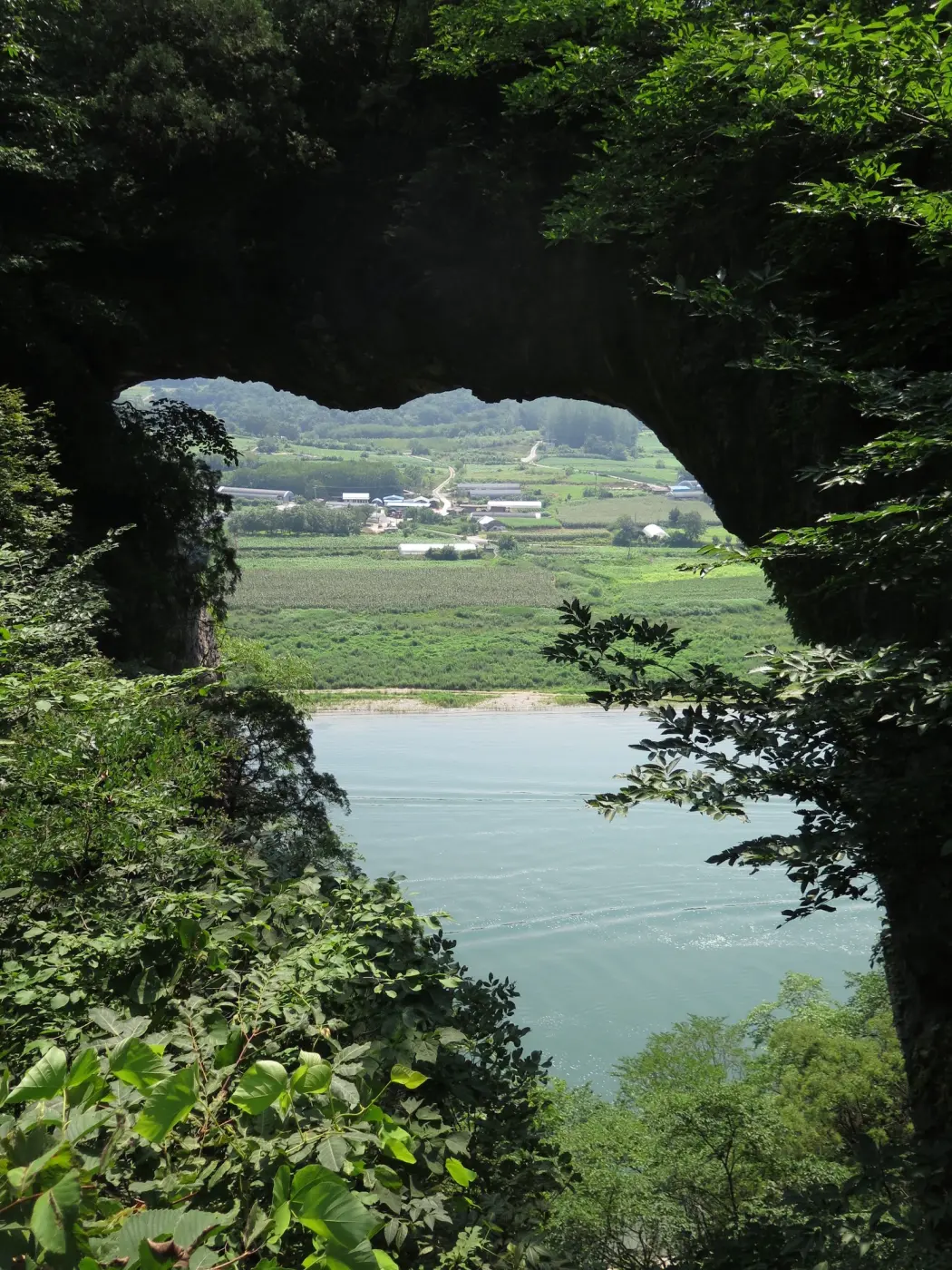
Seokmun, also one of the Eight Scenic Views and a national scenic site designated in 2008, sits about 200 metres from Dodamsambong. The county explains that it was once a large limestone cave; the cave collapsed over time and only its rounded entrance remained, leaving a natural arch on the hillside above the river.
From the Dodamsambong side you climb about 170 steel steps to a small pavilion, which gives a view back down to the three peaks, then walk roughly 50 metres further to the arch. Through it you look out at the river and the fields of Dodam village. A legend says that Mago Halmi, a grandmother figure from Korean folklore, came down from heaven to fetch water, lost her hairpin, and dug up so much earth looking for it that she created ninety-nine paddy fields; the county says a rock shaped like her can still be spotted nearby. The steps are steady rather than difficult, but wear proper shoes after rain.
Gosu Cave
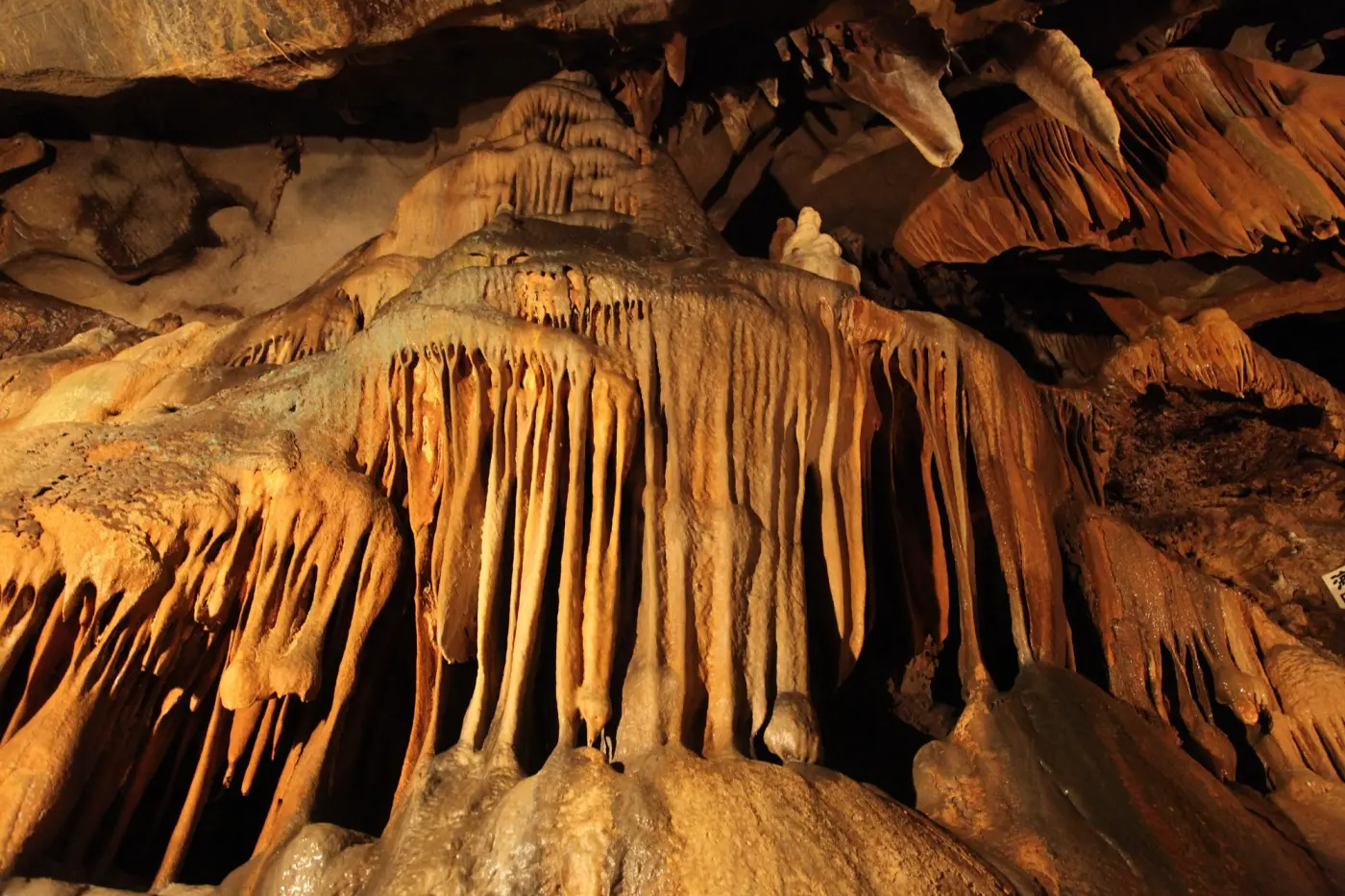
Gosu Cave is a limestone cave on the edge of town, designated a natural monument in 1976. Both the county and the operator describe more than a kilometre of passages, with part of it open to visitors, and formations with names such as Lion Rock. The operator gives the temperature inside as 14 to 15°C all year, so it feels cool in summer and mild in winter. Walkways and stairs take you up and down through several levels.
A few rules from the operator's own notes are worth knowing before you go. There are many stairs, and the operator warns that small children, pregnant visitors and older people may find it tiring. There are no toilets inside. Food and pets are not allowed, smoking is banned across the whole cave area, and photography inside the cave is restricted. The operator recommends long sleeves, comfortable trousers and trainers. On its website, gosucave.co.kr, entry starts at 9 a.m. and the last entry is at 5 p.m., and the cave is open all year, with any closure announced in advance on the site.
Mancheonha Skywalk
The Mancheonha Skywalk is a modern viewing facility run by the Danyang Tourism Corporation in Aegok-ri, Jeokseong-myeon, an area known for the Suyanggae prehistoric site. According to the county, a round observation tower looks out over the Sobaeksan, Geumsusan and Woraksan mountains, and three walkways project from it towards the river at about 80 metres above the water. Below the tower is a 980-metre zipwire, and the operator also runs an alpine coaster.
The tower can only be reached by the site's shuttle bus. Opening hours are 9 a.m. to 6 p.m. in the summer season and 9 a.m. to 5 p.m. in winter, the same on weekdays and weekends; ticket sales end earlier. Viewing may be restricted in heavy rain, heavy snow or fog, and the operator warns that waits for the observatory can exceed an hour at peak times. It is exposed, so bring a hat on sunny days. If the forecast is grey, it is the easiest stop to drop from a short itinerary.
Guinsa Temple
Guinsa sits in a valley of the Sobaek Mountains in Yeongchun-myeon. The Cheontae Order of Korean Buddhism describes it as the order's head temple. The order traces its roots on the peninsula to the monk Uicheon in the Goryeo period and credits Sangwol Wongak, whom it honours as the restorer of the order, with reviving it after Korea's liberation and founding Guinsa.
It is an active religious centre rather than a museum, so dress modestly, keep your voice down in the halls and ask before photographing people. The order runs a templestay programme here that, according to its page, includes the dawn and evening services, an introduction to temple etiquette, visits to halls such as Seolbeopbojeon and Daejosajeon, a walk down from Bobaljae pass, tea and conversation with a monk, and the order's Buddhist museum. If an overnight stay appeals, our templestay guide explains how these programmes work.
Getting there is easy by Korean countryside standards: buses towards Guinsa leave Danyang Intercity Bus Terminal through the day and take about 40 minutes, and some buses from Dong Seoul run on to the temple.
Ondal Fortress and the Ondal tourist park
Ondal Fortress stands on a hill above the river in Yeongchun-myeon. It is tied to one of Korea's best-loved stories: Ondal, a poor young man mocked as a fool, who married Princess Pyeonggang, became a general of the Goguryeo kingdom and son-in-law of King Pyeongwon, and fought over the Han River region. The county describes the fortress as a semicircular stone wall 972 metres long and about 3 metres high, unusually well preserved, with gate forms rarely seen in other early Korean fortresses. It was designated a historic site in 1979.
At the foot of the hill is the Ondal tourist park, which the county describes as a cluster of attractions themed on Ondal and Princess Pyeonggang: an exhibition hall about the legend, an open-air set used for historical TV dramas, and Ondal Cave, a limestone cave whose walkways are mostly level and easy to follow. One park ticket covers the set, the cave and the exhibition hall. From the set, a path climbs the hill to the fortress walls; allow time for a steady uphill walk, and the view over the bend of the river at the top.
Paragliding over the river
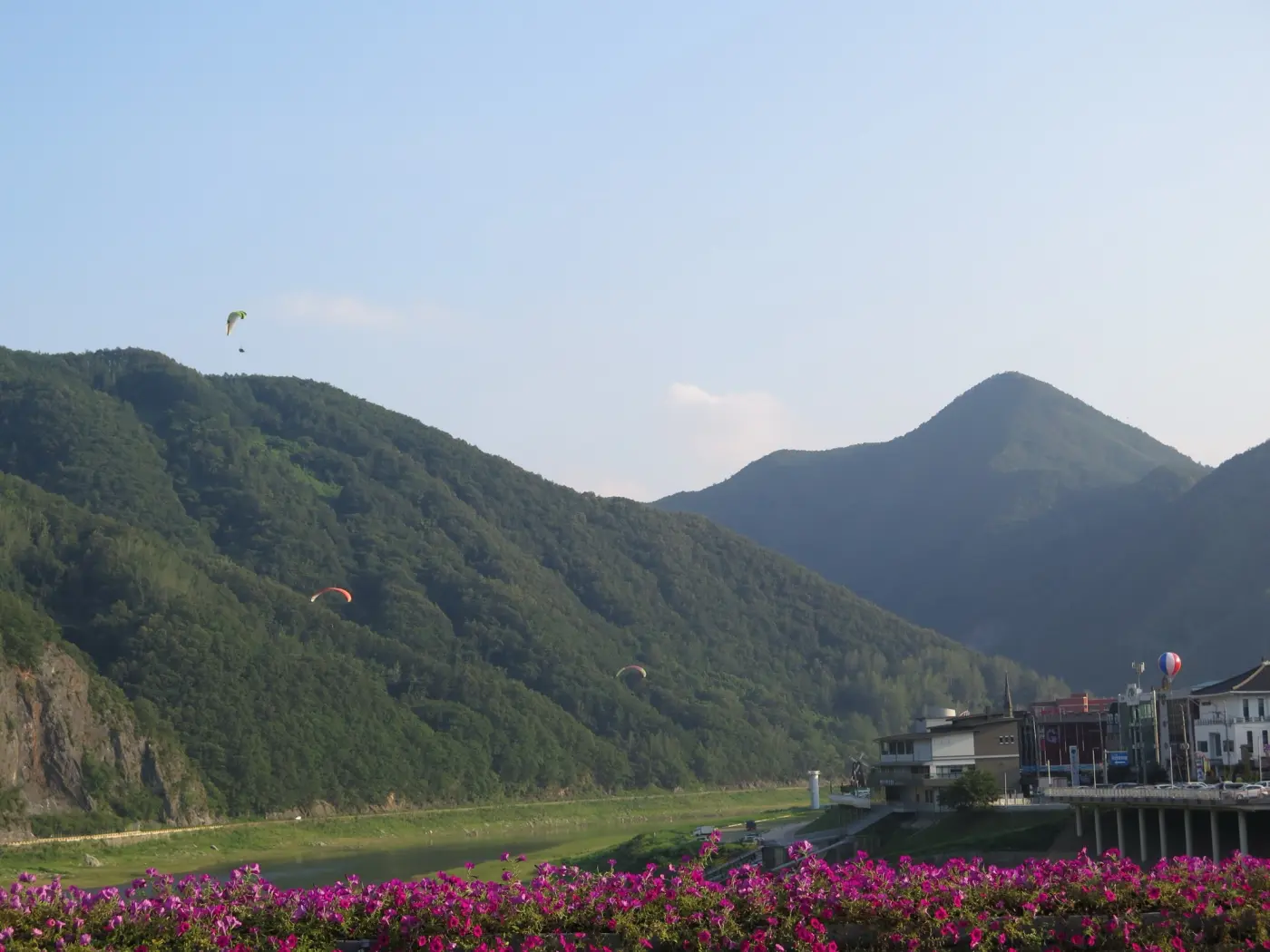
Danyang is one of the best-known places in Korea for hang gliding and paragliding. The county describes a launch site on the top of Yangbangsan, a mountain that looks straight down over the town and the river, and says Danyang has five launch sites, practice slopes and an ultralight runway, and hosts national competitions. It also notes that beginners can try it.
For most visitors that means a tandem flight, with a qualified pilot flying and you strapped in front. A few general points apply wherever you book. Flights depend entirely on wind and weather, and it is common for a slot to be moved or cancelled on the day, so leave some slack in your plans. Book with an established, registered operator, ask whether insurance is included, listen carefully to the safety briefing, and check any age, weight or health limits in advance. Wear closed shoes and a layer, since it is cooler at the launch site than in town.
Gugyeong Market and what to eat
Gugyeong Market is the covered market in the middle of Danyang-eup. The name is a pun: gugyeong means both a ninth scenic view, after the Eight Scenic Views, and simply looking around. The county says the market built its reputation on food made with Danyang garlic, and lists garlic sundae (blood sausage), dumplings and garlic dakgangjeong, sweet-glazed fried chicken pieces, among its typical items. In 2023 it was chosen as one of ten K-Tourism Markets by the Ministry of Culture, Sports and Tourism and the Korea Tourism Organization. A traditional five-day market is also held on dates ending in 1 and 6: the 1st, 6th, 11th, 16th, 21st and 26th of each month.
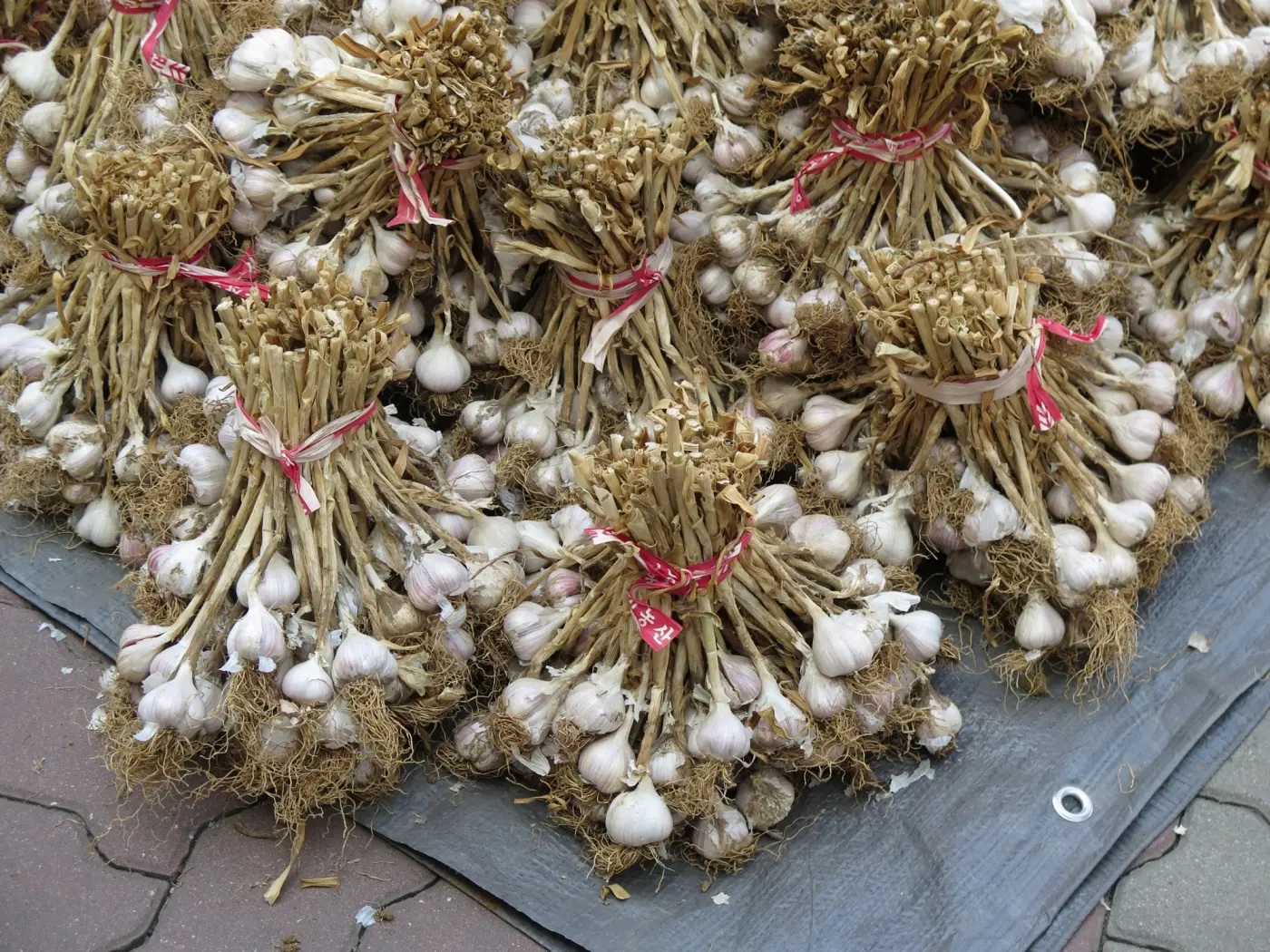
Garlic is the food most closely linked with Danyang. The county's English food page explains that it grows well in the region's long spring and that Danyang garlic is known for its distinct taste and aroma. The local dish to look for is garlic pot rice, rice cooked in a small pot with garlic and served with side dishes that also use it. The river also shapes the menu: the county recommends spicy freshwater fish stew made with river fish such as mandarin fish, acorn jelly, a traditional autumn snack, and set meals of wild greens gathered from the Sobaeksan area in spring.
A day trip from Seoul
- Early morning: take an early KTX-Eum from Cheongnyangni, or an early bus from Dong Seoul.
- Morning: taxi to Dodamsambong, then climb to Seokmun for the view through the arch.
- Late morning: Mancheonha Skywalk if visibility is good; skip it in fog or heavy rain.
- Lunch: garlic pot rice in Danyang-eup, or snacks at Gugyeong Market.
- Afternoon: Gosu Cave, a short bus ride or ten-minute walk from Danuri Center.
- Evening: train or bus back to Seoul. Check the last departures before you set off in the morning.
One night in Danyang
- Day 1, morning: arrive by train or bus, leave your bag in town, then Dodamsambong and Seokmun.
- Day 1, afternoon: Gosu Cave and Gugyeong Market. If the forecast is good, book a paragliding slot or the Skywalk instead of the cave.
- Day 1, evening: an early dinner of garlic pot rice or freshwater fish stew, then a walk along the river in town.
- Day 2, morning: intercity bus to Guinsa, about 40 minutes, and time to walk up through the temple.
- Day 2, afternoon: Ondal tourist park and the walk up to Ondal Fortress, then back to Danyang.
- Day 2, evening: train to Seoul, or continue south on the Jungang Line to Andong.
Practical tips
- Weather decides a lot here. Fog and rain can restrict the Skywalk and cancel paragliding, so keep one indoor option, such as a cave, in reserve.
- Caves stay around 15°C all year. Bring a light layer in summer and wear shoes with good grip.
- Trains and buses are not frequent. Check Korail and the Danyang terminal timetable the day before, and note that some buses do not run on certain weekdays.
- Guinsa is an active temple. Modest clothing and quiet voices are appreciated.
- Sights are spread out along the river. Two or three main stops in a day is a comfortable pace without a car.
Comments
Sign in to leave a comment.
Sign in ·No account? Create one
Confirm your email address to comment — it takes one click.
No comments yet.