
Andong & Hahoe Village: Day Trip or One Night from Seoul
How to reach Andong and Hahoe Folk Village from Seoul, what to see on the river bend, when the mask dance plays, and a day-trip and one-night plan.
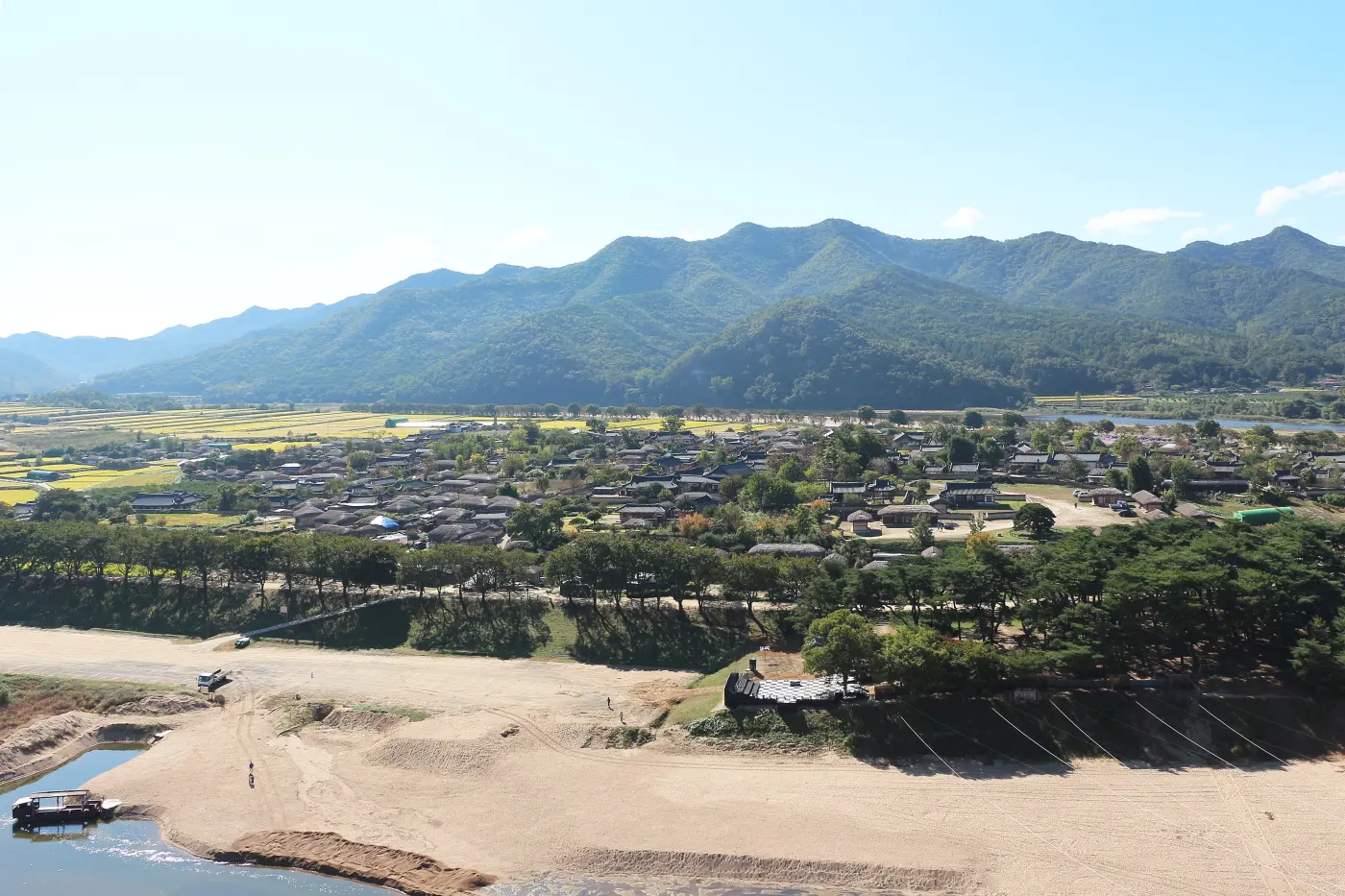
Most first trips to Korea run along the same line: Seoul, then Busan, perhaps with Gyeongju in between. Andong sits off that line, in the hills of North Gyeongsang Province, and that is exactly why it rewards the detour. It is the place to see the Confucian side of old Korea: clan houses, a scholars' academy facing a river cliff, and a masked village drama that has been performed in the same village for centuries.
The centrepiece is Hahoe, a village on a bend of the Nakdong River in the countryside west of the city. It is not a museum or a film set. People live there, farm there and run guesthouses out of family homes, which shapes how you visit. This guide covers getting to Andong from Seoul, getting from Andong out to Hahoe, what to see once you are there, what to eat back in town, and two realistic plans: a long day trip and a calmer one-night stay.
Why Hahoe is different
Hahoe is the home village of the Pungsan Ryu clan. Andong City's tourism site explains that the clan's ancestor settled here roughly six hundred years ago, that the village is known as the birthplace of the Joseon-era scholars Ryu Unryong and Ryu Seongryong, and that the name Hahoe, meaning "river turning around", comes from the way the Nakdong curves around three sides of it. The whole village was designated as national folk heritage in 1984.
In July 2010, at the World Heritage Committee's 34th session in Brasília, UNESCO inscribed Hahoe together with Yangdong, near Gyeongju, as "Historic Villages of Korea: Hahoe and Yangdong". The city's summary of the listing stresses two things: the layout of houses, pavilions and academies, which mirrors the social order of Joseon aristocratic Confucian culture, and the customs that residents still keep, from ancestral rites to seasonal festivals.
That last point is the one to hold on to. The Hahoe Village Preservation Society, which runs the village's own website, contrasts it with the Korean Folk Village near Seoul, which was built as a tourist attraction: Hahoe is a natural village and an administrative district, where private living space and areas opened to visitors sit side by side. City and village figures for the population differ slightly, but both put it at more than a hundred households. The city notes that the designated historic houses all belong to the Ryu family, and the society's welcome note asks visitors to understand that residents need fridges, cars and modern kitchens, and to show them consideration.
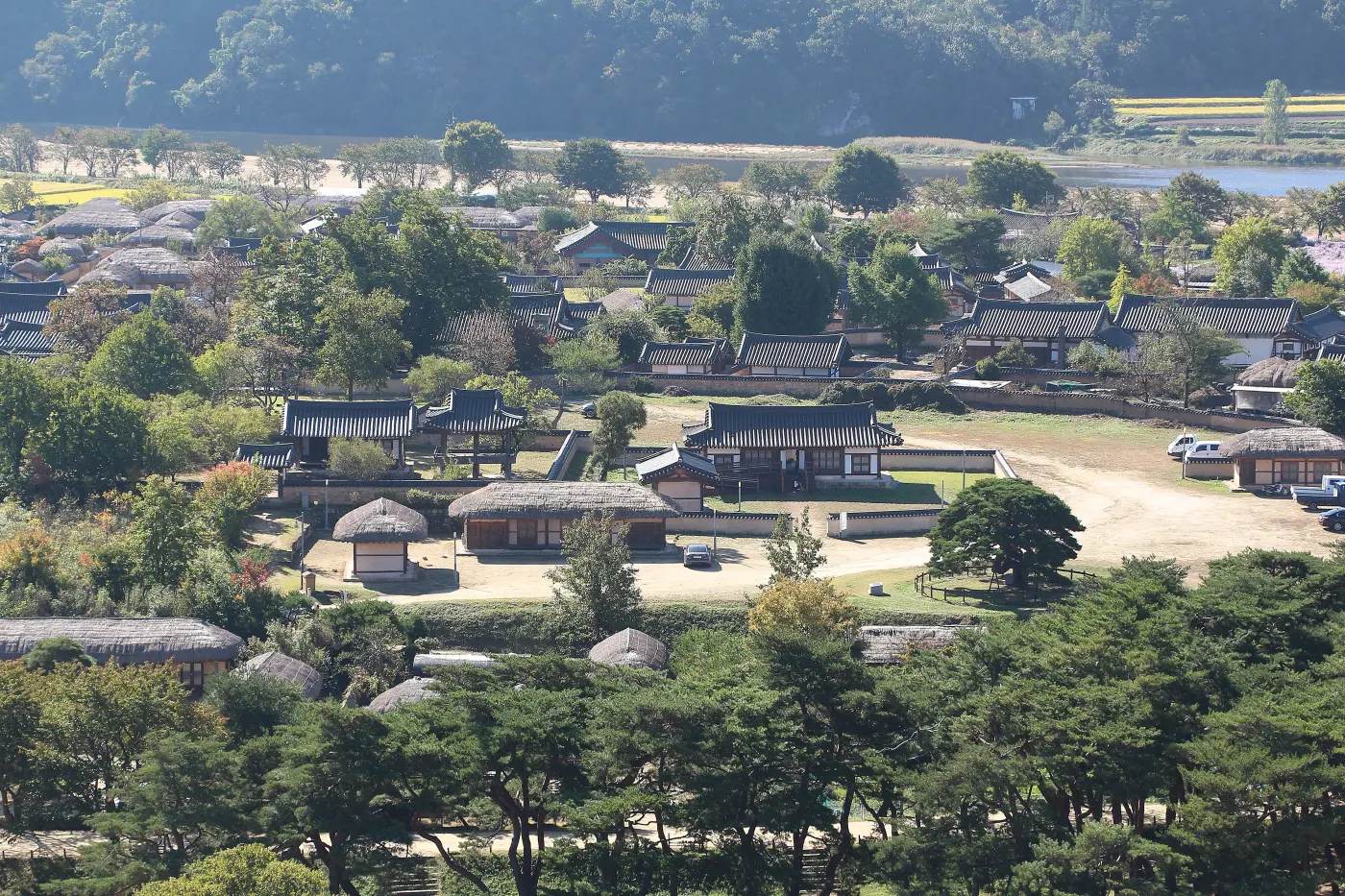
In practice that means a few simple habits. Keep your voice down in the lanes. Treat a closed gate as a closed door, and only step into a courtyard where it is clearly open to visitors. Ask before photographing people, and do not fly a drone over someone's roof. None of this is unusual; it is the same courtesy you would want if strangers walked past your own front door all day. Our guide to Korean manners covers the general picture.
Getting to Andong from Seoul
By train, Andong is on the Jungang Line. The city's English transport page lists KTX-Eum trains from Seoul and Cheongnyangni stations to Andong, and since December 2024 the same line has continued south through Gyeongju to Bujeon in Busan, according to the Seoul Metropolitan Government's news site. Timetables on this line have changed several times as upgrades were completed, so check the current times on Korail rather than relying on an old schedule; our KTX guide explains how to book.
By bus, express buses run to Andong from Dong Seoul Bus Terminal and from the Seoul Express Bus Terminal in Gangnam. The city gives the journey as around three hours. The bus is a reasonable choice if you are staying south of the river or if trains are sold out on a holiday weekend.
When you arrive, the Gyeongsangbuk-do General Tourist Information Center is in front of Andong Station. The city says it is staffed with interpreters who speak English and Japanese, opens from 9 a.m. to 6 p.m., and covers the whole province, not just Andong. It is the best place to confirm the bus to Hahoe and pick up a map.
From Andong to Hahoe
Hahoe is in Pungcheon-myeon, west of the city, and most visitors without a car get there by city bus. Andong's tourism site lists buses to Hahoe from the Andong Station and bus terminal area and from downtown, and some buses on the route also stop at Byeongsan Seowon. Route numbers have been reorganised in recent years, and the city's English and Korean pages do not currently show the same numbers, so this guide does not give one. Check the Andong bus information site, which has English and Japanese versions, or ask at the information centre in front of the station.
Buses are spread through the day rather than every few minutes, so note the return times before you set off. Taxis are the practical fallback, especially if you want to add Buyongdae or Byeongsan Seowon, which are awkward or impossible by bus.
Admission to Hahoe Village was 5,000 won for an adult as of October 2026, according to the city's fee table, and parking is free. Opening times vary by season and the city's pages give slightly different hours, so if you are arriving late in the afternoon, check before you go.
Walking the village
Inside, the main road runs east to west through the middle of the village. Andong City's Korean page describes the area north of it as Bukchon and the area south as Namchon, with the large tiled houses of the Ryu family near the centre and smaller earth-walled and thatched houses around them. Two houses, Yangjindang and Chunghyodang, are designated Treasures, and several more are listed as national folk heritage.
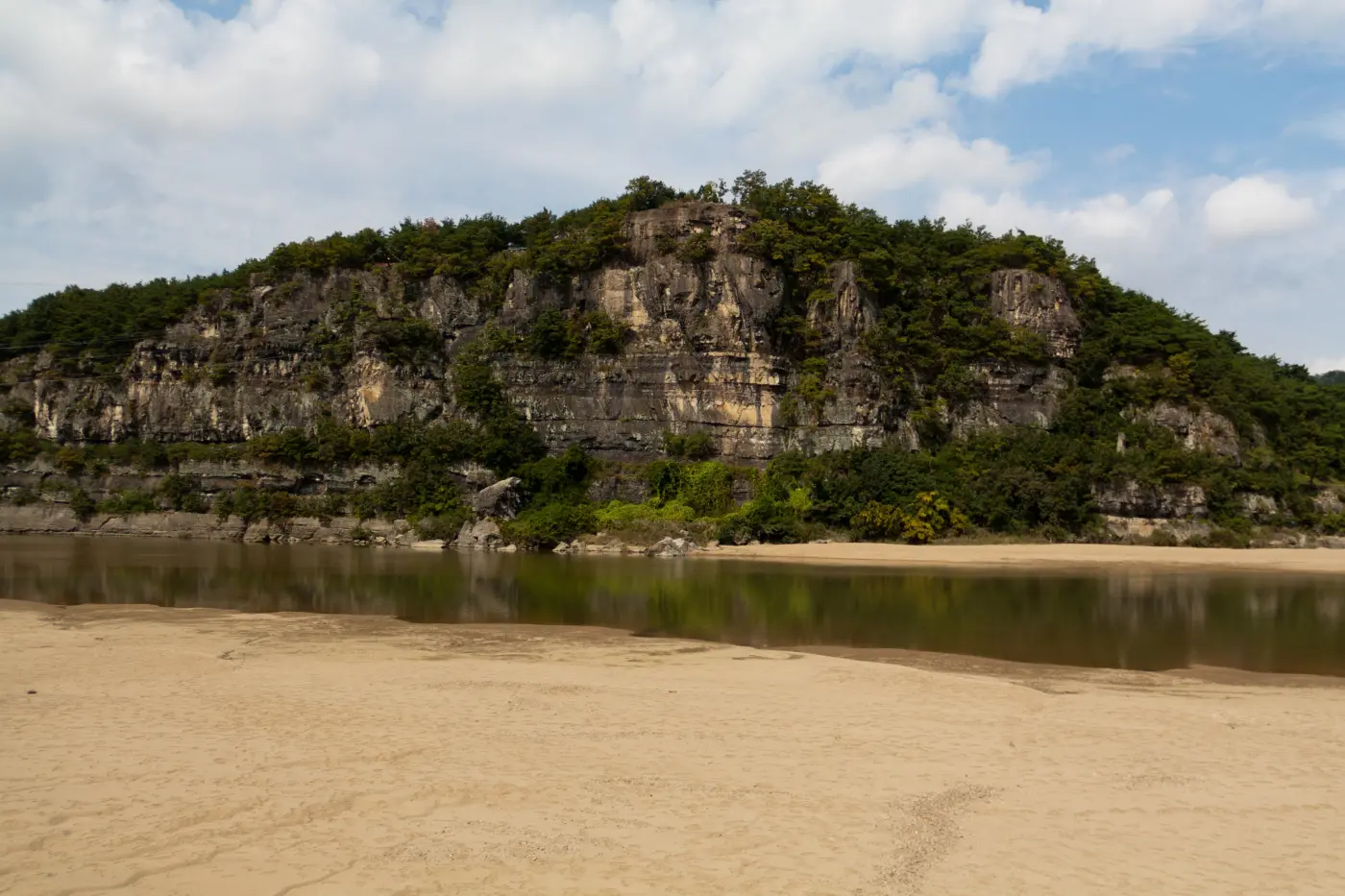
On the river side you find wide sandbanks and, to the north-west, an old pine grove that the city singles out as part of the landscape. Across the water rises a sheer cliff with pavilions tucked beneath it. That cliff is Buyongdae, and it gives the best view back over the village.
The preservation society's FAQ suggests two to four hours to walk the village properly, and around four hours in total if you also want to see the mask dance. The city's own estimate for a basic look around is shorter. Inside the village there is also a small information desk run by volunteers and cultural heritage interpreters, open from 10 a.m. to 5 p.m. according to the city, with guidebooks in Korean, English and Japanese.
The Hahoe mask dance
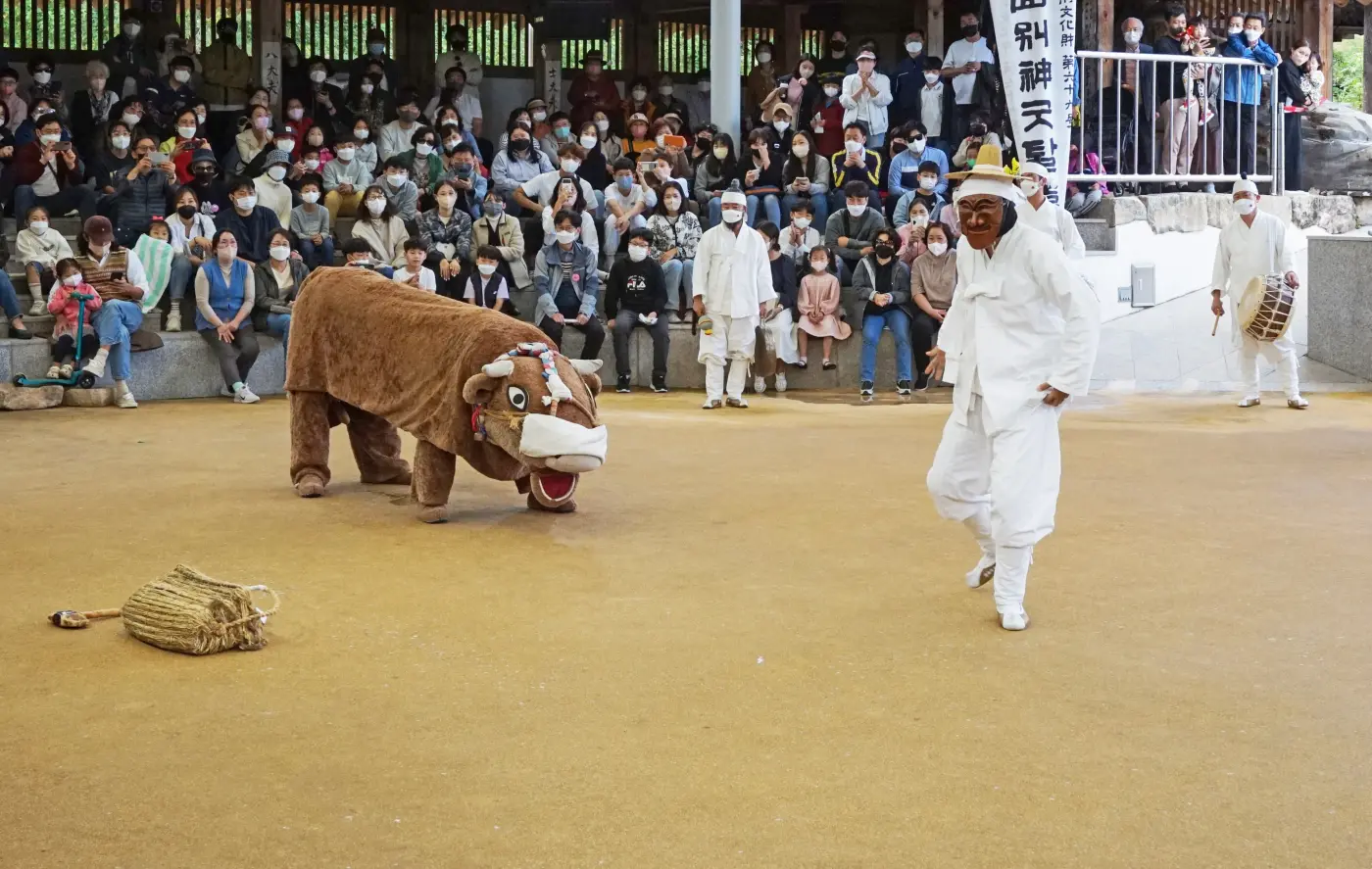
Hahoe Byeolsingut Talnori is the village's masked drama. It began as part of a ritual for the village guardian spirit and is now a National Intangible Cultural Heritage, kept alive by a preservation association based in the village. The stock characters will be familiar to anyone who has watched satire anywhere: a pompous aristocrat, a scholar, a monk, a butcher, an old woman and a sharp-tongued servant who mocks them all.
The masks themselves are the reason the drama is famous. The village's website says the original Hahoe masks are the oldest surviving masks in Korea and are designated a National Treasure; eleven survive and three have been lost. They are carved from alder and lacquered in several coats. The aristocrat's mask is cut so that it laughs when the actor tips his head back and looks angry when he lowers it, a detail worth watching for during the performance.
For 2026, the village's published schedule has a free performance from 2 p.m. to 3 p.m. at the performance hall in the village: on Saturdays and Sundays in January and February, and from Tuesday to Sunday from March to December. There is no regular performance on Mondays. The schedule notes that it can change, so confirm on the day. In summer there has also been an evening stage near Andong Dam, but the official pages do not agree on its days, so check locally.
At the entrance to the village, the Hahoe World Mask Museum, opened in 1995, puts the Hahoe masks in context. Its galleries cover masks from across Korea, from elsewhere in Asia and from the rest of the world, so you can compare them before or after the show.
Buyongdae: the view back over the village
Buyongdae is the cliff on the far bank of the Nakdong, at the southern end of the Taebaek mountain range. The city describes it as the classic viewpoint over Hahoe. Below it sit Okyeonjeongsa House, Gyeomamjeongsa Pavilion and Hwacheon Seowon, all linked to the Ryu family. It is free and open at any time.
Getting there is the catch. The city's page says there is no public transport and that it is about ten minutes by car from the village; the preservation society explains that you leave the village and cross the river by the Gwangdeok road bridge. A taxi round trip is the simple answer. On certain evenings the village also stages Seonyu Julbullori, a traditional fire-rope display on the river beneath the cliff; dates and ticketing are announced on the village website.
Byeongsan Seowon
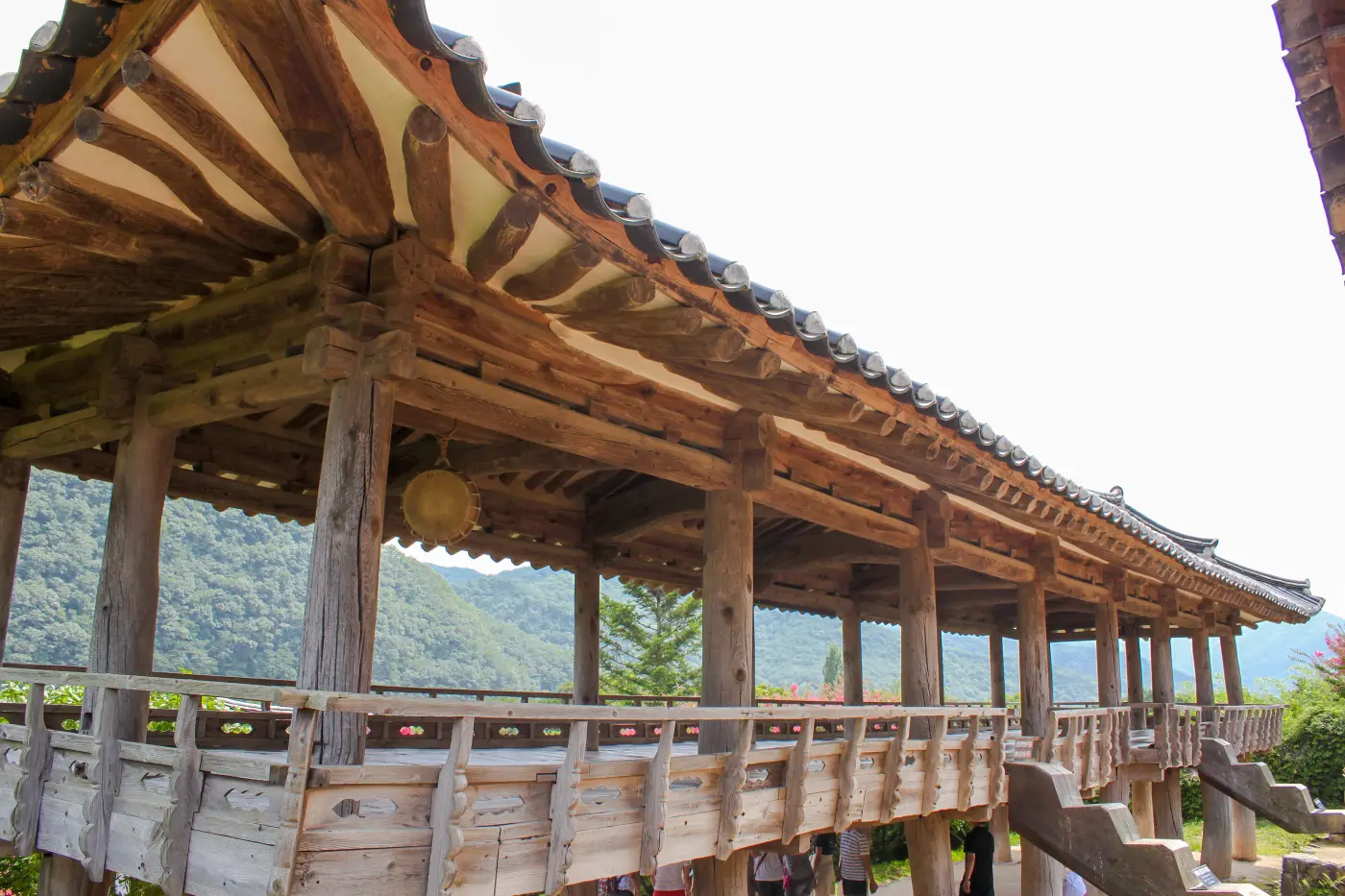
Over the hill to the east of Hahoe, Byeongsan Seowon is a Confucian academy that honours Ryu Seongryong and his son Ryu Jin. A seowon was a private academy for study and for rites to honour respected scholars. According to the city, Ryu Seongryong moved the school to this site in 1572, and it was one of only 47 seowon left standing when most academies were abolished in 1868.
In July 2019 it became part of a second World Heritage listing, "Seowon, Korean Neo-Confucian Academies", a group of nine academies that also includes Dosan Seowon, Andong's other famous academy. The highlight is Mandaeru, a long open pavilion facing the river and the hill called Byeongsan on the far bank. The city lists free entry, opening hours of 9 a.m. to 6 p.m. in summer and to 5 p.m. in winter, and about 30 minutes for a typical visit.
Plan at a glance
| Place | What it is | How to get there | Time to allow |
|---|---|---|---|
| Hahoe Folk Village | Lived-in clan village of the Pungsan Ryu; UNESCO World Heritage (2010) | City bus from the Andong Station and terminal area or downtown; taxi | 2–4 hours (preservation society estimate) |
| Hahoe mask dance | Hahoe Byeolsingut Talnori, a National Intangible Cultural Heritage | Performance hall inside the village | 1 hour, 2–3 p.m. on performance days (2026) |
| Hahoe World Mask Museum | Masks from Korea, Asia and around the world; opened 1995 | At the village entrance | A short stop before or after the village |
| Buyongdae | Cliff viewpoint across the river from the village | No public transport; about 10 minutes by car via the road bridge | Add a taxi round trip |
| Byeongsan Seowon | Confucian academy; UNESCO World Heritage (2019) | Some city buses on the Hahoe route; taxi | About 30 minutes (city estimate) |
| Jjimdak Street | More than 30 braised-chicken restaurants in the old market | Downtown Andong | A meal |
What to eat in Andong
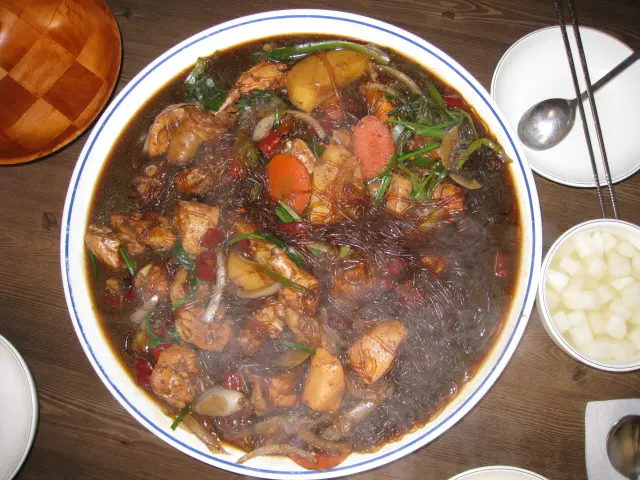
Andong jjimdak is the dish most Koreans associate with the city: chicken braised with glass noodles and vegetables in a soy-based sauce. The city lists several origin stories, from the kitchens of old Andong families to the chicken alley of the old market. That market is still the place to eat it. The city's food page says Jjimdak Street inside Andong Old Market has more than 30 restaurants specialising in it.
Heotjesabap is the local dish with the best story. Ancestral rites matter in Andong, and after a rite families shared the food that had been offered. Heotjesabap, literally "rice from a rite that never happened", recreates that spread as a bibimbap you mix yourself. Salted mackerel is the other classic: the city explains that fish salted on the coast survived the long trip inland and that people here came to prefer it that way.
Andong soju is not the green-bottle soju sold everywhere. The city describes it as a traditional spirit distilled from grain, classically bottled at 45 percent alcohol. Sip it slowly, and see our drinking rules guide for the etiquette of pouring for others.
The Andong Mask Dance Festival
If you can choose your dates, the Andong International Mask Dance Festival is the time when the whole city is about masks. The city describes it as an annual festival of about ten days spanning late September and early October, with mask dance troupes from Korea and abroad. The 2026 edition ran from 24 September to 4 October, with events downtown, in Talchum Park and at Hahoe. Check the festival's official site for the next edition's dates.
A day trip from Seoul
- Take an early KTX-Eum from Cheongnyangni or Seoul Station, or an early express bus, so you reach Andong by mid-morning.
- Stop at the tourist information centre in front of the station, confirm the bus to Hahoe and the last bus back, then head out.
- Walk the village before lunch, starting with the lanes around the big Ryu houses and finishing by the river and the pine grove.
- Watch the mask dance at 2 p.m. (Tuesday to Sunday from March to December, weekends only in January and February).
- Take a taxi to Buyongdae or Byeongsan Seowon, not both unless you are early. Visit the mask museum if you are waiting for a bus.
- Go back to town for an early dinner of jjimdak in the old market, then take the evening train or bus to Seoul.
It is a long day, and it works best if you are not set on seeing everything. If you are travelling on a Monday between March and December there is no regular mask dance, which is a strong argument for choosing another day.
One night: the calmer version
With a night, the area makes much more sense. Spend the first afternoon in Hahoe and see the performance, then either sleep in town or stay in the village itself; the city notes that traditional house stays are available through the preservation society, and the village website lists guesthouses run in family homes. In the evening, once the day visitors have gone, Hahoe is a different place.
On day two, go to Byeongsan Seowon early, while it is quiet, add Buyongdae and the mask museum, and eat jjimdak or heotjesabap in town before you leave. Because KTX-Eum trains continue south from Andong, you can also carry on to Gyeongju instead of going back to Seoul. Our two-day Gyeongju itinerary takes it from there, and our PDF Gyeongju, a City Guide covers the Silla capital in more depth.
If you have already seen Jeonju's hanok village, Hahoe is a useful contrast: Jeonju's is a city district of traditional houses full of cafés and shops, while Hahoe is a farming village where the same clan has lived for centuries. And if staying somewhere quiet and traditional is what draws you, a templestay is another way to spend a night outside the usual tourist trail.
Comments
Sign in to leave a comment.
Sign in ·No account? Create one
Confirm your email address to comment — it takes one click.
No comments yet.