Gyeongbuk: Gyeongju, a thousand years of capital, and no glass towers
경북
Gyeongju spent a thousand years as the capital of the Silla kingdom and still reads like an open-air museum. This is Korea with nothing modern in the photograph, which is rarer than it sounds.
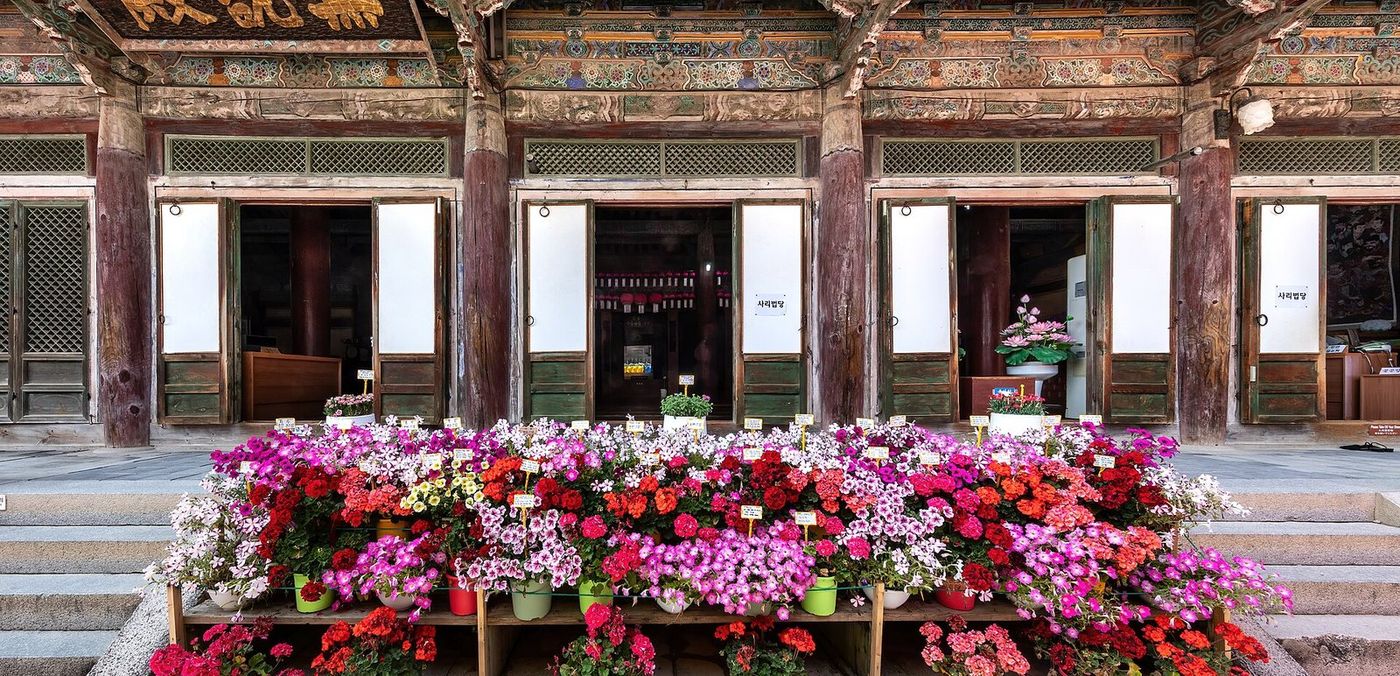
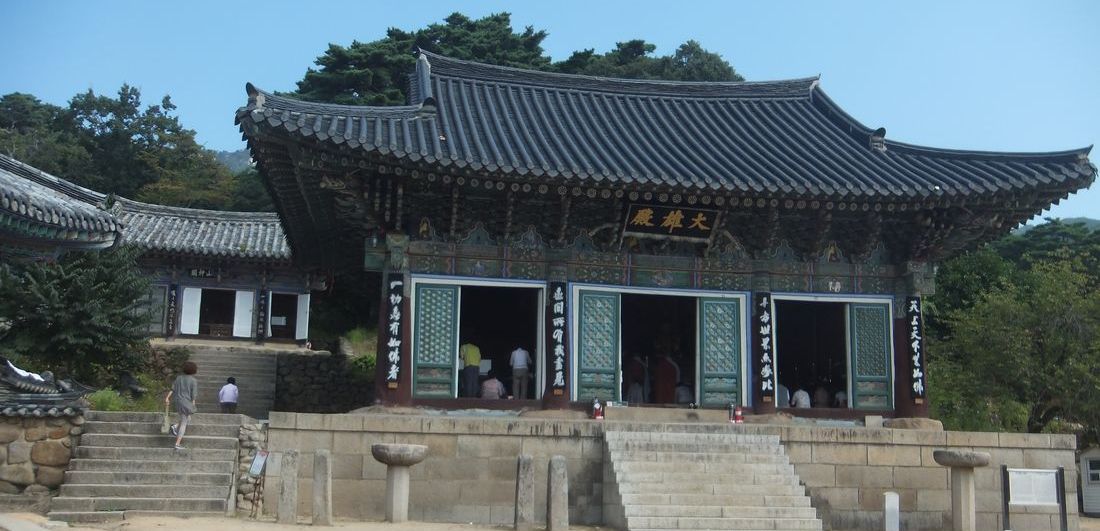
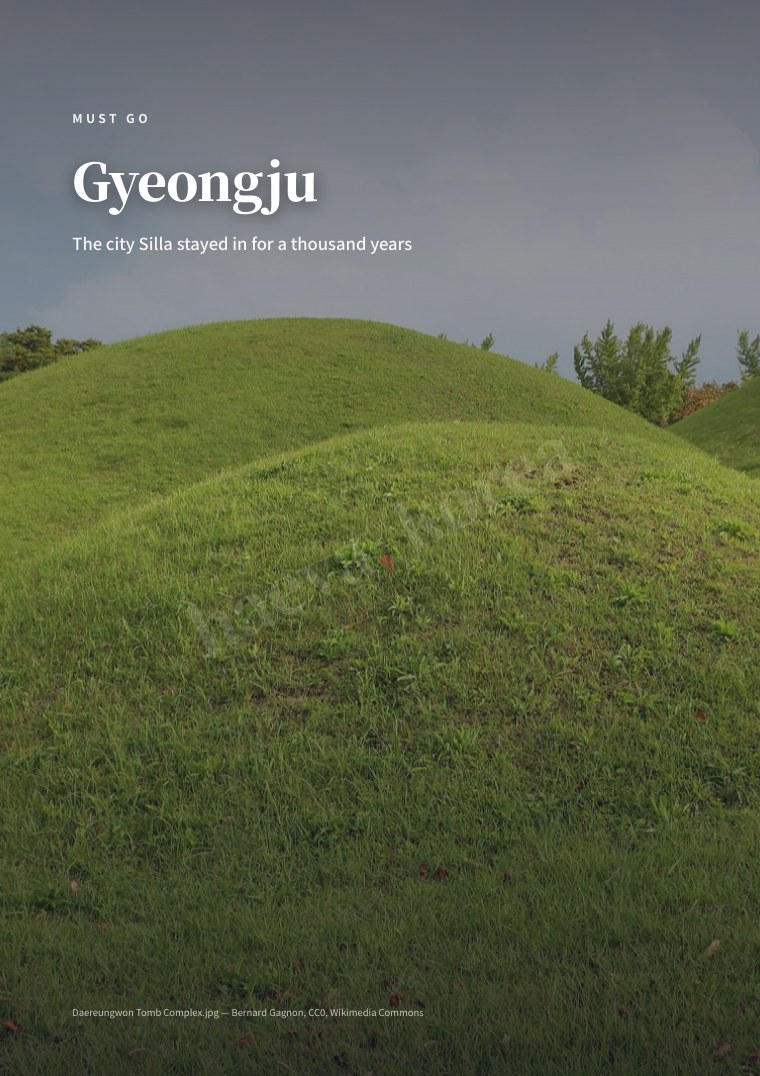
Gyeongju spent a thousand years as the capital of the Silla kingdom and still reads like an open-air museum: grass burial mounds in the middle of town, a temple in the hills above it, and a building code that keeps glass towers out of the frame. Andong, north of it, is where the old Confucian houses and the mask dance survived.
- From Seoul: a high-speed train reaches Gyeongju; the station sits outside the old center, so plan a bus or taxi at the end. Andong is a separate trip, not a side stop.
- Give it: two days for Gyeongju, and rent a bicycle — the sites are spread out and flat.
Where it fits in a trip
Gyeongju is the standard companion to Busan: on an eight-to-fourteen-day route, the usual shape is Seoul plus Busan with a day in Gyeongju. Two days is the honest figure if you want the town rather than a highlight reel, and Andong is a separate trip rather than a side stop — treat it as its own decision.
A whole book about one place here
The guidebook covers this region in a single section. Each of these is a separate book about one place inside it.
The names, in Korean
Signs, tickets and map apps use the Korean. Showing the written form is usually faster than saying it.
- Gyeongbuk경북
- Gyeongju경주
- Silla kingdom신라
- Bulguksa불국사
- Andong안동
Questions people actually ask
- How many days for Gyeongju?
- Two, and rent a bicycle — the sites are spread out and flat, which is an unusual combination and the reason bikes work here better than anywhere else in this chapter.
- Can I do Gyeongju as a day trip from Busan?
- That is the common shape on a two-week route and it works, but it buys you the highlights rather than the town. Note that the station sits outside the old center, so plan a bus or taxi at the end of the train.
- Is Andong worth adding?
- Only as its own trip. Andong is north of Gyeongju and it is where the old Confucian houses and the mask dance survived — but it is a separate journey, not a side stop from the Silla sites.